








December 2025. Jaime Urrutia (Madrid, 67 years old) is declared dead by a National Police officer. This writer is in the car when a routine police checkpoint stops him at the height of the Madrid roundabout Marqués de Vadillo. On the passenger seat rests the vinyl Patente de corso, Urrutia’s first solo album, released in 2002. One of the officers is in charge of asking for the documentation when the other, from the other window, sees the album, in which the musician appears in profile, wearing sunglasses and a shiny quiff while his name is read in large letters. “Isn’t this the one who sang in Gabinete Caligari?” asks the veteran policeman. The answer leaves no doubt: “Indeed, and I have just met with him.” The man hesitates and, as if the answer were the typical one given by those who hide something from the authorities, sticks his head through the window. “That can’t be. This musician is dead,” he says firmly while his companion at the driver’s window straightens up in alert. There is a certain unnecessary tension, but in the end, there is no need to get out of the car or call a lawyer to convince him that “the one who sang in Gabinete Caligari” is alive. “Proceed and drive carefully,” says the veteran officer before taking one last look at the album of the author of songs that are part of the Spanish collective memory such as ‘Camino Soria’, ‘La culpa fue del chachachá’ or ‘Al calor del amor en un bar’.
Alive, although like a pillar of salt, Jaime Urrutia waits for that day sitting in the dressing room of the Palacio de Vistalegre. He has a concert. It is hard for him to move, but his smile of an old bar comrade is firm. He exudes the aura of a survivor. It is no wonder. Months earlier, reality almost gave the policeman reason. After dragging cardiovascular problems for years, the musician had suffered a heart attack that left him in a coma for 15 days, and had broken his hip. All this led him to “be in a pit.” “Since the pandemic, I have done nothing but fall sharply,” he says that afternoon. A phrase repeated several times during the two years of follow-up for a report that was going to be the story of a great figure of the Movida who, with much less audience, resisted as a humble musician out of the spotlight, but which finally became a story of true survival.
Jaime Urrutia, the artist whom Andrés Calamaro described as one of the best Spanish-language songwriters, was alive and wanted to be more than ever.
***
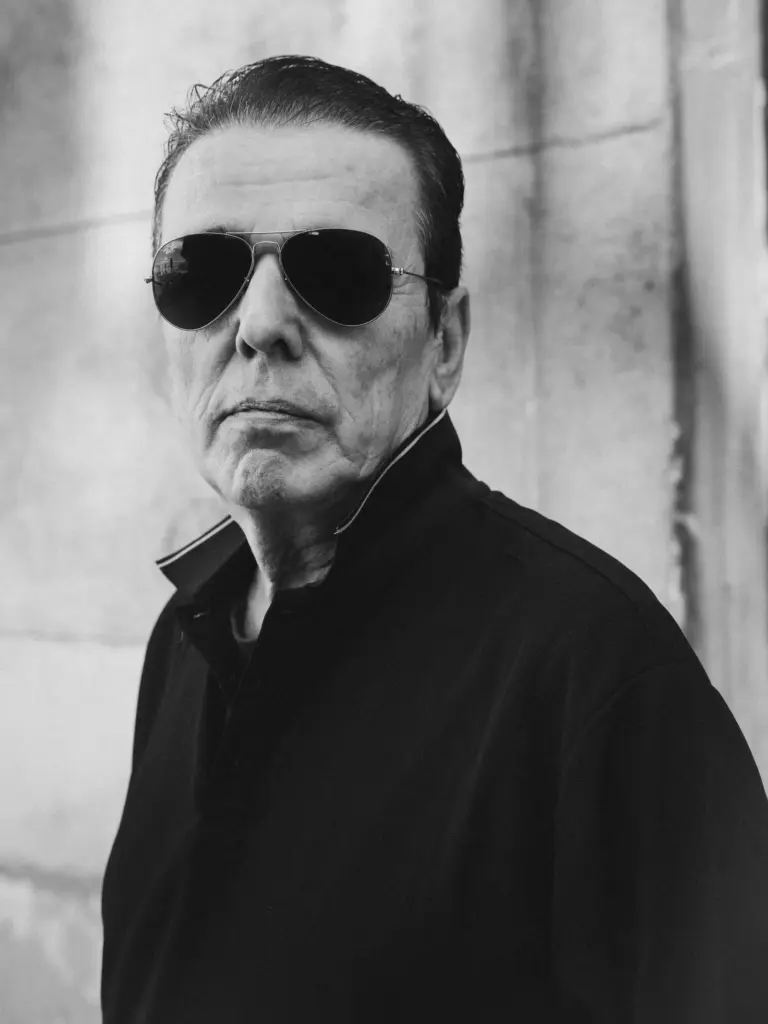
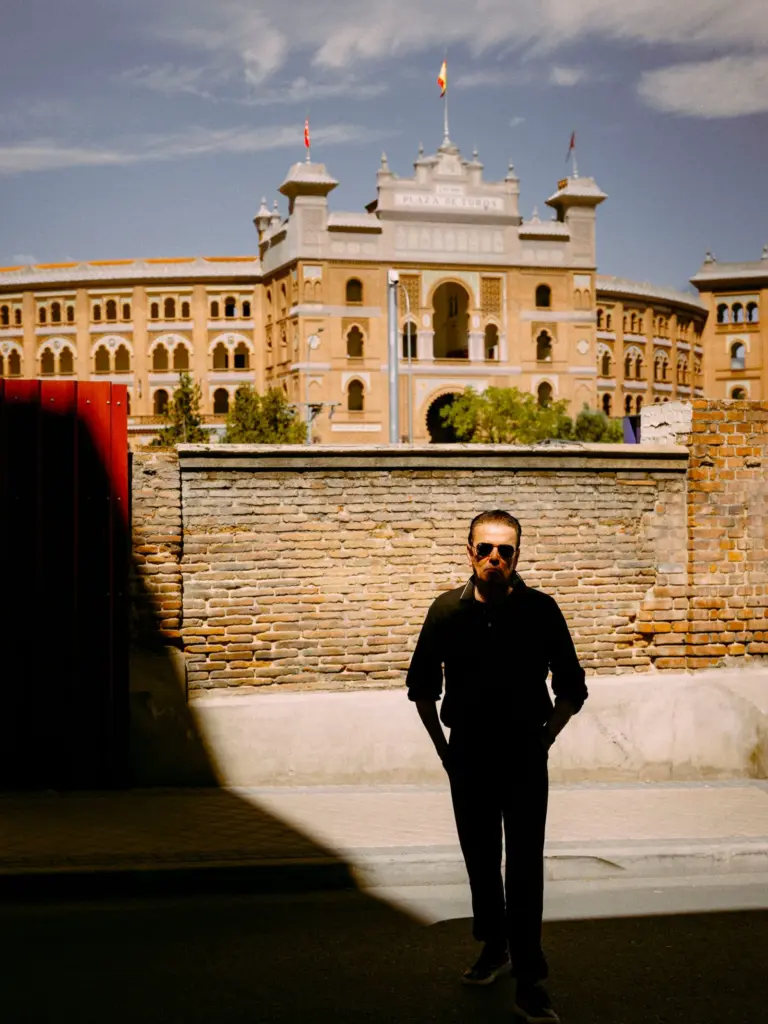
September 2024. Urrutia’s silhouette stands out from the others thanks to the two accessories that characterize him the most: his chulapa cap and his dark aviator sunglasses. He is doing some promotion for the reissue of Cuatro rosas, the second album of Gabinete Caligari, which, released in 1985 by Dro / Tres Cipreses, became the first gold record of an independent company in Spain. He receives guests at El Capote, the bullfighting bar near his house where he usually has an aperitif. “I bought the house to be close to Las Ventas. I love bullfighting, even though it doesn’t have the popularity it used to,” he explains. He doesn’t have it either. Off the media radar, this essential representative of the Movida and one of the most important pop-rock songwriters in Spanish remains active. He maintains a discreet solo career in which he plays with his band wherever they call him. They don’t call much, but they do. “I don’t lack gigs,” he points out. Small venues in cities or towns, nostalgic eighties festivals, or even more nostalgic cruises, like the one he did through Italy with No me Pises que Llevo Chanclas or Rafa Sánchez from La Unión. “It pisses me off that they call it the eighties festival or the eighties boat. I live in the year I am in,” he assures.
It is 2024, but his last solo album, Lo que no está escrito, is from 2010. Lacking new material, he is encouraged to promote the reissues of the band he formed in 1981 with Ferni Presas (bassist) and Edi Clavo (drummer). He already did so with the anniversary of Camino Soria, the album that made the members of Gabinete stars of Spanish pop with a style very different from the prevailing one in the Movida. “We came from the moderns of Rock-Ola, but we wanted to distinguish ourselves. Already on our first album, Que Dios reparta suerte, we went with Alberto García-Alix to Almería dressed as cowboys. We were looking for something more our own and not to look like so many people we saw, like Nacha Pop, Alaska or Los Secretos,” he says. “Although we were very dry, bad-tempered. I remember that in some promotions they told us: ‘Damn, you guys are scary.’ Our image was not exactly designed for the general public.”
The distinction of Gabinete Caligari was, in the words of Edi Clavo, “to associate the universe of olive and carajillo bars with rock and roll.” Music journalist Patricia Godes once described it as “bullfighter rock.” Like Burning or Leño a few years earlier, they represented the Madrid castizo style in the eighties, only that from their early modern influences like Joy Division or The Cure, so typical of the Movida, they derived their rock and roll into something more classic, with sounds from the fifties and sixties, all that music that, seasoned with pasodobles and fair touches, marked Gabinete’s style in Cuatro rosas, Al calor del amor en un bar, Camino Soria, Privado and Cien mil vueltas. A unique style, of sawdust, streamers, and mixed drinks. All that music that Urrutia absorbed since his adolescence.
***
Seventies. A beardless Jaime Urrutia puts on the records from his older brother’s collection. He takes them from Gonzalo, who had previously stolen them from El Corte Inglés. That collection includes essential artists like Bob Dylan, The Rolling Stones, The Animals, or The Kinks. Musicians who lead him to want to pick up the acoustic guitar of his sister Paloma, who had signed up for an extracurricular guitar class at the convent school. He learns by himself. He also learns a lot from the vinyls he buys at the Rastro, in a place called El Rubio. LPs for 100 pesetas, which come with the gift of the smell of joints and patchouli from the hippies who sell them. He especially likes the wrinkled records he acquires from Lou Reed and The Doors.
All that music is pure effervescence in the Spain of the dying Franco regime. Like Jaime, there will be thousands of young people who will leave behind the gray years and find lights and colors in the playground of the Madrid Movida and other regional scenes. All that music will be the one that, with his fixation on writing with a rogue and castizo language, will triumph in Gabinete Caligari, the group of bolingas, ganapanes, and jaris. The group that his father, “very fascist” in his son’s words, would call “a group of acrobats” and for which his mother would hold her head in her hands upon hearing references to the ladies’ big butts in the songs. And the group that would reach the top of the Spanish charts and make an even more difficult conquest: winning the memory of a country through the orchestras of the towns. Where the future and acclaimed Spanish indie will never triumph, several songs by Jaime Urrutia, composer of music and lyrics of the band, will be sung and danced in that Olympus of popular heritage and toasts with tall glasses where Antonio Machín, Extremoduro, Luz Casal, Los Suaves, or Rosendo are found.
***
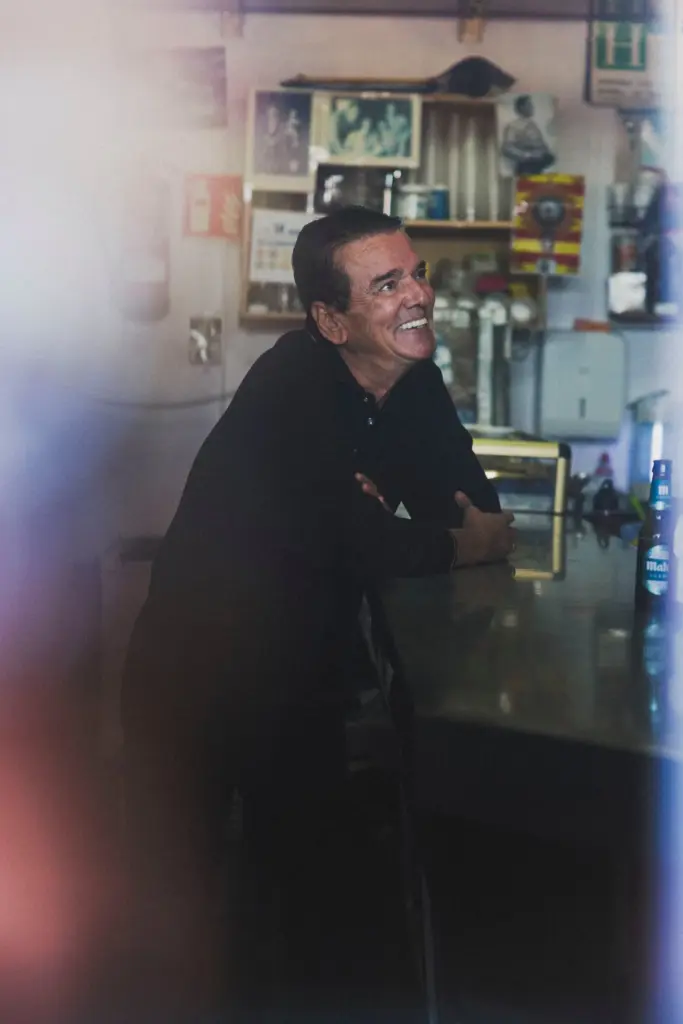
September 2024. Urrutia is still at the bar El Capote and orders a small bottle of beer. After reviewing everything Gabinete Caligari meant, he comments that he sees himself as a “survivor.” Earlier he admitted that when he was in the band, he was “the scoundrel of the group,” “the most libertine,” and “the one who drank too much.” “They,” the rest of the group, “told me I should take care of my voice,” he says. “Sometimes I lost it, I became hoarse. I was into drinking, coke, whatever…” To which he adds: “I smoked and drank. I never held back. I haven’t been very healthy, to be honest.”
After almost two hours of conversation, he confesses that in 2023 he hit rock bottom: “I have been depressed. I got up and didn’t want to do anything. I watched TV just to do something. I went through a very bad time. I didn’t answer anyone’s calls.” Much of this depression stemmed from health problems. The doctor told him he suffered from circulation and cardiovascular disorders. He got very tired and, after the pandemic, he fell “sharply.”
***
December 2024. Urrutia, far from improving, falls even more. He attends the Real Madrid match against Getafe accompanied by May, his partner. He has not been to the Santiago Bernabéu stadium for many years. It is the first time he goes since the major renovation. “It’s impressive,” he will say several times while his team wins with goals from Bellingham and Mbappé. Alongside music and bullfighting, Real Madrid is his great passion. Upon arriving home, he looks very tired. Two days later, he suffers a heart attack in his living room. He is lucky that May is there with him. On his social networks, they don’t say it is a heart attack, but “a severe pneumonia derived from the flu.” Not even his closest colleagues in the profession know the truth. He spends 15 days in a coma and a month and a half in the ICU.
Read more The 50 recommendations from ‘Babelia’ for World Book Day 2026
***
March 2025. When he is in the full recovery process from the heart attack, the sharp fall is literal. He falls in one of the rooms of his house. He breaks his hip. “I became very skinny and weak and slipped badly,” he says. “The pains were horrible.” To the physical pain is added again the spiritual pain. Depression returns. The “pit.” This time it is worse: “I was so bad that, unlike other times, I didn’t even want to listen to music or watch Real Madrid. I was at my lowest.” He goes to the psychiatrist. He stuffs himself with pills. He locks himself at home and doesn’t answer the phone.
***

October 2025. After the summer, he begins to come out of the pit. He is already feeling better, with less pain. “The psychiatrist has helped me a lot,” he assures. “That thing they say that one helps oneself if one wants, well, bullshit. Without him, I wouldn’t have been able to get better,” he explains. He starts seeing his manager and his band, schedules concerts, leaves the house, and enjoys Real Madrid matches again and listening to his vinyls. His agenda is not that of a star, but that of a neighbor from the Las Ventas neighborhood. He allows himself to attend a lunch at Café Varela with two people who admire him and want to get to know him up close: journalist Edu Galán and filmmaker Álex de la Iglesia. The lunch goes by with laughter. Urrutia tells how Madrid taxi drivers confused him in the nineties with Millán Salcedo, the comedian from Martes y Trece, who imitated him in one of his famous sketches. He also hears that he is one of the best Spanish lyricists, on par with the greats, both for his work in Gabinete Caligari and solo. He even signs a vinyl of Patente de corso, an unknown gem of Spanish music in which he received support from Loquillo, Bunbury, and Andrés Calamaro, who sang and appeared in the videoclip of ‘¿Dónde estás?’. “That album came out perfect,” he points out. He was not the only support. Many artists also backed him, such as Amaral, Pereza, Iván Ferreiro, Jorge Drexler, Ariel Rot, Dani Martín, Bunbury, or Calamaro, in the live album En Joy, released in 2007. Then, his name faded over the years in the frenzy of Spanish music. Others of his generation like Loquillo, Los Secretos, or Alaska have managed to stay at the top, and others like Santiago Auserón, so committed to leaving the big stages and spotlights, have gained prestige and influence. Without being a fallen angel, he is a shadow survivor, who has taken more than a decade to release a new album, which he already compares to Godot, for its wait. “I have some songs to shape for a long time. It is a dream to record it someday,” he says. At the end of the lunch, in good humor, he also talks about his times in Gabinete Caligari, the band of his life, the one that made him great and with which he ended up forever estranged after its dissolution in 1999. He went solo and Ferni and Edi formed Paraphernalia, a group that soon dissolved.
***
“I already thought that on the album Cuatro rosas we were going to separate. I told the others that I thought the music should be signed only by me. I composed and wrote it. They didn’t talk to me for 10 days. Since that album, the problem stayed forever. It was a trauma for them. They never recognized my authorship of the songs. I tell it as it is and I don’t care to tell it at this point,” he says in one of the many talks with him. When Urrutia talks about the band’s breakup, he says he felt “relief and sadness.” He moves his hand in a “so-so” gesture, as if he still doesn’t have, 25 years later, very clear which feeling prevails more, relief or sadness. “I don’t know, really. What is certain is that we didn’t deserve to end that way. For the last album, Subid la música, we didn’t have a label. We recorded it with a Telecinco label, the same where Inhumanos had recorded. It was a bad decision. Everything was very shabby.” He wanted to have ended the band around 1992, after releasing Cien mil vueltas. “I remember a phone interview they did with me from my parents’ house and I already said: ‘It’s better to leave it now at the top than later.’ I’ve always thought that way. To leave like Radio Futura. They had class. But then, in those years, the rest of the group and other friends took badly what I proposed.” And he concludes: “The decline of Gabinete hurt me a lot. And it still hurts.”
The question that he has been asked the most in his life arises, of course: would a Gabinete Caligari reunion be possible on his part? “I feel a bit worn out, but for a good offer, a very high one, I think I would return with Gabinete. And I suppose they would also consider it. Although Edi Clavo has declared that he would never play with Jaime Urrutia again. As if I were a pariah. I haven’t done anything to make them feel so bad about me. I haven’t killed anyone nor am I the author of any attack. I only defended what was mine.” And, always evasive to generate new controversy with his former comrades Ferni and Edi, he concludes: “When I listen to Gabinete’s songs, I think: damn, man, how well we did it. I feel that I love them a lot. We made a band and we were very good friends.”
***
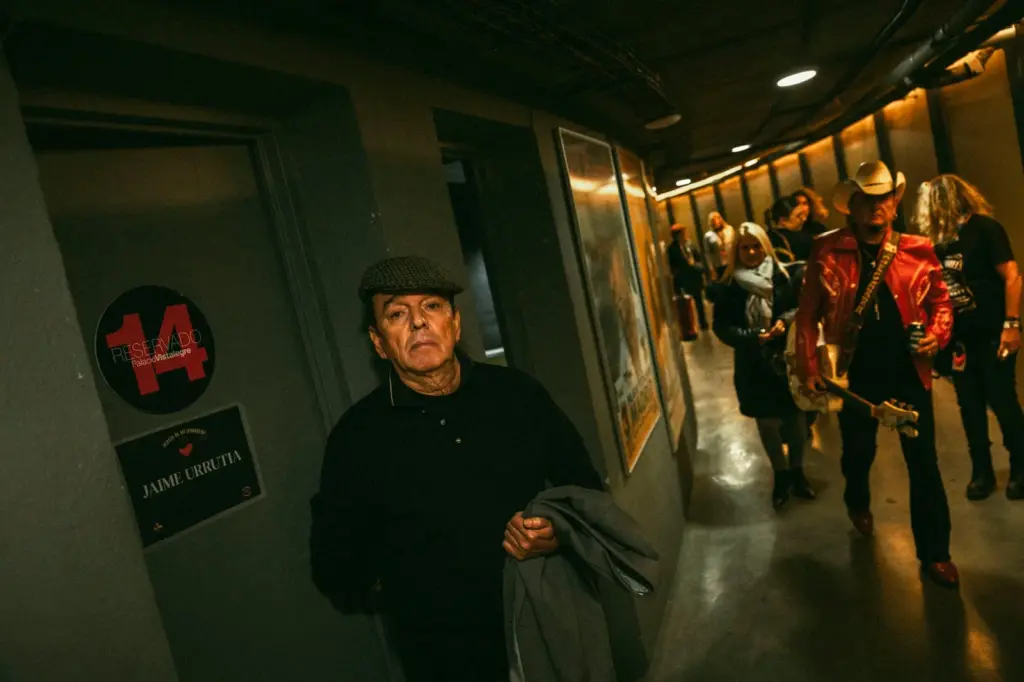
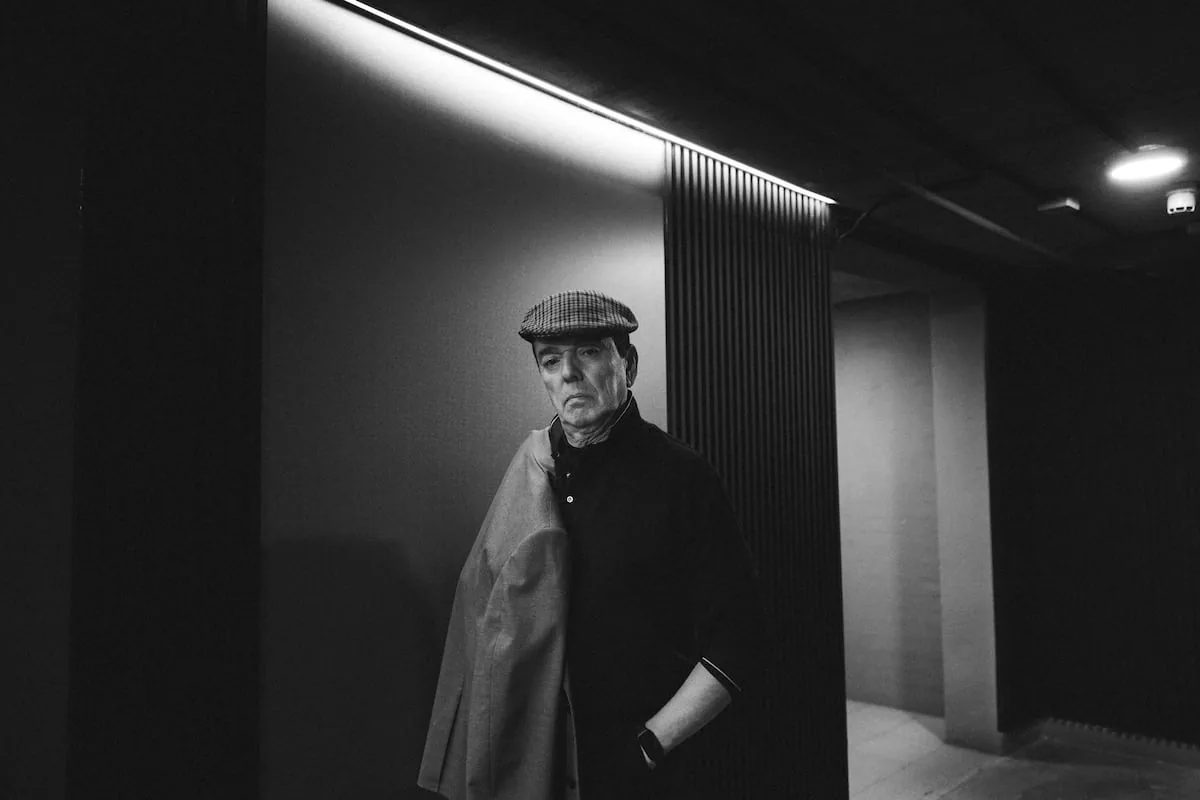
December 2025. Urrutia waits in the modest dressing room of Palacio de Vistalegre. He goes with his look: chulapa cap, aviator glasses, and shiny quiff. A guy from the sound team sees him and exclaims: “Don Jaime, what elegance!” He talks a lot about Xabi Alonso’s Real Madrid. In less than an hour, he will go up, in small steps and with the help of an assistant due to his damaged hip, to the stage of this festival called Debajo de mi Sombrero, where he shares the bill with Seguridad Social, Orquesta Mondragón, Javier Ojeda from Danza Invisible, or Carlos Segarra from Los Rebeldes. “I go my own way,” he says when asked if he misses the big audience. “I should be more considered in Spanish music, but after 20 years living like this, I have learned to accept everything. The audience rules,” he concludes.
He goes on stage. The audience is made up of men and women who know his lyrics by heart. They sing and dance them with more strength than the other guests. They even seem like teenagers at their first concert when it comes to singing ‘Camino Soria.’ He is recovered. When he is about to start playing ‘¿Dónde estás?,’ he says with that grandiloquent and raspy voice, so his own: “Now I am going to play one by Jaime. Well, they are all mine. Also those of Gabinete Caligari.”
In two years of conversations, he once told that his father, the same one who said that Gabinete Caligari were acrobats, boasted about his son among his elderly friends when he was already old. “Jaime, if I had known, I would have put you in the conservatory,” he told him one day in front of them. Maybe he would have liked to see his son almost at his age then still on a stage. An older son, limping and not as strong as before, but who looks happy when he sings ‘Solo se vive una vez.’ That son says goodbye to everyone with the following phrase: “Jaime Urrutia, at your service.”
Soon after, backstage, he states: “What I like most to be told in life is that my songs have meant something.” He signs the vinyl Patente de corso for which the police officer thought Jaime Urrutia was dead. When the whole misunderstanding is explained to him, he says with a laugh: “We are older than a forest.” He falls silent and speaks again. “Music is my life. I haven’t retired. I won’t.” And he leaves a pertinent reflection: “What I don’t know is how Keith Richards is still alive.”
***
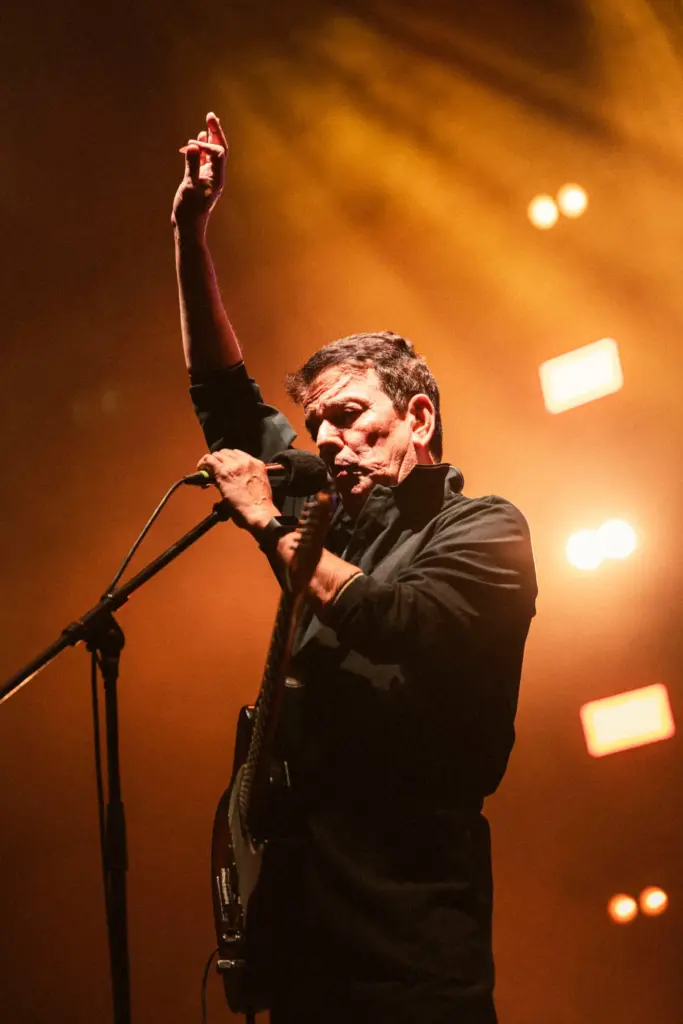
April 2026. There is one more call. On the other end is Jaime Urrutia. He trusts that Real Madrid will eliminate Bayern Munich in the Champions League and says that that day he picked up the guitar and started playing songs from Nashville Skyline, Bob Dylan’s album. “I am very well, better than ever.” And when he remembers the policeman who thought he was dead, he laughs again and says: “What things! You have to hang on to life.” And, as if he wanted to start a jari with that unbeatable voice, he says: “But one thing. Next time tell the cop: ‘You who don’t get it, asshole!’”
Read more Willem Dafoe: “I live near Rome, on an alpaca farm, it is the best place to see the river of life”