

Antonia sighed, her last breath, and departed as discreetly as she had lived. But her phrases now float in our memory. Antonia would say, “Ave María Purísima” (Hail Mary Most Pure), when entering a house, and “May Mary Magdalene guide you,” when we left. You would then imagine her lost in her memories. Antonia’s memories could resemble those of so many anonymous women whose childhoods were interrupted by war. Born six years before ’36, she had to leave school and forever harbored the complex of someone who couldn’t read fluently or write with ease. It was said of that generation that they worked “in their labors,” understanding that a woman’s labors were synonymous with not truly working, but Antonia, like so many others, toiled like a mule with the children, with the house, with the olive harvest, and with ensuring the well-being of the men at dusk and dawn, because for them, leisure time was not provided for in the marital contract.
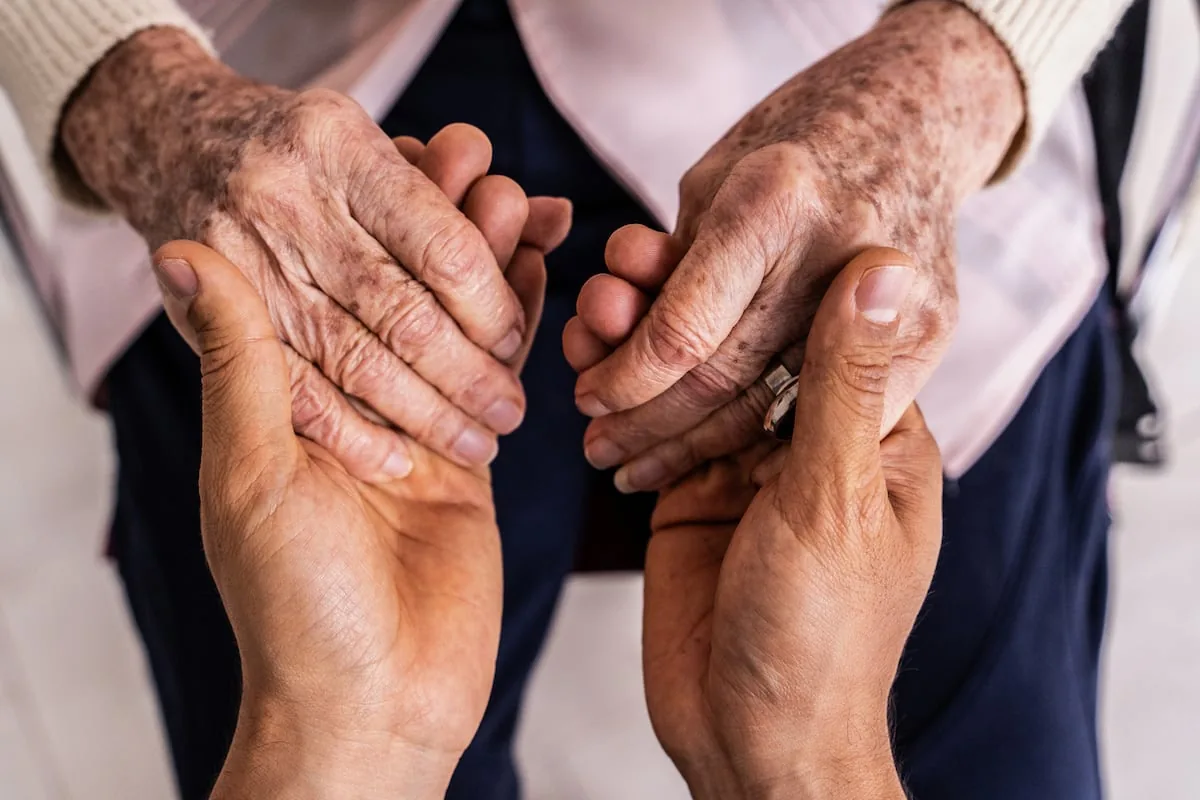
Antonia used to say, “I’ve worked a lot, honey,” because she punctuated everything with a “honey,” which softened the harshness of the memory; having said this, she would get lost in her melancholies, which perhaps led her to wonder if life couldn’t have been more benevolent to her. Antonia never had a salary, nor a sovereign existence, but Antonia reigned in her kitchen and, educated in times of scarcity, knew what “utilization food” was. Antonia wouldn’t pronounce the word “croqueta” (croquette), for fear of making a mistake, but hers were the glorious result of the leftovers from a stew from which only the bones were discarded. Antonia had time to study at the adult school, and by capricious fate, her son became a writer, so she clung with both hands, like someone learning to drive late, to the novels of the man she used to wake up at dawn as a child to take him to pick olives. She read conscientiously, moving her lips, as that generation did, determined to recover something that had been taken from them. Antonia never stopped still. When household chores gave her a break, she knitted sweaters for her grandchildren, sheet borders, embroidered little cloths that were then a shame to use. Antonia traveled with her husband thanks to Imserso, but she preferred the quietness of her domestic homeland. Antonia had an exquisite upbringing and used to reply with a “say usté that yes” to visitors. Her hallmark was cordiality. When the strength in her hands began to fail, her daughter placed the novels on a stand for her; later, she turned to the e-book where the letters enlarged at her will.
Read more Stoichkov, Crazy Horse
Her life will not fall into oblivion like that of so many women because her son took it upon himself to recount everything from the birth with which she brought him into the world to her use of that rural language, now in danger of extinction. Antonia read El Quijote and was amazed that words she considered vulgar were spoken by characters who so closely resembled the inhabitants of the archaic universe of market gardeners. Antonia wanted her children to study, and that was the pride she took with her to the other side. Every time she appeared in one of my articles, Rafael Azcona would write to me to say, “olé your mother-in-law”; after all, he was the master at portraying those people who don’t live a transcendent epic but bear on their shoulders the weight of history written by the powerful. Antonia has left at a slow pace, with a sideways gait from so much hustle and bustle: an interrupted childhood, a laborious youth, an old age meticulously cared for by her daughter. I remember that years ago I anticipated her departure by celebrating her undisputed culinary mastery. And forgive me for quoting myself: “No one will ever feature her in an essay, but I can imagine her entering, at this same slow pace, through the gates of paradise, where the Lord (as she says) will tell an Arzak or a Ferrán Adriá: ‘Please, gentlemen, let the lady sit down.’”