








Hombres G soon understood that life might not be as serious as Gil de Biedma said. It happened long before embarking on the path to success. Specifically, on October 19, 1984. That Friday they played at the Autopista room, in the La Vaguada shopping center (Madrid). The entrance cost 300 pesetas. It was not just another concert: after two years of playing, they considered it one of their last chances.
Read more Typos as a symbol of prestige: how to write so it doesn’t seem like AI
The thing, a priori, did not go very well. Nervous, they started drinking. Javier Molina (61 years old, Madrid), the drummer, fainted backstage. “Sorry, we’re a bit wrecked,” said David Summers, the singer, in a youthful voice, before his bass strap broke, it fell to the floor and cut the cable. That was the end of the concert. They had 10 songs in the repertoire. In exchange, 25 minutes they didn’t need. None of that mattered to producer Paco Martín, who called David the next day to sign them. “That day there was something incredible: the communication between the audience and them, the disrespect in their lyrics, full of irony… I was convinced there was something different. Let’s not be mistaken: they were quite weak musically…,” Martín recalls at the beginning of The Best Years of Our Lives, the documentary about the band directed by Charlie Arnaiz and Alberto Ortega, which hits theaters on Friday, May 8, and will later be exclusively on Movistar +.
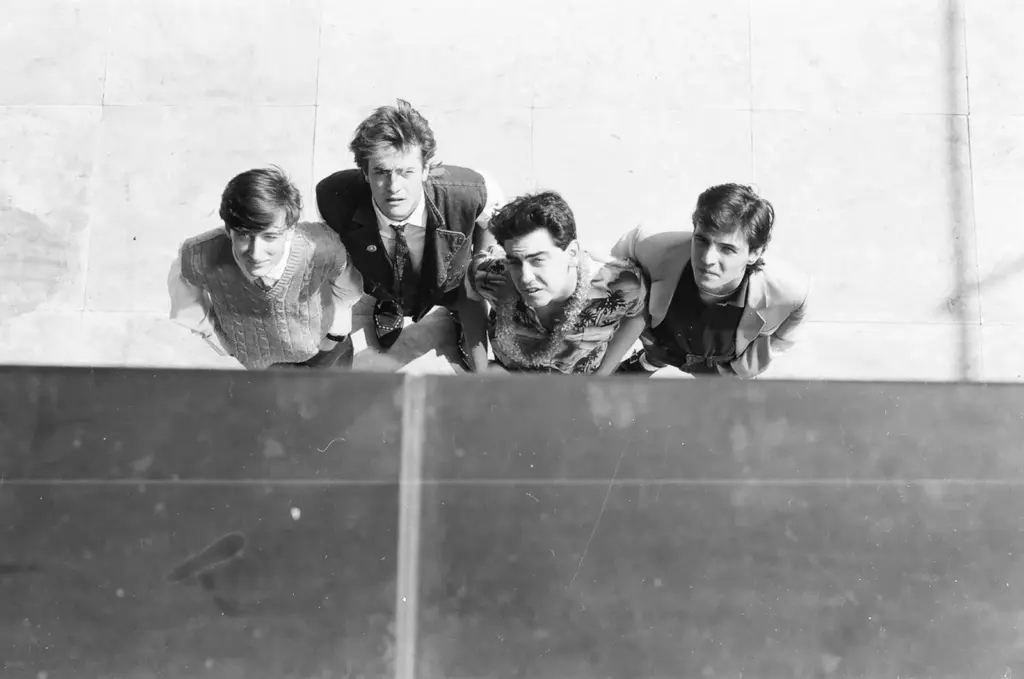
Thus began the first chapter of the story of one of the most iconic Spanish pop bands. A band that wanted to make funny songs and resemble Siniestro Total or Glutamato Ye-Yé. They considered names like Los bonitos Redford or Dos hombres y un Vespino. They finally decided to Spanish-ify the title of G Men, that American film noir movie directed by William Keighley.
Their first album —with songs like Venezia or Devuélveme a mi chica— came out in 1985. When the popular Sufre, mamón was played for the first time on Los 40 Principales, calls overwhelmed the station’s switchboard. It was two in the morning and a fan had just left a tape with the song there. Overnight —literally— they began to be heard by thousands of people. A fan phenomenon was born around them whose magnitude marked an era. A phenomenon that remains alive, forty years later, as shown by the tour of more than twenty dates that will take them across Spain until the end of the year.
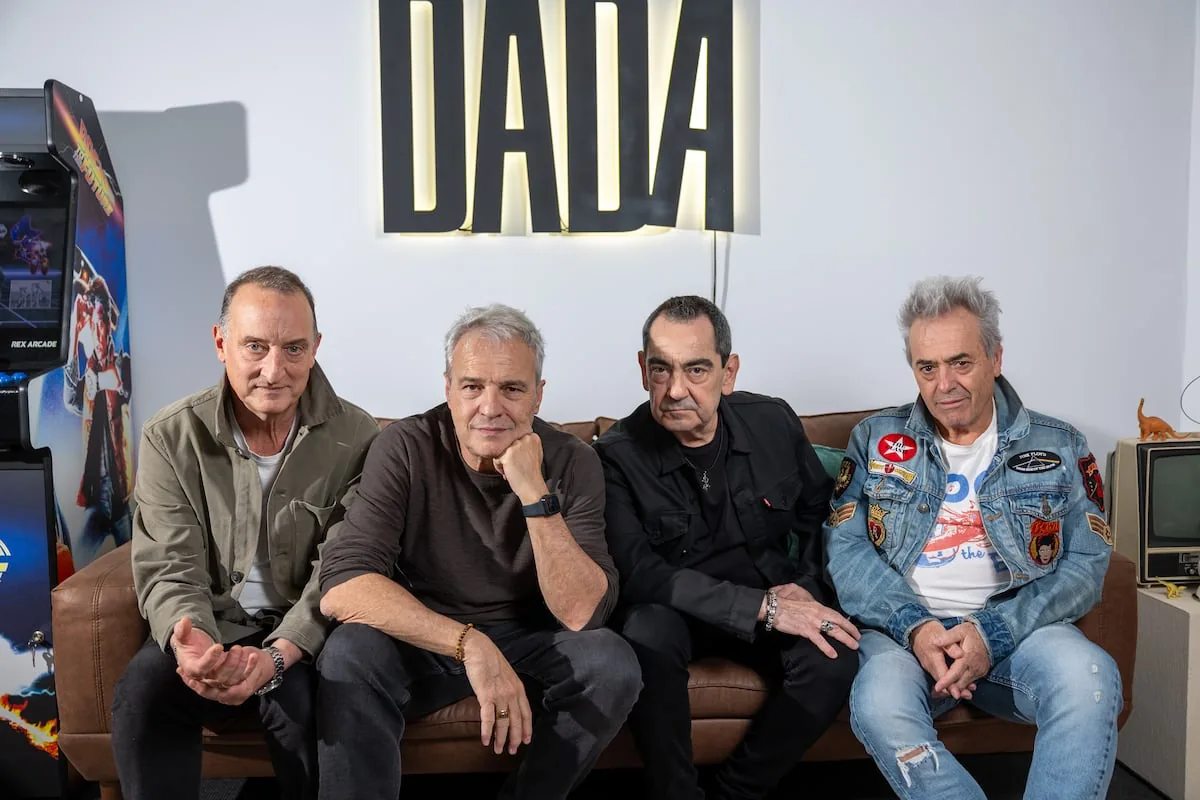
Sitting in a room at the documentary production company’s offices, they remember those times. “It was an absolutely unusual phenomenon. We were a group of kids from a neighborhood who each bought a guitar and a drum set. We started rehearsing in a garage and began making songs and playing wherever they let us. We arrived by a path no one had taken before,” says David Summers (62 years old, Madrid). “We were just four friends, without a big multinational behind us, not a marketing product,” adds Javier Molina (61 years old, Madrid).
Talking about that change and the passions they stirred, a reflection on the followers arises: “Having fans is the best thing that can happen to an artist. You make music for people to like it. And fans are people to whom your music reaches in an extraordinary way. It changes their lives, makes them happy, moves them… that’s the purpose of music. Music serves that!”
For guitarist Rafael Gutiérrez Muñoz (66 years old, Madrid), the stereotyped image of those fans is unfair: “It was assumed that girls liked a band because they were very handsome boys. But in our case, our audience discovered us through the songs. And music critics found it hard to say they liked the same as thousands of young girls.” That said, the situation was, at least, curious. In fact, David wrote The Attack of the Crocodile Girls as a parody of what was happening to them, and the fans decided to parody themselves and call themselves “crocodile girls.” Even today, some dress as reptiles at their concerts.
On the other side, the band’s enemies appeared. First, the media criticism. Then, a violent movement popularized a sort of national tournament consisting of seeing in which town the Hombres G concert was canceled first. Radicals threw objects at the band. In Baza (Granada), guitarist Daniel Mezquita (60 years old, Madrid) was hit by a stone on the temple. In Oviedo, in 1987, with the press announcing trouble, they brought 50 people as security staff. Also a notary. The concert lasted two songs. The notary’s daughter, a fan of the group, took the first stone of the afternoon.
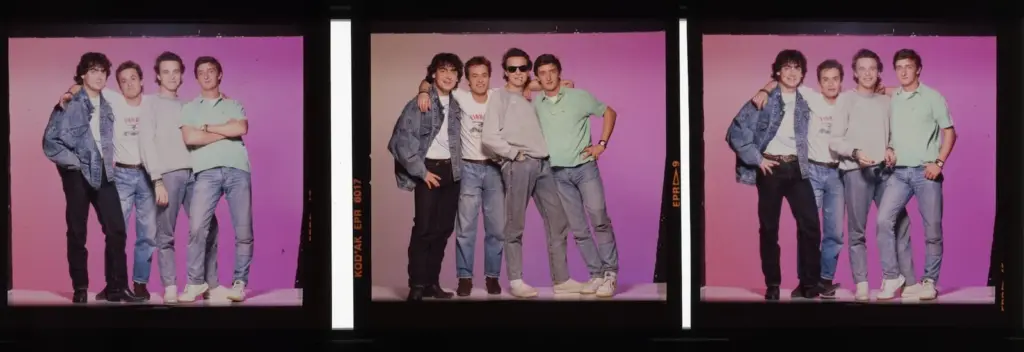
There was something about those attacks that reflected the spirit of the times. In an era of urban tribes where aesthetics clearly defined; some boys started appearing on TV wearing t-shirts, jeans, and sneakers. “At that time there was a need to label everyone,” says David, “there were rockers, mods, punks, posh kids… I understand it must be very confusing that suddenly we appeared, and there was no way to label us anywhere. So where do we put these guys? They’re posh. But, dude, we’ve been working nonstop since we were 18… We’ve never gone to regattas, played polo, or been part of exclusive clubs. We’ve been dressing the same for 40 years. We’re neither thugs nor aristocrats, we’re normal people.”
Read more Between protests and corsets, the Bezos assault hints at the end of an era at the Met Gala
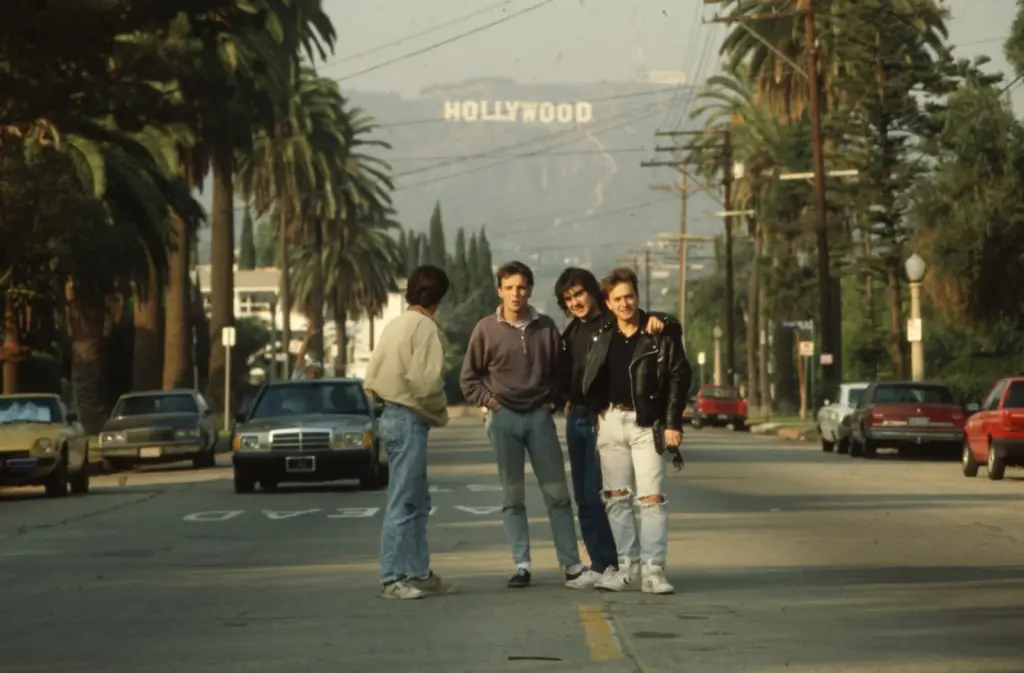
With Spain divided between passion and hatred for the band, the opportunity arose to travel to Latin America. It was 1987. When they landed there, they discovered the phenomenon was even stronger than in Spain. Just landed in Lima, they found a track packed with fans. Then, at their first concert in the city, they performed before 60,000 people. “There they considered us more rock. At the time young people saw us as an outlet,” says Daniel. “Well, we did a tour with Ilegales, because there we were two irreverent groups,” adds Rafa. The person responsible for those first American tours was, by the way, the communicator Juan y Medio.
Paloma, a university philosophy professor born in Mexico and raised in Venezuela, explains that the American experience with the band is very different from the Spanish one. “I still know the first two albums completely. When I moved to Spain I went to a wedding, they played, I started singing, and my then boyfriend told me that music was for stuck-up posh people. It surprised me because we didn’t have that feeling there. For us, it was very neutral music. And it reminds me of my first concert, in Caracas, at 8 years old, which I really enjoyed.”
Seven albums and seven tours in seven years —along with David’s father’s illness— generated some weariness in the group. Also the fact that Historia del bikini, a more artistically elevated album, was liked more by critics but less by fans. Then came the separation. It was 1992. Although the documentary goes into more detail about the reasons, today, in the meeting with EL PAÍS, they don’t dwell much on the subject. “For us it doesn’t matter at all. If you think about it, 10 years is nothing,” points out Javier. In that separate decade, David launched his solo career, Daniel worked in the music industry, Javier opened a bar after selling his first drum set cheaply, and Rafa did everything, even working as a live assistant for other groups —“I couldn’t go to the unemployment line and ask for another job as a guitarist in a band that sold millions of records,” he jokes—.
It was in America where the band’s rebirth began. There, when the internet was not yet the internet, the site hombresg.net was founded, a kind of social network dedicated to the band where followers shared memories and, above all, how much they missed them. The sales figures of the record label’s back catalog in Mexico did the rest. A lunch among the four, an exchange of views between David and Javier, and the band was ready to return.
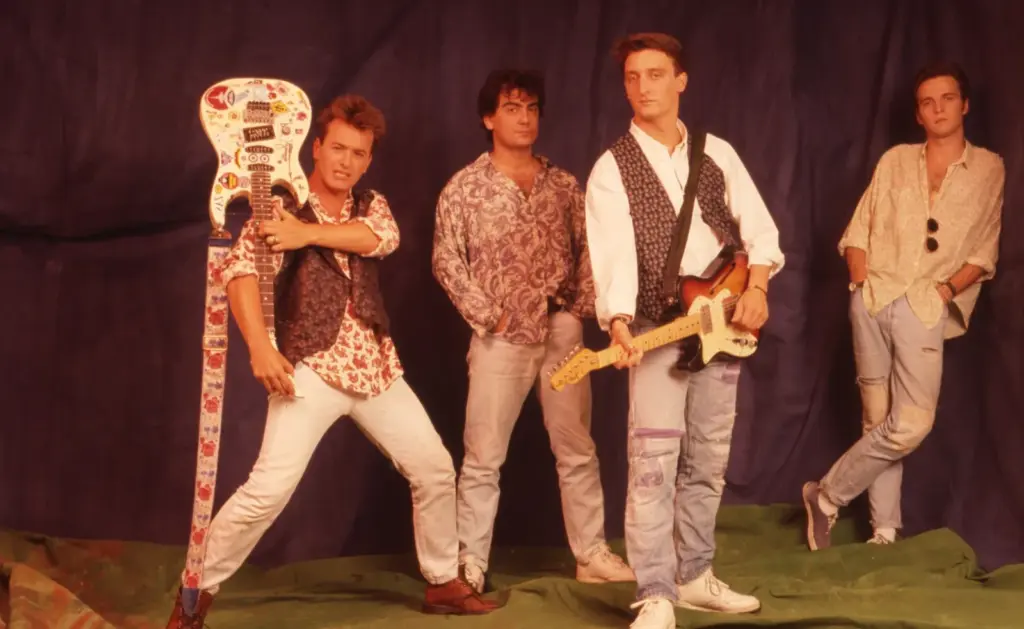
They returned in 2002 with Peligrosamente juntos, an album that housed a great song, Lo noto. Also with fear. “We didn’t know if people would still be there,” admits Daniel. It turned out they were. Their audience, now more mature, was waiting for them. Not only that, it had increased in a transversal and intergenerational way. Six studio albums and dozens of concerts later, it is difficult to interpret whether the best years of their lives were those of the eighties or those they are living now.
Among the dozens of people consulted for this report are people ranging from 11 to 87 years old, with professions spanning from medicine to roof repair. The vast majority associate the band with good memories, fun, catchy, unpretentious, and danceable songs that talk about love and also humor. Even those who do not declare themselves big fans end up conceding: “I think I like them more than I think I like them,” says a 59-year-old advertiser; “as a rebellious teenager I hated them and when you start thinking you realize they have something, that their success is no coincidence,” says a 59-year-old who, that September day in 1987 when they had to cancel their concert in Oviedo, did not arrive in time to participate in the turmoil.

“Here,” says David, “everyone is welcome.” “We sing for anyone who wants to get close to our music.” “Our mission is to entertain people, to make sure they have a good time at concerts,” adds Daniel. “And that the songs make you feel things. That there are funny songs and that people laugh. Because we want to keep laughing at everything,” concludes Rafael.
Read more From Mass Tourism to Drug Trafficking: the Costa del Sol Two Decades After Malaya