







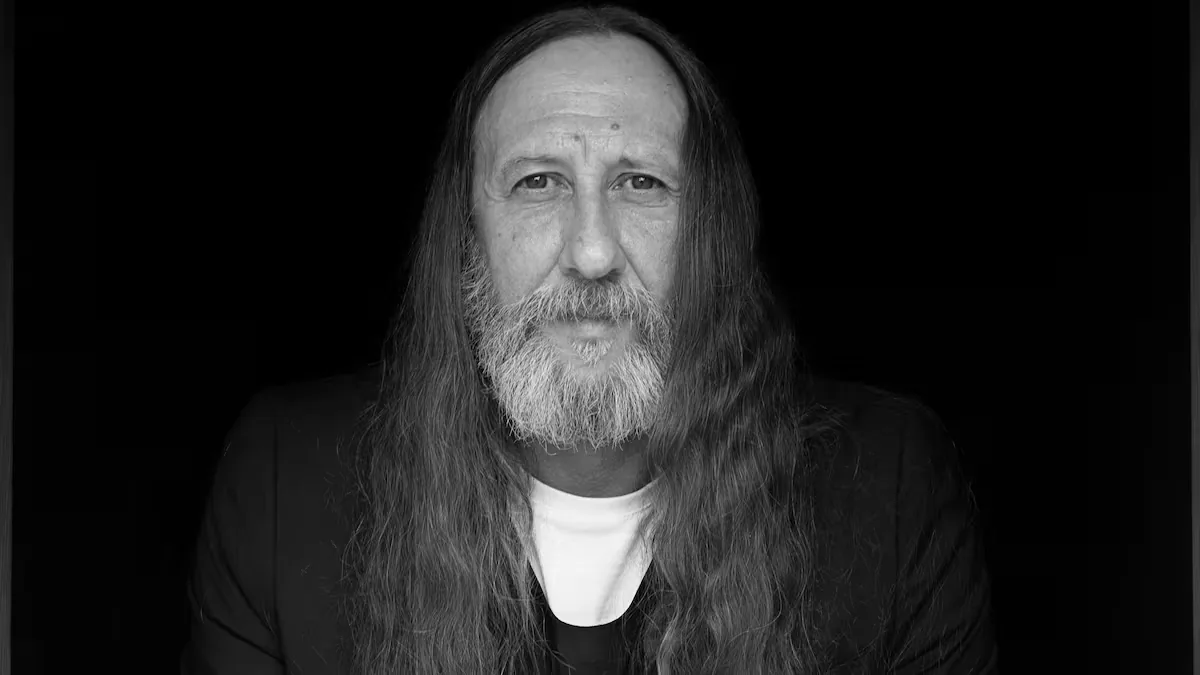
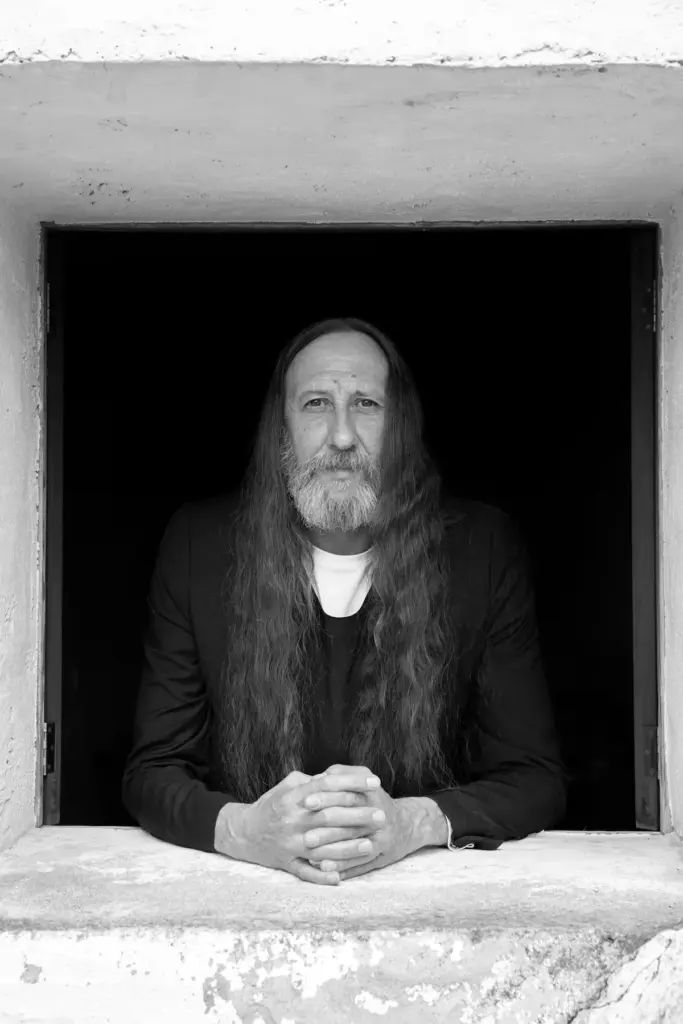
Hold on tight, because there are twists ahead, that is, headlines worthy of five columns, as they used to say. “Current fashion treads on corpses.” Or: “I am a toxic person for this industry.” And also: “John Galliano will die being the richest in the cemetery, but Zara is a disgrace.” That’s what happens when you talk to Miguel Adrover (Calonge, 61 years old), you put the recorder in front of him and he fires verbal bursts without respite. Which, surely, anyone who knows the Mallorcan designer and artist would expect. Here’s the thing: it seems as if he were induced to drop time bombs almost Pavlovianly, journalists or storytellers hunting for the explosive statement, the scandal to feed the algorithm for a while. The problem is that no one, or almost no one, stops to listen to what he really wants to say after the detonation, truths that others barely dare to whisper and that account for a philosophy of resistance still indigestible even for the clothing business. So much noise contrasts with the rural silence of his village, in the southeast of Mallorca, which is not idyllic either: it sounds like a battle, a bit like a trench. Anyone expecting to find in him the melancholic martyr of Spanish design, the genius who once brought Manhattan’s aristocracy to its knees with a dress made from shirts of soldiers killed in the Vietnam War, author of one of the most exciting chapters of global fashion between 1998 and 2012, will come across a kind of indomitable ascetic enjoying voluntary disappearance. An undeniable part of contemporary clothing narrative — sustainability, the climate and migration crisis, feminism, homophobia, and Islamophobia were already in his discourse — his work retains something extraordinary, extinct in almost all of his former colleagues: danger.
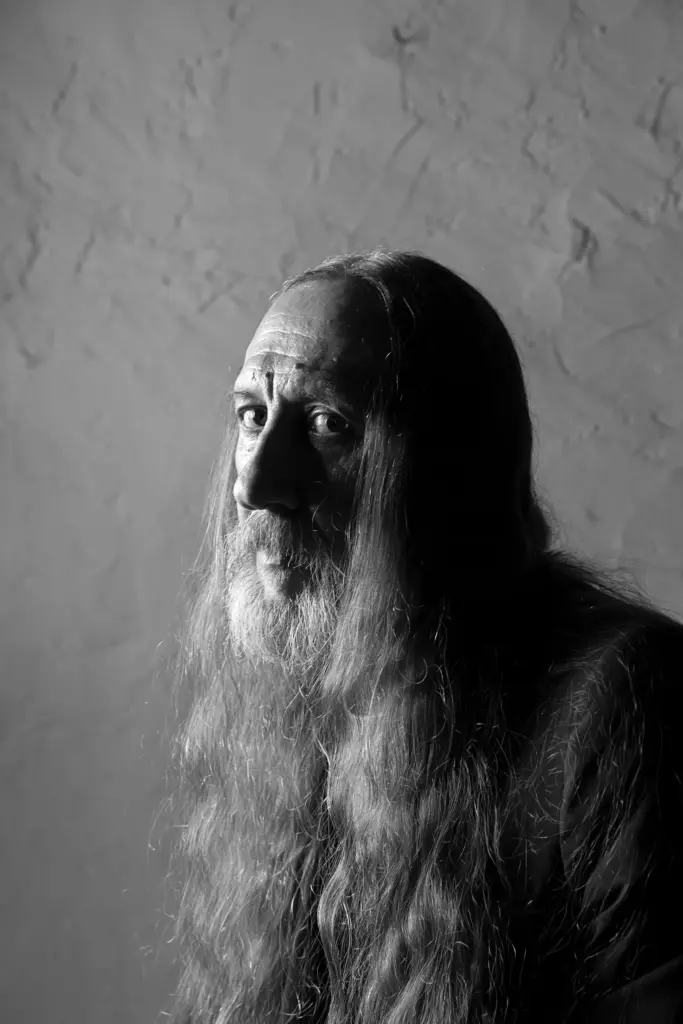
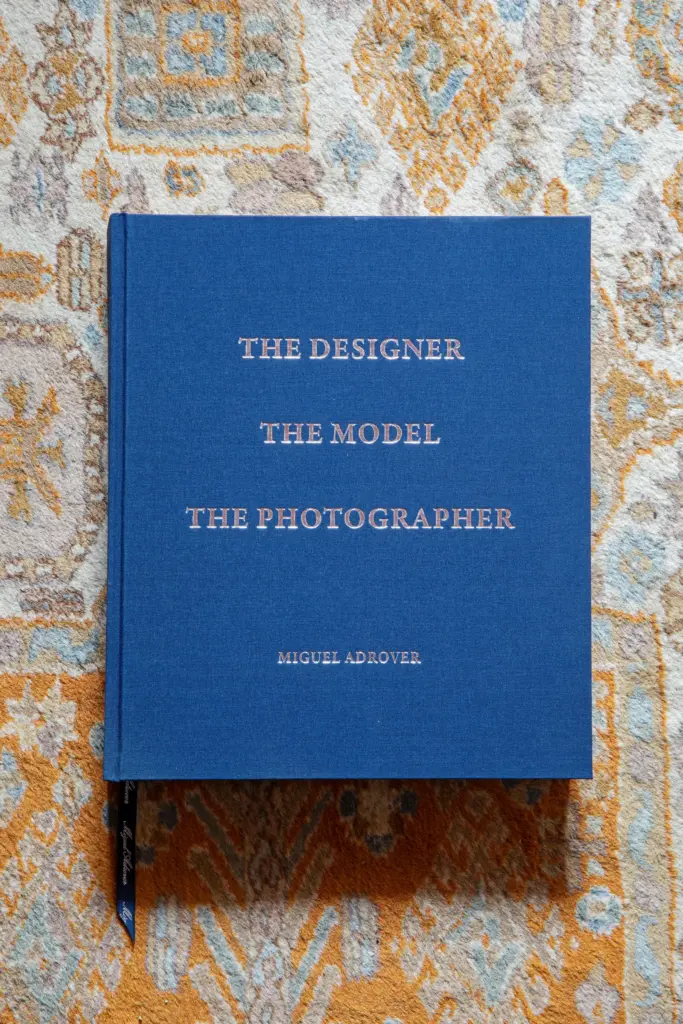
There is always a good reason to return to Miguel Adrover, but the one that puts him in the spotlight right now is supreme: a glossy monolith with which he rebuilds and claims himself and his work. Miguel Adrover, self-portraits. The designer. The photographer. The model, he has titled this self-published photographic volume, 432 pages conceived in the strictest creative autarky over the last seven years. No, it is not a book seeking friendly distribution in bookstores (1,500 numbered and signed copies, four kilos in weight, 300 euros, it was clear it wouldn’t be easy), it is a historic reckoning, a manifesto in which he claims intellectual property of his own iconography against those predators who have been plundering his archive for almost three decades without giving him credit.
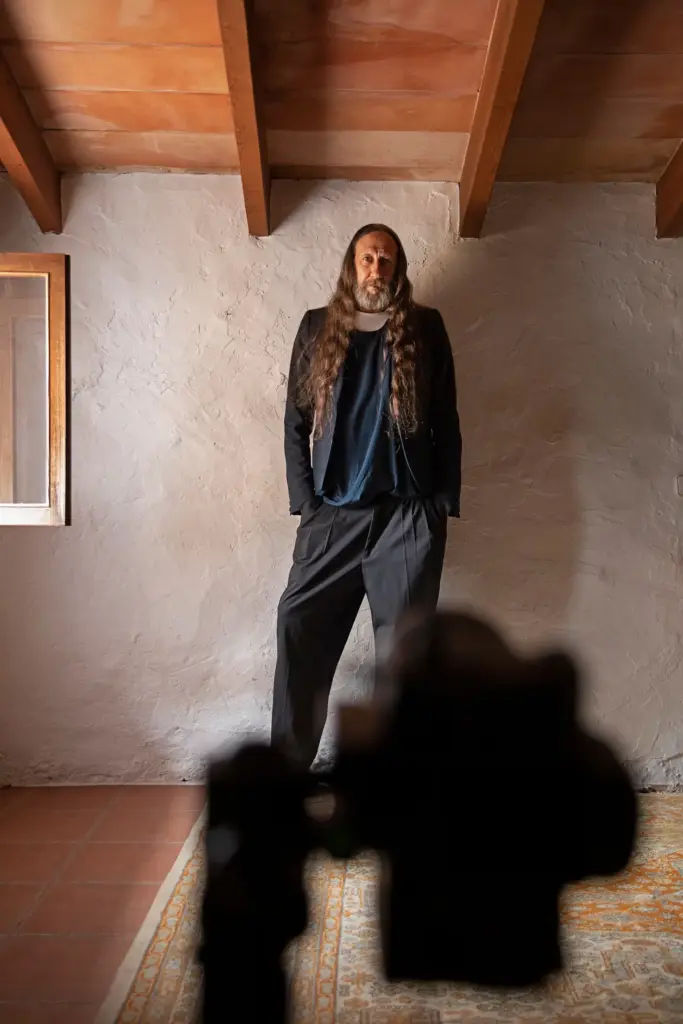
A perfect parable about the price of artistic sovereignty, here is a monograph born kamikaze-style, the savings of a lifetime invested in a project that almost led him to poverty. “It cost me 65,000 euros that I paid out of my own pocket,” he confesses. “It has been a devastating process that left me emotionally exhausted and physically destroyed. The concept is radical: 365 chronological self-portraits, one look from each of my collections photographed for each day of the year. I had to fit my body into women’s sizes 34 and 36 of the garments from my shows, learn to pose hiding my sexagenarian anatomy, dealing with pants that didn’t close on me… A calvary. And I did it all alone, going back and forth from the light to check it. I didn’t want assistants contaminating the energy of the space,” he explains about the process.
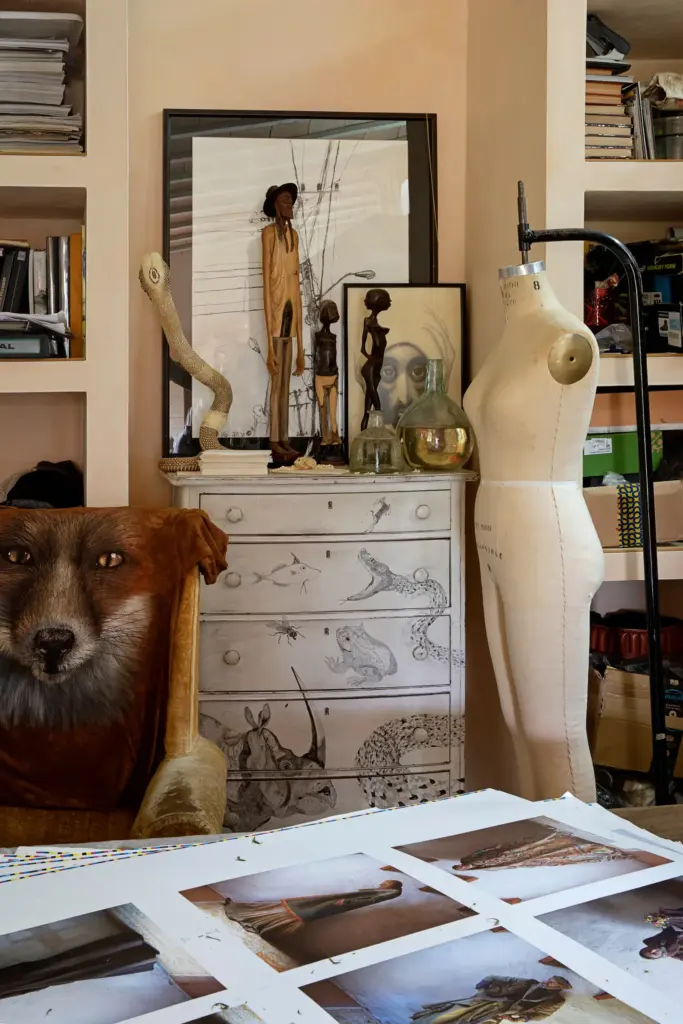
Regarding the reasons that led him to empty himself inside while dressing outside, there is no loss. “It is my legacy,” he states. And then he elaborates, sharpening the knife: “Everything is dated and meticulously documented. Anyone can check what I did and when. I see too many things on the runways that I already proposed. Most young people don’t know me, and there are recent designers exalted by capitalism, like the one who was at Balenciaga [Demna] and many others, who have limited themselves to replicating my ideas. For me, it was crucial that people saw that I did that, and above all, why I did it. I never worked trends. I never created fashion to please glamour.”
To understand the magnitude of Adrover’s reach, it is necessary to descend into the common grave of the clothing business in the late nineties, when New York was a hotbed of aseptic minimalism and yuppie opulence. In that scenario, a self-taught Mallorcan, emigrated for love, who had scrubbed floors in the Lower East Side and fought in the belligerent ranks of activism during the most devastating years of the AIDS crisis, decided that clothes should not serve to beautify the rich, but to dismember their privileges. That debut with the Manaus-Chiapas-NYC collection, in 1999, thus walked the wild side of deconstruction/destruction: luxury bags cut open to serve as miniskirts, status symbols worn inside out airing their linings, the leather of New York taxi seats as fabric, and a bastard mix of traditional tailoring and urban waste. Adrover did not design, he performed social autopsies. “I feel more like an anthropologist than a designer,” he reflects. “What I tried was to decipher the seams of society, highlight the everyday and bring it to the divine. My life stance has always been the reverse of what is understood as elegance,” says the creator who said no to Anna Wintour, according to the legend embroidered on one of the caps he has put up for sale to help cover the costs of the book edition.
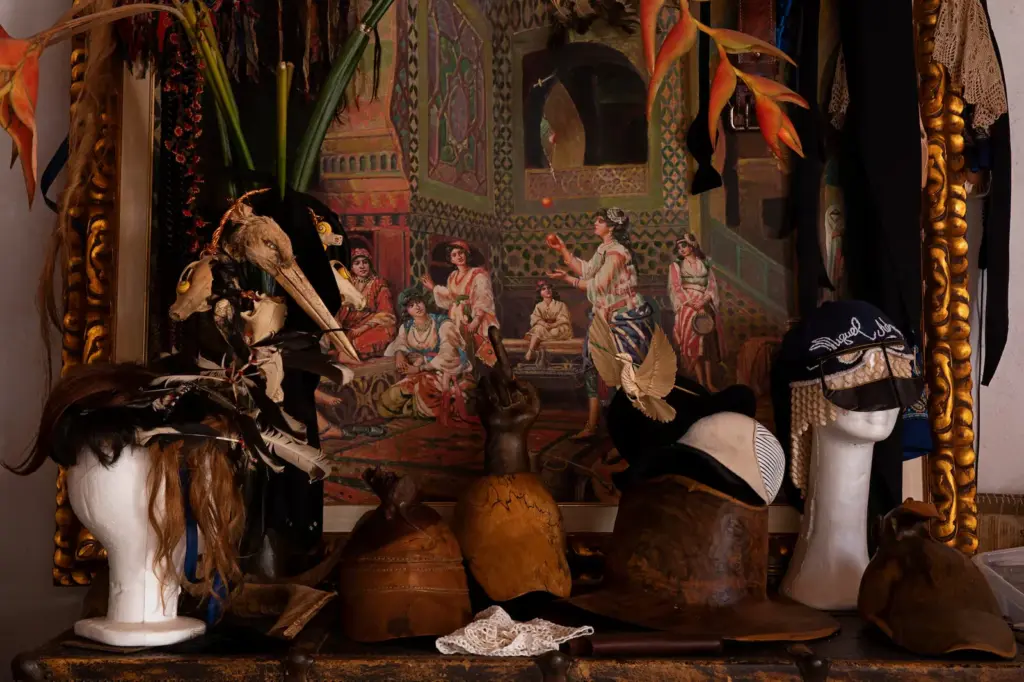
Such mythology still operates as a magnetic force that unsettles equally in editorial offices and in multinational luxury boardrooms. Almost 30 years have passed since his first presentations in Manhattan, and Miguel Adrover’s name remains the worst-kept secret of creative directors seeking credibility. “I think it is very relevant that, isolated here in the countryside, I still retain this drawing power,” he states.
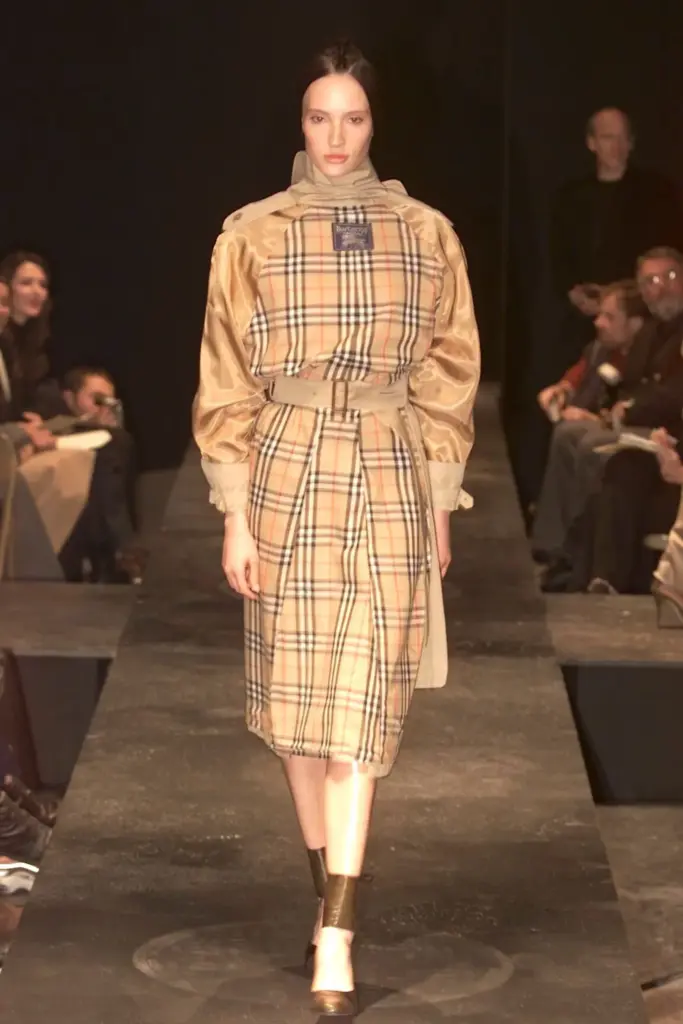
Curious: he, with a career illuminated by barely a dozen shows, has the same impact as a creator who today needs to present between four and six collections annually. “Current fashion does not interest me at all,” he shoots without blinking: “This obsession with pure aesthetics seems to me a social disease. Frivolous behaviors have been normalized that amaze me, all these influencers who decipher the shows on social media, what a waste of energy spent exclusively on appearance. Watching red carpets is like watching a competition of hens showing off their feathers. And there is nothing more ordinary and disgusting than going somewhere and the first thing some idiot asks you is: ‘Oh, what are you wearing?’. What do you care, asshole? Behind all that noise, there is only empty aesthetics. Zero discourse. Zero risk.”
Read more Marc Márquez is crowned at the German GP to go on vacation on the doorstep of the MotoGP leadership
His analysis becomes even more painful when he points to the labor structure of conglomerates and the role of schools: “There are no designers left in the strict sense; what there are are creator-servants.” And he adds emphatically: “Their job is to be docile to get placed in brands of multinational companies whose founders died decades ago. They feed on corpses. In schools like [London’s] Central Saint Martins, students are educated to become the new Gallianos of the system. They are centers designed to spit out corporate servants.” And he does not hesitate to name names on the cultural criticism gallows: “All these people with indisputable talent, like Blazy, Anderson, or Demna, should be raising their own brands, expressing their present, and not be forced to relive a brand whose creator has been underground for half a century. Today our problems are radically different, they are geopolitical and climatic, and fashion is not helping anyone. On the contrary, it is committing suicide from within due to its disconnection from reality. It lives in such an opulent bubble that, when a real historic crisis occurs, it remains silent, irrelevant.”
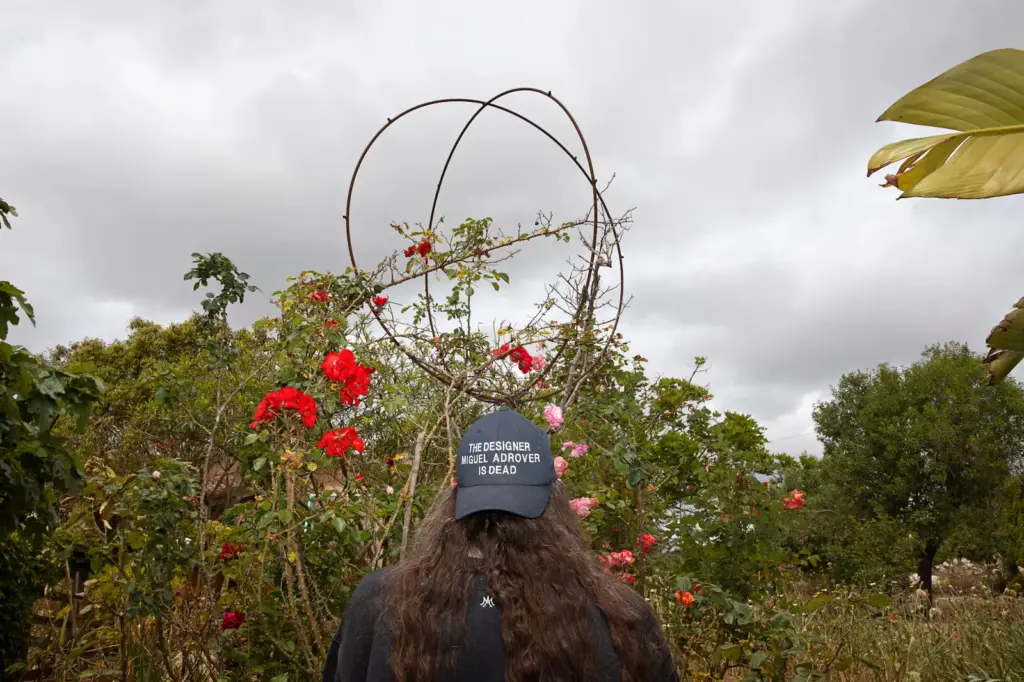
Be careful not to interpret the political depth of the designer (if he can still be considered as such, since he himself killed him in that post on Instagram in 2018 that proclaimed “Miguel Adrover the designer is dead”) as a maneuver to gain more likes. His stance is a direct inheritance of those years of radical militancy in New York in the late eighties, when the corpses of his friends piled up due to government inaction against HIV. His current fixation on systematically denouncing the military occupation of Palestine and the genocide in Gaza now raises blisters in a sector that prefers the commercial neutrality of the showcase. “I was a member of Act Up [the international organization founded in 1987 to fight the HIV pandemic under the slogan Silence=Death], that’s why I have always conceived the queer movement and activism in a much more political-intellectual and combative way than the frivolity of these days,” he explains. “It seems that all our struggle has only served for new generations to paint their nails and make makeup tutorials on TikTok. I cannot remain silent in the face of injustices. I spend my days reading reports from independent correspondents; I know exactly the horror of Gaza and the West Bank. It is not an isolated civil war like Sudan’s, it is a televised ethnic cleansing financed by European and US governments. Zionism controls the major narratives through cinema, media, and fashion groups. And watch out, I am not talking about the Jewish community or religion; I am referring to the criminal actions of a militarized state,” he continues heatedly.
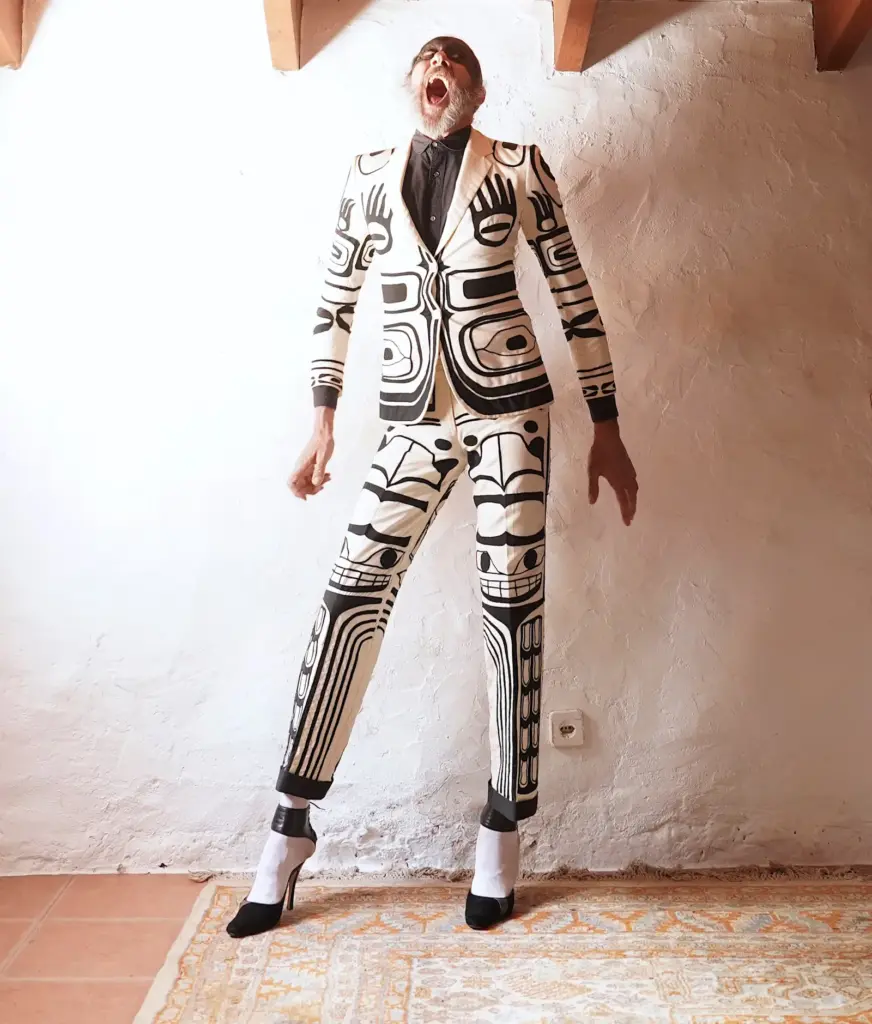
His belligerence has cost him a flood of reprisals, not only in the digital environment. “I have been banned from entering Germany and I have hundreds of death threats signed by Zionist sectors and accounts linked to Mossad,” he confesses without his voice trembling. “They send me private messages with a tremendous level of aggression because I am one of the few names in fashion with some weight who dares to point out the genocide without filters. But fear disgusts me, fear is for cowards.” That moral imperative triggered one of the most talked-about episodes in the last year: his refusal to lend Rosalía one of his archive garments to wear on the Lux tour. “It was nothing personal,” Adrover explains with total transparency: “Her team asked me for a dress and I had already left comments about it on her Instagram before that happened… I imagine she didn’t even read them. I told her: ‘With these colossal follower platforms that big stars have, how can you keep complicit silence in the face of such a massacre?’. I saw the political opportunity to publicly express my rejection to stir consciences. Then critics and hipsters came out to call me an idiot, that I had wasted a golden opportunity to promote the documentary premiere they made about me. What a miserable reading! I did it for ethical principles and I would do it again.”
Since his public mockery of Kanye West almost a decade ago, tension with celebrity has settled into the creator’s daily life. “I’m not going to become a pop puppet. And look, they have offered me,” he concedes. Indeed, it could have been for money, but no. Adrover’s financial trajectory is another parable about the servitudes of aesthetic capitalism. After the collapse of the group that financed him, Pegasus, partly a consequence of the 9/11 attacks, the Mallorcan went through various stages of resistance. His signing as creative director of the German ethical fashion brand Hessnatur, an eight-year idyll, was one of the most lucrative. “They called me because I was the only recognized designer with real ecological awareness,” he recounts. “I was perfect for them to clean their image. I must say I enjoyed it because I love the process of making clothes. At that time, I was negotiating simultaneously with them and Tommy Hilfiger. They paid me damn well: 40,000 euros a month.” The contrast with his current reality is devastating and portrays the monastic asceticism he has settled into: “I live on barely 800 euros a month. Six years ago, the island’s administrative authorities took away the vacation rental license I had for the upper floor of my house. I am in a very precarious situation, but I am the absolute owner of my time.”
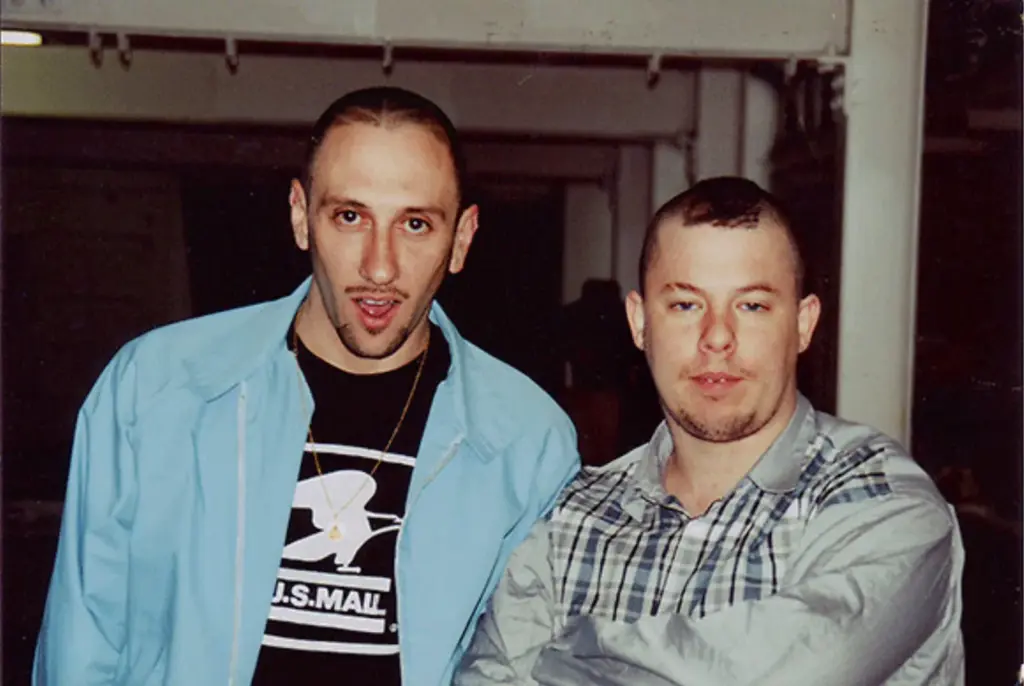
The frontal rejection of commercial alliances that, he says, do not suit him, has much to do with such precariousness. “They have offered me the creative direction of a lot of brands, Donna Karan, Moschino… Even Mango contacted me to make capsule collections. But I am not a marketing product,” he assures, before qualifying: “It has been said about me that I returned to the underground, that I didn’t quite succeed on a large scale like Alexander McQueen. But the cost of my friend Lee for staying inside that golden cage was much higher: he took his own life. Commercial success demands speed, performance, and constant sacrifice that ends up devouring your insides. When I talk about this, I always say the same thing: ‘Hey, yes, I am here isolated doing my things in Mallorca, I am not at the top of New York, but my friend died, you know?’. That is the highest price one can pay, their life. I chose to survive.” What he certainly did not choose was the portrait that filmmaker Gonzalo Hergueta made of him in The Designer Is Dead, the documentary by Little Spain (a production company linked to C. Tangana) that brought him back to the media spotlight last year. “I didn’t even go to the premiere, here at a Mallorca festival,” he confesses annoyed. “I saw the first cut and didn’t recognize myself. I feel they built a melancholic character based on how they wanted to see me for show, but that dark hermit is not me. And they completely omitted all my political and social activism. I made the mistake of giving them intimate video material and they used it to create a purely aesthetic and commercial product. I am very naive about these things; I no longer have a press department to take care of my contracts. I didn’t even know who the hell C. Tangana was! I didn’t want to be part of that mess, so I disconnected. I am clear that I will never authorize a documentary about my life again.”
When asked if the absence from the physical fashion circuit diminishes the impact of his discourse, he responds forcefully: “In times of obscene overexposure, it is more relevant and political not to be present. In this saturation scenario, where everyone is desperate to be seen, the true act of resistance is voluntary disappearance. Staying on the sidelines gives you an intellectual relevance that commercial presence immediately destroys. If you are stuck there in the middle all day, you end up devoured by the system.” Just looking into Miguel Adrover’s eyes makes it evident that he has not surrendered, he has only chosen a plane of artistic existence alien to the market farce. “I see myself more as an 18th-century artist than a 21st-century creator,” he concludes with a smile: “I no longer execute my work thinking about applause, I do it out of pure biological and spiritual necessity. I can freeze a photographic project today and resume it next year because the countryside light has changed or because my internal energy is different. I have done whatever the hell I wanted with my life, my career, and my body. And that is a colossal triumph because I don’t have to answer to anyone. I am free. I owe no explanations to anyone on this planet. If anything, to my parents.”