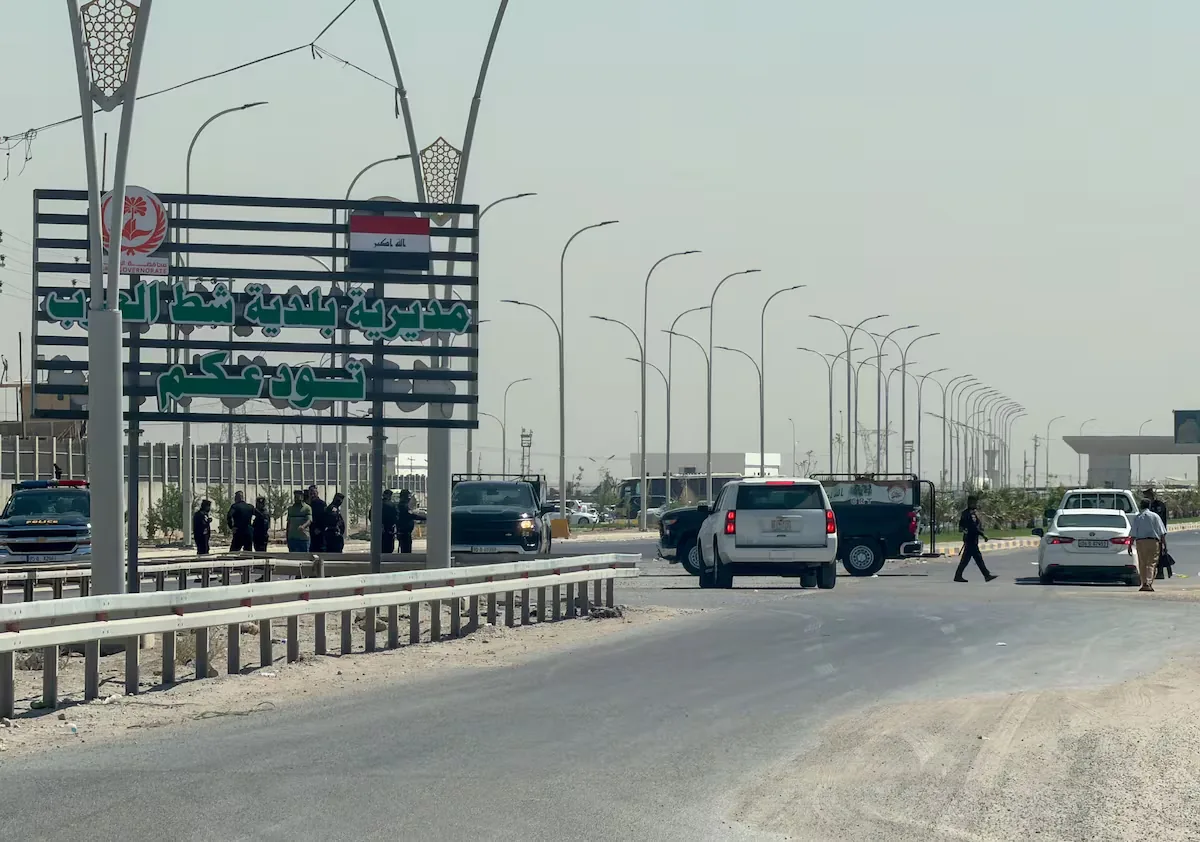









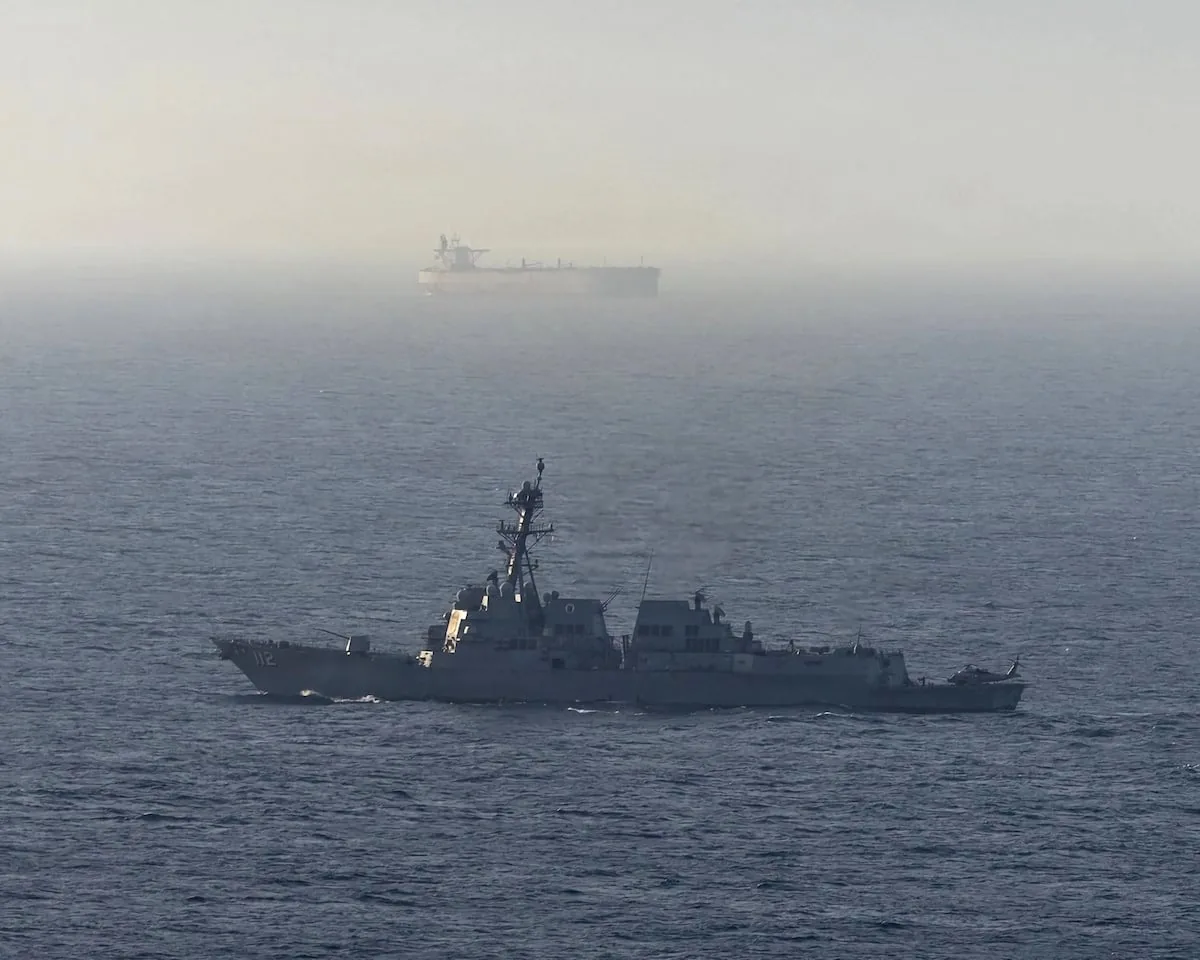
More than 800 ships and their crews remain trapped in the Persian Gulf due to the blockade established by Iran in the Strait of Hormuz, its only maritime communication route with the rest of the world. The Freedom Project Operation announced by U.S. President Donald Trump is aimed at these ships and involves the U.S. Navy “guiding” the vessels “to safety,” an initiative that has been harshly criticized by Iran and is viewed with suspicion by the shipping industry.
Read more Six armed guards were guarding the ship’s drug with the giant cocaine stash
According to data from the tracking company Marinetraffic shared with EL PAÍS, there are currently 805 ships in the Persian Gulf, of which just over half are cargo ships, bulk carriers, and container ships, 265 are crude oil and derivatives tankers, and 45 are gas carriers. These 805 ships are those that, in the last 24 hours, had used the Automatic Identification System (AIS) to report their position. However, maritime intelligence firm Windward adds at least another hundred ships that do not use the AIS system, a tactic prohibited by navigation regulations but increasingly used to evade blockades and sanctions.
Although the trapped ships represent dozens of countries, many fly flags of convenience such as Panama, the Marshall Islands, Liberia, or Comoros, although there are also ships from coastal states like Iran (109) and the United Arab Emirates (89). Of these two countries, around 40% of the ships keep their AIS turned off to avoid detection and evade blockades.
Thousands of workers have been trapped on these ships since the beginning of the conflict. The International Maritime Organization (IMO) estimates that about 20,000 sailors are suffering from the closure of the strait and the inability to continue their operations, under increasingly harsh circumstances.
The tankers and cargo ships that, with their international routes, supply the world’s ports usually carry food and drinking water for a maximum of five or six weeks, depending on the planned voyage, but the Hormuz blockade has already exceeded two months. Therefore, it is necessary to bring provisions from the mainland — most ships are anchored several miles from the coast — which requires mobilizing the various layers of hiring involved in navigation, who do not always act transparently.
“Requests for help do not stop,” explains Mohamed Arrachedi, coordinator for the Arab world and Iran of the International Transport Workers’ Federation (ITF). The representative of this union says they have already received more than 2,000 requests and are working on several abandonment cases, in which the shipping company neglects the vessel and stops paying the crew’s wages. These cases require IMO intervention, but their resolution takes time, with the consequent psychological and economic cost for the sailors, especially in a situation like the current one where they cannot supply themselves.
For this reason, requests for sailor repatriation have skyrocketed. At the end of April, the Indian government — nationality of a significant part of the crews, along with Filipinos — announced that since the start of the crisis, it has repatriated 2,680 sailors.
Read more The first electoral debate in Andalusia | The five main candidates face off
The risks of the strait
Despite Trump’s plan announcement, the shipping sector is not convinced. “It is not easy to implement,” a maritime intelligence source told EL PAÍS, preferring not to be named. Navigating a partially mined strait, under the risk of attacks, interceptions, or boardings either by the Revolutionary Guard Navy or the U.S. Navy, which maintains its own blockade in the Gulf of Oman, aboard a vessel costing between 70 and 100 million euros, carrying an equally costly cargo, requires careful risk calculation by shipping companies and vessel crews.
Nevertheless, some have dared. According to combined data from ship tracking and maritime intelligence companies, about 500 ships have entered or left the Persian Gulf since the start of the war, although most have done so through the corridor designated by the Iranian Revolutionary Guard, north of the one used internationally before the war. “Any movement of civilian and commercial ships that complies with the transit protocols issued by the Revolutionary Guard Navy and is carried out through the specified route will be safe,” announced the military body of the Islamic Republic in a statement published by the Fars agency, which also warns that ships using other routes “will face serious risks.”
On the other hand, U.S. authorities have urged using the southern route of the strait, through Omani waters, which is supposedly mined by Iran. “In the last twelve hours, we have contacted dozens of ships and shipping companies to encourage transit through the strait,” said Admiral Brad Cooper, head of the U.S. Central Command. On Sunday, two Indian cargo ships used this route with AIS turned off to avoid detection, according to Windward.
Jakob Larsen, head of security at BIMCO (the world’s largest shipowners’ organization), criticizes the lack of formal details or concrete guidelines on the implementation of Trump’s Freedom Project Operation. “Without Iran’s consent to allow the safe transit of commercial ships through the Strait of Hormuz, it is unclear whether the Iranian threat to ships can be reduced or eliminated,” he argues in a comment sent by email.
The risk is there. About thirty commercial ships have been attacked since the start of the U.S. and Israel war against Iran, both in the Persian Gulf and Hormuz, causing the death of at least ten sailors. This Monday, a tanker from Abu Dhabi’s oil company ADNOC was attacked with drones while trying to navigate the dangerous strait, an incident for which Emirati authorities and other regional governments have accused Iran. The South Korean cargo ship HNM Namu also suffered an explosion while anchored at the western exit of Hormuz, which Seoul authorities have said they are investigating. Security company Vanguard Tech attributes it either to a naval drone or a drifting naval mine.
“We have written instructions from our company not to cross through Hormuz,” explained Raman Kapoor, captain of a tanker interviewed by Al Jazeera: “No one wants to be a hero until it is officially declared by different maritime authorities that it is a safe passage and we have confirmation that naval mines have been removed. That will take time.”
Read more Sheinbaum gives the green light to an ambitious plan to boost mixed and private investments