The Ceuta crisis has become a tangle in which the Government, far from seeing the light at the end of the tunnel a month and a half after the border jump, gets more entangled every day. The declassification of documents with which the Executive hoped to regain the initiative and demonstrate that it was not warned of the threat to territorial integrity in which some 80,000 irregular immigrants burst into the city from Morocco, has ended up unleashing an open war in the Delegation that goes far beyond the political repercussions. The officials involved in managing the crisis are very aware of the judicial case opened in the National Court.
Read more The derailment of a train in French Normandy causes 44 injuries
The resignation of Gonzalo Sanz as chief of staff to the delegate, Miguel Ángel Pérez Triano, triggered a new fire for La Moncloa. The Government found itself caught in a new clash of versions, just when it had resolved the differences over the prior warnings that strained the relationship between Margarita Robles and Fernando Grande-Marlaska until this week. The chief of staff, the first public official to pay for the crisis, resigned but without assuming the thesis held by La Moncloa and the Government delegate, that is, that he did not inform his superior or anyone else of the information communicated to him by a CNI agent on July 29, the eve of the start of the crisis, about the call on social networks “for assault by fence and sea” in Ceuta. The delegate accuses him instead of not having transmitted that information to him.
The delegate’s refusal, who according to his circle does not contemplate resigning, and that of his former chief of staff to acknowledge that only he knew such sensitive information and did not give it relevance responds, according to various sources consulted from the Delegation and the PSOE of Ceuta, to the possible responsibilities in the investigation opened by Judge María Tardón about the massive irregular entry of migrants into the city. The magistrate of the National Court sees signs of “an allegedly criminal conduct committed abroad that has seriously attacked the territorial integrity of Spain.”
The contradictions between the delegate and his former trusted man are the latest episode of a crisis that has sown confusion in the PSOE, where they fear the impact of the management on the general elections, without a date but which more and more socialist leaders see at the beginning of 2027, before the municipal and regional elections in May.
The latest chapter of a crisis in which the Government cannot find a way out was triggered by the letter in which Sanz communicated his resignation, which the delegate had asked for on Thursday. The chief of staff justified his resignation in a letter to the General Secretariat of the Delegation “due to the evident incompatibility between my statement that the written messaging information transmitted by the CNI on July 29 was transmitted by me to the delegate himself that same day and the various statements of the delegate in different media in which he claims not to have received information from me.” Sanz was chief of staff for the last four years with the two previous Government delegates, Cristina Pérez and Rafael García, and Pérez Triana kept him in the position when he was appointed in February.
The declassified information indicates that the Spanish intelligence services agent conveyed on July 29 to the chief of staff how the existence of social network groups spreading a call to jump the Ceuta border fence had been detected. “On social networks there is a call for assault by fence and sea tomorrow at 8 pm,” reads one of those WhatsApp messages from the CNI agent at 13:52. “We have information of an attempt of entries by swimming and fence jumping for tomorrow, the day of the Throne Festival,” added the CNI member. “There are two different groups with a total of 180,000 followers. To give you an idea of the reach of the dissemination (sic),” he shared next. “Sus rilas [Ceutan expression meaning the mother who gave birth to me],” replied the chief of staff.
The communication between both resumed at 21:34, with an 11-minute call whose existence and content the Government delegate also says he was unaware of. The Delegation insisted that Triana “had no knowledge, before July 30, neither of the content of the WhatsApp message exchanged between the chief of staff and a CNI member, nor of the existence or content of the phone call held between them.”
Read more Álvaro Cueva on the audiovisual industry: “Mexicans are ashamed of our culture”
Juan Jesús Vivas, the president of Ceuta for 25 years, took advantage of the opportunity offered by the latest disagreement in the Government. The PP baron, who stated in a press conference that La Moncloa asked him “not to call anymore” after days warning about the migratory crisis, considered it “unlikely” that Sanz did not inform Pérez Triano. His conclusion is that the clash of versions “puts the Executive in a bad light” in any case.
“What Ceuta is suffering does not deserve one to be saying I was there, I didn’t find out, no one told me. Two people who, until yesterday, had a close relationship of trust, suddenly, the next day, contradict each other. And if I saw you, I don’t remember. Every man for himself,” Vivas added. The longest-serving regional president in Spain linked the different versions to the judicial case. “I believe this justifies why we have appeared in the case that is being opened in the National Court. Because everyone there will have to go, I suppose, as a witness or as a defendant. To have to tell the truth. And for this to be clarified. It is the most serious thing that has happened in Ceuta since I have had use of reason,” he stressed.
Criticism of the Government also came from the PSOE. Melchor León, vice president of the Ceuta Assembly, assured that the Government delegate “was on the CNI call.” “He knew everything that was going to happen,” he claimed on La Sexta without providing any proof. The delegate’s circle denied it.
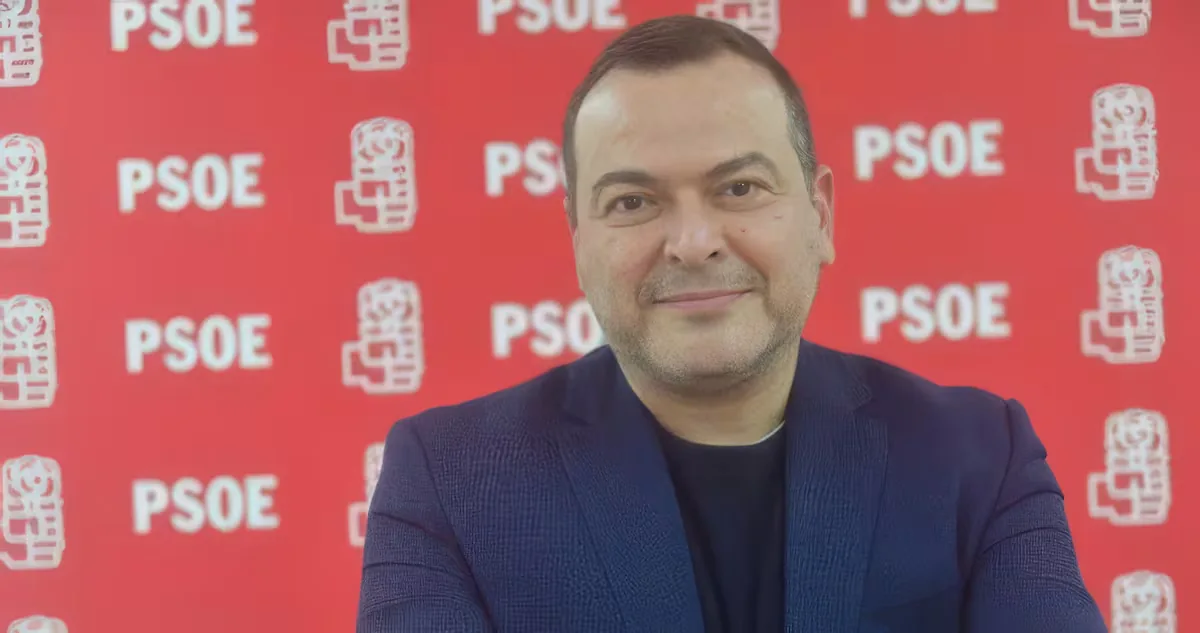
The crisis has also shattered the PSOE’s organic strategy in Ceuta. Pérez Triano has been the secretary general of the PSOE of Ceuta since March 2025 and was going to be the candidate in the next local elections, a scenario that none of the consulted leaders now see possible. The party proclaimed him candidate on July 23 without anyone else running. Six days later was the border jump. The protests of Ceutans against the Government’s management usually end up at the Delegation since then, where demonstrators demand the delegate’s resignation.
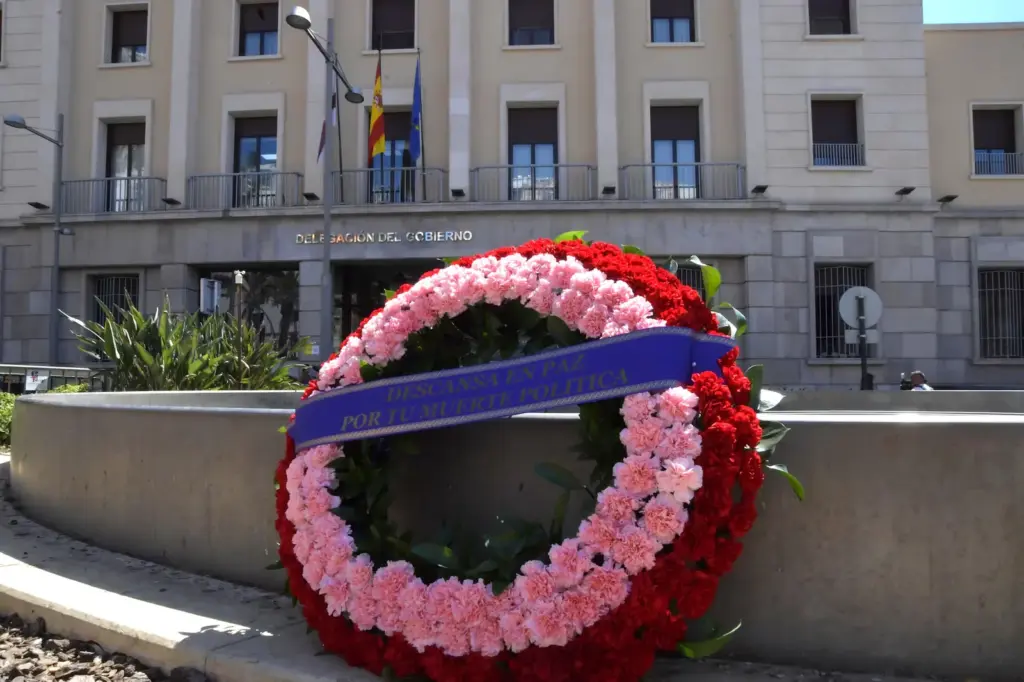
Pérez Triano’s circle acknowledges that he is not unaware of the enormous pressure from citizens who demand, as the highest representative of the Executive in the city, the return to normality in Ceuta. After being unanimously elected just over a year ago, after a caretaker committee that had included Melchor León and Gonzalo Sanz, his goal to “put an end to more than two and a half decades of PP government in the autonomous city” has no chances for any of the consulted socialist officials. Some demonstrators have even placed a wreath of flowers in front of the Diputación headquarters. The message is eloquent: “Rest in peace for your political death.”