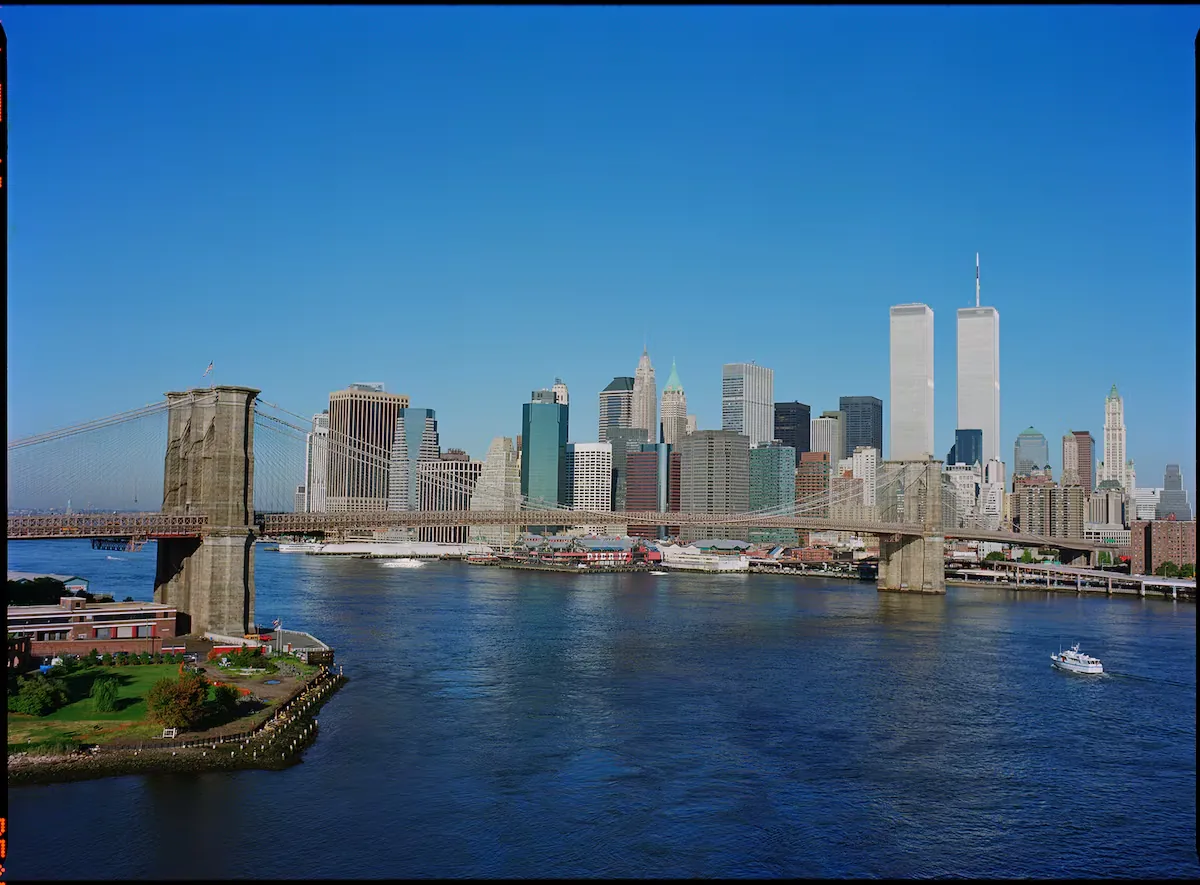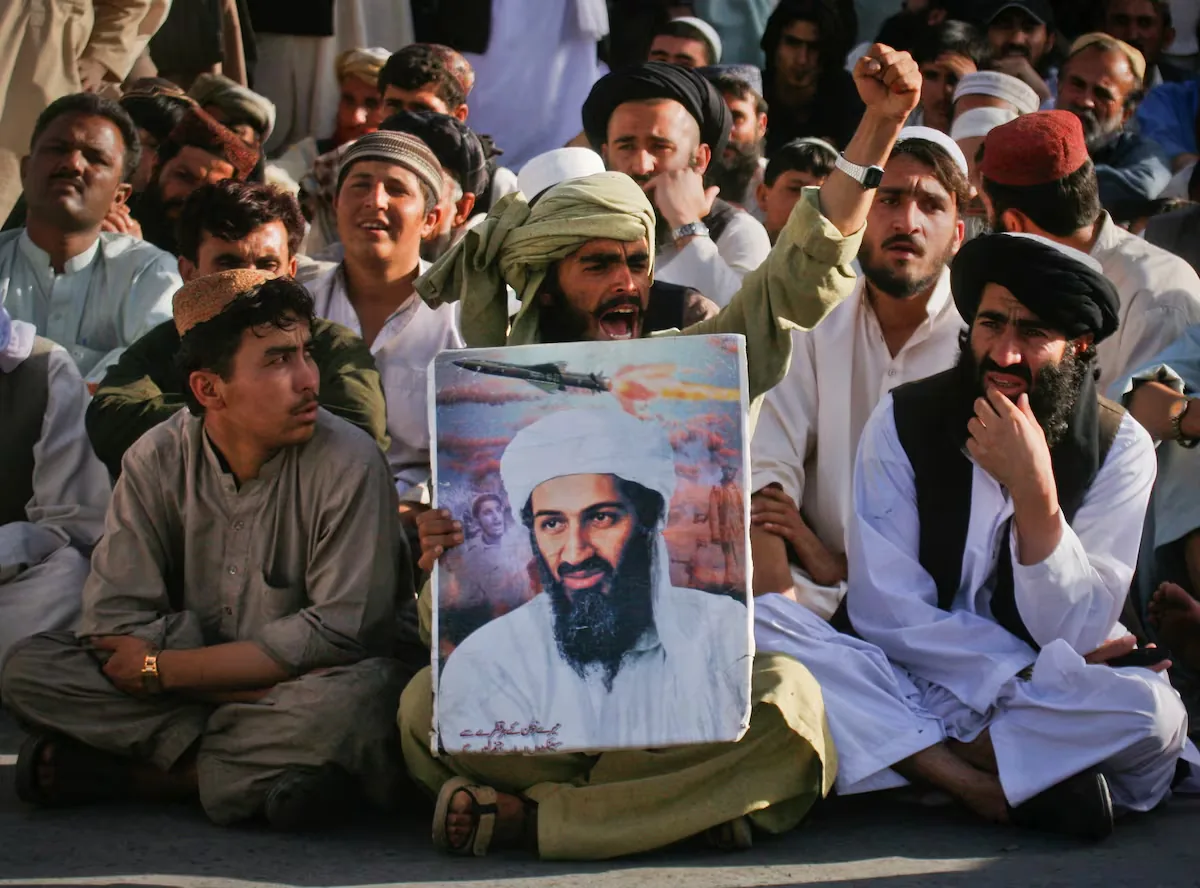
In addition to eliminating the terrorist leader Osama Bin Laden, the Navy Seals special forces secured a very valuable loot on May 2, 2011, during their operation in Abbottabad, in northeastern Pakistan: 6,000 pages linked to the Al Qaeda network, responsible for the attacks against the United States on 9/11, committed 25 years ago. The dossier included a handwritten letter signed by the veteran Libyan jihadist Atiyad Abd al Rahman, addressed to Bin Laden himself. The sender prayed, in July 2010, for the release of three terrorist commanders. At least one of them, Saif al Adel, was under house arrest in Iran. A former Egyptian military man with a long career in the war, Al Adel already held a prominent position in the organization. Little else has emerged about him, except that, after Bin Laden’s death — and 11 years later, of his successor, Ayman al Zawahiri — Al Adel is the chief. That is, from the shadows.
One of the few photographs of this terrorist dates back to 2012, with Bin Laden’s corpse already at the bottom of the sea. In the image, in the FBI archives, an individual identified as Al Adel appears wearing sunglasses, a gray t-shirt, and casual pants, sitting on the street with a rosary in hand. The photo was taken in Tehran, the Iranian capital. With a sparse beard and little hair, the subject appears to be just over 50 years old.
According to the few biographical data available about him, this Egyptian was born on April 11, 1960 or 1963. He is currently just over 60 years old, which means he was practically in his twenties when he jumped from the Egyptian special forces to the armed holy war against the Soviet army in Afghanistan. From there, he reached Al Qaeda training camps and the close circle of the wealthy Saudi Osama Bin Laden.
“He belongs to the old guard of Al Qaeda,” explains Danish terrorism expert Tore Hamming in an email. “From an operational point of view, it could be said that he is a more serious figure than Al Zawahiri ever was.” This, especially on the battlefield. Al Adel was always a respected military strategist among his own, although he did not have all of Bin Laden’s sympathies. In one of the letters recovered in Abbottabad, the Saudi expressed doubts about Al Adel’s political and strategic management. In another letter, Al Adel questioned Al Qaeda’s “recklessness” and its actions after 9/11, which triggered the war on terror declared by the United States. That is, anyone who stuck their head out could end up feet first.
Despite that lack of harmony, once the also Egyptian Al Zawahiri was eliminated in the summer of 2022, in a US drone attack on his residence in Kabul, there was no doubt that Al Adel would take over the leadership of the hydra. This is how he appears in the dozen intelligence reports published in the last four years by the group of experts monitoring Al Qaeda’s activities for the UN.
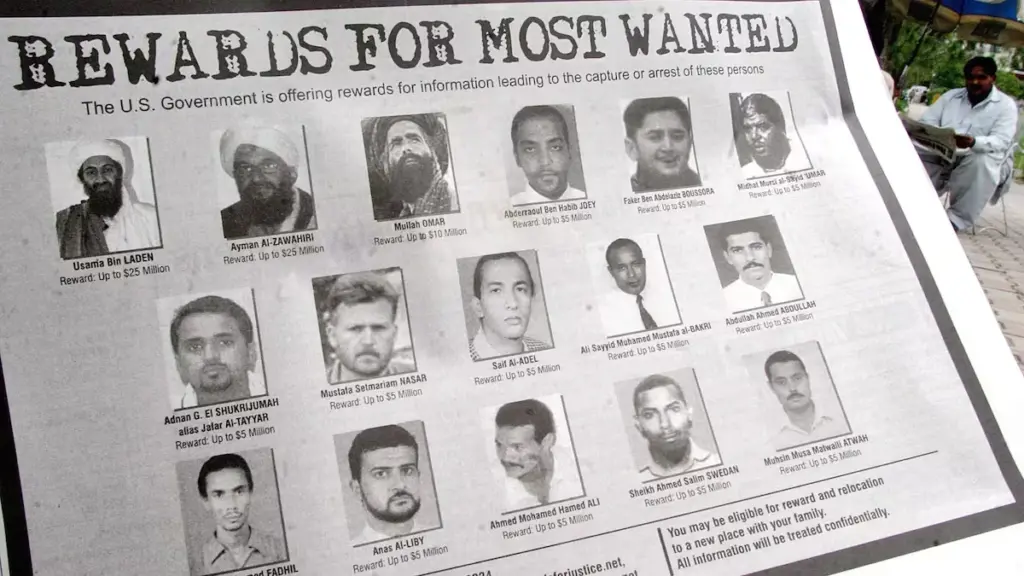
That is why the United States, which accuses Al Adel of the attacks on its embassies in Tanzania and Kenya in August 1998, offers a reward of 10 million dollars for information leading to his capture. In the charges against Al Adel, Washington even holds him responsible for training Somali fighters who in October 1993 killed 18 US soldiers in Mogadishu, the Somali capital, after downing two Black Hawk helicopters.
Ending the current head of Al Qaeda is, however, a difficult task when not even the Shura council of the terrorist network, its highest governing body, has admitted that the Egyptian is in command. Hamming explains three reasons why Al Adel operates in the shadows: first because he succeeds Al Zawahiri and the latter died while residing in Taliban-governed Kabul. The fundamentalist group, which tolerated his presence in the Afghan capital, never wanted to admit it.
Read more The derailment of a train in French Normandy causes 44 injuries
Secondly, Al Adel, at the head of a Sunni organization, resides in Iran, a majority Shia country, repudiated by jihadists, with which the network has maintained a special relationship for geographical reasons — the pressure from the US army led many to cross the border between the two countries in the first decade of the century — and operational reasons, having the same enemy in front: the United States. However, acknowledging that the top leader of Al Qaeda resides in Iran would give ammunition to the Islamic State, its rival in sowing terror, which since its creation criticized Al Qaeda’s lack of ambition in establishing an emirate in Afghanistan.
And the facts have given meaning to the belief that Al Adel remains sheltered in Iran, as noted in a message by Aaron Y. Zelin, a US analyst at The Washington Institute: “There is greater collaboration between [Al Qaeda and] the Houthis, who are allies of Iran, as well as a kind of ideological shift of the terrorist group after October 7, 2023, trying to capitalize on Hamas attacks.” The Palestinian armed militia also has Tehran’s support.
Security
Hamming provides a third factor explaining Al Adel’s reluctance to publicly assume the leadership of the network founded by Bin Laden: “The group’s former number two, Abu Muhammad al Masri, was assassinated in Tehran in 2020, and since then Israel has demonstrated the extent of its operational capacity inside Iran. For Al Adel, visibility is a risk.” This expert argues that Al Qaeda’s silence also shows that its leadership has become more of a kind of grand council and a brand rather than a military command.
According to intelligence information made public by Washington, Al Adel managed to leave house arrest around 2015, after an agreement between Al Qaeda and Tehran. The Egyptian jihadist gained total freedom in exchange for the release of an Iranian diplomat kidnapped by the Yemeni branch of the terrorist network. But he still does not show his face.
Along these lines, Tricia Bacon, a US expert and professor at American University, states in an email that Al Adel “lacks the title he needs to truly be the emir of Al Qaeda.” “A de facto leader is not a leader who can religiously bind Al Qaeda affiliates and vice versa,” continues the former US State Department counterterrorism analyst. “He cannot galvanize, recruit, or inspire in the way Al Qaeda needs to rebuild.” And this, according to Bacon, is mainly due to one reason: 25 years of successes in the fight against terrorism.
However, the UN expert group’s reports, addressed to the Security Council, while acknowledging the loss of weight of Al Qaeda Central in Afghanistan compared to the branches in North Africa and the Arabian Peninsula, do not lower the threat level of the network and Al Adel himself. In a report published in July 2024, they note that, based on intelligence from member countries, Al Adel had given instructions to activate cells in Iraq, Syria, Libya, and Europe. Six months later and in several texts signed with aliases, the Al Qaeda leader also encouraged attacks fueled by the war in Gaza. “Although his message did not seem to resonate,” one report says, “Al Qaeda’s ambition to carry out operations abroad remains high and could be increasing.” The threat persists.
Read more Álvaro Cueva on the audiovisual industry: “Mexicans are ashamed of our culture”