





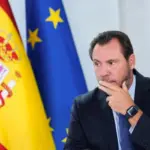




Vox has lost its great reference in Europe, which was Viktor Orbán. It is difficult to know how all this will influence the future of Santiago Abascal’s party, which even requested a loan from a Hungarian bank. Abascal is going through a politically strained moment: he suffers a slowdown in some polls — despite his recent growth — and his international associations increasingly generate suspicion. It is not so strange to suspect, at this point, what model of democracy the Spanish far-right really defends.
Precisely the Hungarian elections have allowed a better understanding of what Orbán represented for his citizens: for 16 years, the outgoing prime minister promoted an illiberal turn that clashed with Brussels’ standards. Vox may deny that it intends that paradigm for Spain, but it is no less true that it chose to join the Patriots group and surround itself with those allies because it wanted to. For this, it had to leave Giorgia Meloni’s group in the European Parliament: although the Italian leader is also against immigration, she applies a more pragmatic strategy within the institutions governed by Ursula von der Leyen. On the other hand, the winner of the Hungarian elections, the pro-European Péter Magyar, also seems not to propose reversing his predecessor’s migration policy, no matter how much Vox suggests that Hungary will henceforth become a country with an open bar for the arrival of foreigners.
Thus, the European Union is what Vox has been wanting to escape from for some time. They will say it is because the European Commission would force them to apply woke consensuses, or even because they seek national sovereignty outside any membership in international organizations or the so-called globalism — as Marine Le Pen also says in France. It is not entirely exclusive: as has been seen, there are other parties with similar programs that, on the contrary, have no problem with Brussels. The reality is that there is no ideal international context without spheres of influence: if one does not align with the European Union, the question is which other model it serves.
Interestingly, most of Vox’s allies are in favor of weakening the EU or what it symbolizes: a world based on rules, of democracies that pivot around the liberal order. It is not necessary to look far to observe the contrasts: whenever he can, U.S. Vice President J.D. Vance lashes out against Europe, knowing that MAGA, his social base, today feels closer to admiring regimes like Russia or China than to the tacit understanding that European countries and the U.S. forged after World War II. The Capitol assault is evidence of this. Vladimir Putin himself — close to Orbán — surely also looks with disdain at the Old Continent: unlike authoritarianism, our institutions are governed by changes in public opinion, dissuading our rulers from doing whatever they want at all times. Benjamin Netanyahu has become another controversial figure for Abascal due to his actions in Gaza or the Gulf, while Spaniards suffer the consequences of the current war.
Read more The blockade of Hormuz goes from bad (Iran) to worse (United States)
Consequently, the world is beginning to divide between those who believe in the international liberal order — and its rules — and those who see the law of the strongest as an achievement. This far exceeds the classic left-right axis and, paradoxically, it is progressivism that benefits the most from this context. President Pedro Sánchez has been able to read it: his defense of international law illustrates the dichotomy between the limits of the EU and the league in which other powers play. It is not just a legal matter. Pope Leo XIV has recently become — unintentionally — another moral beacon of European values as we once understood them; the proof is that even Meloni has come out in defense of the Supreme Pontiff, confronting President Trump — who has gone from admiring her to criticizing her. A part of old Europe does not intend to give up the values that shaped it, and Sánchez — strikingly — is using this in Spain to unite all progressivism under an anti-imperialism umbrella. It will not serve to take votes from the right, but it will erode the space to the left of the PSOE. If in 2014 it was Podemos who defended Spanish national sovereignty against the EU, today it is curiously that same EU that promotes it against other foreign powers.
All in all, it does not help the positioning of certain voices saying that Orbán’s defeat is not a success because Magyar left his party. Today there is a difference between more or less conservative rights and illiberal ones, where the biggest challenge for the former is to survive the questioning of the latter. To put it plainly: it benefits the left, the international order, democracy, and the rule of law more to assume that the Popular Party is not Orbán’s Fidesz than to deny it. The defeat of the former Hungarian prime minister has thus exposed Vox: although it plays domestic ambiguity, people will always tend to associate its values with those of the companies they frequent. It remains to be seen if, going forward, its average voter agrees with this.
Read more Faroe Islands: the wild Europe that resists mass tourism