

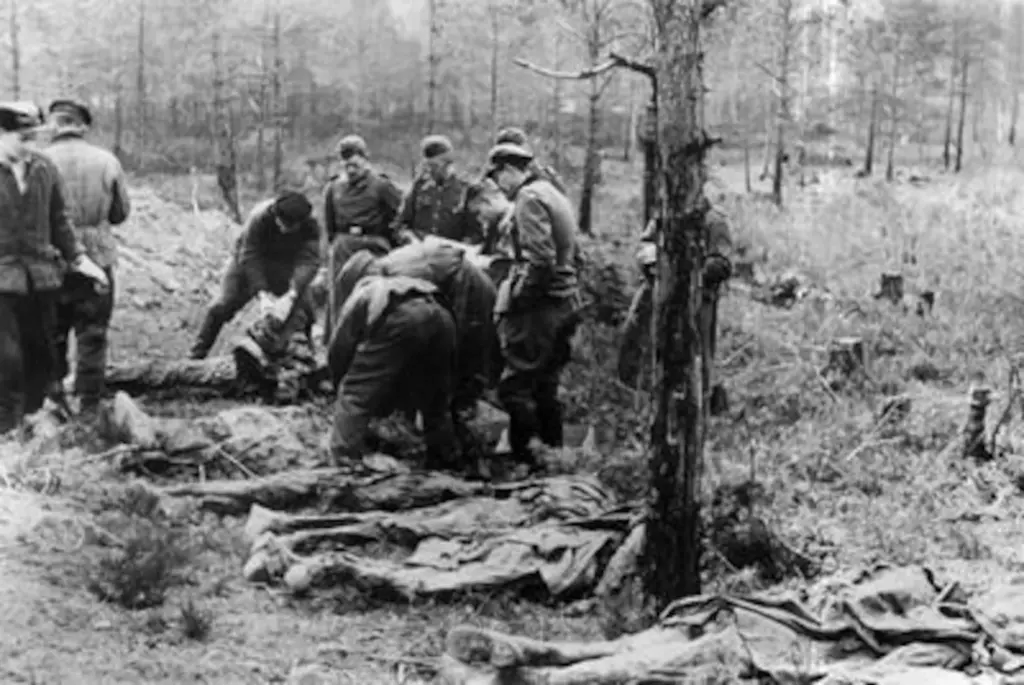
In the forests of the Russian town of Katyn, the mass graves where more than 4,000 Poles and more than 7,000 Soviet citizens were executed by Stalin’s regime stand out: the Poles, in one of the 1940 massacres with which the USSR eliminated around 22,000 military personnel and intellectuals who could oppose the occupation of the country after agreeing to its division with Hitler; the Soviets, victims of the Great Terror of 1937 and 1938, when the regime killed more than 700,000 of its own citizens — some studies point to about two million —. Today, eight decades later, Putin’s government has erected an exhibition next to these mass graves where it talks about “ten centuries of Polish Russophobia” and “Ukrainian Nazis.”
“We preserve the memory, in Europe they tear down Soviet monuments,” an employee of the complex that now stands on the site tells this newspaper. Just this week, in Tomsk, the Kremlin dismantled for the first time a monument to Soviet political repression. And in the exhibition about the supposed Polish Russophobia, not even the most important milestone between the two countries is mentioned: the Molotov-Ribbentrop pact with which the USSR and Nazi Germany divided Poland.
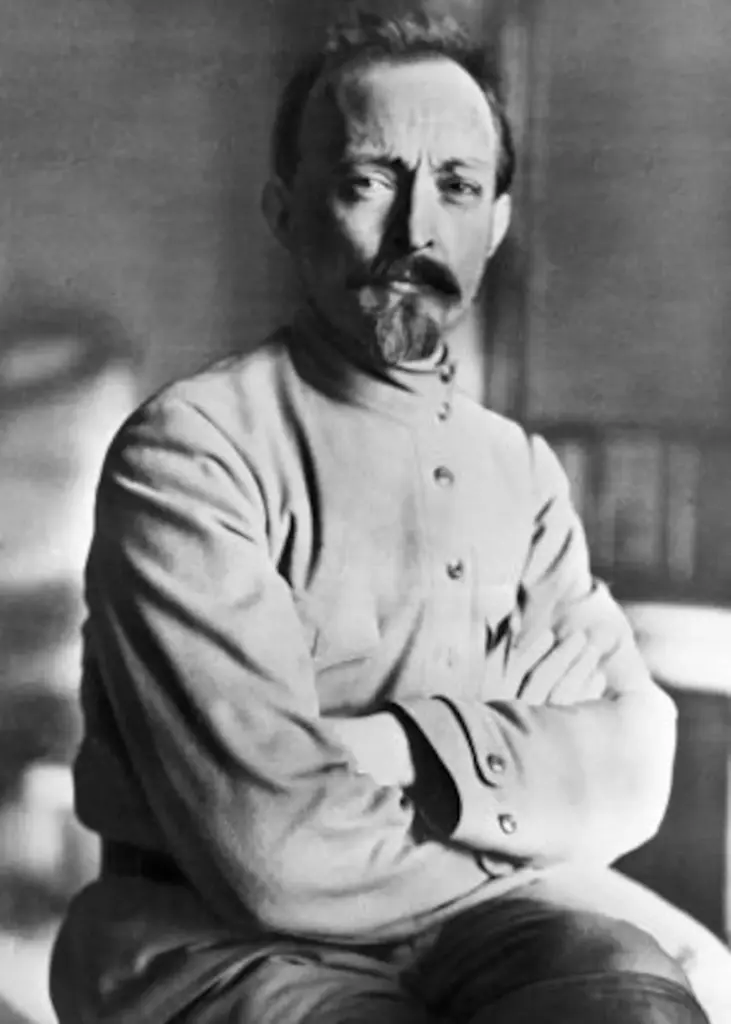
In the wonderful forests of Katyn, the NKVD had a barracks, the body responsible for the gulag, the network of Soviet concentration camps. This week Putin also renamed the Federal Security Service (FSB, successor to the KGB) academy in honor of Felix Dzerzhinsky, father of the Soviet secret police, the feared Cheka. Thousands of deaths bear his signature.
The goal of rewriting history is, from museums to school books, to make Russians believe that repression was, is, and will be necessary because the country is constantly threatened by the West. “For Russians, Poland has been a constant source of danger,” says the exhibition.
“We are always blamed,” laments Liudmila, an elderly woman visiting the exhibition with her partner who says she “knows the history well.” The exhibition posters tell the story of Kievan Rus in their own way and speak of Polish “conquests” and Russian “liberations,” including the puppet regime imposed on Poland after World War II. They also accuse Warsaw of signing a non-aggression pact with Berlin without mentioning the one it signed with Moscow in 1932. And they show a photo of former Polish president Andrzej Duda with Ukrainian Volodymyr Zelensky in which they define the Ukrainian government as a “neo-Nazi regime.”
This exhibition is just one example. There are more. Authorities closed the Moscow Gulag History Museum in 2024 and now announce it will reopen this year as a “museum of the genocide of the Soviet people.” All reference to Soviet internal repression, its millions of victims, and hundreds of concentration and labor camps will disappear to tell what other Russian museums already tell about the colossal massacre perpetrated by Nazism during the invasion of the USSR.
Another case. The Memorial foundation, the great association for the protection of Russian historical memory, investigated Soviet crimes for five decades. Its archives contain books with millions of names of victims. On April 9, Putin’s justice declared this organization “extremist.”
That same day, the police raided the newsroom of another symbol of Russia’s fleeting democracy, the newspaper Novaya Gazeta, and arrested an investigative reporter. This year marks 20 years since the murder of another well-known investigative journalist from this outlet, Anna Politkovskaya. The plaque that remembers her at the entrance to her home, where she was shot dead in 2006, has been torn down dozens of times in recent months without any consequences.
From Memorial, they suspect that the dismantling of historical memory starts from a common point: order 1564 of Prime Minister Mikhail Mishustin. That document, dated June 2024, completely rewrote the “concept of state policy for preserving the memory of victims of political repression.”
The order went unnoticed, although a well-known opposition politician, Boris Vishnevski, warned at the time about its content. “Under the new canons of state historical memory, Soviet repressions were not massive and the amnesties [by Soviet governments] for political prisoners freed people like the banderovtsi [term for supporters of the ultranationalist Stepan Bandera with which the Kremlin accuses Ukrainians of being fascists],” denounced the Yabloko party representative then.
“The wording of the order is so vague that it is not known who was responsible for the repression, who and how many were victims, and who were rehabilitated,” Vishnevski emphasized.
Read more Mexican economy: mixed signals
According to the Russian prime minister, 2025 and 2026 would serve to review the rehabilitation of victims, and 2027, 2028, and 2029 to act.
Each government action reveals, like an unearthed “fossil,” the true “dinosaur” of Russian society, this systematic state plan to rewrite the past and thus justify its repression and its war, says Alexander Cherkasov metaphorically from exile, president until its liquidation in 2021 of the Memorial Human Rights Center, one of the different branches of this historic organization.
The process toward the definitive criminalization of Memorial has been long. The Kremlin labeled Memorial as a “foreign agent” in 2013. This implied some draconian requirements, but it was able to continue operating. Almost a decade later, a couple of months before invading Ukraine, Russian justice took the obligations of this designation to the extreme, such as marking every comment on social media, to order the cessation of the association’s activities at the end of 2021. Some members of Memorial went into exile, others, like its co-founder Oleg Orlov, were imprisoned for protesting the war, and others stayed in Russia after leaving the organization.
Several former Memorial employees kept their archives in some of the organization’s former offices. However, Russian justice designated this association as an “undesirable organization” in February this year, which already implied administrative sanctions for displaying its symbols or having any relation with Memorial. And barely two months later, the Supreme Court has again labeled it as an “extremist organization” and any contact is now a punishable crime with imprisonment.
“Personally, I did not expect the move to this stage to happen so quickly,” Cherkasov admits by phone. “Since the approval of the foreign agents law, we have come a long way. What season of this series are we in today? Once we thought we could not surpass Belarus. Now I do not know if in the next seasons we will surpass Iran or China,” he adds.
Cherkasov warns that with this rewriting of history “the Kremlin tries to connect two narratives.” “One, the war between the Soviet Union and Nazi Germany; the other, the current war with Ukraine, which Russian propaganda presents as a war against all Europe, and which, according to Russian propagandists, is the heir of the Nazis.”
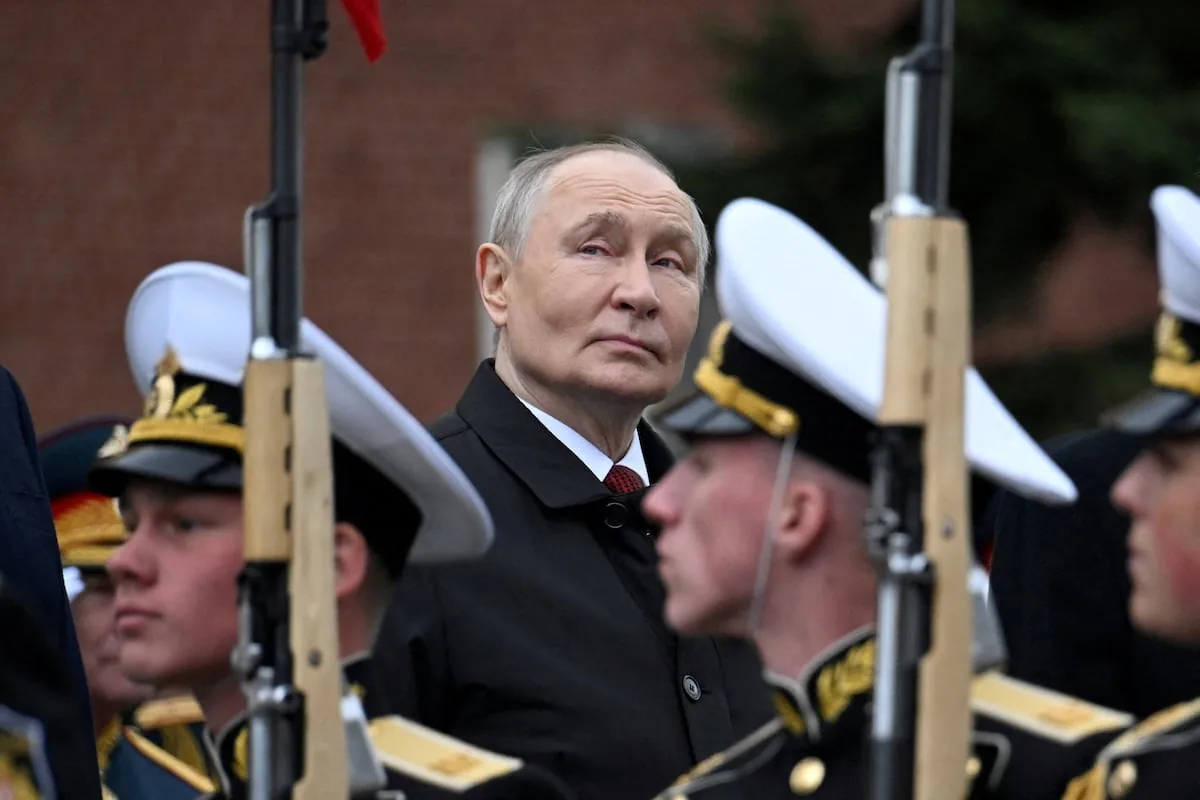
In 2024, in an interview with American polemicist Tucker Carlson, Putin directly blamed Poland for the Nazi invasion in 1939 and reproached it for not handing over the Danzig [Gdansk] corridor to Hitler. In the same interview, the Russian leader insisted on his theories that Ukraine has “a Nazi regime” and must give Russia what it considers its “historical territories.”
Katyn is a symbol of Russian thaw with Europe. Inside the enclosure, the museum founded in 2018 still stands, where the secret protocol of the Molotov-Ribbentrop pact for the Nazi and Soviet division of Poland is exhibited. Those agreements, like the Katyn massacre, were denied for decades by the Kremlin and only came to light in the 1980s thanks to Mikhail Gorbachev’s government.
However, today Putinism embraces the historical manipulation of the different Soviet regimes. Its propaganda maintained for decades that Germany was responsible for the murder of 22,000 Poles in 1940. And now, the FSB suddenly finds evidence to accuse Berlin while the president of the Russian State Duma, Vyacheslav Volodin, proposes to annul the pardon requested for that massacre and change in school books that the shootings carried out by the NKVD “were carried out by German fascists.”
Russians wonder when Putinism will remove the Solovetsky Stone, the monument that honors the millions of victims of the gulag in front of the FSB headquarters. A year ago, in 2025, the authorities erected a statue to its great executioner, Stalin, in the Moscow metro. And although the colossal repression of Stalinist totalitarianism seems impossible to repeat today, Putin has gone further than Khrushchev, Brezhnev, or Andropov by rehabilitating the vozhd [leader, in Russian] and reversing the rehabilitation of the victims. In Russian museums, there is no longer a warning about how the Great Terror came about. The verb to shoot is impersonal, like to snow.
Read more Jódar withstands a tough duel with Arnaldi and advances to the round of 16 in Rome