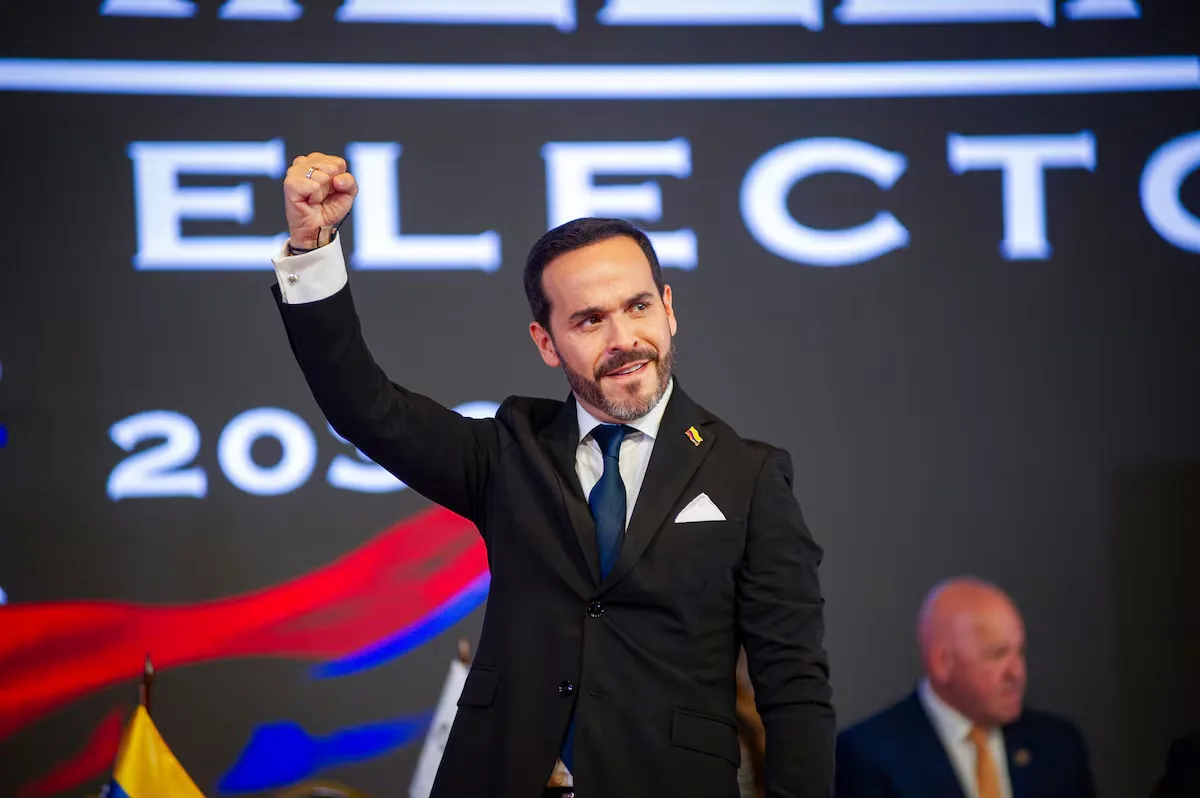


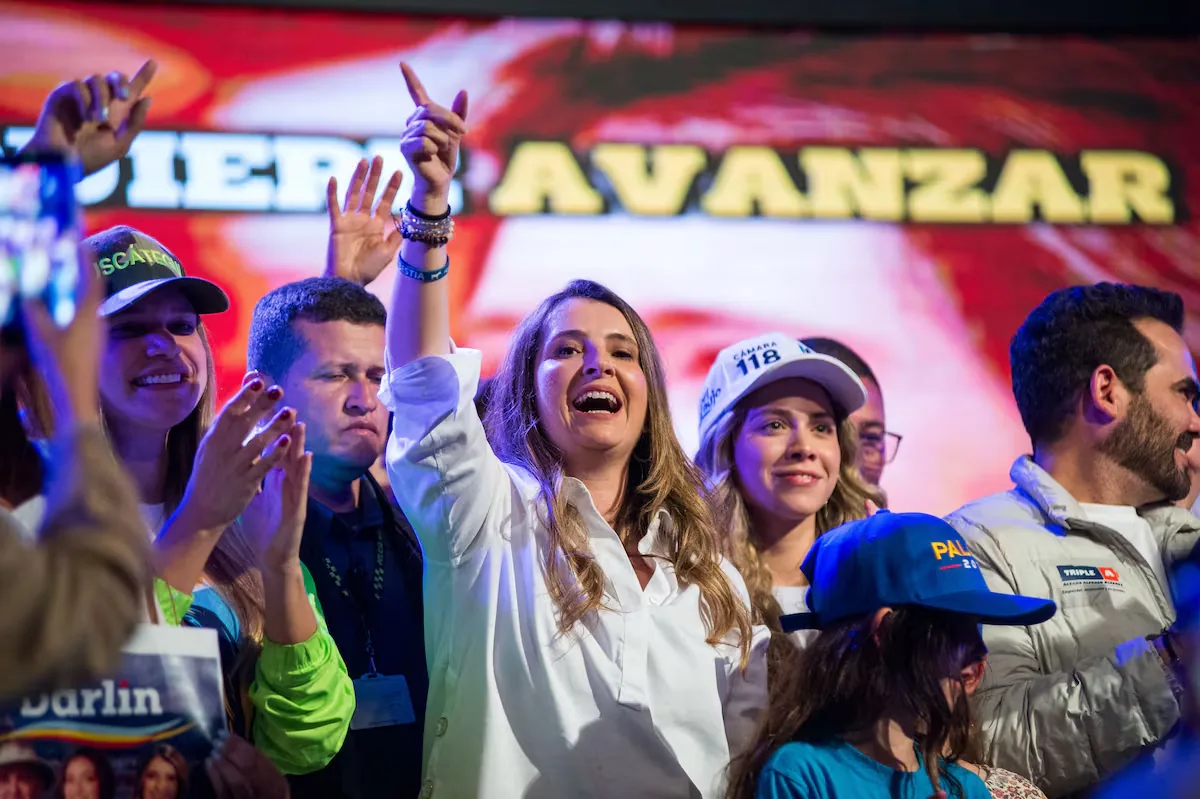
Of the three leading campaigns, Paloma Valencia’s has been, at the same time, the shortest and the one that has undergone the most changes. In its final stretch, the Uribista senator has decided to become the candidate who fights against the extremes, equating the speeches of the leftist Iván Cepeda and the far-right Abelardo de la Espriella. “The country is tired of spectacle politics,” said the candidate this week, who in her last sprint has doubled down on her bet on the center and the undecided, key voters to define those chosen for a foreseeable second round. The plan to convince them is based on the maxim “better the known good than the unknown bad”: it does not appeal to the epic of winning in the first round that her opponents stir up nor to major transformations of the political system.
Read more Abelardo de la Espriella’s campaign: the ultra-conservative criminal lawyer who broke the right-wing
Valencia waves the not-so-disruptive flag of an established right that, despite having deep roots in several regions of Colombia, no longer excites massively. That is why, from the outside, her rivals see a campaign marked by desperation. The Uribista realized — later rather than sooner — that her main adversary in the first round is not Cepeda, but De la Espriella, the outsider who has stolen the attention of millions of right-wing sympathizers and who recalls other ultra leaders in the region. In recent days, she has directed much of her attention to responding to the lawyer — and his circle, from where she is most attacked — and has crossed for many right-wing voters a red line: labeling De la Espriella as extreme and comparing him to Cepeda.
It is a surprising turn for a campaign that for two months maintained caution before an irrefutable truth: if the right does not unite for the second round, Gustavo Petro’s successor will be the candidate supported by the left-wing president. The problem is that on the ballot that the polls drew for the June 21 date, she did not appear as the opposition figure.
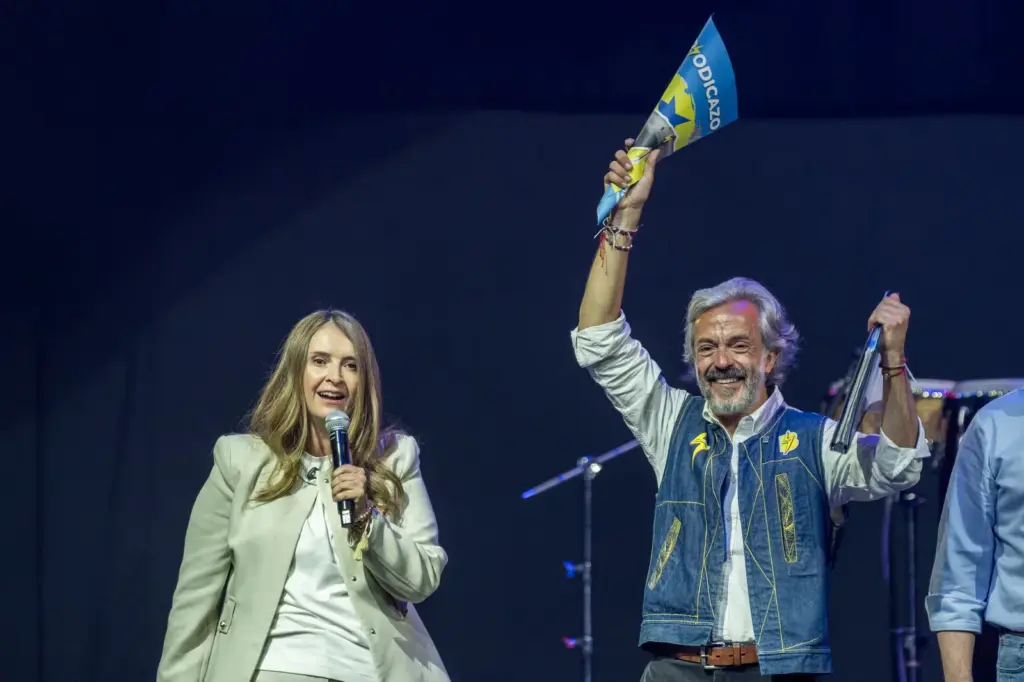
Her fall in the polls has been progressive. When she officially became a candidate last March 8, after winning the right-wing interparty consultation with more than 3.2 million votes, Valencia had demonstrated enough strength to expect good results this Sunday. She established a robust campaign, driven by Uribismo and traditional parties — which joined gradually — and her name was already mentioned in the runoff predictions.
Read more Compare the proposals of the presidential candidates for the Colombia 2026 Elections
The second big boost came with the selection of Juan Daniel Oviedo, a center-right politician and openly gay, as the vice-presidential running mate. Center sympathizers, who saw an increasingly narrow space to emerge, saw in Valencia’s bet a possibility to be heard. The polls responded positively and the campaign monopolized attention. But the euphoria lasted little. As days and weeks passed, public disagreements between the candidate and her vice distanced the most radical Uribistas and the more progressive center voters. There were other missteps: Valencia announced former president and political godfather, Álvaro Uribe, as her Minister of Defense, and old ghosts were resurrected. Memories of civilian murders at the hands of the military, known as false positives, and paramilitarism during his government ended up scaring away other voter groups.
Meanwhile, De la Espriella bet everything on anti-politics, encouraging all those frustrated by traditional parties. And he showed that they are not few. The polls began to endorse the far-right’s game and Valencia was relegated to a third position, increasingly distant. Her dream of being Colombia’s first female president was slowly fading.
That is why Valencia’s last sprint has not focused on the profound changes proposed by her opponents for the country, but on distancing herself from both and standing out as the candidate who respects institutionality, a firm hand but without falling into the “circus.” The change was so sudden that not even in her campaign closing, held last Sunday in Bogotá, did she speak much about this new vision. It has been, above all, on social media and in interviews this past week that she has taken a stance that for many analysts is late in the face of the unparalleled phenomenon that the far-right has proven to be in Colombia.
Read more Luis Enrique, Champions legend and prophet of Paris