







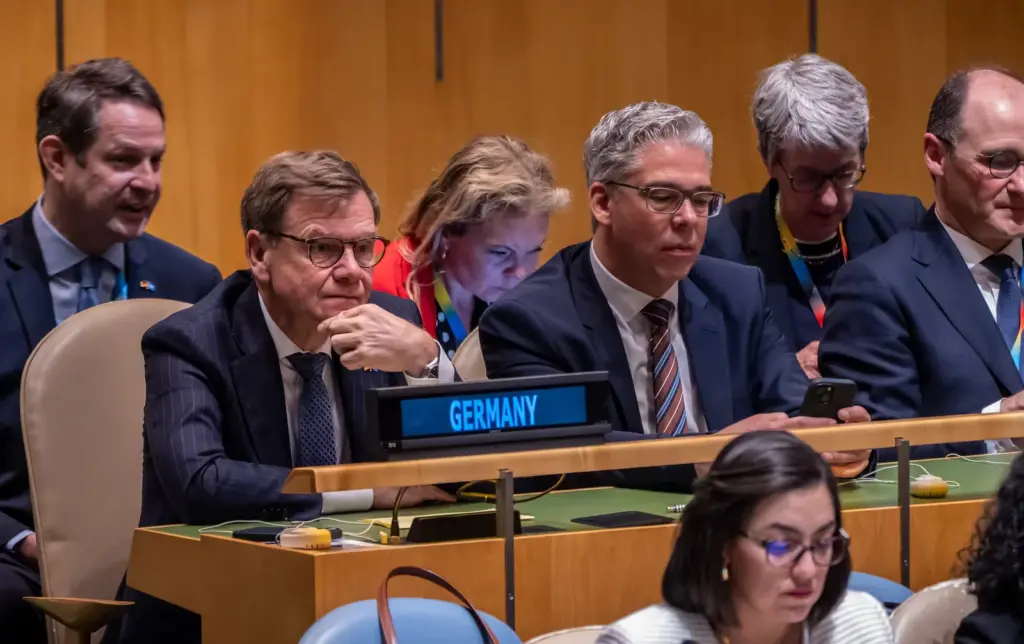
What was initially seen in Germany as a straightforward vote without major headaches ended up becoming a cold shower on Wednesday. The country aspired to be re-elected as a non-permanent member of the UN Security Council —a position it had held previously, in different periods—. But it did not succeed: it was defeated by the candidacies of Portugal and Austria.
While in Berlin’s political circles voices are raised demanding action after this failure, major media outlets speak of “German arrogance” and the existing gap between Germany’s self-image and its prestige in the world, as well as between the values it proclaims and the reality of its foreign policy.
The Security Council, composed of 15 countries, is the only UN body that can adopt legally binding decisions, such as authorizing military operations or imposing sanctions. Only five of these 15 countries are permanent members and therefore have veto power: the United Kingdom, China, France, Russia, and the United States. The other ten seats are distributed among countries from different parts of the world and are renewed for two-year periods.
Germany’s failure in Wednesday’s vote, which it approached confidently and assured of its success, was significant: it obtained only 104 votes, far from the necessary two-thirds majority, which stood at 127. It was defeated by Portugal, which obtained 134 out of 190 votes cast, and by its neighbor Austria, which secured the support of 131 member countries. These two EU countries will thus occupy, for a period of two years (2027-2028), the two seats reserved in this call for Western Europe on the Security Council.
For Germany —the most populous EU state, the second-largest UN contributor, and the world’s third-largest economy— this is a humiliation. The country has long claimed a permanent seat on the United Nations Security Council and, until it achieves that, it aspires at least to be elected every eight years as a non-permanent member.
Since German reunification in 1991, this had always been the case: on all six occasions the country presented its candidacy for that seat, it succeeded. Until now. In 2018, for example, Germany obtained 184 votes. What has happened in this time? Why has Chancellor Friedrich Merz’s government lost a vote that was seen as a mere formality?
The first to try to analyze it was German Foreign Minister Johann Wadephul, who called the result a “bitter defeat.” Wadephul stated that, on some issues, there are “positions not always shared by all member states,” and cited “unwavering support for Ukraine” as an example. In his opinion, Russia did not want “such a voice at the Security Council table” and has created a climate of hostility against Germany.
That argument had already been mentioned by some diplomats, although others expressed their doubts. And the minister himself pointed out: “Perhaps Germany also lost votes due to the fact that, in the Middle East conflict, it always assumes a special responsibility towards Israel.”
Nicaragua’s lawsuit before the International Court of Justice, with the serious accusation that Germany has been complicit in the Israeli genocide in Gaza, has been met with interest in many countries, although it probably has no prospects of success. In fact, Austria has also clearly positioned itself in favor of Israel. However, supporters of the Palestinians perceive Austrian policy as more nuanced, especially since the country does not supply weapons to Israel and officially remains neutral. Something that is not the case with Germany.
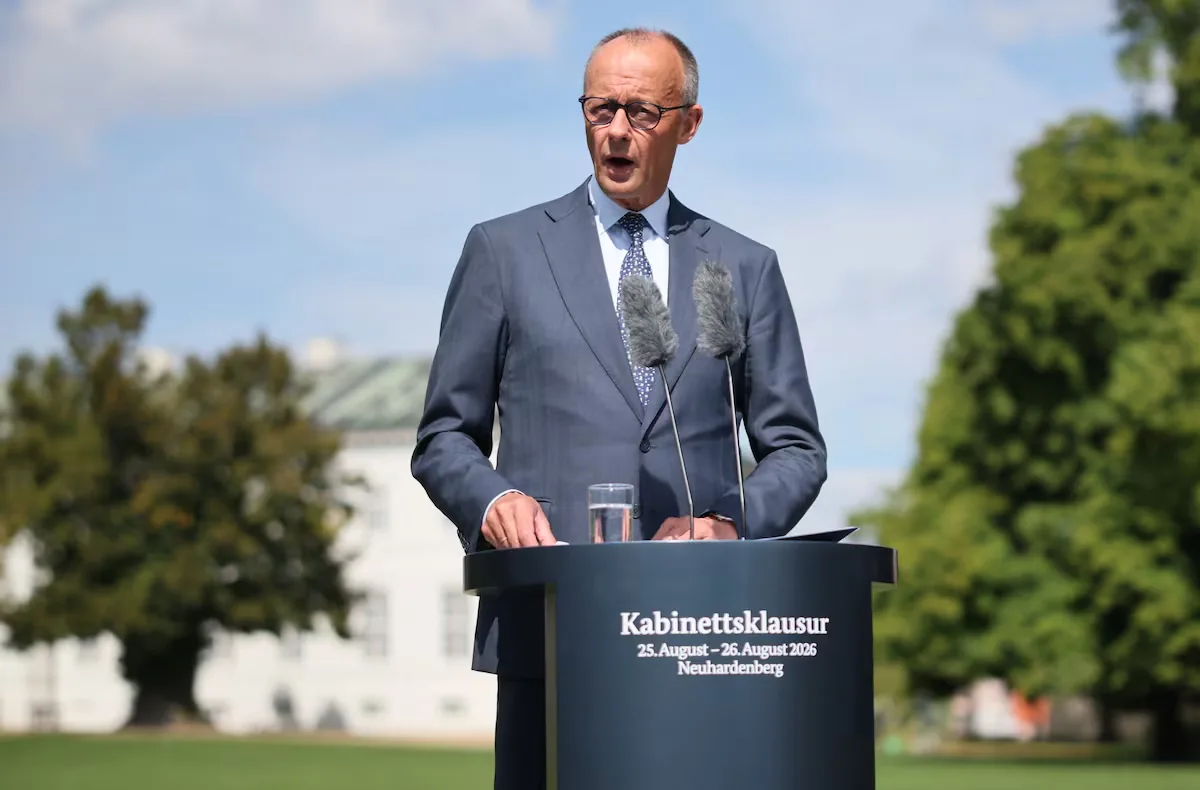
Despite the defeat, Chancellor Merz has assured that Germany’s commitment to international politics, and especially to the United Nations, will not diminish. But not everyone sees it the same way.
The conservative Manfred Pentz, regional minister for International Affairs of the federal state of Hesse, opened the door to a reduction in German financial contributions to the UN, which in 2024 amounted to 4.4 billion euros. “If in the future we don’t have the influence there that we deserve, the question arises: why should we continue to invest so much money in the UN?” he told the newspaper Bild. This question will surely be on the minds of many in a context of serious economic and structural problems in a country preparing to undertake painful cuts to its welfare state.
For the German Social Democratic Party (SPD), Merz’s conservative coalition partner, this defeat is an alarm signal. The SPD parliamentary group’s foreign policy spokesperson, Adis Ahmetović, called it a “notable foreign policy setback” and an “indicator of how Germany is perceived internationally.” He also called for an honest analysis of what signals the country has sent in recent years.
“Whoever claims to be a guardian of the rules-based international order cannot apply double standards in international law,” Ahmetovic told Der Spiegel. His party colleague, Siemtje Möller, vice-chair of the Social Democratic parliamentary group, also believes that Germany must be “even clearer” on international law. “This also means that the government must clearly label anything that constitutes behavior contrary to international law, regardless of who questions it,” she told the Funke media group.
From the opposition, this failure is seen as a defeat for Merz and his Foreign Minister. “Whoever aspires to a seat on the Security Council must defend the UN and its values, even when it is uncomfortable. It is not enough to stand aside in international crises or defend international law only when it is politically convenient,” declared the leader of the Greens, Franziska Brantner, to the RND media network.
Meanwhile, the leader of The Left (Die Linke), Ines Schwerdtner, has highlighted that this defeat is also the “consequence of Germany having remained silent in the decisive conflicts of these days and not having clearly denounced violations of international law.” “Whether in Gaza, Venezuela, or the war in Iran, Germany has remained silent in the face of violations of international law when committed by the United States or Israel. These are paradigmatic examples of double standards. That’s not how you win elections at the UN,” she stated in T-Online.
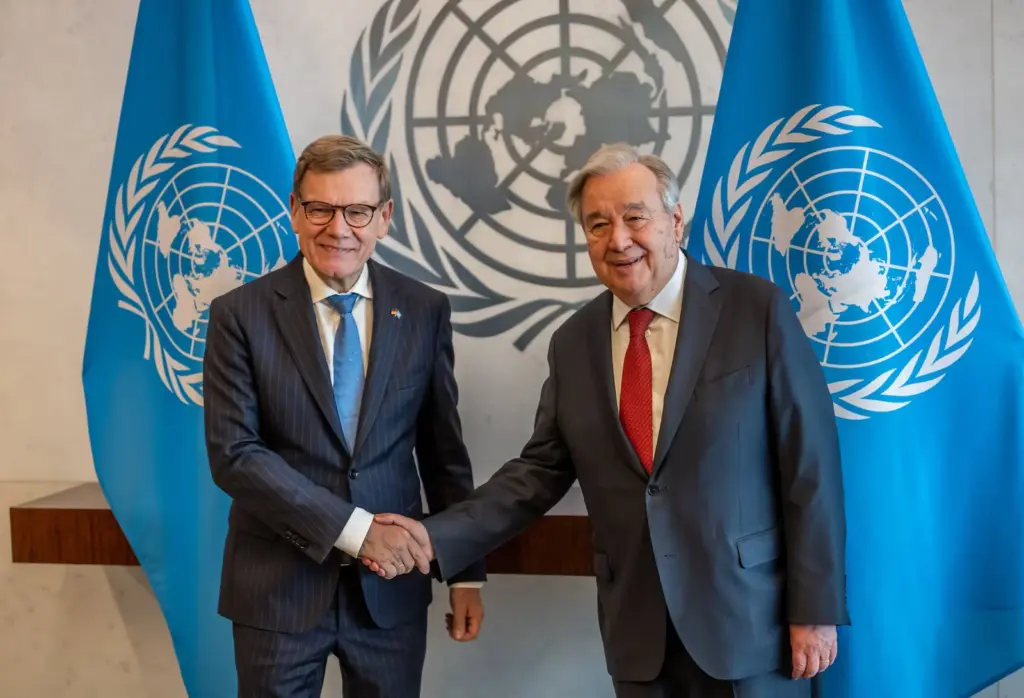
For decades, German foreign policy was successful with a clear course that consisted of presenting itself as a peaceful power, defending international humanitarian law, and allocating large sums of money to development aid. But that era has ended. And numerous countries view the lack of principles in the country’s foreign policy in recent months with displeasure, according to various analysts.
The German government continues to evade the question of whether the kidnapping of Nicolás Maduro on January 3 in Venezuela by the US has violated international law. Nor has it wanted to provide an assessment of the US and Israeli attacks on Iran from the perspective of international law. “There is an enormous gap between Germany’s self-image and its prestige in the world,” Der Spiegel opines in its editorial titled Germany’s defeat at the UN: the punishment for arrogance and lack of principles.
It also probably didn’t help that the chancellor missed the opening of the UN General Debate last September. Despite Germany’s candidacy, Merz did not deem it necessary to appear in New York. He justified it by claiming he was indispensable in Berlin.
For the newspaper Süddeutsche Zeitung, it is now about thoroughly analyzing a defeat “that hurts.” “German foreign policy must bid farewell to the idea that it enjoys a kind of permanent credit of trust in the world,” it argues.
Despite all the commotion, the conservative newspaper Frankfurter Allgemeine Zeitung tried to downplay the discussion by pointing out that it was “a lot of effort for a position that would not have brought much” and without veto power. “The UN Security Council is not the governing body of world politics. What Germany truly needs for its security must be sought elsewhere,” it published.