









EL PAÍS offers the América Futura section openly for its daily and global informative contribution on sustainable development. If you want to support our journalism, subscribe here.
Read more One hundred years of national parks: conservation as our best investment
Carla Rodríguez, a nursing student in Carolina, a municipality in northeastern Puerto Rico, was surprised that in 2025, during a workshop on how to get employed in the hospital world, they talked to her about “allowed” hairstyles in the health sector. She, who proudly wears her dreadlocks, watched in amazement as images of white people with straight and wavy hair were shown as “acceptable,” while most photos of “not allowed” hairstyles were of Black people with curly and textured hair.
When she questioned the images, her teachers’ responses were based on health arguments, comparing Afro hair to “dirt.” “No matter how much we want to defend our rights as Black people, and we know of a law that protects us, right now they don’t care,” explains the student.
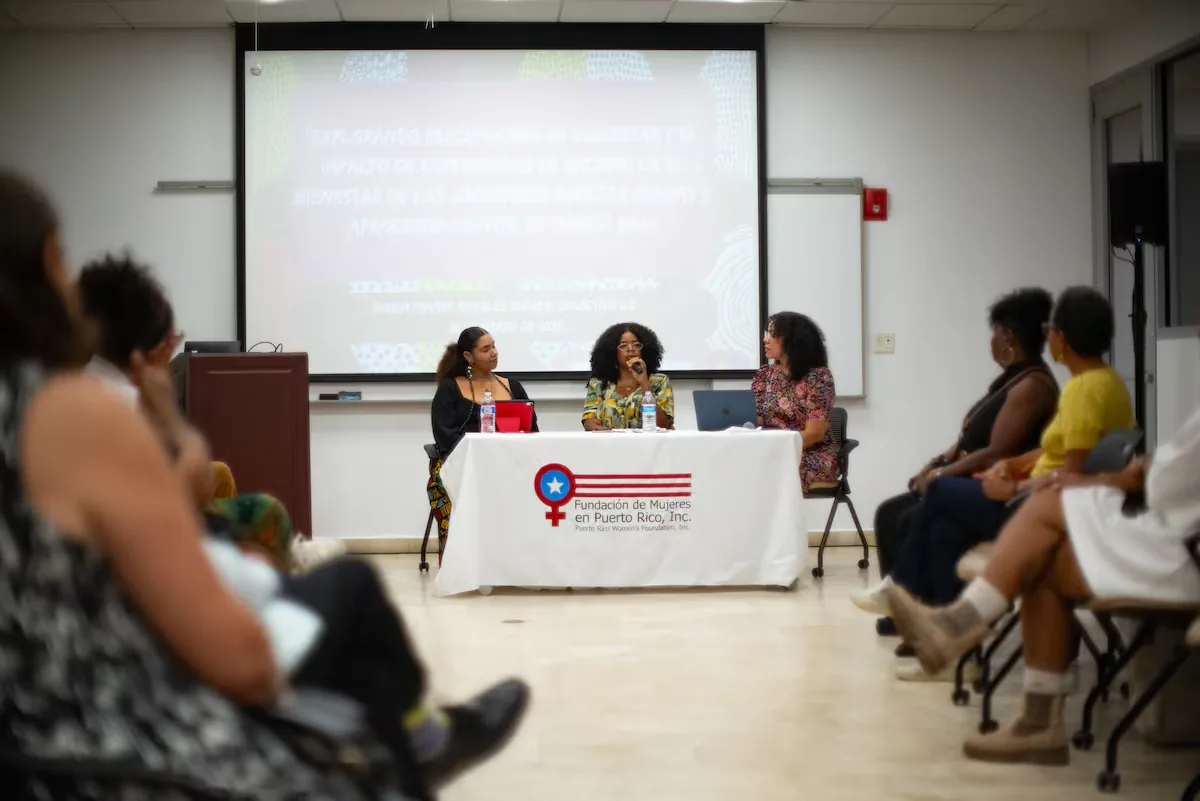
Black communities in Puerto Rico know racism from their own experience, but the lack of official data allows the State to ignore the seriousness of the situation. Without statistics, the problem does not exist for public policies. That is why, after identifying this gap, Colectivo Ilé, an organization with more than 34 years of intergenerational anti-racist work on the island, began taking the first steps to build some of this data. In 2024, with the support of the Women’s Foundation in Puerto Rico and a grant from The Annie E. Casey Foundation, they boosted efforts focusing on youth experiences. “In Puerto Rico, the data problem is serious, especially community data,” says Verónica Colón, executive director of the Women’s Foundation on the island.
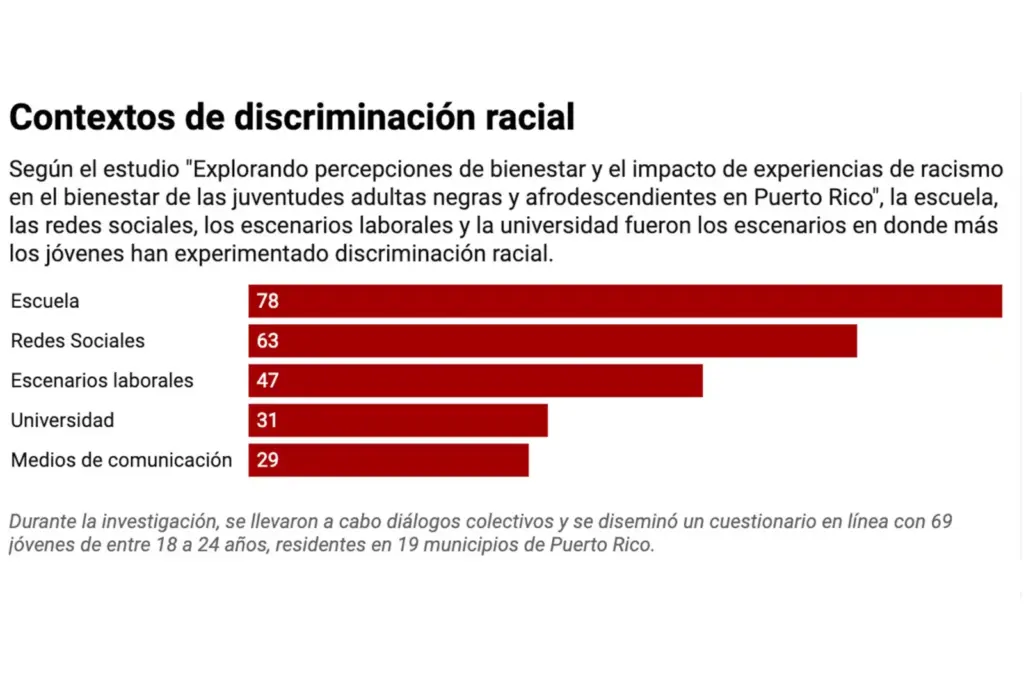
After holding several collective dialogues and disseminating an online questionnaire in which 69 young people between 18 and 24 years old, residents of 19 municipalities in Puerto Rico, participated, they published the report with their conclusions in March 2026. Although the sample is not nationally representative, it does raise alarms about the challenges faced by Afro-descendant youth to achieve well-being.
For example, 85.6% reported having suffered unfair treatment due to their racial appearance or skin color. They also showed how everyday discrimination and structural racism intertwine with other axes of oppression, generating anxiety and emotional trauma. This is one of the first structured efforts in the archipelago focused exclusively on perceptions of well-being and the impact of racism on young Black adults on the island.
The discrimination experience Rodríguez received at university also echoes among the most alarming findings of the exercise: young people reported having experienced greater racial discrimination in educational settings such as school, pointing to 78%, and university, with 31%.
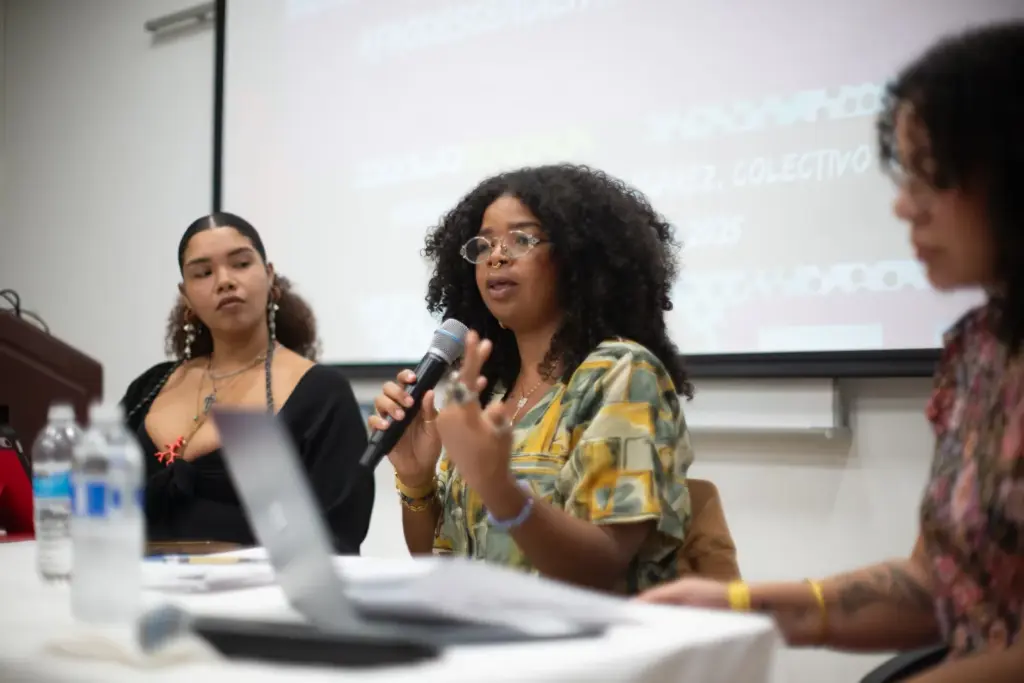
According to Miriam Morales, researcher and community facilitator of Colectivo Ilé, this is not unusual. Experiences of racial discrimination in educational and work environments not only generate anxiety and racial trauma but also connect to material limitations. “How I present myself and the work I choose to avoid comments leads to economic precariousness that impacts well-being,” she emphasizes.
Read more Politics and Security
For her, it is vital to have safe and supportive spaces that validate their experiences and foster self-worth. She also adds that positive visibility is fundamental. Including Afro-descendant history and contributions in educational curricula reduces marginalization, improves self-esteem, and prevents limiting stereotypes.
Mariluz Franco, a community social psychologist with more than 25 years of experience and who was not involved in the creation of the report, adds that this systemic violence triggers a psychosocial impact manifested in the internalization of oppression, a phenomenon she describes as a “racist self-stigma,” where beauty standards centered on whiteness directly attack the self-esteem and self-worth of youth. Racism, she says, operates as a trigger for chronic trauma. “Continuous hostility generates a state of hypervigilance that keeps young people in constant alert, which translates into persistent anxiety, emotional exhaustion, and cumulative stress.”
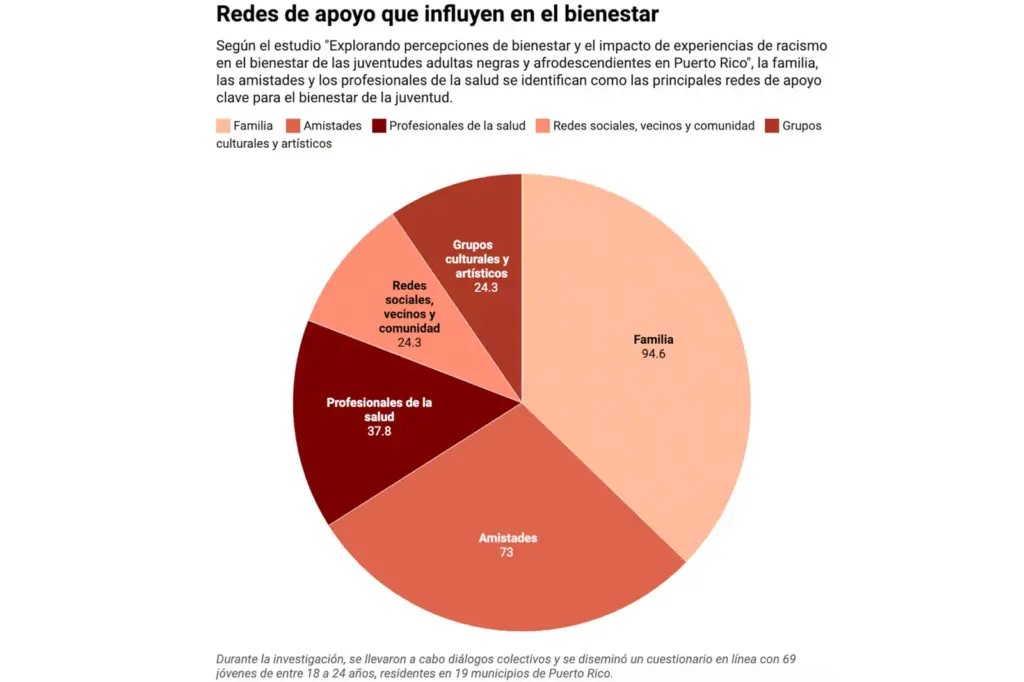
Beyond documenting how racism directly affects development opportunities, the researchers highlight the crucial strengths that positively contribute to the well-being of Afro-Puerto Rican youth. Among them, 72% of young people stated that Afro-descendant music — such as bomba, bachata, and plena — positively influences their well-being. They also indicated that support networks like family and community are crucial strengths despite systemic precariousness.
For Rodríguez, turning to spaces where Afro culture is celebrated, such as Puente Herrera in Loíza, to sing and listen to drums makes her feel safe. “That practice has been a great tool for me as a Black person,” says the 22-year-old young woman and participant in the exercise. “It has not only allowed me to celebrate myself but also my family.”
This need to heal in community is central, according to psychologist Franco Ortiz. She maintains that the “medicine” against racism cannot be limited to the individual sphere but must be collective. “These practices strengthen collective resilience and, beyond resistance, generate transformative action against oppression,” she points out.
To continue developing alternative instruments that include ethnic-racial variables on the island, Colectivo Ilé and the Women’s Foundation in Puerto Rico plan to return to community spaces to identify public policy projects and future initiatives. The organizations’ goal is to expand this preliminary study. “For us, the feeling is hopeful,” emphasizes Colón. “While many back down because they are afraid of the race issue, we say this is what we bet on.” They seek more than addressing the hidden disparities experienced by Afro-descendant youth: they bet on equitable access to education, health, and dignified work as essential pillars for enjoying their rights.
Rodríguez’s experiences confirm this. Today, she has one semester left to finish university and, despite having been discriminated against on multiple occasions for her hairstyle, she has not cut her dreadlocks as a form of resistance. She also helps other Afro-descendant youth reconnect with their hair through her protective style hair business, as dreadlocks, braids, and knots are known. “I did it solely to offer a space for Black people, so they could have a safe space to style their hair and talk about whatever they need.”