




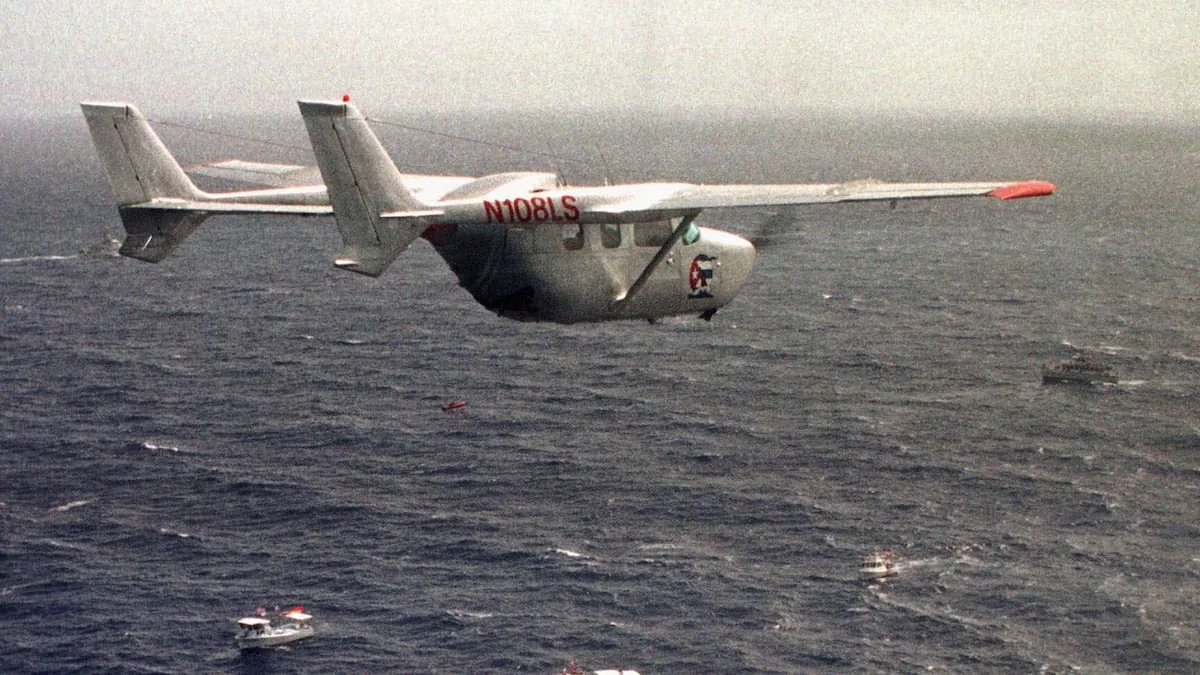
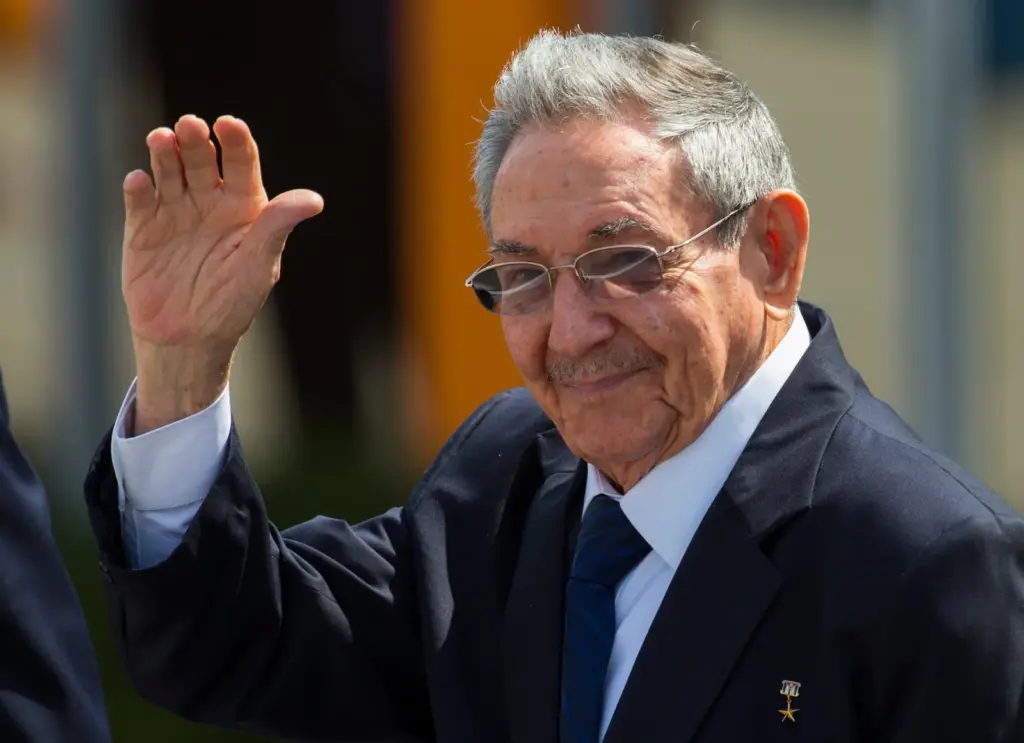
The confession came almost four months after the planes exploded in the Caribbean sky: “I said try to take them down over the territory, but they entered Havana and left.” It is June, 1996, and the 11 minutes and 32 seconds statement is recorded and then transferred to an old compact disc. “Of course, with a rocket like that, plane-plane, what comes down is a ball of fire and it will fall over the city.” It is a man speaking who does not yet know that he is revealing the crime that will haunt him until the end of his life: the shooting down of the two planes of the organization Brothers to the Rescue. “Well, take them down in the sea when they appear; and do not consult those who have the authority.” The speaker is Raúl Castro. The United States Department of Justice now intends to prosecute him for the murder more than three decades ago of the four people who were on board the aircraft.
Read more Zapatero, investigated for money laundering in the ‘Plus Ultra case’ at the National Court
Something unprecedented could happen this Wednesday in the mecca of Cuban exiles: the presentation by the Federal Prosecutor’s Office of the Southern District of Florida of the formal indictment against Castro in an event at the Freedom Tower in Miami. The initiative comes amid the siege by Donald Trump’s government against the Havana regime. Since the Republican announced in January that Cuba was “the next,” after the incursion in Venezuela to detain Nicolás Maduro, Cubans are attentive to any sign that sheds light on the uncertain plans of the U.S. president. If in April they thought that “something was going to happen” on the island, coinciding with the anniversary of the Bay of Pigs invasion; now it is said that plans for Cuba could materialize on May 20, during the Independence Day celebrations.
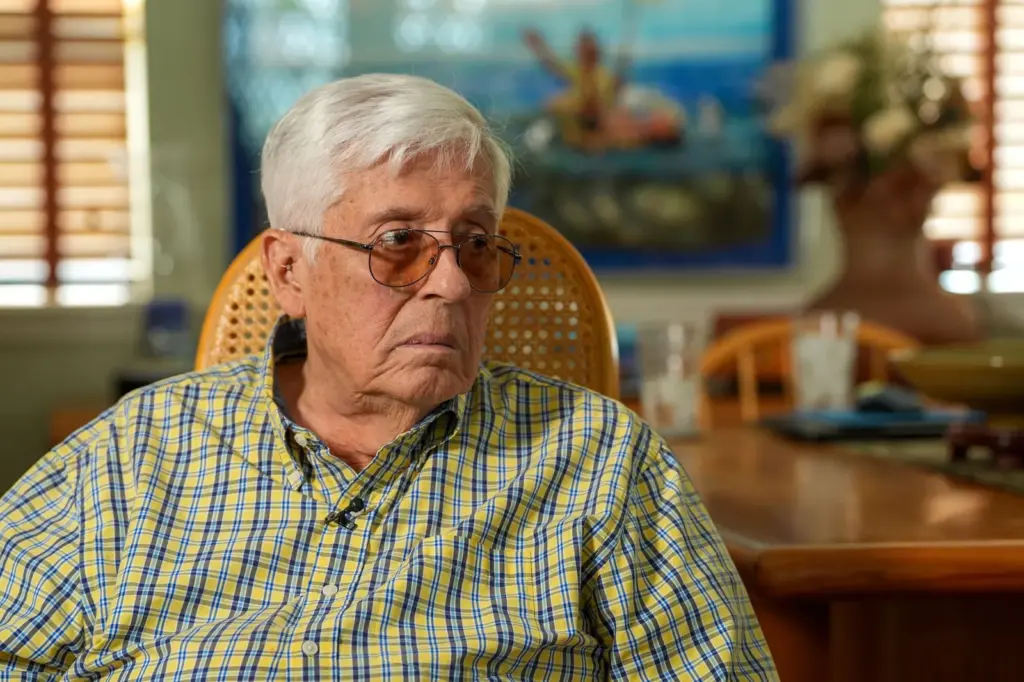
Still, people find it hard to think that a figure like Castro, 94 years old, will be transferred to a maximum-security prison in the United States almost at the end of his life. He is no longer the powerful man who sat down to dialogue with the United States, as he did during Barack Obama’s administration in 2016. Now he sends his grandson, Raúl Guillermo Rodríguez Castro, to be the escort of his legacy. Time, however, has not reduced his debt, nor has old age granted him any kind of deference among the exile community. “I don’t know if we will see Raúl Castro before a U.S. court,” says Arnaldo Iglesias, now 88, at his home in Miami. “But I would like full recognition of the truth. That it be established that four men were murdered by a dictatorship during a humanitarian mission.”
His memory has not erased the events of that February 24, 1996, when the two Cessna C-337 planes carrying his Brothers to the Rescue companions were shot down between 3:21 and 3:27 p.m. by MiG fighters of the Cuban air force. A third plane, in which Iglesias was, managed to escape. “I remember the voices on the radio, the uncertainty and then the silence. A silence that cannot be explained.”
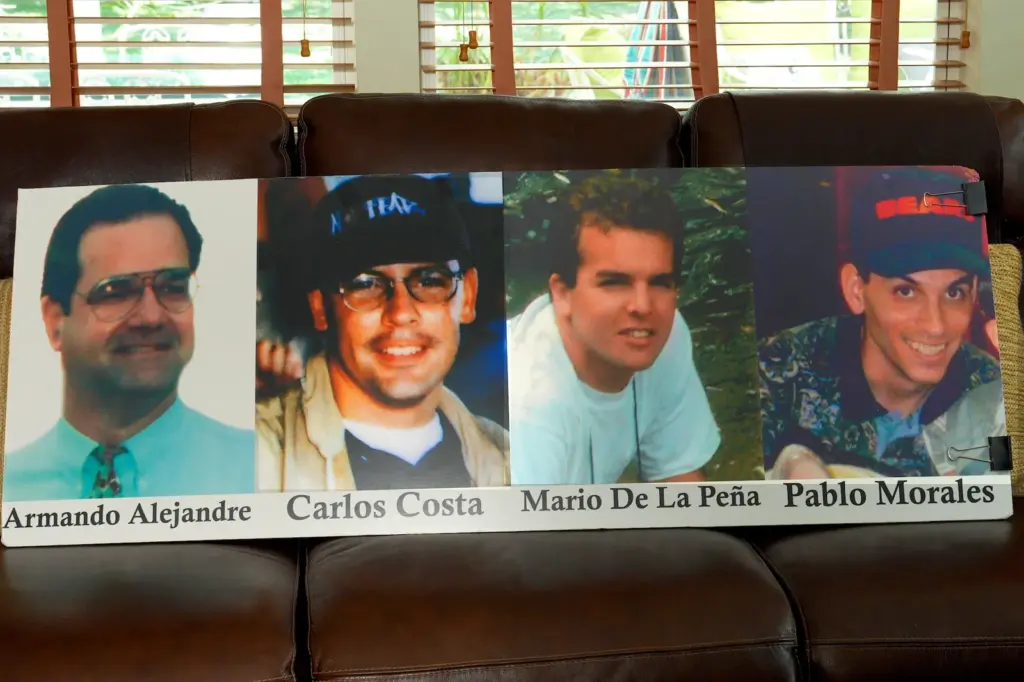
A week earlier, Iglesias had seen his friends so smiling in Nassau, Bahamas, during a humanitarian mission of Brothers to the Rescue. The group carried out search and rescue operations in the Florida Strait, with exiles and help from the U.S. Coast Guard, to assist those who threw themselves into the sea from Cuba, the so-called rafters. Iglesias never saw Armando Alejandre, 45, Carlos Costa, 29, Mario de la Peña, 24, or Pablo Morales, 29, again. He still keeps details of each one, as if not letting time take them away.
“Carlos Costa had a special calm. Mario de la Peña was an enthusiastic young man and accomplished environmentalist. Pablo Morales was a rafter rescued by us, helping others to achieve the freedom he already enjoyed, and Armando Alejandre Jr., an exemplary Cuban,” he recalls. “Thirty years later, I still think about them almost every day.”
The survivors, the victims’ families, and the exile community that for years has mourned the four deceased of Brothers to the Rescue have patiently waited to see justice fall on the Castros. Nothing, for now, has happened. Five administrations have passed through the White House without response despite evidence that the planes were shot down in international waters and not in Cuban airspace, and that the U.S. Congress condemned what happened on March 12, 1996. That year, the case judge, James Lawrence King, ruled that the Castro government had murdered “four human beings in international airspace over the Florida Strait.” Cuba refused to compensate the victims’ families, but the United States compensated them with 93 million dollars in frozen assets of the Cuban government.
After Donald Trump barely paid attention to Cuba in his first administration, perhaps no one in Havana expected him to now dedicate almost a minute every week. Events indicate that Washington is determined to struggle: to an almost five-month oil blockade are added threats, negotiations, visits by officials, an amount of 100 million dollars in humanitarian aid, and the revelation that Castro could be prosecuted by U.S. courts. There is a resource that federal judges now have and that is the fundamental element of the ongoing indictment: the voice recording in which Raúl Castro admits that he was the one who gave the order to shoot down the planes.
Read more The electoral cycle consolidates the rightward shift of Spain awaiting the general elections
Brothers to the Rescue at the center of politics
In 2006 that audio fell into the hands of Cuban journalist Wilfredo Cancio, based in Miami, then a reporter on Cuban affairs for El Nuevo Herald. It had been a few days since Castro had become president of Cuba, replacing his sick brother. Ten years earlier, when he was Cuba’s Minister of Defense and head of the Armed Forces, he admitted in a meeting with island journalists his responsibility for the attack on the planes.
Cancio verified the recording with several specialists and with Alcibiades Hidalgo, who was Castro’s personal secretary. It was his voice. On August 20, 2006, the journalist published an exclusive that captured the attention of media worldwide. “What changes with that recording is that there is now a voice proof of Raúl Castro assuming full responsibility,” Cancio tells EL PAÍS. The indictment, if it materializes, would be “an act of historical justice,” he says. “The announcement on May 20 is also a nod to the Cuban community.” When asked if the Federal Bureau of Investigation (FBI) contacted him at any time for the investigation, he preferred not to comment.
The case of the plane shootdown has followed the course of the times marked by South Florida politics. “In the nineties there were formal charges and accusations that were shelved by the Bill Clinton administration, which was hard to accept for the families of the four murdered men,” says Iglesias. Two years after the recording was made public, the case was once again put on hold with Barack Obama’s arrival at the White House and the diplomatic rapprochement between the two countries. Castro not only visited the United Nations headquarters in New York but also received the Democrat during a two-day stay in the Cuban capital. Former spy Gerardo Hernández, linked to the shootdown, was sentenced in the United States to life imprisonment and then sent to Cuba in 2014 as part of a prisoner exchange.
The Republicans, for their part, have called for Castro’s head: Rick Scott, former governor of Florida, and the current one, Ron DeSantis, have asked the Department of Justice to file charges against Castro.
CBS News revealed the news about the possible prosecution of Castro the same day the CIA director arrived in Havana last week. “Everything being done is pressure elements on Cuba and a symbolic act of justice, albeit late, but justice nonetheless. There is pressure in Congress and in the community for Raúl and Fidel to be tried as responsible for the crime,” Cancio comments. “That responsibilities are spoken of again today sends an important message: state crimes do not disappear simply because time passes.”
In 1996, Fidel himself said that he was the one who gave the order that the planes could not fly over Cuban airspace to drop leaflets, as they had done before. “They had the general order not to allow it… They acted fully aware that they were fulfilling the order… I assume responsibility for that,” said the deceased leader. However, the leaked audio shows that the order was actually given by his brother Raúl.
“For decades, many victims of the Cuban regime felt that their cases were caught between diplomatic interests and political calculations,” says Iglesias. “That responsibilities are spoken of again today sends an important message: state crimes do not disappear simply because time passes.”
Read more Guardiola finalizes his departure from Manchester City this summer after a decade at the club