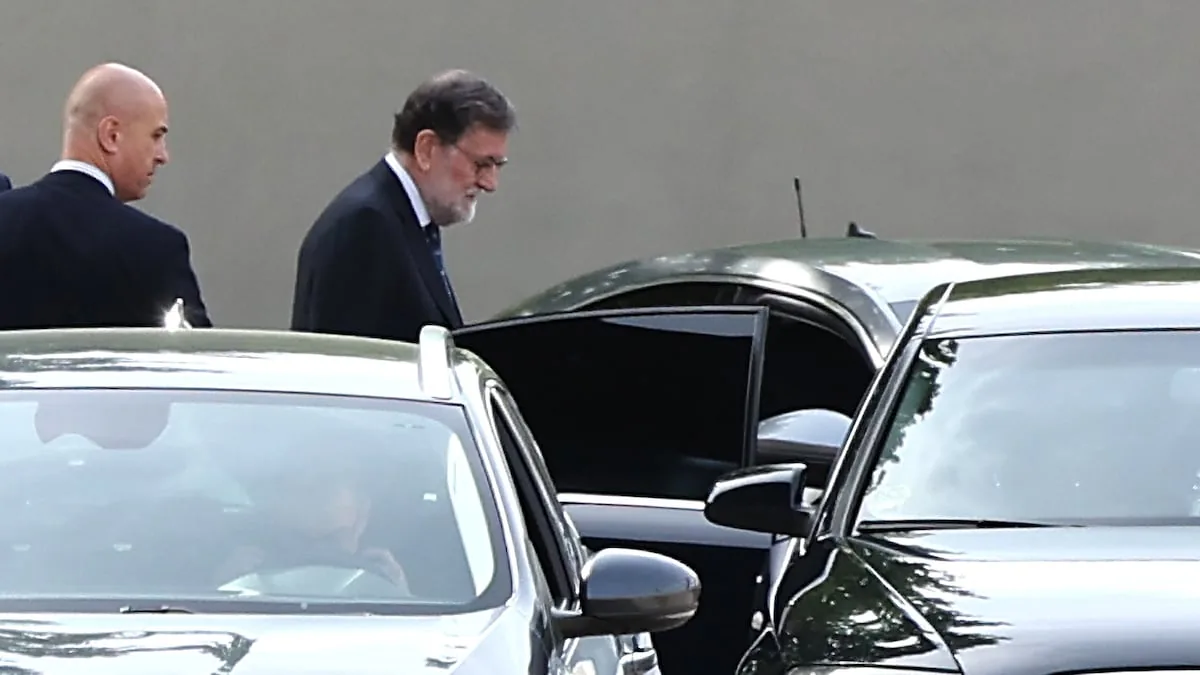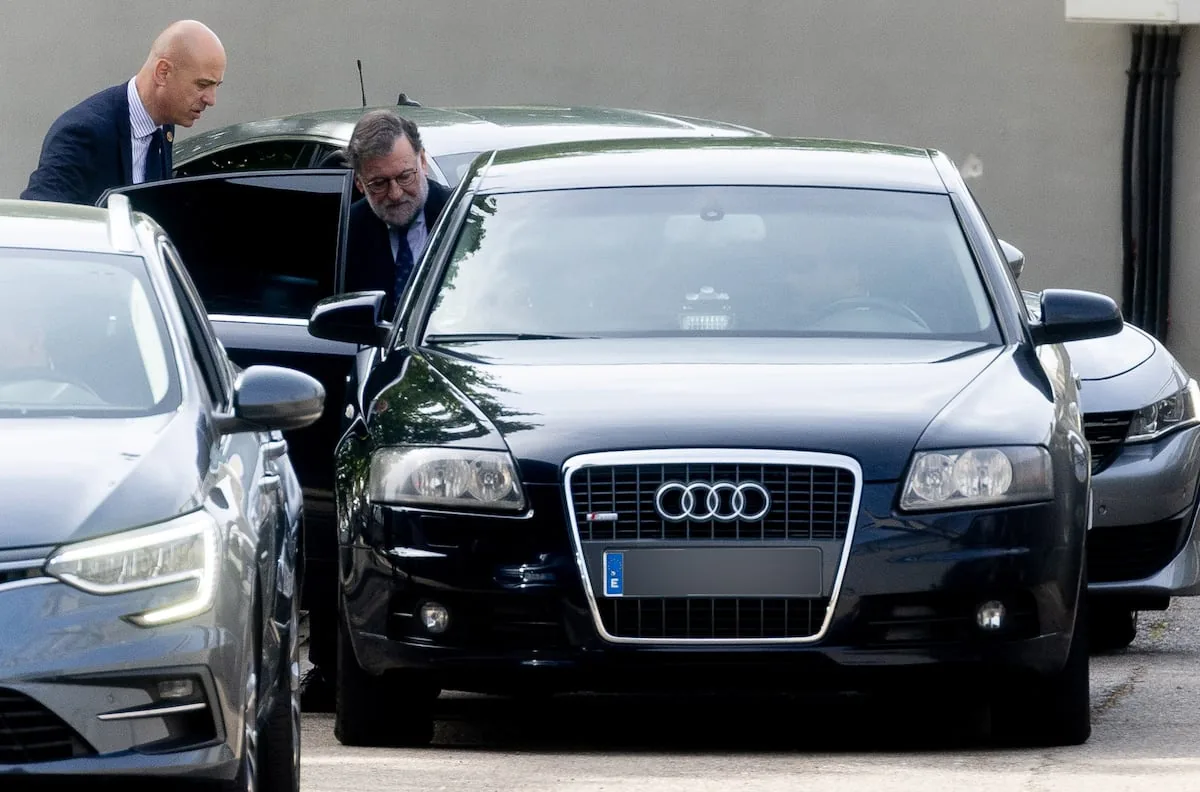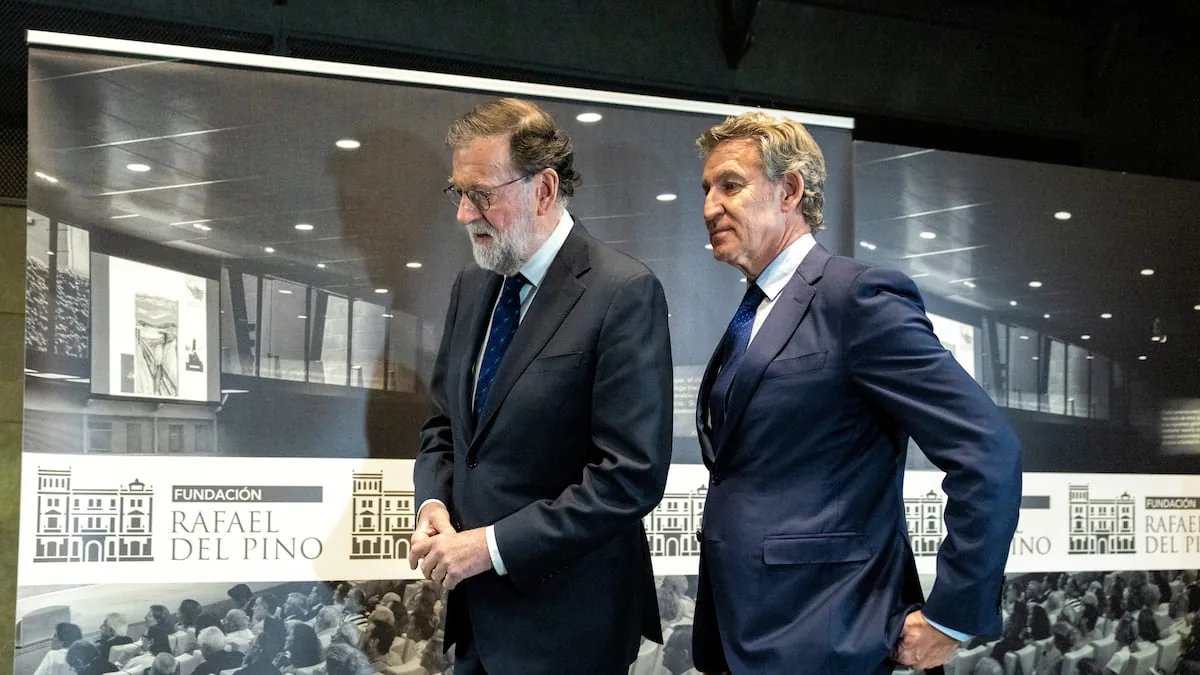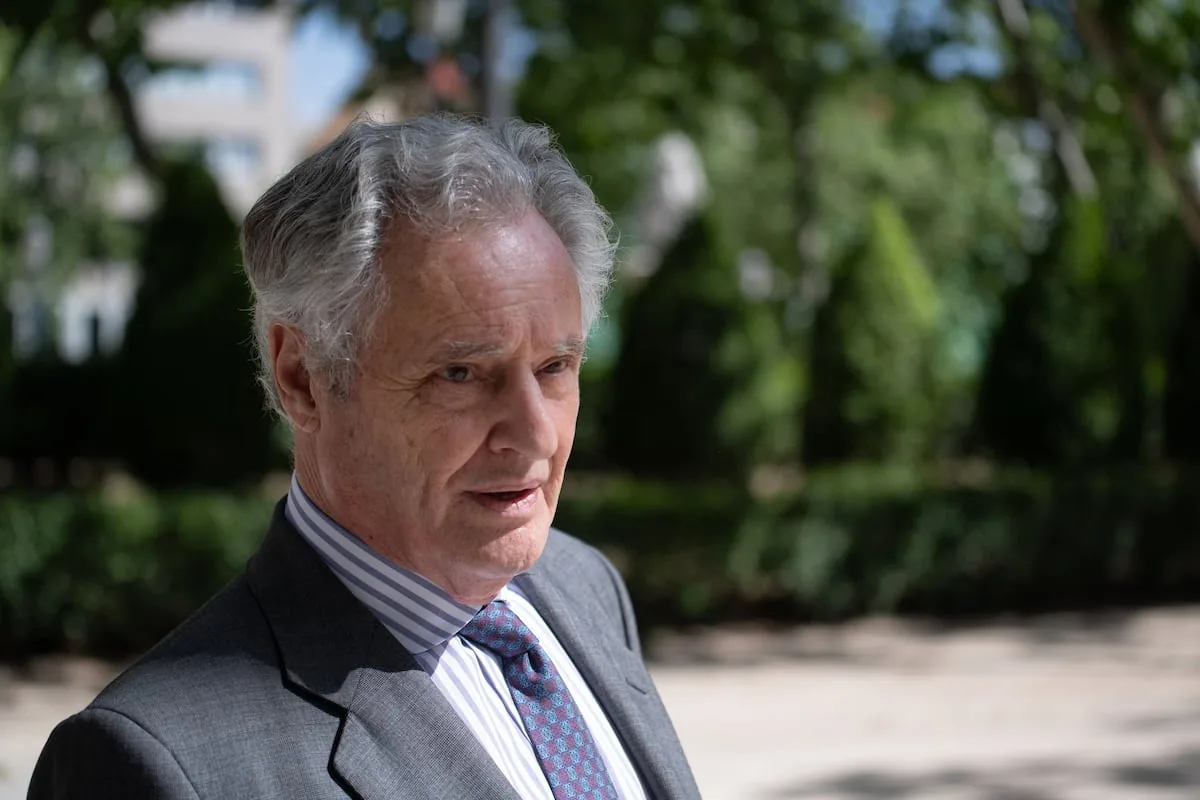
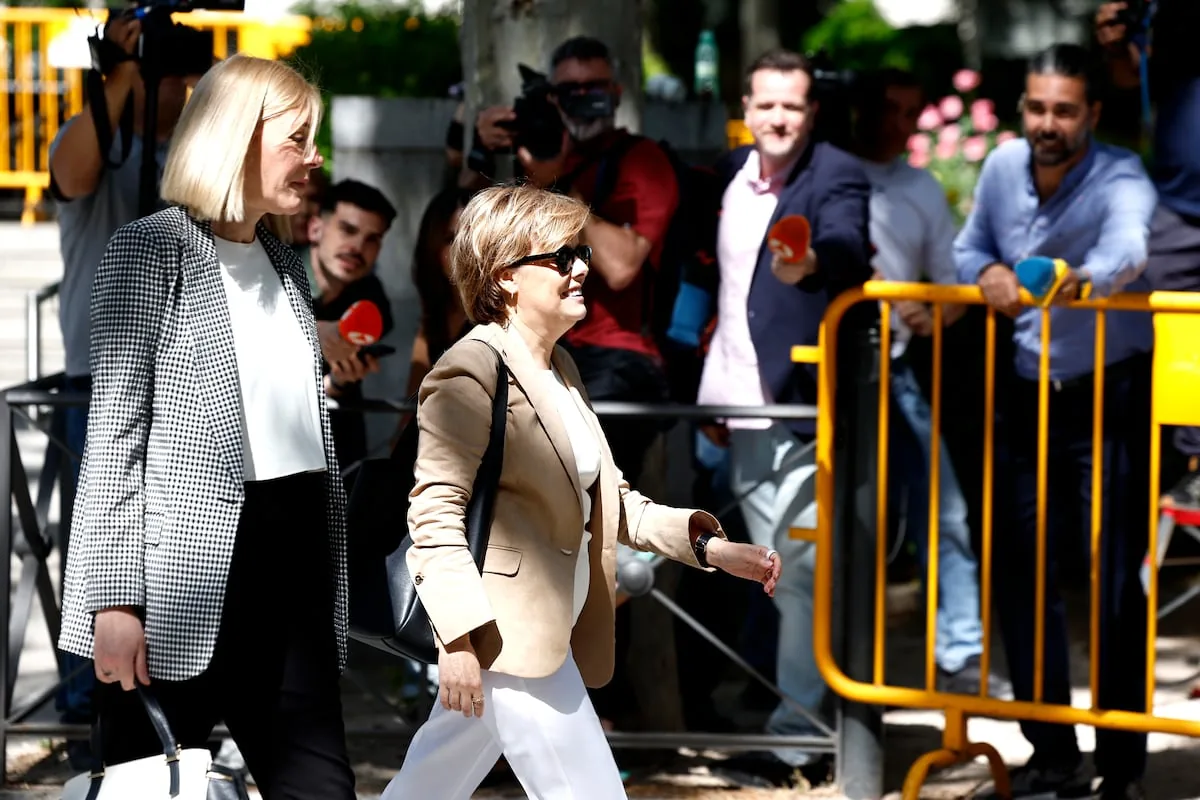
The trial of the Kitchen case moved at an unusual speed this Monday. The eleventh session of the oral hearing concluded in barely an hour and a half, despite the appearances of two witnesses of enormous political weight: Soraya Sáenz de Santamaría, who was Vice President of the Government during the deployment of the espionage operation against former treasurer Luis Bárcenas; and Javier Arenas, former general secretary of the PP. As the prosecution and defense already anticipated, neither of them deviated from the script set last week by Mariano Rajoy and María Dolores de Cospedal. “I have no knowledge of that operation during my time in government,” stressed the former right-hand man of the head of the Executive from 2011 to 2018.
Read more Support for the doctors’ strike continues to fall, and unions call for Pedro Sánchez’s intervention
Both Soraya Saénz de Santamaría and Javier Arenas tried to cast an air of normality over years of brutal agitation in the conservative party: especially after EL PAÍS published the so-called Bárcenas papers in January 2013 and after Switzerland reported on the former treasurer’s hidden fortune. According to the former vice president, at that time, the reaction in La Moncloa was “none.” No special monitoring of the case was done, nor was anyone tasked with finding out anything. “I never had any approach or strategy of any kind regarding Gürtel,” the witness summarized.
—And did you disagree with Cospedal’s strategy? —the PSOE lawyer, acting as popular prosecutor, asked her, referring to the meetings she held with Commissioner José Manuel Villarejo.
—I also don’t know Ms. Cospedal’s strategy, if she had one.
Sáenz de Santamaría’s “noes” followed one after another. Did she make any inquiries about the Bárcenas papers due to her position as government spokesperson and to answer the press? “No.” Do you remember a news item from late 2015 about Kitchen, which said that police had seized Bárcenas’s papers and had not handed them over to the judge? “I don’t remember it.” Do you remember if any investigation was launched in the Ministry of Interior? “I have no information about that, I was Minister of the Presidency, not Interior.” Do you remember if the Presidency of the Government was interested in this information? “Not with me, certainly.” Did Minister Jorge Fernández Díaz or Francisco Martínez, his Secretary of State for Security, tell you if they made any contact with journalists about it? “No.” And about the use of reserved funds? “They were not within my competence.” Did the CNI have any involvement in surveillance or monitoring or any type of investigation into Luis Bárcenas’s circle? “No,” she continued.
As Rajoy and Cospedal had done, the former PP leaders cited this Monday denied that there was any special “concern” within the party and the Government about the material Bárcenas might have kept at that time. The Anti-Corruption Prosecutor’s Office and the rest of the accusations, however, present a radically different scenario. The public prosecutor maintains that Kitchen was activated in the Ministry of Interior —then headed by Jorge Fernández Díaz— when the Popular Party was surrounded by the advances of the Gürtel case; and its objective was to steal “compromising” documents that he might still be hiding so that they would not reach the investigators and the Audiencia Nacional. The plot sought, among other things, alleged recordings of the former accountant where he spoke with Mariano Rajoy and Javier Arenas about the party’s slush fund.
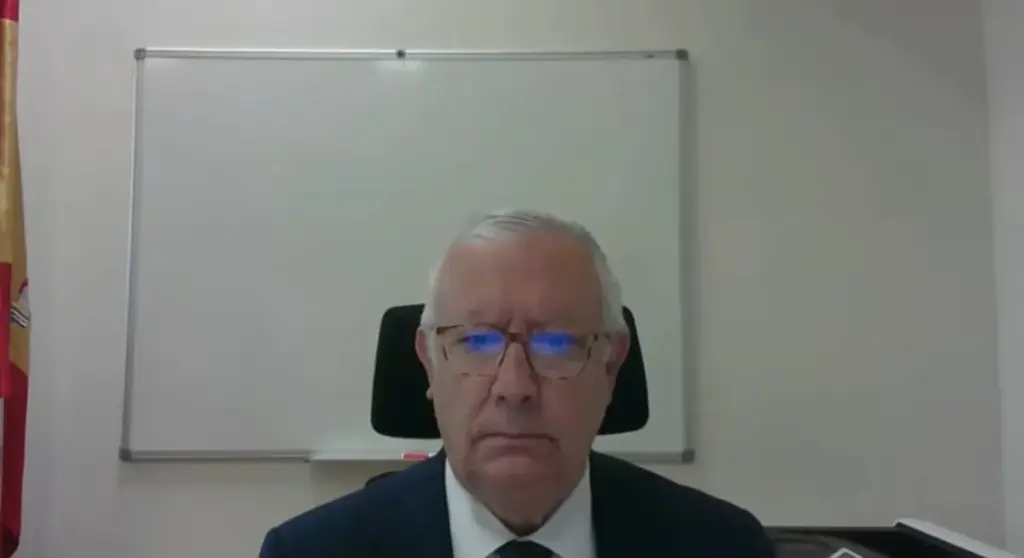
The former President of the Government, who emphasizes that he never knew anything about the party’s parallel accounting, denied that such a recording with him could exist: “It is absolutely false.” Arenas moved in the same vein. With a Spanish flag behind him and connected by videoconference, the former general secretary reiterated that he never knew anything about a PP slush fund until it was published in the press in 2013; and, therefore, there cannot be a previous audio where he is heard discussing the matter with Bárcenas. And are you aware that the PP tried to search for, find, or verify the existence of these recordings? “Under no circumstances am I aware,” said the current senator for Andalusia.
Moreover, Arenas stated that he abruptly cut ties with the former treasurer when his dealings came to light. “I had a friendship with him forged professionally. I believe our last conversation was in late 2012. And, from then on, two relevant facts [became known]: the Bárcenas papers and the amounts Bárcenas held outside Spain. These two facts were relevant for the friendship to disappear,” he declared, before continuing: “In the 2012 meeting, he basically conveyed to me that everything he had done was legal and that he was very angry with the anything but impartial behavior of prosecutors and police.”
Read more Iran proposes a three-stage peace plan that leaves the nuclear issue for last
When asked about Kitchen, the current senator also supported Fernández Díaz and Francisco Martínez, former Secretary of State for Security and also accused in this trial (along with Bárcenas’s former driver and seven former senior police officers): “It seems to me to be a very confusing matter. I absolutely do not know the conduct of those people you refer to, among other things because I don’t even know them. I only know Mr. Fernández and Mr. Martínez in this room; by the way, great professionals in public administration, serving the Spanish people.”
“My mind wanted to forget”
The parade of witnesses resumed this Monday with the testimony of singer Guillermo Bárcenas, alias Willy, son of the former popular treasurer and Rosalía Iglesias. “My father’s first 18 months in prison were very hard. 13 years have passed and my mind wanted to forget that time. But they made his life impossible in prison. I think it was an order. From the director to… The behavior towards my father was very hostile,” he narrated as soon as he sat before the magistrates.
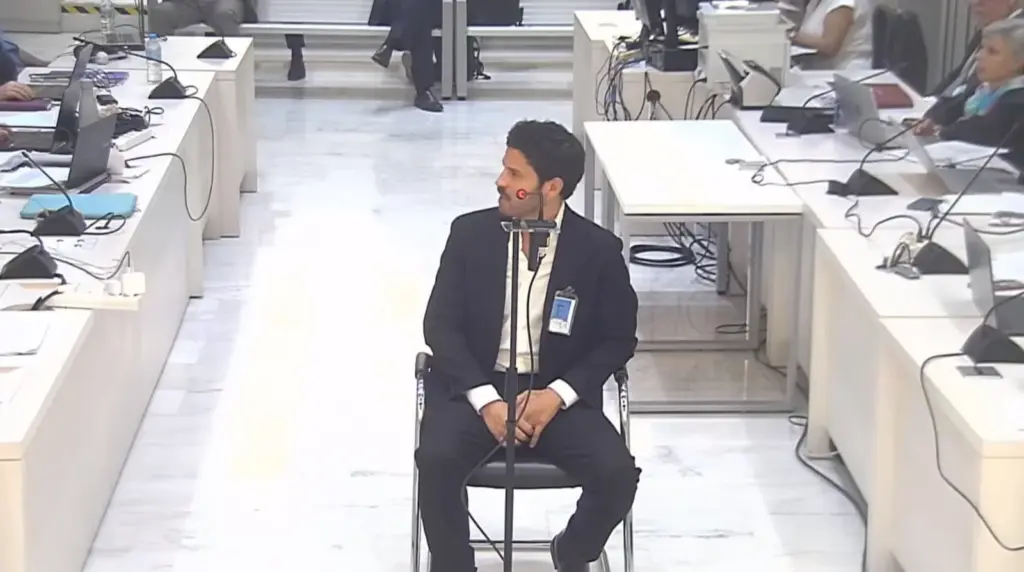
During his appearance, which lasted less than half an hour, the witness recalled the turbulent years after the outbreak of the Bárcenas Papers case. “They tried to keep me quite out of all these kinds of things […] I knew a little of what my father told me: that there was documentation, that it affected…” summarized Guillermo Bárcenas, who elaborated that his father “thought the phones were tapped” and that he experienced a situation of “harassment and demolition” in Soto del Real prison (Madrid) “so that he would stop talking.” Also, he added, he himself saw how, when he was in the car with his mother, motorcyclists with “a camera on their helmet” followed them.
The statement delved into his relationship with the family driver, Sergio Ríos, who was recruited as an informant by the plot. The former treasurer’s son insisted that it was “good,” but that they observed a “change” in him. Especially, he stressed, after he and his mother were kidnapped in their home by a man disguised as a priest. “We stopped trusting him, because of the kidnapping at home. Everything smelled pretty bad to us. When he was holding the [assailant], [Sergio] appeared very quickly […] He told us his wife was at the hairdresser’s and that’s why he was nearby,” he indicated, before adding that many police officers also arrived at breakneck speed: “Yes, we were very surprised. Like, 15 police officers suddenly.” During his appearance in the investigative phase, Guillermo Bárcenas already stressed that he believes the driver was involved in that episode.
—How did your father find out about the kidnapping? —they asked him.
—The first impact was on television. He told us he was in the common room [of the prison] and saw it —he pointed out.
The son’s testimony introduced a contradiction regarding the version offered last week by the former treasurer. Guillermo Bárcenas assured that, according to what his father told him, he kept a recording where he discussed the PP’s “b accounting” with Mariano Rajoy and Javier Arenas. “I didn’t hear it. But he told me about it before entering [Soto], in some conversation,” he elaborated. Upon hearing this, Commissioner José Manuel Villarejo’s lawyer, Antonio García Cabrera, immediately saw the loophole and asked him if that audio captured a three-way meeting: that is, a meeting between Bárcenas, Rajoy, and Arenas. “My father told me that both people were present,” the witness affirmed. However, the former popular accountant assured the court that he was hiding three audios: one where he himself was heard offering details of the slush fund; another, where he chatted alone with Rajoy; and another, alone with Arenas.