









EL PAÍS offers the América Futura section openly for its daily and global informative contribution on sustainable development. If you want to support our journalism, subscribe here.
Read more Latin America Time at the United Nations
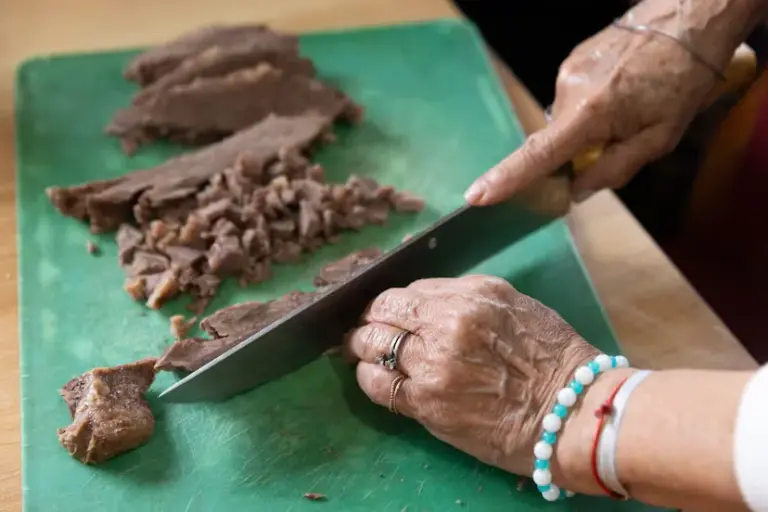
Ema Quinteros occupies one of the restaurant tables to prepare the empanada filling. The process is artisanal. On the kneaded dough, she distributes a mixture of shredded chicken and seasonings that she previously stirred in a steel container. She also prepares the meat ones, which she chops very finely with a huge knife whose dry thud echoes throughout the premises in the Villa Crespo neighborhood.
With her work, Quinteros is part of a team that daily dispatches hundreds of lunchboxes for companies and dishes for customers who come to the restaurant. While she concentrates on the empanadas, another employee receives suppliers, the head chef organizes the day, and behind the counter, someone fries what a customer has just ordered.
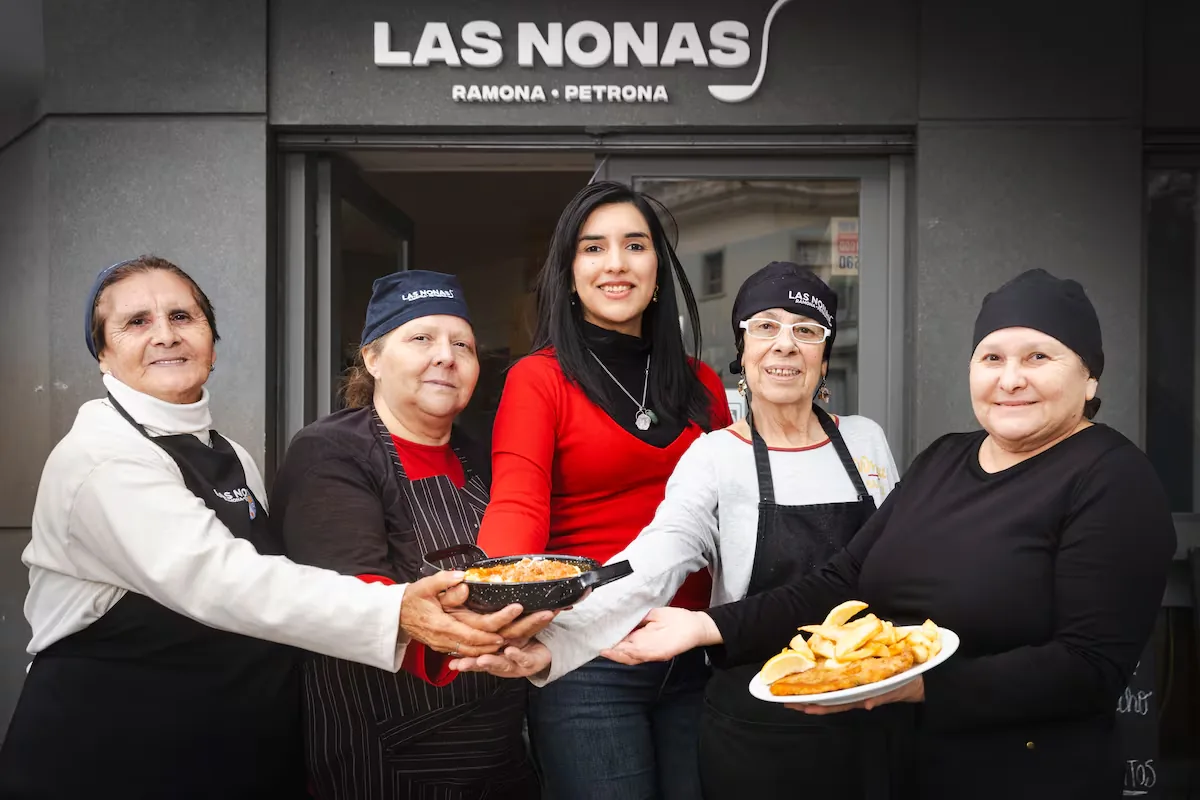
The scene could be repeated in any restaurant. But Quinteros is about to turn 71, and Las Nonas Ramona Petrona has a peculiarity that differentiates it from most gastronomic establishments in Buenos Aires. More than 80% of its staff is made up of people over 50 and retirees, in Argentina, a country where the minimum pension is not enough to cover the basic cost of living.
The idea came from the owners Débora Ibáñez and Diego Quinteros, who have more than a decade of experience in the gastronomic sector. They started with a rotisserie inside a house and, as they grew, they noticed that many workers over 50 showed great responsibility and commitment to work, in addition to marked punctuality. Diego Quinteros recalls those first steps: “When two employees were missing, it made your life miserable. So we said: ‘We have to go the safe way.’ After hiring the first person, they told us about a 62-year-old Venezuelan man who was looking for work. He told me: ‘I don’t know anything about cooking, but I learn. You teach me, I need to work.’”
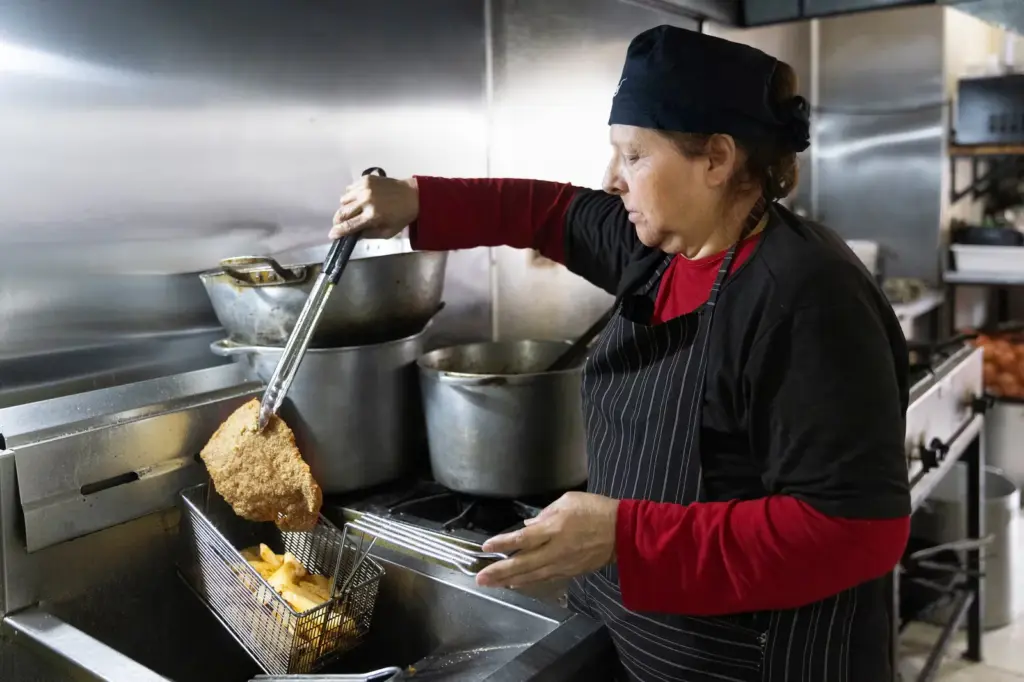
What began as a logistical necessity ended up becoming the engine of the business, inspired by family cooking (Ramona and Petrona were Ibáñez’s grandmothers). Older people work shifts of four, six, or eight hours, depending on their possibilities. They receive remuneration according to the law, and the restaurant owners ensure that they can attend their medical appointments and other needs so that they feel comfortable in a sector that demands work and physical effort.
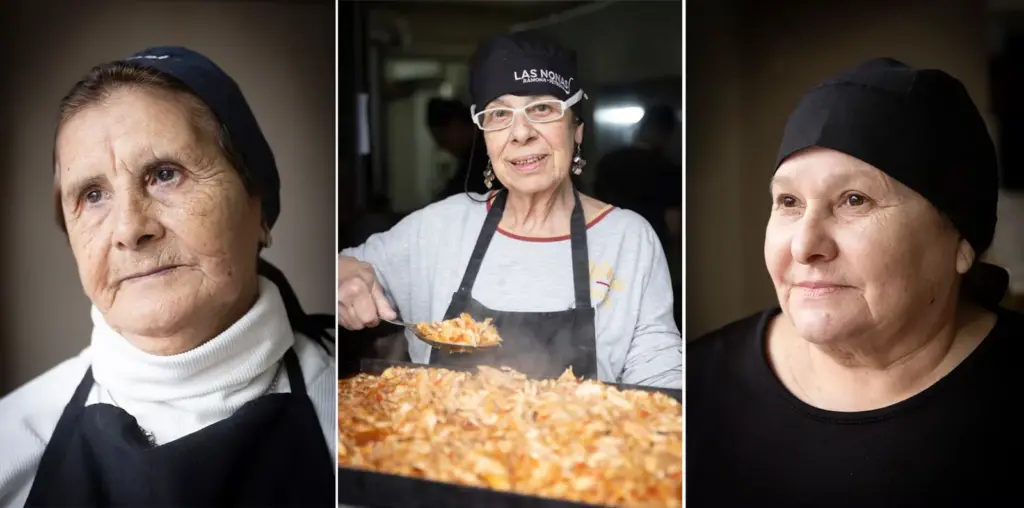
Ibáñez explains the day-to-day logistics with older people, whom everyone affectionately calls uncle and aunt, a form of address that reflects the bond they seek to build within the establishment. “We need them to tell us about their health and their appointment schedules for check-ups. We also consider the number of hours they work according to their possibilities. There is a difference between people who work because they need money — which no one minds today — and those who need to work to feel emotionally accompanied and valued. For many people, work does them good because it gives them a purpose,” she says. Diego Quinteros, for his part, describes how work is organized during dispatch. “The grandmothers prepare the dishes early, and at the time of dispatch, we say that the Formula 1s come in, who are our youngest and fastest employees.”
A former maid at the prestigious Savoy hotel and a renowned domestic service company, Ema Quinteros is retired and Diego’s aunt. She has been working at the restaurant for two years. She says that her pension covers less and less, and unexpected medication expenses always arise. “Besides the economic issue, I feel useful and I like what I do. I feel better being here than at home. I don’t even pay attention to my age. For me, it’s like therapy. They don’t give us old people jobs anymore. It’s as if for others, we should already be content with our pension or with our children helping us,” says the cook, a specialist in empanadas, locro, and other homemade dishes.
Read more The Congress elects a National Electoral Council favorable to De la Espriella
Retired as a primary and basic cycle teacher, Lola Realza, a 65-year-old Venezuelan immigrant, had never worked in a kitchen. She arrived in Argentina five years ago, took some gastronomy courses, and started at the restaurant washing vegetables and preparing salads. “I enjoy restaurant life and contact with people, who in many cases are already regular customers. This is my first job in Argentina, and I already told the boss: ‘If you don’t fire me, I’ll stay here,’” she laughs.
Stories like Ema’s and Lola’s are increasingly common in Argentina. The loss of purchasing power of pensions and retirement benefits, especially since late 2023 with the arrival of President Javier Milei, affected the living conditions of many older people and increased the need to supplement income with new forms of work or by returning to the labor market. In numerous cases, it also led to indebtedness.
According to a recent study by the Public Policy Observatory of the National University of Avellaneda (UNDAV), between the fourth quarter of 2023 and the first quarter of 2026, the number of employed people over 65 registered a net growth of 4.5%, which implies the incorporation of approximately 27,000 new older adults into the labor market. The increase is not only due to the desire to stay active; in many cases, it is driven by the loss of purchasing power of pensions.
In Argentina, many retirees return to work out of necessity. Andrés Hatum, from the Torcuato Di Tella University Business School and a specialist in the labor market and career development, believes it is key to distinguish between true labor inclusion and a form of precariousness. “The distinction is fundamental because it would be very naive to romanticize the return of retirees to the labor market. It’s one thing for an older person to want to continue working because they find purpose, sociability, economic autonomy, or simply because they want to stay active. It’s quite another for them to have to do so because their pension is not enough to live on,” Hatum maintains.
Nevertheless, he highlighted the value of the model proposed by the establishment. “This restaurant understood something that many large companies still don’t grasp: hiring senior talent is not charity or fulfilling a diversity quota. It can be a very good business decision. Furthermore, there’s something interesting about the model. It demonstrates that generational diversity also produces value. We talk a lot about diversity, but often we forget about age. An organization composed exclusively of 25-year-olds is as undiverse as one made up solely of 60-year-olds,” he concludes.
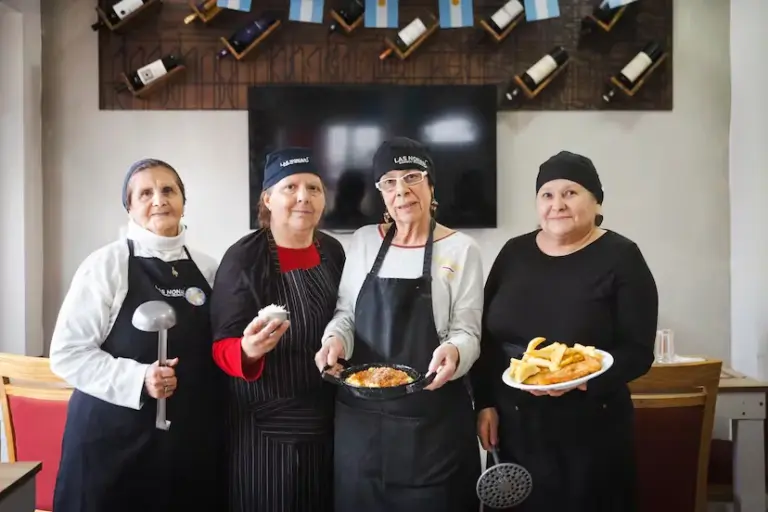
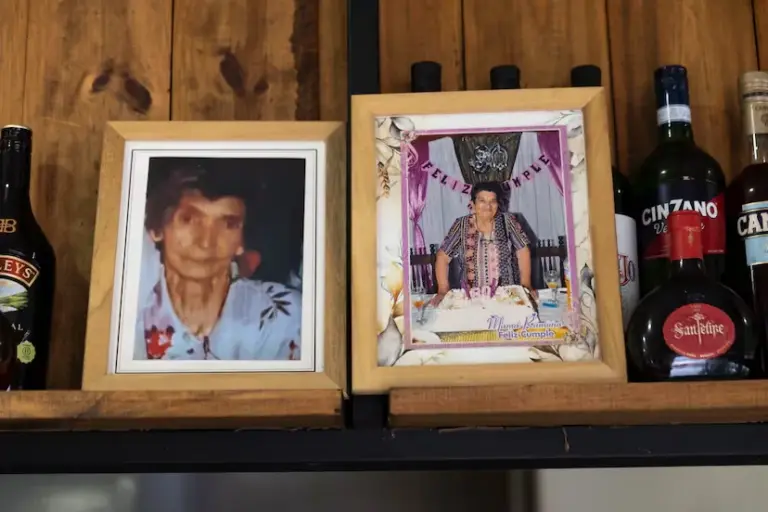

At Las Nonas Ramona Petrona, the day continues like any other midday. Empanadas leave the kitchen, orders pile up, and customers arrive in the dining room. The difference lies in those who sustain this scene. Ema Quinteros has finished preparing the empanadas, and behind the counter, Débora Ibáñez sends a message to other gastronomic entrepreneurs: “There are many people over 50 who feel marginalized by a labor market that no longer considers them. To restaurant owners, I would say give them a chance. You won’t regret it. You will find responsible, kind, and respectful people who value work and are committed.”