








In an increasingly digitalized world, cash is losing weight in people’s daily lives, but in crisis situations, it can be a lifeline. The Bank of Spain, in a blog post about the first year after the blackout, recommends keeping banknotes and coins at home, between 70 and 100 euros per family member, to be able to pay during crises like the one the entire country experienced exactly one year ago.
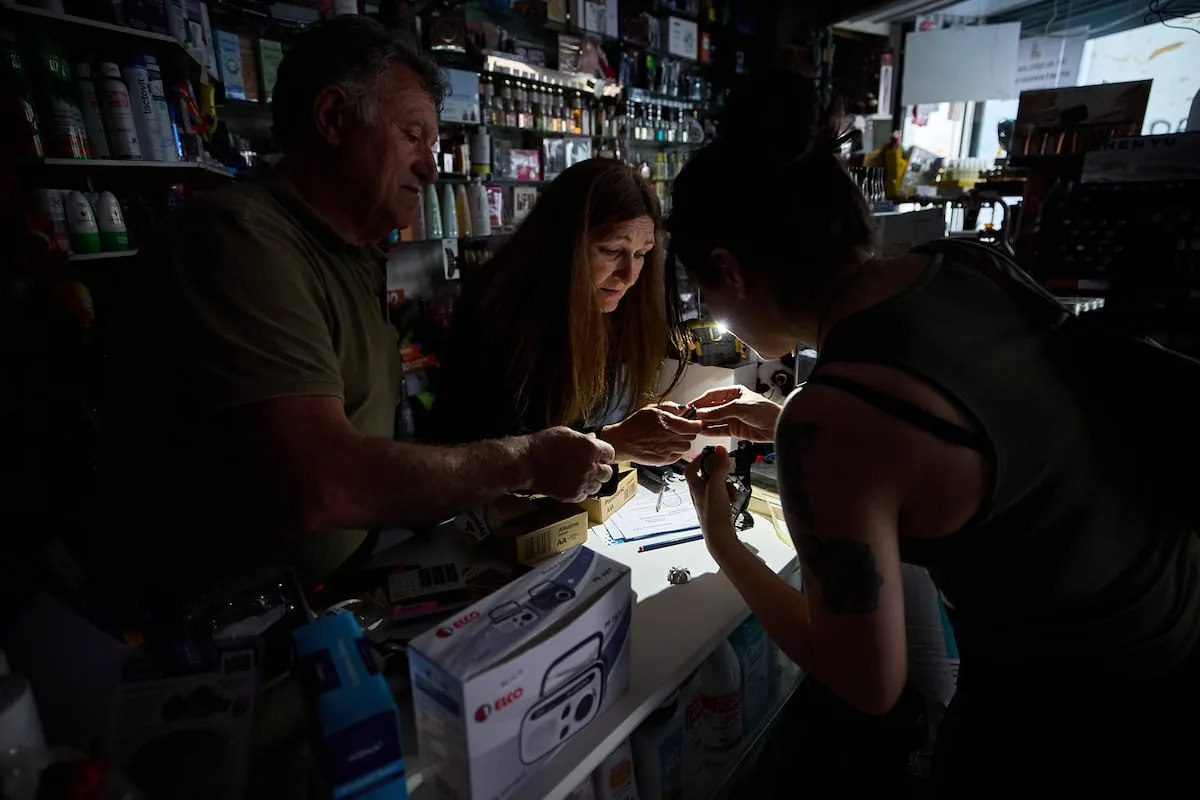
The supervisor himself insists that cash is not so much a matter of nostalgia as of functionality. In the blackout scenario, it was the last operational resort when the rest of the payment systems stopped working. The simultaneous failure of electricity and communications disabled ATMs, point-of-sale (POS) terminals, and payment applications. According to data from the European Central Bank (ECB), physical card spending fell between 41% and 42% compared to usual levels. The impact was even more pronounced in e-commerce, where the drop was around 54%, which translated into an estimated 34% decrease in aggregate consumption in Spain throughout the day the incidents lasted. Only cash maintained its operability without interruptions.
In this regard, the Bank of Spain highlights the virtues of banknotes and coins for their speed and because they ensure citizens’ autonomy. “It is the only means of payment we can use today without equipment, electricity, or internet,” the supervisor points out in the text.
The episode, as noted by the Bank of Spain in its analysis, revealed a reality: the apparent invulnerability of the modern payment system rests on a very specific chain of dependencies. Electricity, telecommunications, or servers. When one of these links falls, the entire system can be compromised, even if temporarily.
This is not about questioning the transition to electronic payments. Contactless cards, mobile applications, and instant transfers have significantly reduced the daily use of cash. But one of the lessons learned from the power outage is that banknotes and coins still play an important role in society.
In this context, the Bank of Spain’s recommendation is to have at least a small amount of cash at home, enough to cover basic expenses for several days as a cushion against a potential crisis. “We cannot guarantee that a blackout or similar emergencies will not happen again. We continue to work so that, if it does happen, whenever it may be, the role of cash as a fast and autonomous means of payment continues to be recognized and appreciated by society. The advice is simple: always have some cash on you and at home,” concludes the Bank of Spain.
Read more The Princess of Asturias will study Political Science at Carlos III University
The supervisor reminds that other payment methods are incorporating solutions so that they can be used temporarily without an internet connection and even without electricity. And he cites the design of the digital euro which, if finally adopted, will have an offline wallet mode that will allow payments in such situations where there is no mobile coverage, internet connection, or electricity.
In any case, the recommendation to keep cash at home is not new. In March, Sweden’s central bank, the Riksbank, already recommended that each household keep at least 1,000 Swedish kronor in cash (just over 90 euros at the current exchange rate). This is a striking warning because Sweden is a country where cash has almost disappeared, as only one in ten purchases in stores is made with physical money (10%).
The European Commission has also asked European citizens to have cash on hand in case of a possible emergency, although without specifying an amount, to survive 72 hours without external help in the event of aggression, natural disasters, pandemics, or cyberattacks. The community institution proposed an emergency kit last March, consisting of water, food, tools, a flashlight, candles, hygiene items, medicines, or documentation.
Similarly, the geopolitical tensions dominating the international context have led European financial authorities to be wary of the role of electronic payment systems that rely on international structures. Card payments are dominated by fundamentally American companies, and authorities fear that, in the face of an international conflict, interests may not be aligned with those of the European Union, and they highlight the risk that such a critical sector as payments relies on foreign companies.
Therefore, the European Central Bank (ECB) has been promoting the digital euro project to ensure public access to money in its electronic version for all citizens. And also private initiatives like Bizum and the union of all similar instant payment applications that have emerged in different European countries to ensure sovereignty in the world of payments.