




“What is this?”, I used to ask myself in a joke from my adolescence while the one asking the question puffed out their cheeks, opened their eyes carefully not to blink, and spread their fingers as if touching an invisible glass. “I don’t know. What is it?”, someone would answer, preparing with resignation for the punchline of the joke. “A preppy in a bubble!”, the interlocutor would close with laughter, alluding to the expensive “bubble” model SUVs in which, it was assumed, only preppies with parents who had the resources to buy them could travel.
Nowadays, due to social media algorithms, we are in an era of bubbles. Those who like football think the whole world is focused on all the cups, from the World Cup to the Pony Malta Cup, and those who defend a political cause think the world is divided between allies and detractors. That is why it is good to review how representative one’s own bubble is of what is outside, because the risk is falling into an unknown world when it bursts. As things stand, the hardest fall will be for those who are today in the bubble that feels nostalgia for the world of 2022, the world before Gustavo Petro’s presidential victory.
Let’s understand each other: recognizing that there were valuable things, achievements of Colombian institutions on which it is worth building the future we want is not the same as feeling nostalgia for that world. The fragile bubble is the one within which it is thought that everything was more or less fine and what was wrong was gradually improving thanks to the technical management of the State by a ruling class that gave room to the “technicians” while ensuring “governability” by properly managing the politicians’ ambitions. In this bubble, the liberal paradise was yet to come, and its arrival could be accelerated as more attention was paid to the technicians’ prescriptions. And in that bubble, the left’s victory in 2022 is an anomaly: a popular whim that has had such undesirable and clear consequences for everyone that the priority will be to return to that prudent and sensible path we abandoned on a fateful June 19, 2022.
Nostalgia for that time is a privilege of few, because few could then feel that Colombia had opportunities for improvement but that it was preferable to take things calmly and implement gradual changes. For example, only those who receive good public health care in the main cities can pat themselves on the back for the gradual expansion of the effective enjoyment of the right to health.
Inside the bubble, technical debates about ADRES and EPS, UPC and the Punto Final Agreement can take place, and it is good and important that they do. But outside the bubble, there are children who go blind from completely preventable toxoplasmosis while the EPS sends medicines to the countryside, women who die from childbirth complications in the Amazon while waiting for transfer by boat to a first-level hospital, and people who die from malaria due to lack of access to a health post in places that, like the Nuquí hamlets, are paradisiacal for tourists who come and go.
When the bubble’s inhabitants are pointed to all this, their complaint does not wait. Yes, things were not perfect in 2022, but many of them are worse today than back then, starting with the health system. They are not wrong in that the Government’s mistakes have been serious and, in many cases, completely unnecessary. It is horrifying, for example, that the shortage of medicines for hemophilia control has started for the first time in years to affect the health of those with that condition, like the boy Kevin Acosta, whose death was completely avoidable.
Read more Adrián de la Garza: “The World Cup should be more than just football”
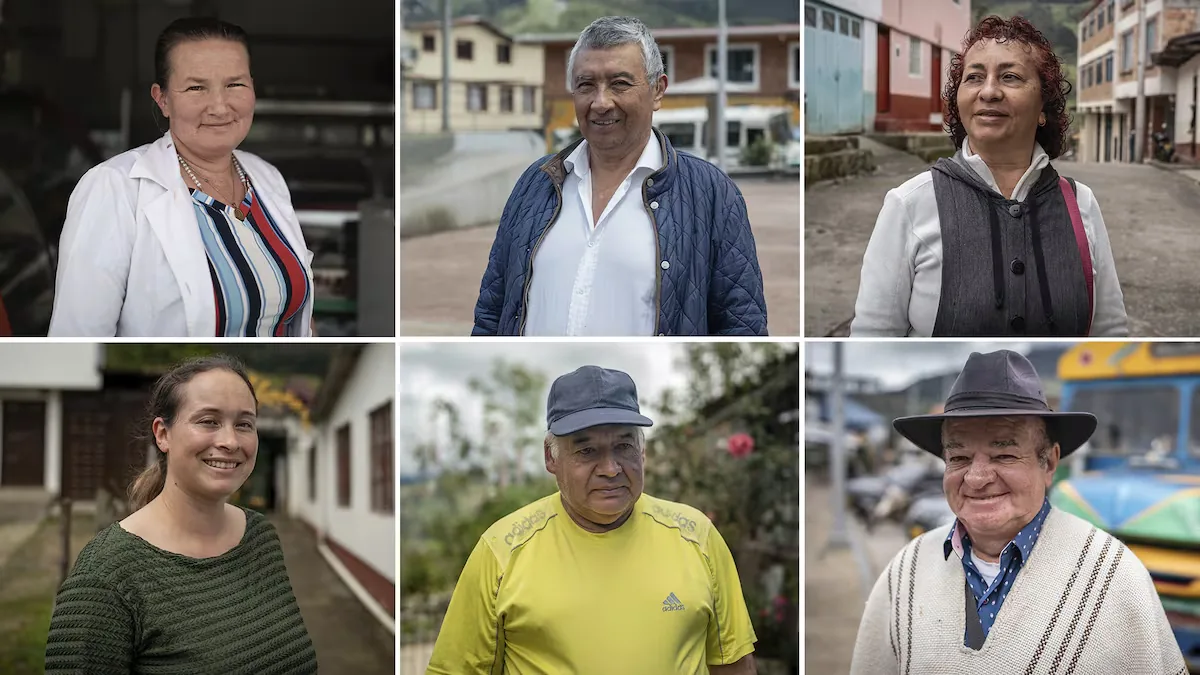
However, skepticism towards the built institutional framework has been accumulating for decades, for just and palpable reasons for everyone except those who live inside the bubble, and millions of citizens remain willing to give the political movement that repeatedly points out the system’s failures the benefit of the doubt. Inside the bubble, for the first time, people have to queue to claim medicines at dispensaries. Outside it, now everyone has to queue as always. This leveling down can be criticized as much as one wants from inside the bubble, but the truth is that from outside it is valid to point out that only when we all face the same problems will the system move to offer solutions that reach everyone, not just some.
Being paranoid does not mean one is not being pursued, and that is why, although President Petro sees political persecution where there is none, the truth is that there is enough for the country living outside the bubble to see it clearly. The persecution is seen in the media and in perhaps well-intentioned statements by academics, thinkers, and opinion leaders tweeting from inside the bubble. So valid criticisms do not resonate as strongly as the weight of certain truths. No one – except those in the bubble – wants to go back to 2022.
Things are going well for millions of people who have seen unprecedented increases in the minimum wage, while unemployment reaches historic lows. Transfers to elderly people without pensions have tripled. Inflation – despite the justified chest-beating of the bubble’s inhabitants over the Government’s attacks on the independence of the Bank of the Republic – is under control. And the coming fiscal crisis is not something someone who spends three hours or more a day on public transport on their way to work somewhere in the bubble thinks much about.
For the vast majority of people, the worry that their cell phone will be stolen is infinitely more tangible than the prospect of credit rating agencies downgrading Colombian debt bonds. If the left ends up losing the elections, it will be because of things that affect citizens’ daily lives, such as the increase in crimes like theft and extortion, and because of the promise that order and a firm hand can be part of a program of radical transformation of the country’s institutions.
If that transformation is delayed, the demands will become increasingly insistent. The sooner this is understood from inside the bubble, the sooner we can build a society that serves us all, and whose main value is not nostalgia for golden times that never existed, but the guarantee of Colombians’ constitutional rights.
Read more Podcast | What are the scenarios following the victory of the three main presidential candidates?