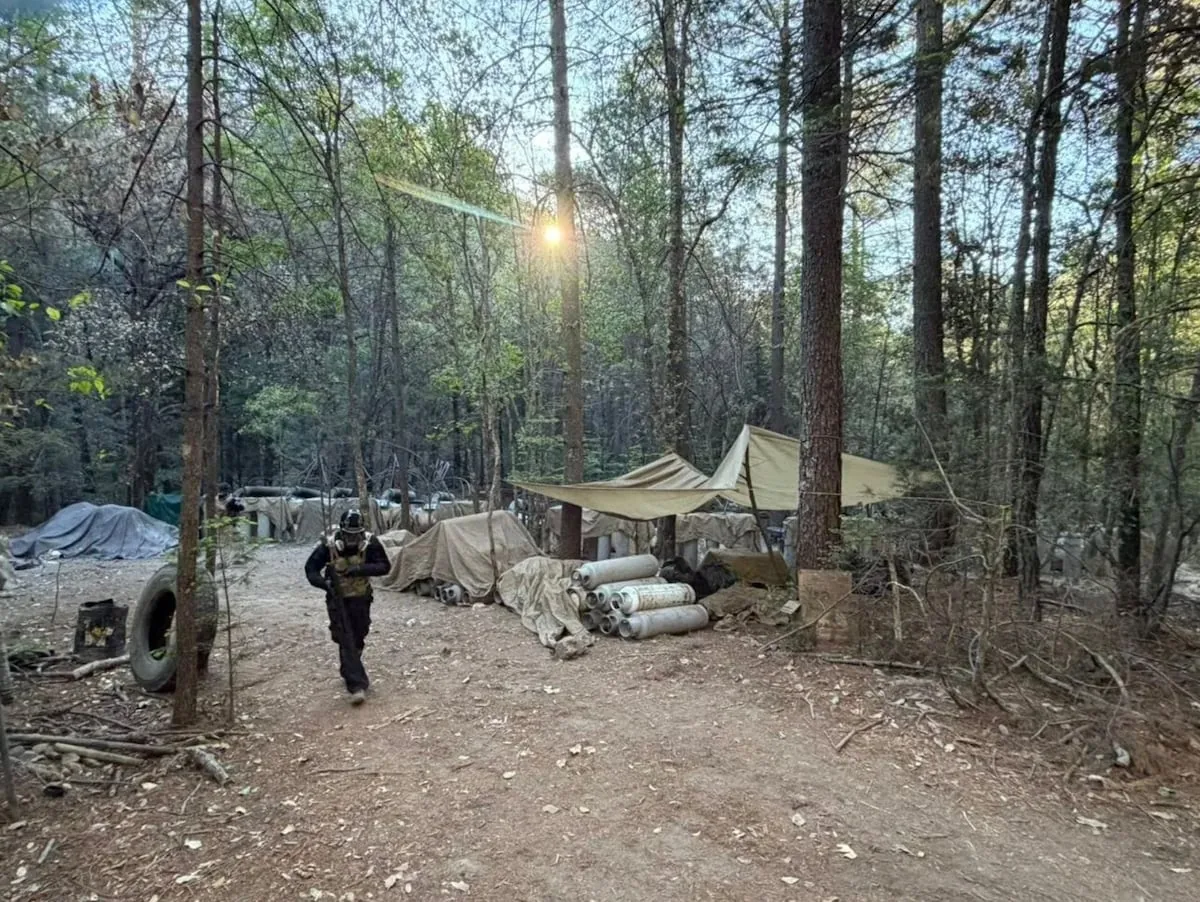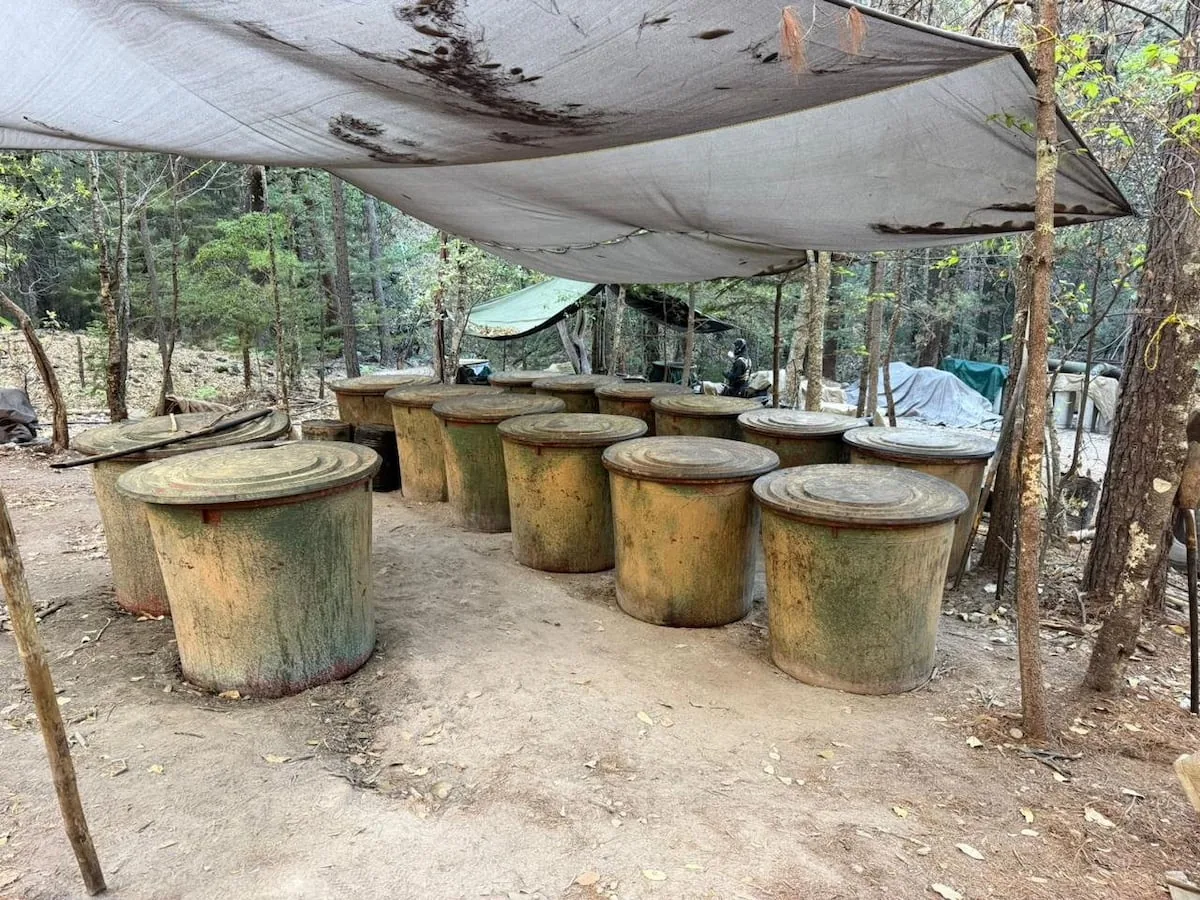







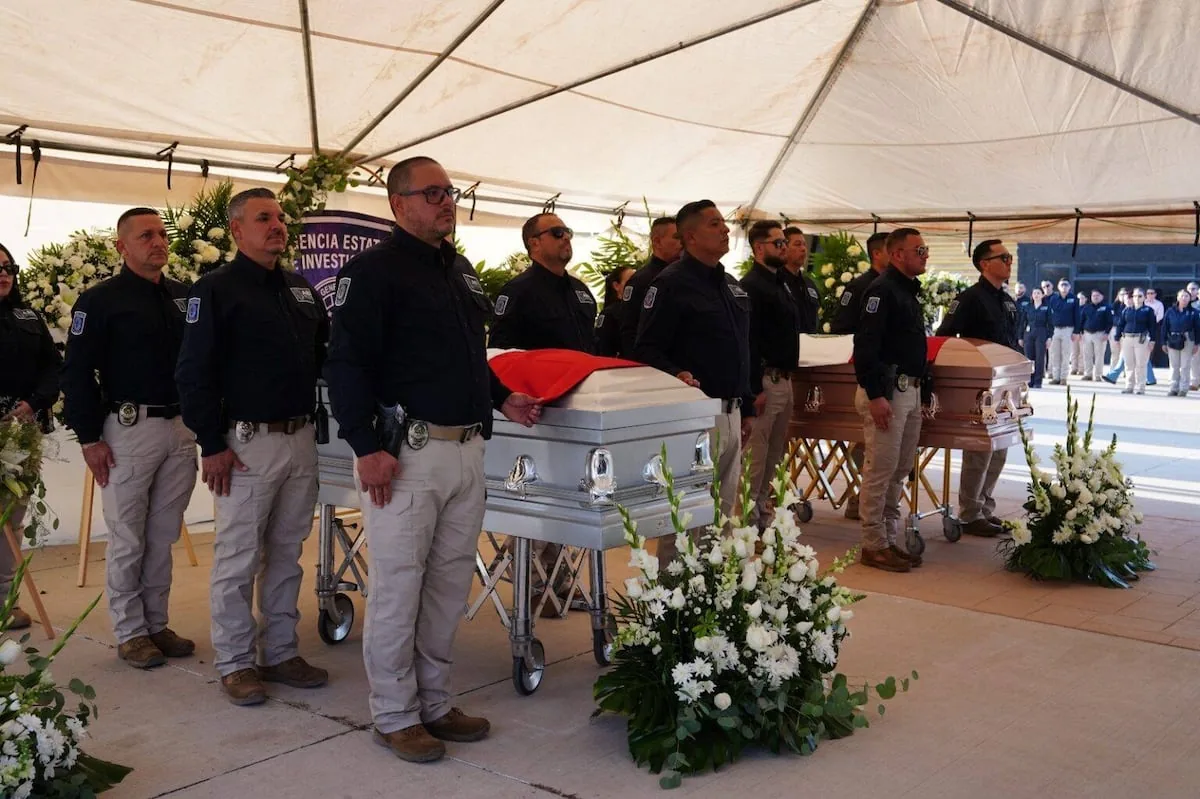
In a country full of dead, important cradles of drug traffickers, and savage fights between cartels, the spark that triggered everything came from a remote point in a remote mountain range. In the early hours of April 19, two CIA agents and two from the Chihuahua Prosecutor’s Office died in a brutal car accident. On a road winding through the canyons of the Sierra Tarahumara, their vehicle fell into the depths of a ravine. The tragedy itself soon took a back seat to what it revealed: there were U.S. intelligence agents with Mexican state agents returning from dismantling a huge drug lab. That premise quickly set the rest of the pieces in motion.
Read more Adrián de la Garza: “The World Cup should be more than just football”
In a chronological and rushed order, Mexico’s president, Claudia Sheinbaum, quickly attacked the opposition government of Chihuahua because the federal administration was unaware of those agents and because the Constitution prohibits any fieldwork by foreign figures; the State Prosecutor’s Office got tangled at every step in not being able to explain what the Americans were doing there; the resignation of the Chihuahua prosecutor was announced, investigations opened, an impeachment trial against Governor Maru Campos, and amid the internal conflict, messages came from the United States: a first criticism of Sheinbaum’s “lack of compassion” over the agents’ deaths and then the announcement of charges against the governor of Sinaloa and nine other officials for links to drug trafficking. Now both Maru Campos and Rubén Rocha Moya have been summoned this Saturday to appear before the Attorney General’s Office. Only a month has passed since the accident and the consequences inside and outside Mexico’s borders are still ongoing.
The gaps
It is a case full of holes. No government has helped fill them. On her side, the governor of Chihuahua says she did not know then and barely knows now, that the one who authorized everything is the director of the State Investigation Agency (who is precisely one of those who died in the accident), that the U.S. agents did not participate in the operation but do participate in operations in the state but are not CIA, and that we must wait for the investigations to finish. Maru Campos only acknowledges that the then prosecutor of Chihuahua, César Jáuregui, called her at three in the morning on April 19 when the accident occurred and later told her that there were four CIA agents there, two in the vehicle that crashed and two in another.
Thus, there is still no detailed reconstruction of the tragedy. With testimonies from the U.S. government, Los Angeles Times published that the four CIA agents did go to the drug lab, that it was the third raid they had participated in since January in Chihuahua, and that they were there dressed in state police uniforms. A source close to Sheinbaum’s government tells this newspaper that the drug lab was no longer operational, so the loss of lives — Mexican and American — was in vain. The accident has indeed left a confirmation on the Mexican side: the CIA is cooperating with governments and doing work that other agencies, like the DEA, used to do. The same sources point out that the presence of these intelligence employees is greater now than at other times, that their arrival has increased by inertia after Trump named Mexican cartels as terrorist organizations.
“In terms of the nebulousness and clarity of the information, in a month we have not yet gained much,” says María Teresa Martínez Trujillo, director of the Noria Research center for Mexico and Central America, “there is no convincing story of who they were, what they were doing here, why it happened, why they were with Mexican agents, why they were where they were, why the accident occurred.” Martínez, a professor at Tec de Monterrey, points out how public opinion in Mexico has become accustomed to having only “pieces of the story and being left with a lot of unknowns,” while the case evolves toward a “politicization”: “And at the same time it is linked to other tensions of political-criminal configurations, particularly with what is happening in Sinaloa.”
The consequences
There is a quote that cannot be overlooked in this story. Most of Mexico’s states are controlled by Morena and Chihuahua, one of the exceptions, led by the National Action Party, the largest entity in the country, has gubernatorial elections in 2027. In the days following the accident, the president spoke about the case in all her morning conferences, announced that it would be investigated if the Constitution had been violated, emphasized that Americans could not work in the field, and also personally attacked Maru Campos by pointing out that she had not even answered her phone.
Read more Podcast | What are the scenarios following the victory of the three main presidential candidates?
“The Mexican government tried to use the accident in internal politics, but unintentionally ended up fueling distrust with the U.S. agencies,” says security analyst Carlos Pérez Ricart: “In the pursuit of gaining some internal applause and affecting some internal opponents, they ended up making political use of the death of two people. And there is also a human aspect that the agency was not going to allow. I think the federal government did not read it well and instead of showing compassion for the death, they made political gain from it.”
For the CIDE researcher, the response from the Department of Justice and the CIA comes in response to “the excessive prominence that the Mexican government gave to the issue”: “It is natural that there was a response and we have not yet seen all the consequences.” Only 10 days after the Chihuahua accident, the United States revealed its accusation against Rubén Rocha Moya and nine other political and security figures in Sinaloa. Two of them have already surrendered on the other side of the border. The Donald Trump government has publicly said on several occasions that these accusations do not end in Sinaloa.
The spies
There have been CIA agents in Mexico for decades, those who were in Chihuahua — without public names, without recognition on this side of the border — were not the first nor will they be the last. Their death has transcended so much for being the latest example of a clash of blocs: Donald Trump’s recurring threat to intervene militarily in Mexico and Sheinbaum’s perpetual defense of the idea of sovereignty. “The president shows a general resistance to the presence of the agents, which does not mean that there are no agreements and probably very precise cooperation projects,” assesses María Teresa Fernández Trujillo. Because the CIA agents should not have been working in Chihuahua, but they were.
“It is perfectly normal for the CIA to do its work with the states. It happens, happened, and will happen,” says Pérez Ricart, author of One Hundred Years of Spies and Drugs: The History of U.S. Anti-Narcotics Agents in Mexico: “Sometimes it is written, sometimes not, sometimes formal and sometimes informal, but CIA agents operate and will continue to operate in Mexico with or without the local government’s authorization.” The researcher believes that now the states will be “more cautious,” because of the lesson to Maru Campos, but does not believe that this will transform the way the intelligence agency intervenes: “The CIA needs informants, police, investigators, prosecutors, and that relationship is not controlled nor has it ever been controlled by the federal government. Much of the operation is not even endorsed by local governments. So this is not a before or after of anything. And less now when the presence of these people is so evident and interference is so key.”
Read more Only 126 hours awake