








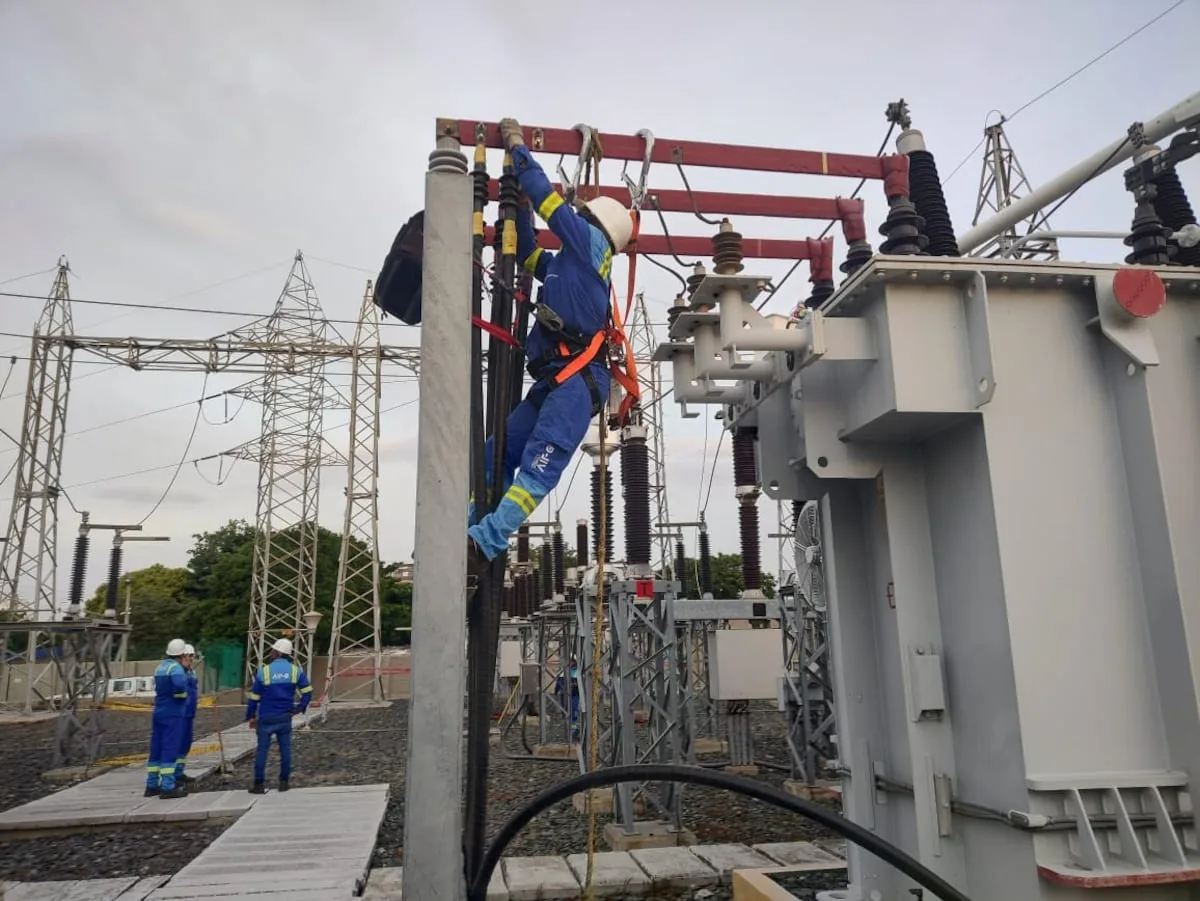
The tax reform that President Gustavo Petro has tried to approve through a series of decrees receives a new blow. This Wednesday, the Constitutional Court unanimously (8-0) struck down a tax on energy generating companies and ordered the Executive to return the collected funds. Sentence C-115 of 2026, with a report by Vladimir Fernández Andrade, declares unconstitutional Decree 44 from last January, which sought to rescue the intervened Air-e, responsible for supply in four departments of the Caribbean Coast and which accumulates debts with the electrical system amounting to 2.5 trillion pesos (671 million dollars). Based on the December economic emergency, which the Court had already overturned, the decree taxed generators with a 2.5% contribution on their 2025 profits and a 12% energy contribution for hydroelectric plants that sell on the stock exchange. The decision comes amid a year in which the Executive faces a gap of 16 trillion pesos (about 4.3 billion dollars) in the General National Budget.
The Superintendence of Public Services — responsible for liquidating and collecting the contribution, and for the intervention of the private company — only managed to publish a resolution for comments to make the collection, but never generated payment receipts, sources familiar with the matter clarified to EL PAÍS. Even so, the Court ordered that any value of the energy delivered under the decree be recognized in the income tax and, if it exceeds the limits, the surplus may be carried over to future periods. The sector had estimated that the taxes would have implied a payment of 300 billion pesos, about 81 million dollars.
Alejandro Castañeda, president of Andeg, said the decision “shows the independence of the powers” and confirms that “the Government acted wrongly and did not act according to the law.” He also highlighted that the order for reimbursement is “very unusual” in the Court’s jurisprudence and reflects the seriousness of the decree’s flaws. The sector had rejected the decree since its issuance because it forced generators to finance the payment of debts that they themselves have pending collection from Air-e.
A few hours after the announcement, President Gustavo Petro questioned the Court’s decision. On X he criticized the annulment of taxes on “the powerful owners of generators after they defrauded the people of Colombia with tariffs ten times higher than what they should have charged.” He defended that the December economic emergency “was necessary and still is” so that resources “come out of the pockets of the country’s big speculators and not from the workers’ pockets.”
The economic emergency was a bet by President Petro to raise the 16.3 trillion pesos he sought with a tax reform that Congress denied twice. The strategy involved declaring the emergency given those denials and issuing decrees with the force of law to create taxes, something that corresponds to the legislative branch. On December 22, the president declared the emergency. Seven days later came Decree 1474, with a tax package: 19% VAT on liquors, an increase in income tax for financial institutions, triple taxation on the mining-energy sector. On January 21, Decree 44 for the electric sector followed.
But the strategy crashed against the Court, as other measures and other control bodies have done. On April 9, the Court dismissed the main decree. The court considered that the arguments did not meet the unpredictability and exceptionality requirements demanded by the Constitution. “The possibility that Congress denies or shelves financing bill projects is not unpredictable, sudden, or extraordinary,” said the report by magistrate Carlos Camargo. Six days later, on April 15, consequently, the Court annulled Decree 1474.
The attempt to collect by decree leaves mixed results for the Petro Government. The December economic emergency collected 1.6 trillion pesos through tax relief for defaulters, resources that remain in the State’s coffers because they correspond to consolidated legal situations that the Court cannot reverse. That figure represents barely 10% of the gap the Government sought to fill. With today’s decision, which ratifies the suspension and declares the decree unconstitutional, it is definitively nullified, although the shortfall maintains the State’s financial pressures.
Read more Politicians, colleagues, and friends remember Sol Gallego-Díaz, the first female director of EL PAÍS