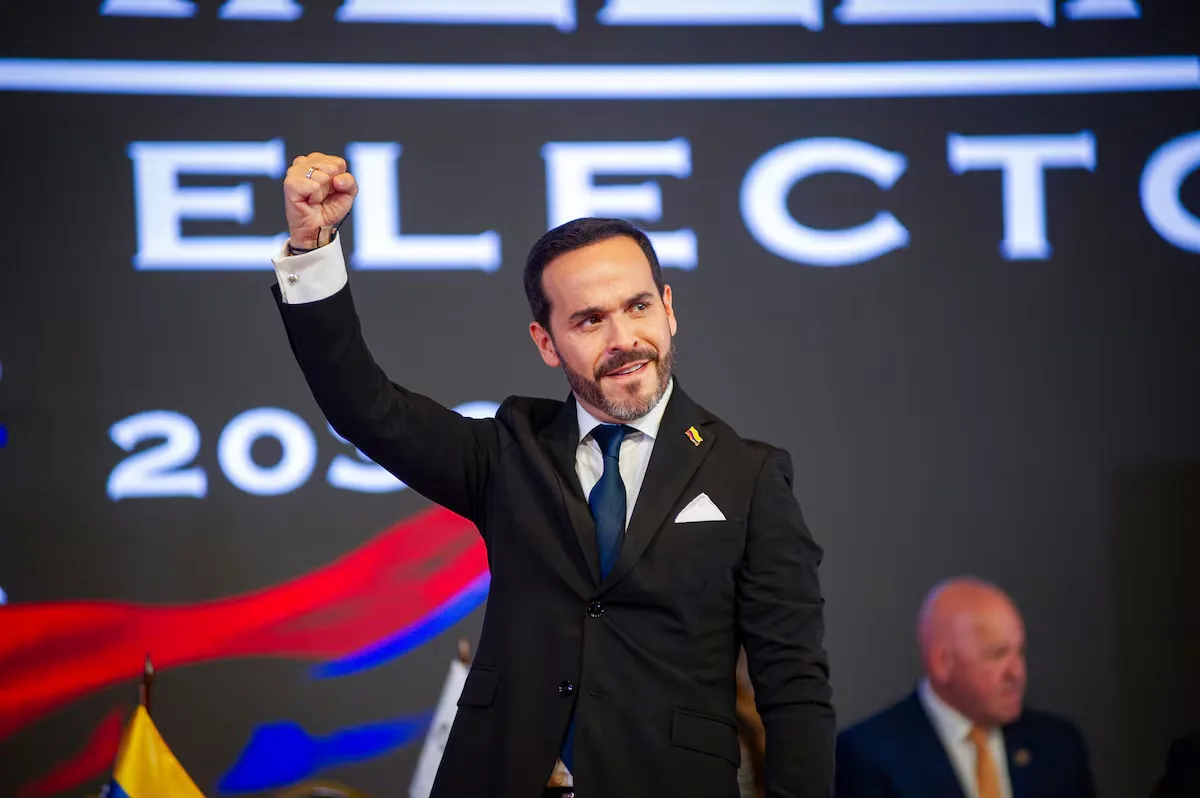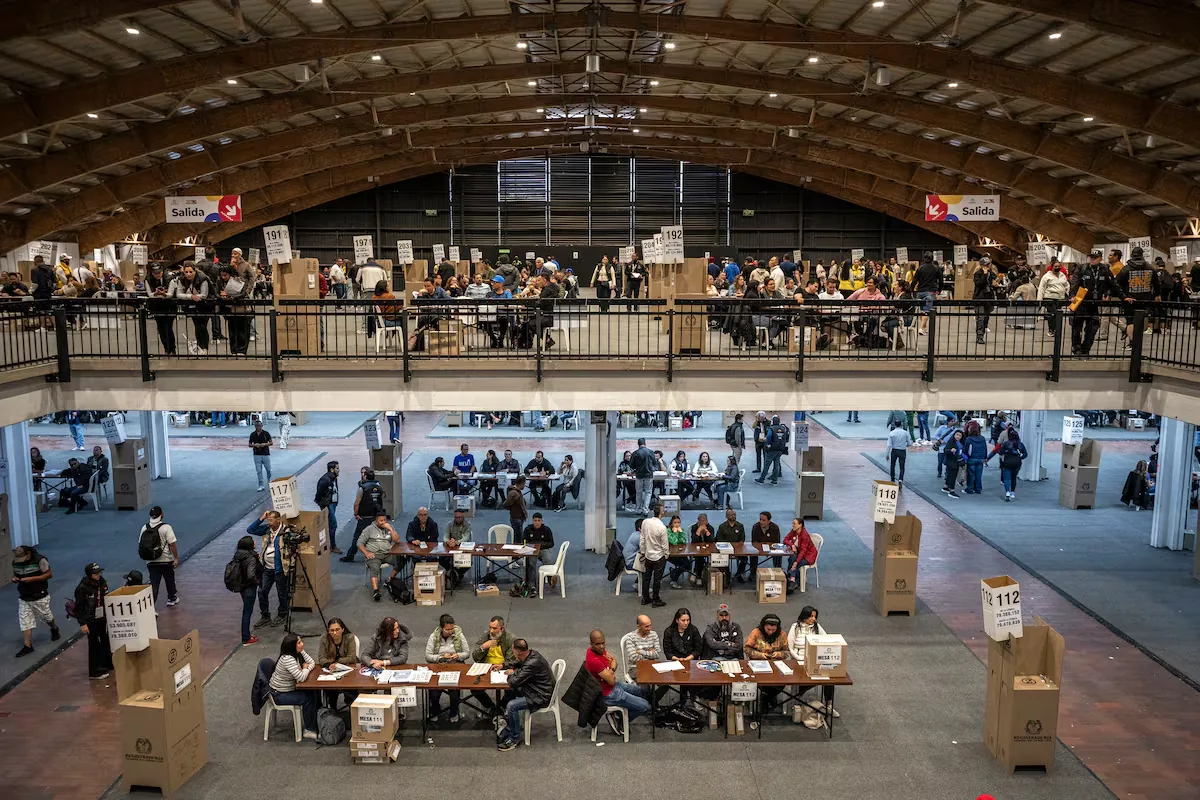







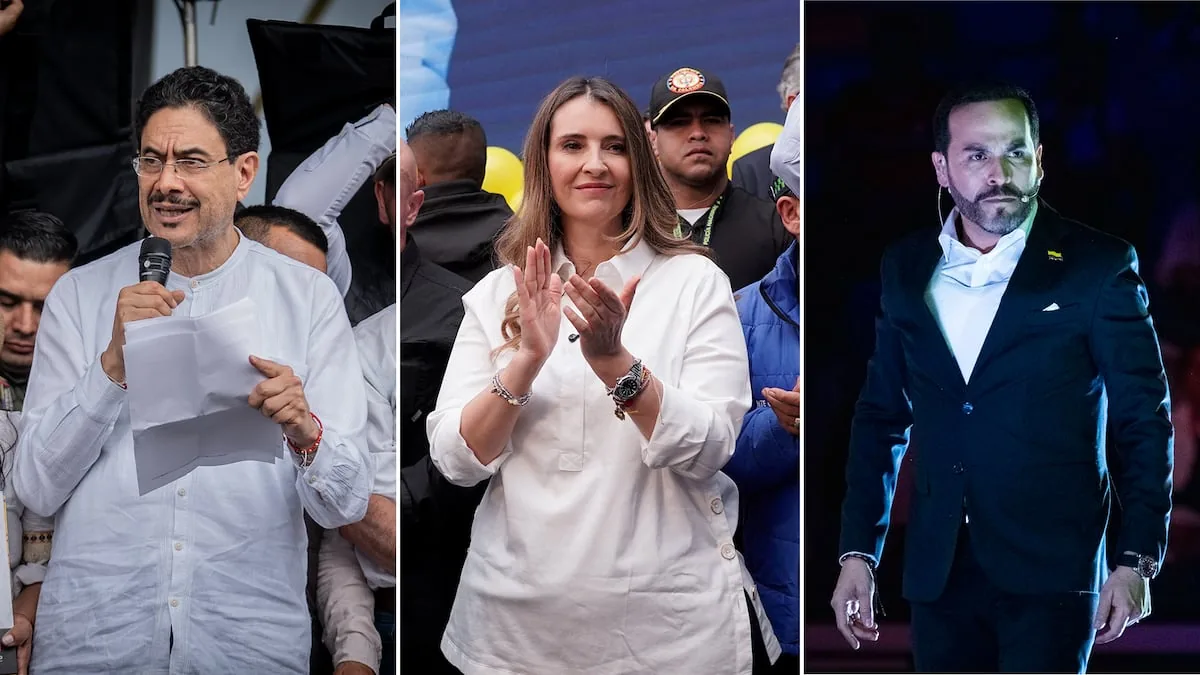
The three main candidates for the presidency of Colombia have not met in any debate with just under a month to go before the first round of elections, which will be held on May 31. Neither the poll leader, left-wing senator Iván Cepeda Castro, nor the two who follow him in the polls, far-right Abelardo de la Espriella and Uribista Paloma Valencia, have agreed to discuss their proposals for the country’s future live. The efforts made by private media, public channels, universities, think tanks, and other civil society organizations have not been enough to bring together the candidates seeking to succeed President Gustavo Petro.
Read more A well-managed migration is a driver of progress
The last few weeks have been dotted with meetings, but those who have participated are candidates with no real chance of being elected, such as former senator Roy Barreras, former foreign minister Luis Gilberto Murillo, former minister Mauricio Lizcano, or former governor of Magdalena Carlos Caicedo. The closest thing to a debate with a variety of candidates and different positions took place this week in an alliance between the RCN channel and the Colombian Chamber of Infrastructure. At the meeting, focused on proposals about construction and housing, De la Espriella, Valencia, centrists Sergio Fajardo and Claudia López, and former ministers Lizcano and Murillo met. Cepeda did not attend.
The senator from the Historic Pact has been the most reluctant to debates. Cepeda’s campaign has chosen to focus its strength on mobilizations and marches throughout the country, has granted few interviews, and has refused to participate in forums or discussions with other candidates aiming to reach the Nariño House. He argues that clear rules about the topics to be discussed are necessary and claims that many of the media proposing these spaces are not impartial. He even stated that he was only willing to attend debates, but only with the two right-wing candidates and those competing for second place in the polls, De la Espriella and Valencia, leaving out centrist options like Fajardo or López.
The space Cepeda has found to polemicize with Valencia, who could beat him in the second round according to the latest polls, has been the Congress of the Republic, where both are senators. In several plenary sessions and in the legislative hallways, the two candidates and congressmen have publicly confronted each other on several national current issues. The latest discussions revolved around the failure of total peace and the corruption scandals of Uribismo.
Despite Cepeda’s continuous refusals, on Thursday afternoon a new possibility for debate among the strongest candidates was opened, promoted by several aspirants before Colombia’s public media system. Hollman Morris, manager of RTVC, has accepted the initiative. The agreement is to hold a series of three debates before the first round. The aspirants who submitted the request, and who would participate, exclude the three strongest. They are López, Fajardo, Murillo, Caicedo, former senator Roy Barreras, and lawyer Sondra Macollins.
Although the moderators and methodology are yet to be defined, the seven campaigns and the state entity agreed to hold the debates on Wednesdays, May 6, 13, and 20, lasting two hours from 8:00 p.m. to 10:00 p.m., and broadcast live by public media. They also established that each debate will focus on one topic: justice, social reforms, and the economy. The fact that RTVC, repeatedly accused of being at the service of the Government, will hold the debate, and that the agenda does not include the total peace policy and the worsening of violence, makes it more likely that Senator Cepeda will agree to attend, as he has demanded not to address those issues. Neither De la Espriella nor Valencia have commented on the invitation.
Responding to the request of the presidential candidacies of @ClaudiaLopez, @sergio_fajardo, @LuisGMurillo, @RoyBarreras, @MauricioLizcano, @carlosecaicedo and @SondraMacol, their representatives met at #INRAVISIÓN @RTVCco to specify conditions and how to carry out… pic.twitter.com/reRCKWcv2E
— RTVC Colombia (@RTVCco) April 30, 2026
Other initiatives from different sectors of civil society that hope to bring candidates together to discuss various topics are joining this initiative. The renowned NGO DeJusticia has partnered with the organization Temblores, the private Universidad EAN, and several media outlets to invite all candidates to another debate, scheduled for May 14 and moderated by journalists María Jimena Duzán and Eva Rey. The frontrunners have not confirmed their participation, nor have they done so for other calls, but these are evidence of increasing pressure from civil society to have serious and quality debates before the May 31 elections.
Read more Mexico’s great fortunes seek certainty outside the country