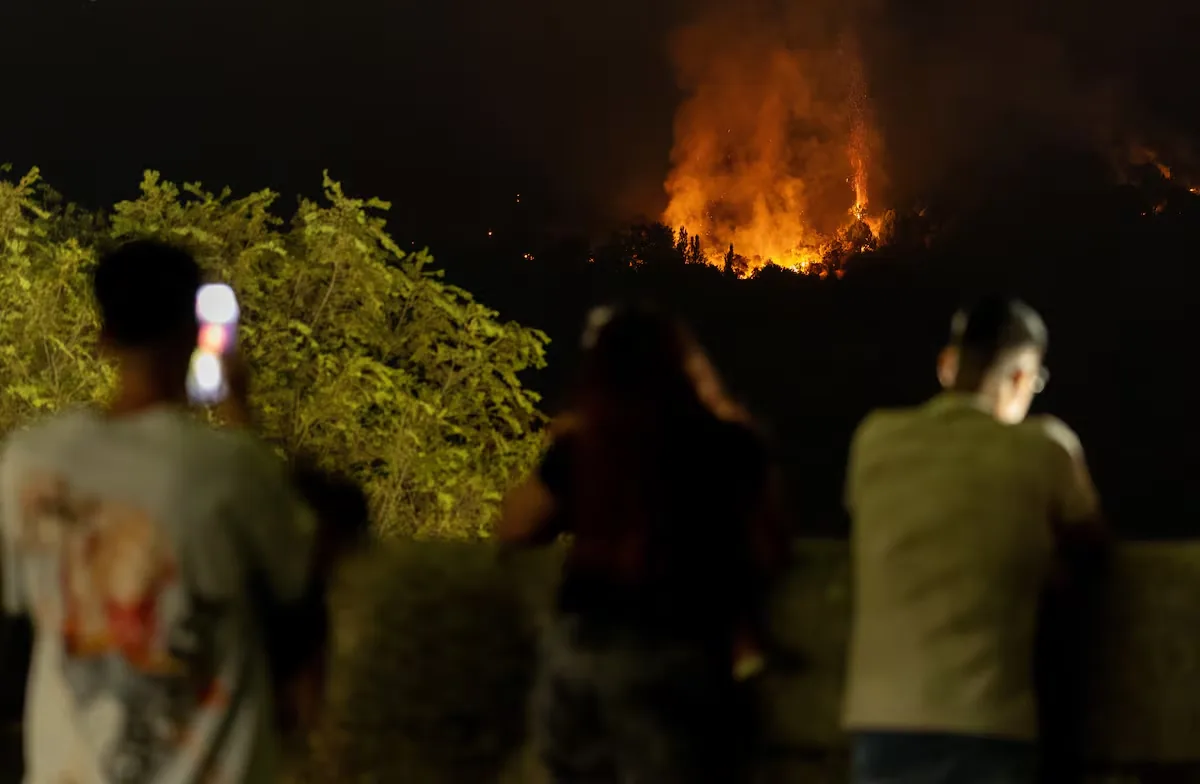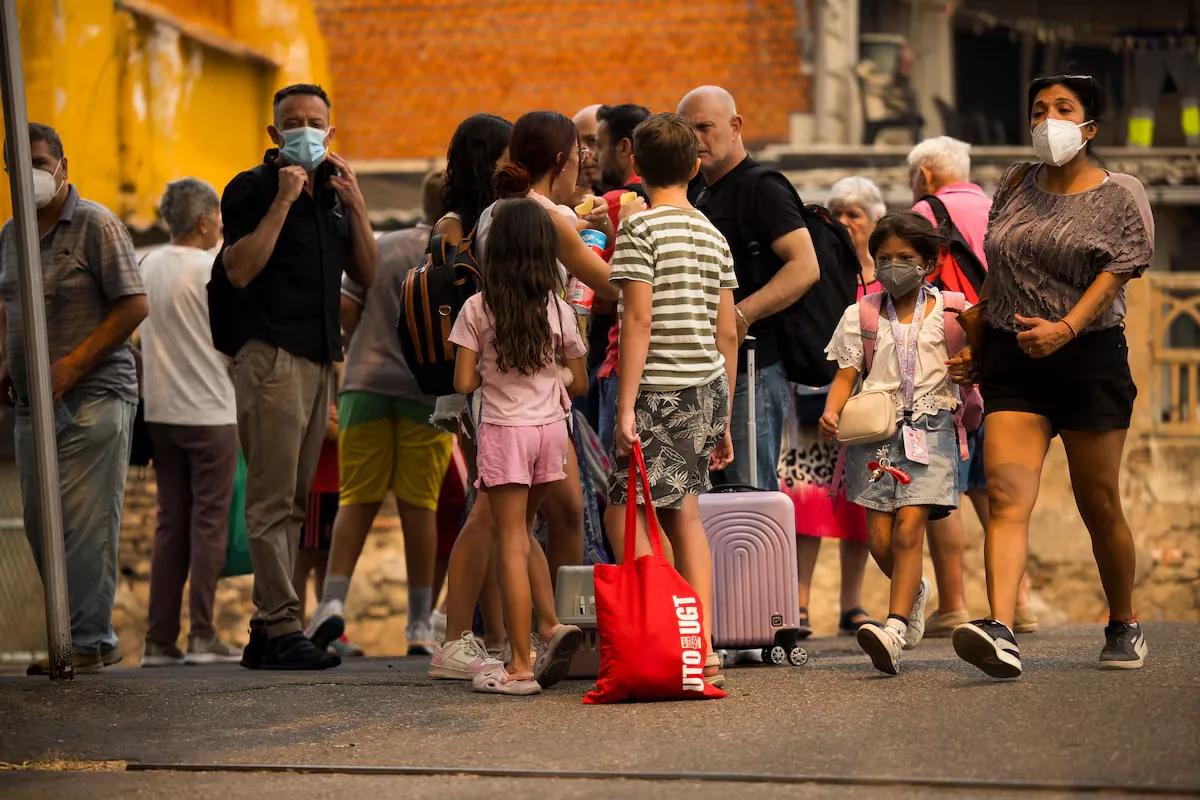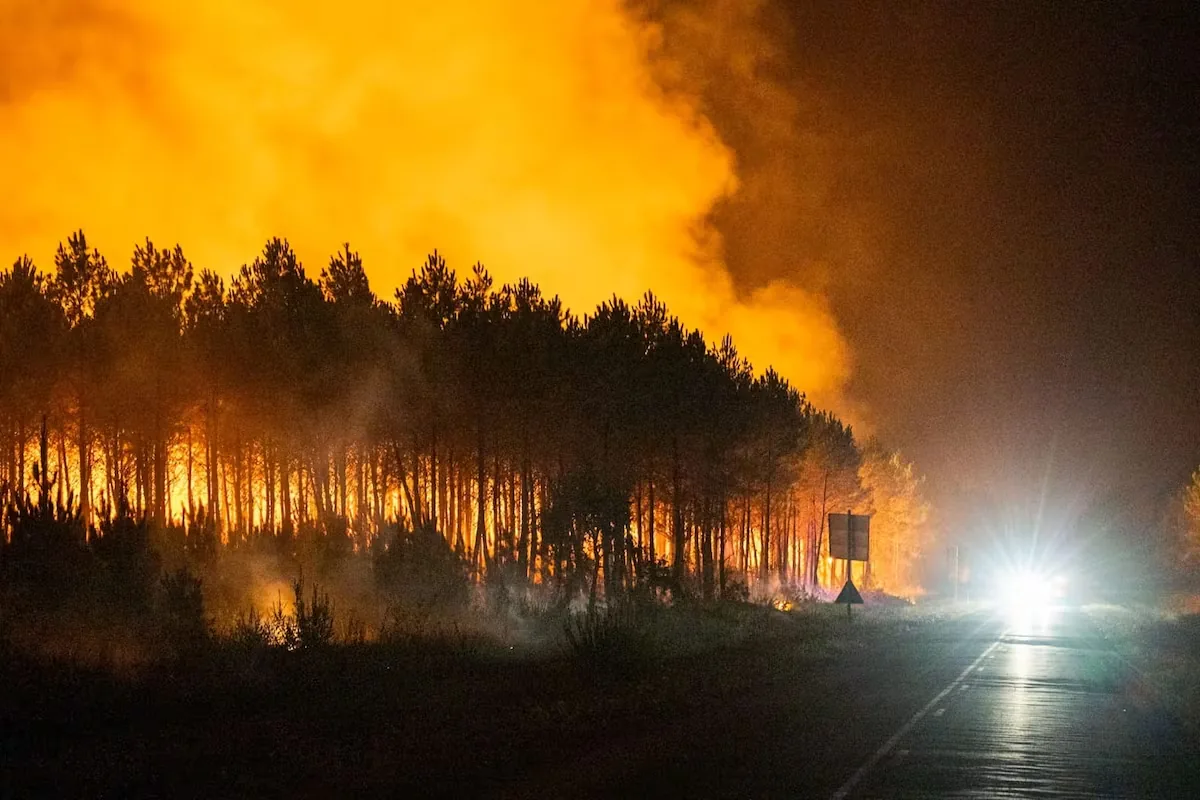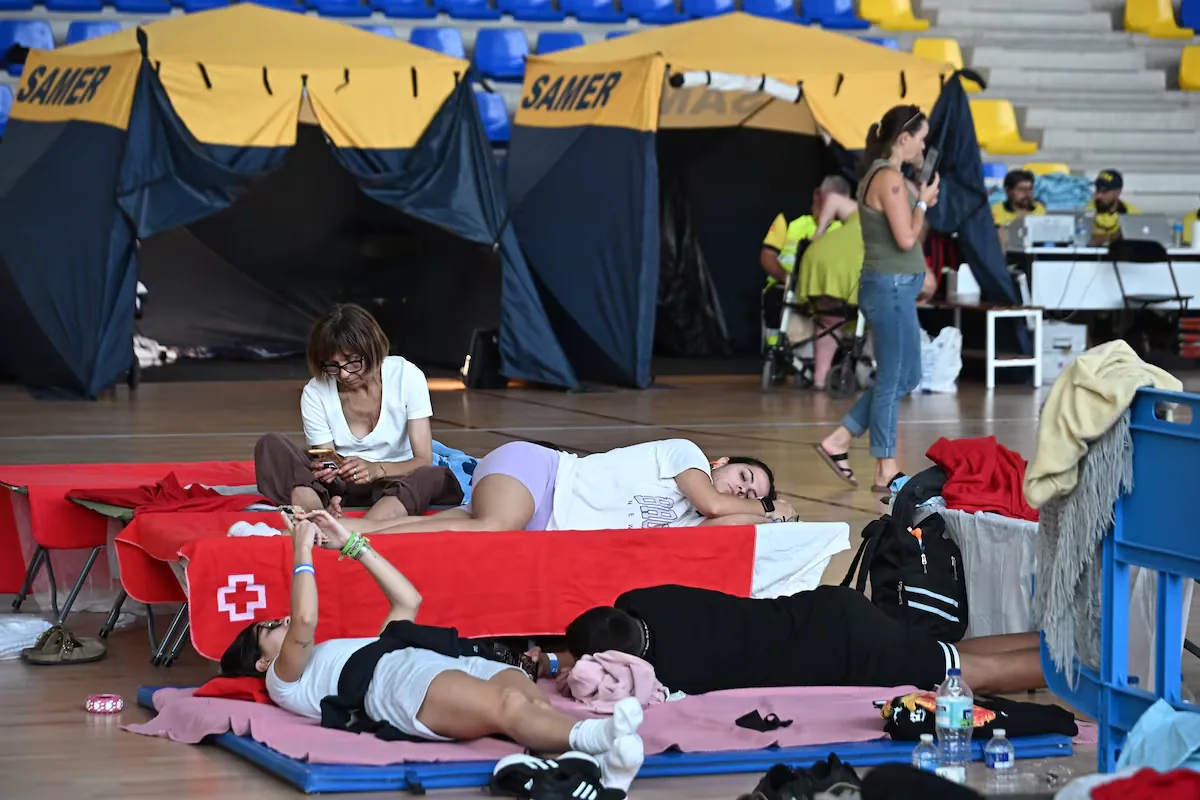






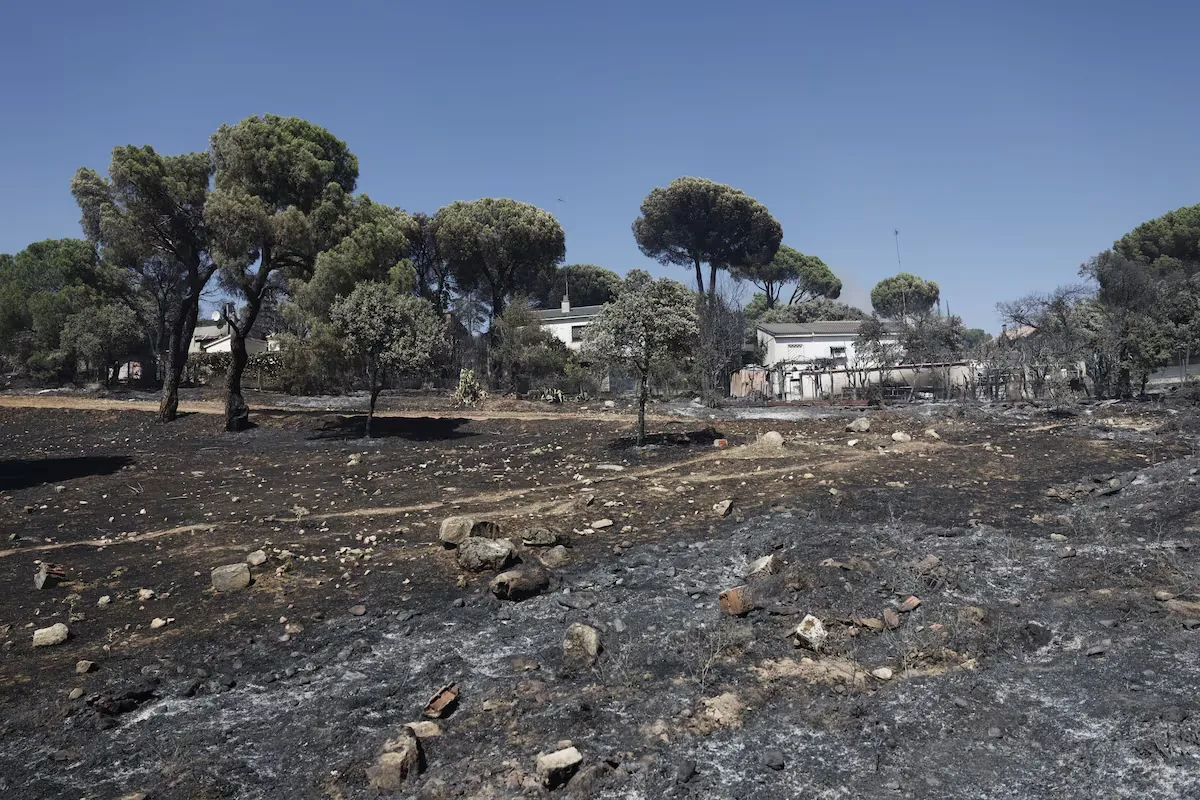
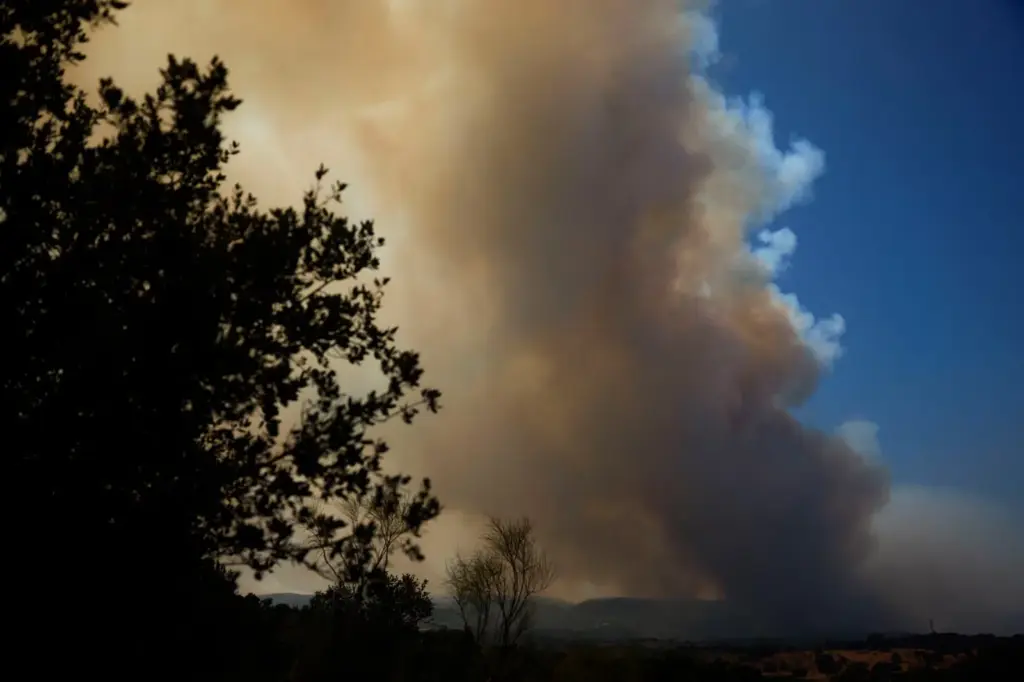
In the confined towns, residents remain attentive to the evolution of the devastating fire in the Sierra Oeste of Madrid, which has already burned 45,000 hectares. They live with fear and hope that the flames can be contained and that only smoke reaches their homes. The fire, however, remains unstable. A total of 12 municipalities have been evacuated, with some 30,000 people displaced, and another four remain confined, where more than 20,000 residents cannot leave their homes. Confinements remain active in San Martín de Valdeiglesias, Pelayos de la Presa, Valdemaqueda, and Villa del Prado.
In San Martín de Valdeiglesias, Mariano Pérez, 48, tries not to be alarmed. “It’s because of the smoke, not the flames,” he explains. He says that the Local Police keep residents informed and that, although the fire got a little closer during the night, the flames cannot be seen from the town. Now they need patience: “We have to stay at home and go out as little as possible for prevention.”
Luis Haro, PSOE spokesperson in the municipality, confirms that smoke is currently the main concern. He says that everything seems under control and that people are no longer as scared because they no longer see the flames. “Yesterday you could see more from the mountain (Canto del Garro). Today you only see a lot of white smoke.” He says that the municipal pavilion has been set up for those who were displaced from homes in nearby towns.
The decision between evacuating or confining is not taken randomly. It depends on the direction of the Civil Protection emergency, based on the technical evolution of the fire. Sonia Crespo, from the Government Delegation in the Community of Madrid, explains it this way: “Experts evaluate and assess it based on the situation of the fire’s development in the vicinity of that municipality.” When confinement is decreed, the Ministry of Interior sends Es-Alert warnings informing of the obligation to stay at home.
According to Dani Fernández, a forest firefighter from the BRIF of Laza, in Galicia, confinement is usually the default option. It serves to avoid unnecessary travel through the area, prevent residents from getting scared when they see the flames and trying to escape on unsafe roads, in addition to reducing exposure to smoke, especially among older people. He explains that homes in Spain are safe from fire. “The buildings here are made of stone or brick, materials that are not susceptible to burning,” he points out. “An inhabited house is very difficult to burn down completely.”
The recommendations not to leave their homes are followed by the residents of Pelayos de la Presa. Among them is the owner of Pelayos barbershop, who prefers not to give his name. He describes a paralyzed municipality. There are no flames within the town, but he says that “it looks very sad.” “It seems like chaos. If they don’t find a solution quickly, this will bring a lot of misery. Those of us who have businesses here will be very affected.” He adds that many residents with a second home have already left and that those who have nowhere else to go remain there because “there’s no other option.”
Another resident of the municipality, who also prefers not to be identified, summarizes the atmosphere in a few words: “Everything is desolate.” She answers the call while trying to go out to get medication for her son, who is diabetic. “We feel bad. There are many desolate families and this is irrecoverable.”
Fernández explains that evacuation is not something done in a hurry and requires a lot of advance planning, with clear protocols. “If it is known that it could be affected during the night, evacuation begins in the morning,” he exemplifies. He emphasizes that evacuating also facilitates the work of the extinction teams. When firefighters arrive at a population center where residents still remain, they have to attend to frightened people and ensure their safety before focusing on the fire. “Working with an already evacuated population allows us to do it with much more peace of mind and with more guarantees, both for us and for the residents,” he summarizes.
Villa del Prado was another of the municipalities where confinement was chosen. But before it was implemented, Ana, a 50-year-old resident, had already left on her own on Thursday afternoon, with her two young daughters. Now she is taking refuge at relatives’ house in Villanueva de Perales. “In Villa del Prado, there is smoke that is impossible to breathe. Ashes are falling on houses, in patios… It’s very scary,” she recounts. She explains that her daughters “were very nervous” and that’s why she decided to leave the municipality.
Her husband, however, remains in the house. “He has two hoses ready and the car ready in case it’s necessary to leave.” Ana is concerned about the lack of information on how to act. She wants to return to Villa del Prado this afternoon, but she can barely talk to her husband because coverage is very limited and official communications are scarce.
Fernández insists that, as long as there is no express evacuation order, the recommendation is never to leave the area on one’s own initiative. Driving away when the fire is already close can be more dangerous than staying at home. “Evacuating is never a decision made when the flames are already close; that is fleeing, and fleeing is dangerous.”
Read more Eventful night with good ballet