









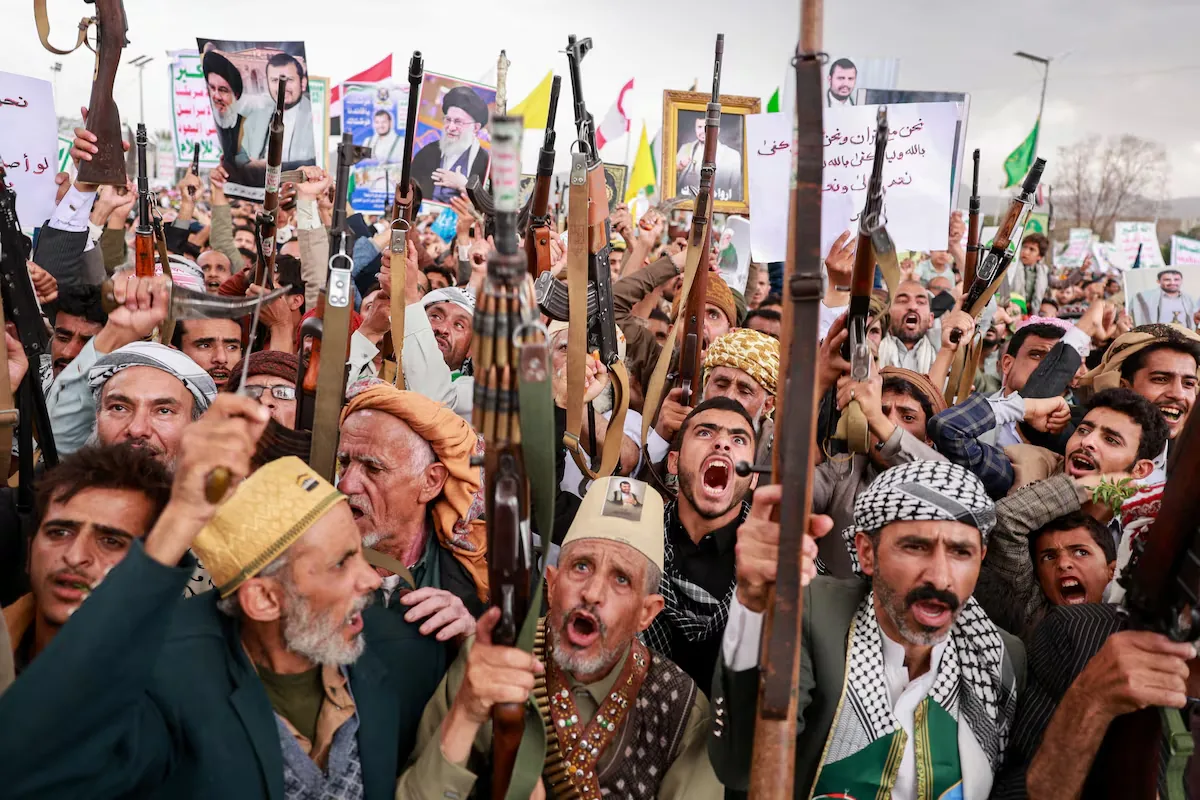
Since mid-July, under the shadow of the entrenched conflict in the Persian Gulf, Yemen has been experiencing its largest military escalation in recent years. The Houthi rebels, allied with Iran, exchange airstrikes with Saudi Arabia and have resumed clashes with the internationally recognized Yemeni government supported by Riyadh, in a conflict largely frozen since a truce reached in 2022. The intensification of violence now threatens to return the country to civil war.
Friction between the Houthis and Riyadh began to increase again on July 13 after Saudi Arabia attacked the airport of Yemen’s capital, Sana’a, controlled by the rebels, to prevent the landing of a plane from an Iranian airline carrying a Houthi delegation that had attended the funeral of Iran’s former supreme leader, Ali Khamenei, in Tehran. This was the first direct bombing against the Houthis attributed to Saudi Arabia since March 2022, according to data from the Yemen Data Project (YDP) platform.
Just a week later, the Houthis attacked with drones and ballistic missiles an airport in southern Saudi Arabia near Yemen and, two days later, two Saudi oil tankers in the Red Sea. Between July 13 and August 14, the group carried out 16 attacks against Saudi targets, including seven oil facilities and six oil tankers, according to the conflict monitoring organization ACLED. Riyadh, for its part, has since attacked port and telecommunications infrastructure in Yemen.
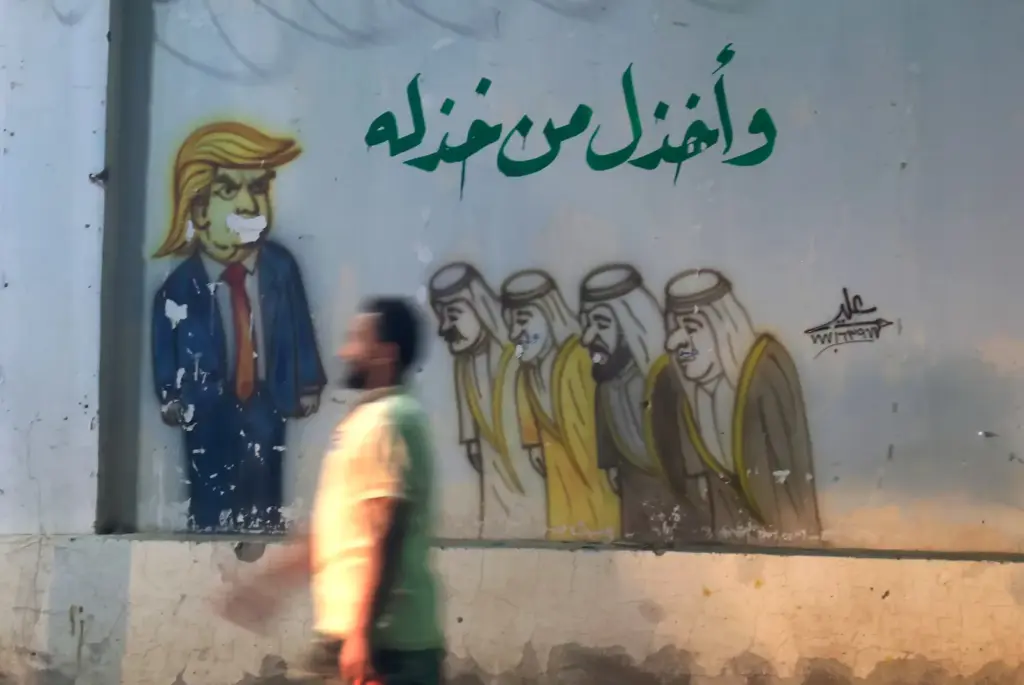
Amid this escalation is an attempt by both sides to weaken and impose a blockade on the rival. On July 20, when the Houthis responded to the bombing in Sana’a, their military spokesperson, Yahya Sarea, described the attack on the Saudi airport as a “blockade for blockade,” referring to Riyadh’s restrictions on air and sea movement to areas of Yemen controlled by the group. Their attacks on Saudi oil tankers have also forced the kingdom to divert some of its oil exports to Egypt and to deactivate the tracking of its ships to avoid detection in the Red Sea.
Despite the multiple Houthi attacks, however, maritime traffic through the Red Sea, including Saudi vessels, and through the Bab el-Mandeb Strait off Yemen’s coast, has not been significantly affected, and traffic through this route remains much higher than through the Strait of Hormuz, according to data from the Portwatch platform.
Internal clashes
Alongside these cross-attacks with Saudi Arabia, the Houthis have engaged in intense exchanges with forces of the Yemeni government backed by Riyadh and recognized by the international community in recent weeks, marking the largest military escalation between the two since 2022. Since early August, the clashes have concentrated in the governorates of Hadhramaut in the east of the country and Marib in the center, although they have also reached the provinces of Hudaydah and Taiz on the Red Sea.
So far, both sides have refrained from launching a large-scale ground offensive, one of the moves many analysts believe would accelerate the return to civil war, and are mainly resorting to attacks with drones, missiles, and artillery. One of the cities most affected by the Houthis so far has been Mocha, in the Bab el-Mandeb Strait, where at least a dozen deaths have been recorded.
Unlike the time when the fronts were frozen four years ago, the Houthis today face government forces with greater access to drones and undergoing restructuring, sponsored by Saudi Arabia since Riyadh forced the United Arab Emirates to leave Yemen earlier this year. According to some analysts, the reactivation of hostilities against the Houthis could help unify this plural government alliance, although with the risk of derailing its reorganization.
Echoing the critical moment the country is going through, the UN special envoy for Yemen, Hans Grundberg, stated before the Security Council in mid-August that the country “faces a more serious risk of returning to large-scale conflict today than at any other point since the truce” reached in 2022. The UN humanitarian chief, Tom Fletcher, said that the surge in violence occurs while millions of Yemenis are forced to make nearly impossible daily decisions between “food or medicine, education or work, survival or displacement.”
Some analysts point out that the risk of Yemen plunging back into civil war would increase significantly if the Houthis or government forces decide to launch a ground offensive. But they warn that it will become increasingly difficult to stop the current spiral of violence and caution about the risk of a new phase of war more focused on air attacks and the battle to control the skies than on ground advances.
Saudi Arabia, for its part, finds itself trapped in an increasing dilemma. On one hand, to agree to negotiate with the Houthis and make concessions to reduce tensions and achieve a ceasefire of attacks against its energy infrastructure and oil exports. Or, on the contrary, to intensify its offensive and double down on its support for government forces, risking becoming embroiled again in a devastating, long, and costly war like the one it launched in 2015 and tried to escape with the 2022 truce.