



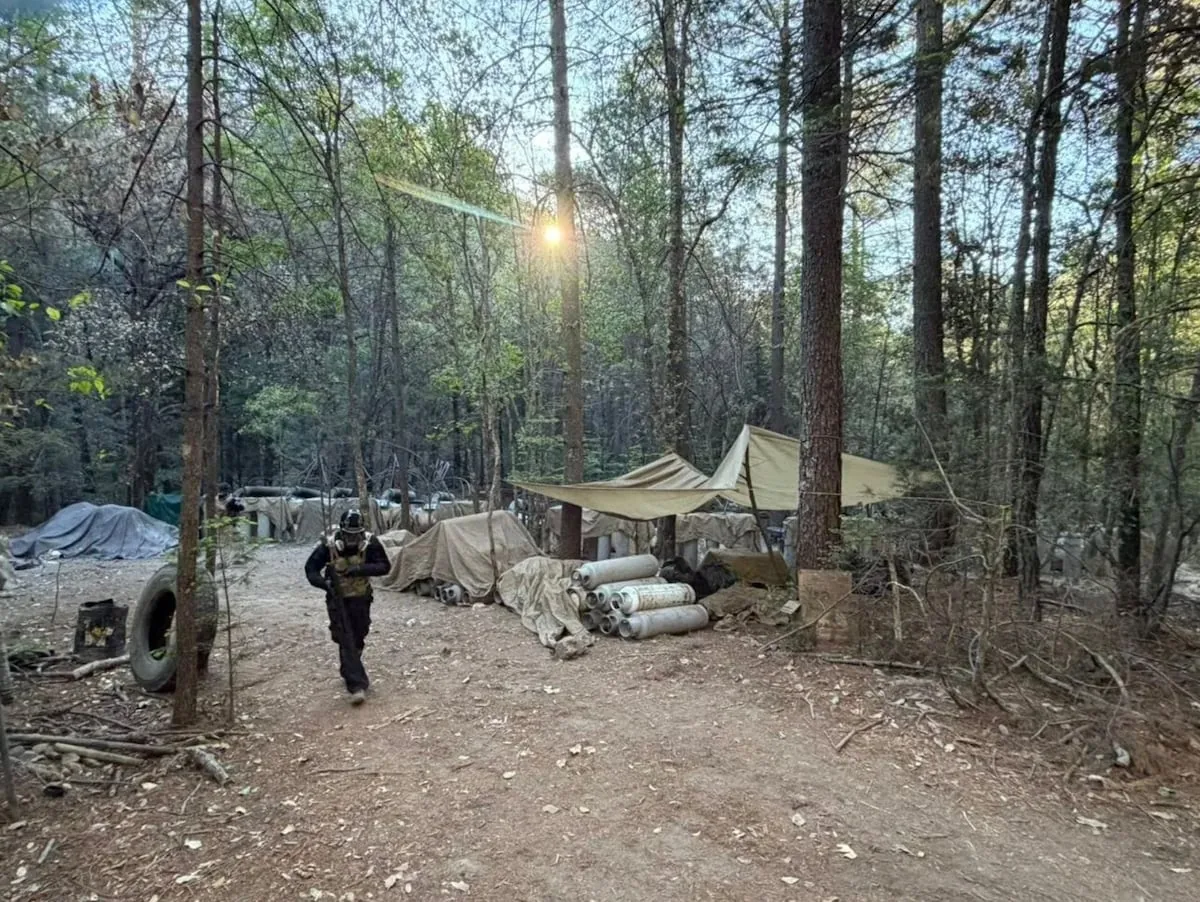
The operation in Chihuahua that ended with four agents dead ―two Mexican and two American― in a traffic accident has opened Pandora’s box. Two questions have been enough to uncover it: what were CIA agents doing helping to dismantle a drug lab in Mexico and who authorized it. Neither has an answer yet, and that has turned them into ammunition for the ruling party and opposition to revive the dispute over the country’s sovereignty, so often invoked and always on shaky ground. US interference is a ghost that Mexico has not managed to scare away since Donald Trump’s return to the White House, and since the previous summer, the struggle on the external front has also moved inward. Each party is trying to capitalize on an incident that touches all the sensitive keys of Mexican politics, and Wednesday’s session in the Senate eloquently demonstrated this.
Read more The president of the Bolivian state oil company resigns less than a month after taking office
The president, Claudia Sheinbaum, has set the course for her party by repeatedly demanding explanations from the state governor, PAN member Maru Campos, regarding the presence of foreign officials, of which she claims not to have been informed as required by law. Morena has joined the request and forced a vote this Tuesday on a point of agreement in the Senate for the state governor and prosecutor to appear before the Chamber next week. Morena members have emphasized that it is an “invitation,” not a formal request, as state executives do not answer to the federal Parliament, but the opposition’s interpretation has been different. “If it was truly a respectful invitation, it would have been enough to pick up the phone,” said MC member Luis Donaldo Colosio to the bench, whose party voted against the ruling.
The PAN, which holds one of its last strongholds in Chihuahua not taken by Morena, has joined MC’s criticisms but has tried to turn the situation around and raised the stakes. Not only did it vote in favor of the proposal, “because he who owes nothing fears nothing,” in the words of Senator Ricardo Anaya, but it also used it to defend Maru Campos’s administration and, in passing, to summon Morena governors Rubén Rocha Moya, from Sinaloa, and Marina del Pilar, from Baja California, over whom doubts about their links to drug trafficking hang. “We are proud [of Campos] and it will be an extraordinary opportunity for them to explain how organized crime is fought,” Anaya said: “Why do they want her to come? Because she just dismantled a drug lab, that is her sin,” he added, avoiding the question of the CIA agents’ involvement.
Morena member Javier Corral, former governor of Chihuahua and a fierce rival of Maru Campos, has again placed the debate on that point, accusing the state government of “deceitful and hidden management,” which has changed its version since the episode came to light this Sunday: from the agents’ collaboration in the operation to routine training tasks six hours away from where it took place. The local governor’s explanations so far have been brief and have focused, as Anaya mentioned, on the success of the operation. “I want to highlight the importance of the result of this operation carried out in coordination with the Mexican Army,” the governor said this Monday in a brief public appearance.
The mention of the Armed Forces opened another possibility, although Sheinbaum dismissed it this Tuesday: that someone in the federal government did know about this binational collaboration, which only came to light due to the traffic accident that ended the lives of the officials. The alternative is not encouraging either. “It seems very serious and delicate to say that the president did not know what was happening, that we work uncoordinated while giving away bits of sovereignty,” summarized PRI senator Claudia Anaya.
Read more Mexico against Turk: The reality of the disappearance crisis prevails
Any of these scenarios opens a crack in the discourse that the Mexican president has firmly defended since arriving at the National Palace: information exchange, yes; foreign agents on Mexican soil, no. That stance had drawn a clear red line until now, despite strong US insistence on “helping” Mexico combat drug trafficking by deploying its people within the country. The authorities of the Anglo-Saxon state, from whom the president has also requested explanations, have ignored the elephant in the room and reproached Sheinbaum for the “lack of compassion” for the fallen agents.
The star issue of foreign policy has stirred up internal dust since last August, when PAN member Lilly Téllez broke ranks and distanced herself from the Mexican consensus that had kept Trump at bay until then. Téllez applauded potential direct collaboration with the neighboring country and opened a gap between the ruling party and the opposition that has not closed since. The issue also reached the Senate then, at Morena’s request, which forced a pronouncement against foreign interference and accused the main opposition party of “treason,” which returned the reproach by appealing to Morena’s “narco-governments.”
The attempt to capitalize on the episode places all parties on a thin rope from which it is easy to fall, as Mexican sovereignty and nationalism are transversal to all formations. At stake is the president’s authority or coherence in her strategy against US interventionism. At stake for the opposition is becoming those who allowed foreign agents to intervene in the country. Everyone will play for the future of the Chihuahua government next year, which will enter the election campaign as a powder keg.
Read more Who are the candidates competing against Michelle Bachelet for the UN Secretary-General position