








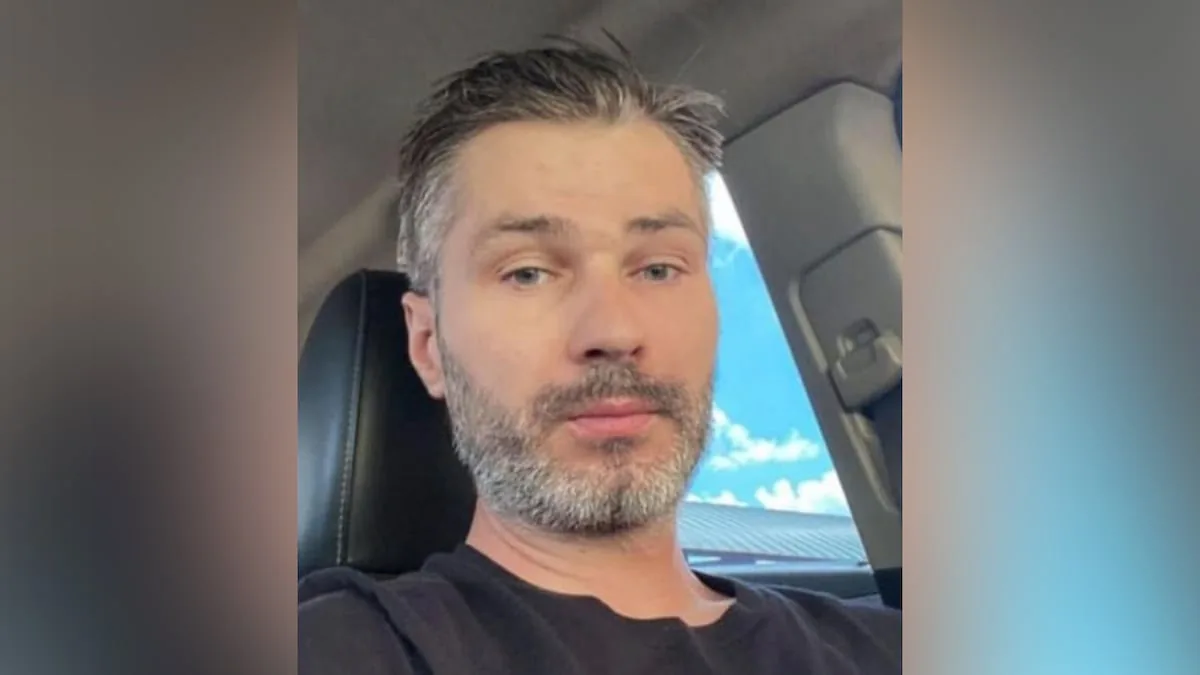
At the Kenton County detention center, in the southern state of Kentucky, there is a migrant who moves like a ghost among the dozens of detainees, as if the world had forgotten his presence. “I am literally abandoned, as if I don’t exist,” he told EL PAÍS in a phone call this week. He is Spanish citizen Miguel Barreno López, 39, who has been in the hands of U.S. Immigration and Customs Enforcement (ICE) for six months, despite a judge approving his voluntary departure from the country on November 17, 2025, due to his desire to return to Spain. But no authority has informed him or told him anything since then. “It’s as if they said: Are you the only Spaniard here? Well, you’ll stay until we decide.”
Mexican, Nicaraguan, Venezuelan migrants, and others of nationalities he doesn’t even suspect, enter and leave the detention center daily, he says, but Barreno López remains as if he were the man not only discarded by ICE, but also by the Spanish consulate in Chicago, to which his family went to ask for help. He longs for the day he can get on a plane, land in Spain, and eat well. He has spent half a year feeding himself with the little they give him in detention and with the Maruchan soup cups he can buy at the center with the money they send him.
Barreno López arrived in the United States from Spain on November 4, 2017. He decided to cross to the other side of the world, first, because he had lost his job at a call center more than a year earlier. “There were many layoffs, I had been fired,” he recounts. Second, because he fell in love with Leticia Centeno, a Nicaraguan passing through Madrid. When Centeno returned to her country and then went to the United States, Barreno López followed in her footsteps. He entered with a tourist visa that he let expire, and his stay turned into almost 10 years in which the Spaniard has lived as an immigrant in the country that today is strongly pursuing every undocumented person who roams its streets.
Barreno López does not fit the racial profile that ICE looks for when its agents patrol migrant neighborhoods or lurk in immigration courts in cities like New York or Miami. He is white, he does not have the typical face of a Latin American. In reality, he never imagined it would happen to him: “Although I was a bit alert with this president, I didn’t think that leaving my apartment I would be arrested like this. It caught me by surprise.”
On October 18, 2025, at 6:30 in the morning, Barreno López was heading to the Indian food factory where he worked near the city of Carol Stream, west of Chicago, in the state of Illinois, where he lived with Centeno. Since Barreno López was one of the few workers in the apartment complex who had a car, he always drove Centeno’s daughter’s husband and two other brothers, all Nicaraguans, in his car. About five minutes from the house, they were, according to Centeno, “ambushed.”
A federal agent’s vehicle followed them and pulled them over. The four men were initially transferred to the Clay County detention center in Indiana. The three Nicaraguan citizens requested their voluntary departure from the United States and were subsequently returned to their country. In November, before an immigration judge, Barreno López also requested his voluntary departure. He wanted to return to Spain.
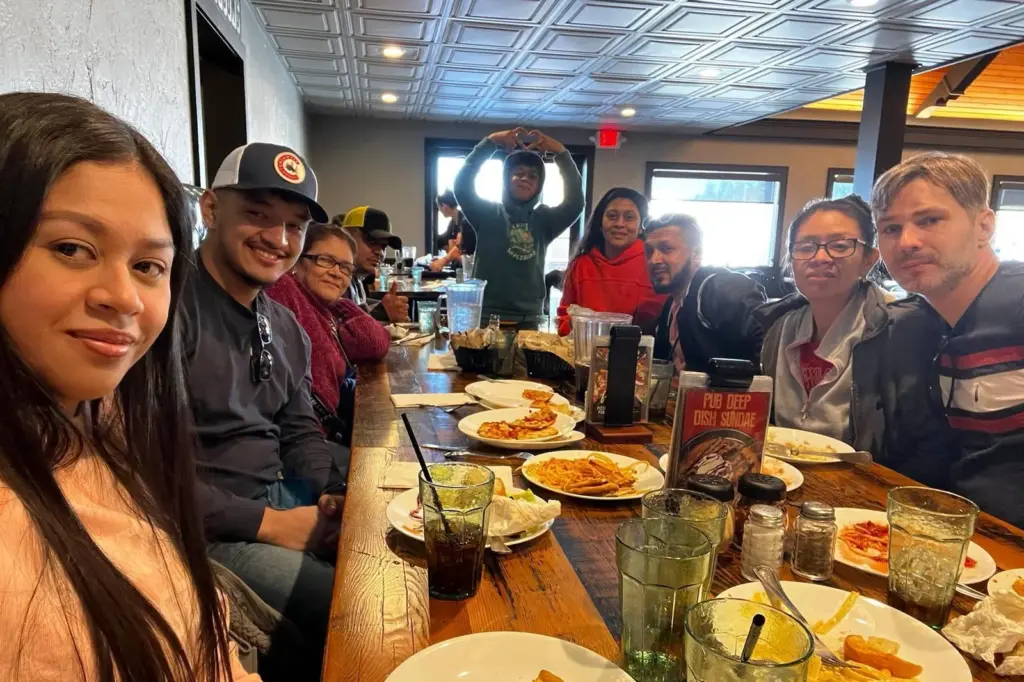
“He says this is too much humiliation for him, that no one had ever done this to him in his life,” says his partner, Centeno.
Later, Barreno López was transferred to Kentucky. “To this day I am here without knowing anything,” he says by phone, noticeably desperate. “They have me here to see how long I can endure, but what I want is to go back to my country now. I feel that, being Spanish, they have forgotten me. And the consulate should be the first to help me.”
His word against the consulate’s
“How can Miguel be locked up if he hasn’t done anything wrong and has already requested his voluntary departure?” Centeno has wondered all these months. Her partner, she says, never “gets into trouble, doesn’t look for fights, or goes drinking.”
A few years ago, when they started a new life in the United States, Barreno López bought a car and a police officer stopped him when they were returning from work at midnight for not having a driver’s license. “That was the only infraction Miguel had in all these years he has been in this country,” Centeno assures. On that occasion, he was ordered to appear in court, and he immediately obtained his license.
Read more Unrewarded disposition for the novice bullfighters
The couple had considered in the past what could be the way to regularize his status in the United States, but, in Barreno López’s case, being a Spanish citizen, they had warned him that it was almost impossible to apply for political asylum. “They told us that, being a European, he did not have a situation like the one in Nicaragua, or like the one Venezuelans have. That’s why we never applied for it,” the woman assures.
By the end of last year, Barreno López was already counting the days to be able to leave the detention center. The anguish was eating him alive. His partner, not knowing how or where to ask for help, thought she could find the solution at the Consulate General of Spain in Chicago: “I called and they told me they couldn’t do anything. I told them: ‘But how so? I imagine that if you are here as a Spanish consulate, it is to look after the well-being of Spanish citizens.’”
She contacted the Spanish consular authorities again on another occasion. “I’m very sorry, but we can’t do anything because ICE has him,” they told her, Centeno assures. “And then what do you do here?” she replied. On a third attempt, a man attended to her in a “very rude” manner, according to Centeno. He told her: “If you are not his wife, I cannot give you information about him. I am very sorry, but if you are not his wife, you have no reason to call us.”
EL PAÍS contacted the Spanish consulate in Chicago for clarification of the case. The Deputy Directorate General of the Diplomatic Information Office (OID) of the Ministry of Foreign Affairs, European Union and Cooperation of Spain assured in an email this Saturday that “the Consulate has been in contact with the affected person, to whom pertinent consular assistance has been offered.” Spanish diplomatic sources in the United States also reported that in November 2025, Barreno López was offered a safe-conduct pass to travel to Spain, but since then he has not contacted the consulate again. With this document, which certifies his identity and nationality, the Spaniard, whose passport is expired, could travel to his country.
Barreno López says that “no one” has ever given him the option of a safe-conduct pass. “At no time have I received an email, or a letter. At no time have I had contact with the consulate, nor have they contacted me, or anything like that,” he assured from the detention center. “It’s been six months and no one has lifted a finger for me, it’s too much, half a year illegally detained here. It’s very frustrating.”
Centeno, who has even sent unanswered messages to migration authorities expressing her willingness to pay for his return ticket to Spain, also denies that the consulate offered her partner an alternative to arrest. “If they had offered him a safe-conduct pass, he would have left immediately; what he wants is to leave,” the woman insists. “Every day he asks me to help him get out of there, and I don’t even know what to tell him anymore, he’s desperate.”
From the Kenton County detention center, Barreno López’s voice comes as a plea for help. “This is an injustice, I have not committed any crime, I have not bothered anyone, nor have I had problems, they know perfectly well that I am clean,” he says. Sometimes he feels that, among the loneliness of all the migrants around him, he is the loneliest of all. “No one comes to talk to me here, I’m waiting every day to see when they call me.”
He recently telephoned Centeno: “Right now I would be arriving from work and watching a movie,” he told her. Centeno breaks into pieces when she hears him so fragile, so broken. More than once she has imagined the day he is released, arrives in Spain, and starts anew in the country that is his.
Read more The road to the Colombian presidential elections 2026, live