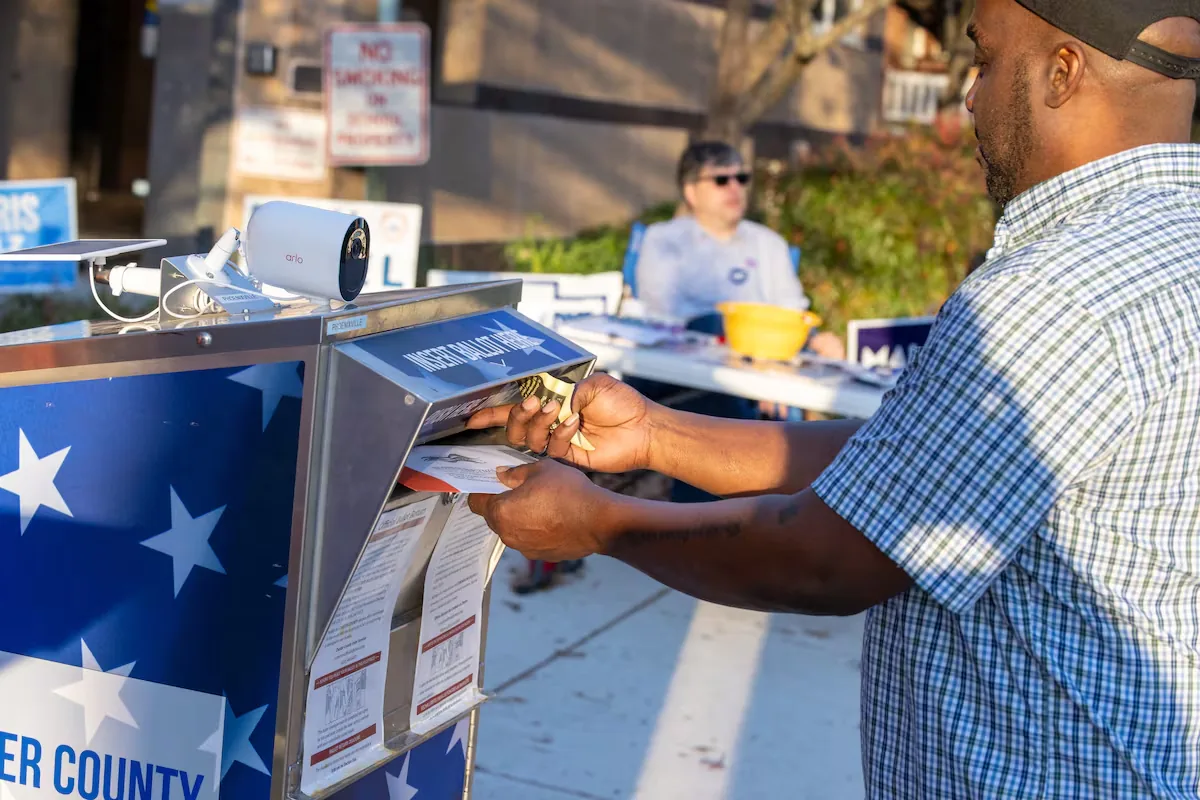
The Donald Trump administration is in a hurry to implement a decree that tightens the mail-in voting process in the November midterm elections, in which control of both chambers of Congress is at stake. It asked the Supreme Court to lift the block imposed by a federal judge in Massachusetts, who halted part of the executive order, considering that the president seeks to interfere in an electoral procedure that is not his concern.
Read more The PP questions Sánchez’s Government after Morocco threatened to suspend the extradition agreement
“It is crucial that the court act quickly on the request to lift the brake (of the judge). Otherwise, the district court’s erroneous orders will exhaust the Government’s time to implement the third section of the executive order in the November federal elections, causing irreparable harm to the federal government, the public, and electoral integrity,” said Attorney General John Sauer in his request to the highest court.
Federal Judge Indira Talwani twice prevented the Administration from implementing part of the decree: she blocked it in June following a request from about twenty states and this week nationwide after a request from several organizations.
For Talwani, the Trump administration did not demonstrate that blocking the executive order puts the integrity of mail-in voting at risk nor provided evidence of alleged fraud through that specific electoral process. “The defendants did very little to defend the executive order on its merits,” Talwani wrote in her decision. “As the presidential decree is currently causing confusion and threatening to generate chaos and erode confidence in our democracy, the court considers that the right to vote far outweighs the Executive’s attempt to unconstitutionally interfere in the realm of election regulation,” she added.
The judge specifically blocked the third section of the executive order that requires sending ballots by mail in an envelope with a special mark and a barcode to track them. The decree also requires states to notify 90 days before a federal election if they will allow mail-in voting through the United States Postal Service (USPS), and to notify 60 days in advance if they will provide the USPS with a list of eligible voters authorized to vote by mail and send their ballot through the USPS. States that fail to comply risk losing federal funds, the decree reads.
Another request in the Supreme Court’s ‘emergency docket’
The Trump Administration had taken the matter to the Supreme Court in July after Judge Talwani issued her first partial block on the presidential decree. This Wednesday it again urged that court to act, after the same judge decided on a second block to the executive order in a separate case.
Read more Marlaska sends more Immigration police to Ceuta to speed up the expulsion of 5,000 migrants
Attorney General Sauer considered that the highest court can decide on both blocks at the same time. But the states that challenged the executive order first differ from that interpretation.
“Although the defendants (i.e., the Government) suggest that the injunction in this case prevents them from implementing Section 3 of the executive order in the November federal elections, that is incorrect. The injunction in this case allows the United States Postal Service to issue a final rule and implement Section 3 in the states that did not sue, while preventing disruptive changes to election rules before the midterm elections in the plaintiff states,” reads the document submitted by those states, which include California, Oregon, and Vermont, among others.
This matter is part of the so-called Supreme Court ‘emergency docket,’ which the Government has used more than ever in this second Trump term in cases ranging from restrictions on birthright citizenship and the elimination of immigration protections, to the dismissal of officials in independent agencies and a Federal Reserve governor.
Regarding the electoral matter, the Supreme Court could announce a decision at any time, since both parties have already submitted their documents.