








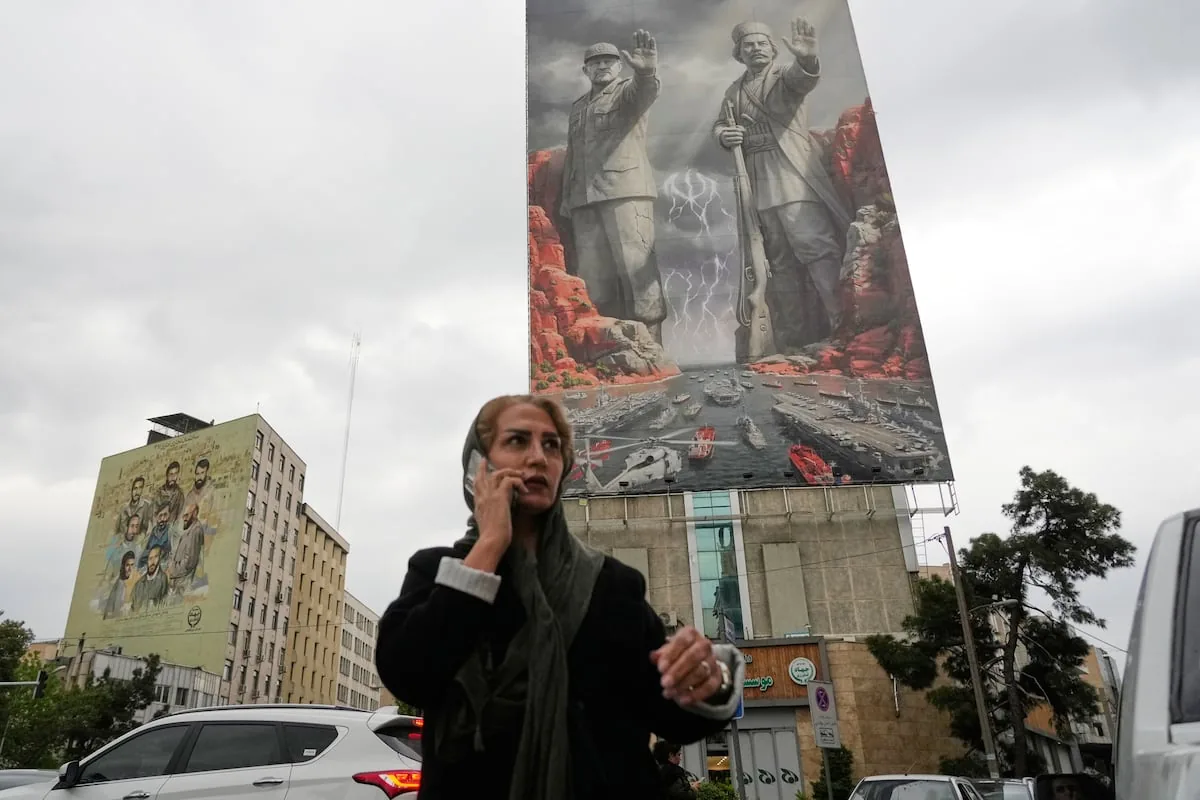
Traffic in the Strait of Hormuz continues to be disrupted after the US Navy’s interception on Sunday of an Iranian-flagged vessel in an operation that added tension to those disputed waters. Only three vessels crossed this bottleneck on Monday, through which a quarter of global hydrocarbon trade passes, according to data collected by the Kpler measurement firm; on Saturday, 24 ships passed, encouraged by Tehran’s announcement of its willingness to lift the de facto blockade it has been imposing in Hormuz for weeks.
Read more United States gives Cuba two-week ultimatum to release high-profile political prisoners
The maps full of dots with vessels stopped by uncertainty on both sides of the line established by the US blockade, decreed by President Donald Trump and in force for a week, during which, according to Central Command, 27 ships have turned back, deterred by the military deployment, seemed on Monday an effective metaphor for the situation in which negotiations between Washington and Tehran find themselves.
On the one hand, the US delegation maintains its plans to travel to Islamabad (Pakistan), as Trump announced it would, for a second round of talks with the Iranian regime. The first ended without an agreement. After a series of contradictory messages, it seemed clear that Vice President J. D. Vance, who led the negotiators in the first contact, will travel to the Pakistani capital this Tuesday.
On the other hand, Iran proclaims that it will take retaliatory measures against the United States for Sunday’s assault on one of its vessels, while a war of interests within the regime is brewing. It pits those who believe the time has come to yield and reach some kind of peace agreement against those who advocate continuing to resist the attacks launched by the United States and Israel on February 28, based on what has been achieved so far.
Meanwhile, the clock is ticking. The fragile ceasefire currently in effect expires sometime this Wednesday, although that part is not entirely clear either. When Trump announced it, he did so for a duration of two weeks. That was at 6:32 PM on Tuesday, April 8 (Washington time, six hours later in peninsular Spain). But this Monday, no one in Washington could say whether the deadline would expire at that same time (i.e., 0:32 AM on Wednesday in Spain) or at midnight on the East Coast of the United States (6:00 AM on Wednesday in Spain).
“Highly unlikely”
In any case, Trump told Bloomberg that he considers an extension of that ceasefire “highly unlikely” if an agreement is not reached beforehand. On Sunday, the US president issued a serious threat against Iran on his social network, Truth, for “opening fire [on Saturday] in the Strait of Hormuz,” something he considered “a total violation” of the agreement.
Read more Vox and PP bring to Jaén the “national priority” in social aid over migrants
“My representatives are heading to Islamabad, Pakistan; they will be there tomorrow afternoon [this Monday] to engage in negotiations,” he wrote, although those plans were later not fulfilled. “We are offering a very fair and reasonable DEAL, and I hope they accept it because, if not, the United States will destroy each and every power plant, as well as each and every bridge in Iran. NO MORE BEING THE “GOOD GUY”!” Trump added, perhaps unaware that with his words he was invoking the spirit of a war crime (by apparently announcing the pulverization of exclusively civilian infrastructure).
A couple of weeks ago, however, he went much further, when he warned that “an entire civilization” was about to “die” if Iran did not agree to his demands to end the war.
This Monday, in another interview with the New York Post (a new example of the latest custom of the Washington press, which calls a president daily who briefly answers the phone to send confusing messages), Trump said he is not in a hurry to achieve peace and attacked “Democrats and some Republicans” for pushing him towards a quick solution. “They are helping the other side. The other side has nothing (…). I’ve only been at this for five weeks. I’m not going to let them rush me,” he told the New York tabloid. A few hours earlier, again on Truth, Trump had published a message in which, somewhat unexpectedly, he stated that Israel never “pushed” him into the war, as was said in the early stages of the conflict.
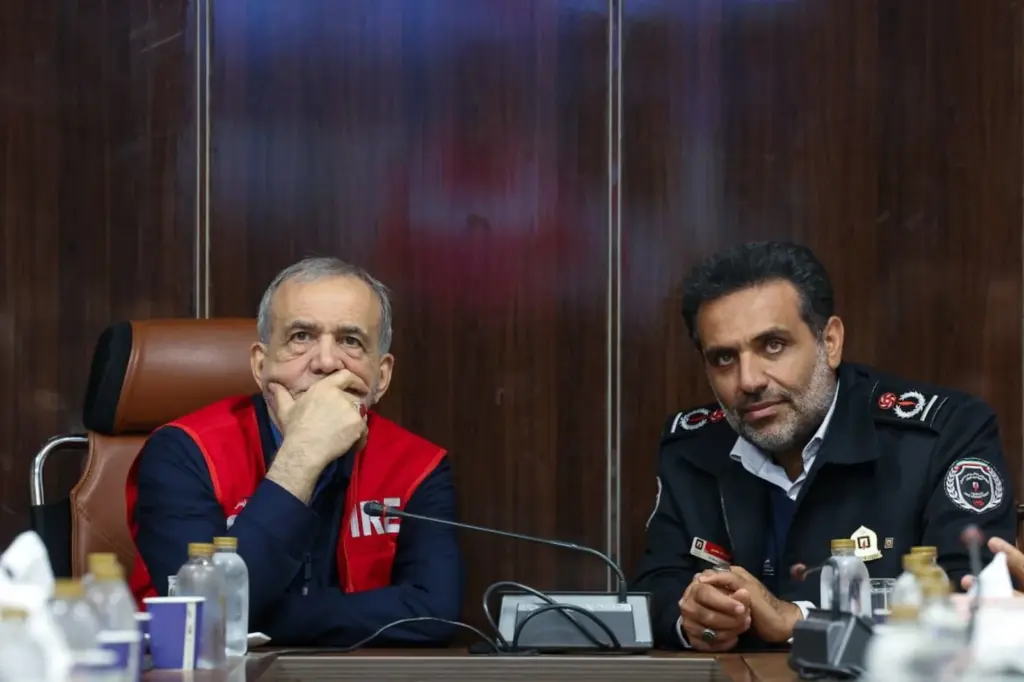
Iranian President Masoud Pezeshkian, for his part, tweeted this Monday that “the unconstructive and contradictory signals from US officials convey a bitter message” about the viability of the talks. And The New York Times reported, citing two anonymous sources, that an Iranian delegation is preparing to travel to Islamabad on Tuesday. Also, that Mohammad Bagher Ghalibaf, who led the first round of contacts for Tehran, will attend the second if Vance also participates.
The Pakistani Interior Ministry published a statement this Monday guaranteeing “infallible security measures for foreign delegations” during their time in Islamabad. The hotel where the two countries met earlier this month for the first round of talks has been cleared of guests, and Pakistan has deployed thousands of additional security personnel in the city.
Read more John Korir gifts a course record to the Boston Marathon, which celebrates its 130th edition