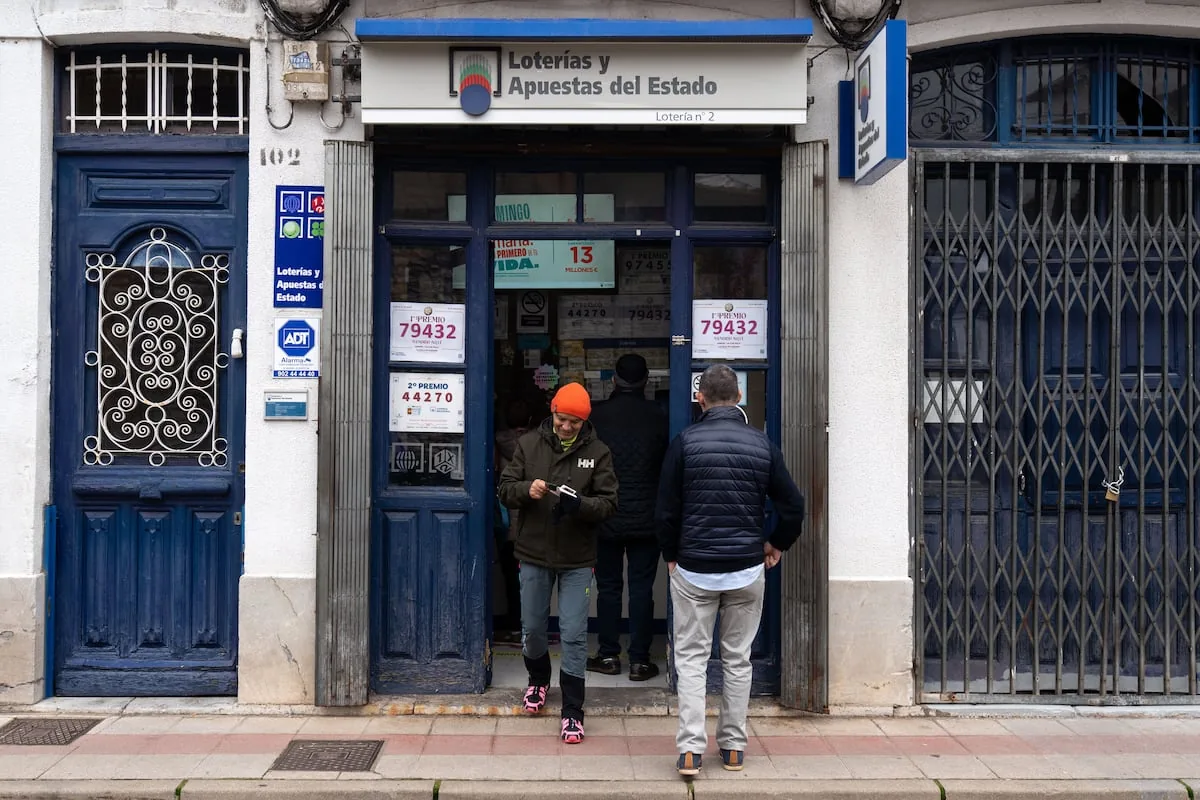










The Villamanín Festivities Committee (León, 1,000 inhabitants) has received a “criminal complaint” that takes the controversial 2025 Christmas Lottery prize to the courts, when the Jackpot fell in that town with a number, 79,432, of which some tickets were not validated. The winners accepted by majority a reduction of about 10,000 euros from the approximately 70,000 corresponding to each share so that everyone, both those who had a formalized ticket and those who did not, would receive the same amount. The criminal complaint means that some of them do not agree with this distribution and, furthermore, are taking it to court. EL PAÍS has contacted two experts in Civil Law and Lotteries to explain the course the process will take in the courts. Rosa Nieto and María Oliva Gómez point out that the key will be to determine the “intentionality” that the Festivities Committee had in not validating all the tickets to discern whether the association intended to deceive the buyers or if it was a mere error, as those involved have claimed.
Read more The 50 recommendations from ‘Babelia’ for World Book Day 2026
The Villamanín festivities association, formed after the conflict to try to resolve the mess, announced this Thursday that so far they have paid the assigned amount ―59,400 euros per share― to the owners of 446 tickets and that only one remains to be paid, due to personal matters of the owner. The “criminal complaint” they announced through a statement on their Instagram account reveals a new level of the controversy, which now reaches the courts.
Nieto explains that a possible judicial victory for the complainant would mean that they would obtain the entire prize sum, about 70,000 euros per ticket, against the nearly 60,000 of those who accepted the reduction and did not complain. These signed in their contract with the association that they would not complain, but the lawyer clarifies that they still have the right to complain if they perceive that there is case law or favorable rulings for those who, in the same situation, complained about the group. The money would still come from the association’s accounts, meaning that those who have already been paid would in no case lose their amount.
The lottery expert lawyer Rosa Nieto suspects, pending more information, that “it will be a complaint for embezzlement or fraud.” For her, everything depends on the “intentionality” and the complainants have to prove it: “The intent must be proven.” Embezzlement, she states, corresponds to wanting to keep the money from selling extra tickets, which if there had been no prize, would be settled at about 250 euros in total, “enough to throw a little party.” “They are young, it looks more like that is what they wanted to do,” she concludes.
Fraud would imply knowing they were winners and trying to keep the tickets, something she does not see because otherwise, “they would have kept quiet with the money.” “The complainant has to prove that it was done by the committee members and who exactly. Responsibility can only lie with one individual and it must be proven who kept that stack and if the intention was to keep it. I think they complained to scare, I don’t see profit motive,” the lawyer considers regarding the moves the complainant’s defense must make, in their right to claim the full prize amount without the reduction agreed among the others to balance the aggrieved.
Read more Willem Dafoe: “I live near Rome, on an alpaca farm, it is the best place to see the river of life”
“The responsibility is civil, the crime of fraud or embezzlement can have criminal penalties in addition to civil liability,” she assures. The association, as the defendant, adds the expert, would be subsidiarily civilly responsible for paying the amounts required if they lose the trial and are convicted. Nieto compares it to an insurance company that should cover liability for the facts.
The civil law specialist lawyer María Oliva Gómez, from the CEAR group, agrees with these points raised by Nieto. “It could be fraud or scam if there are tricks or deceptions, but intentionality is needed, that they issued more tickets knowingly to enrich themselves,” Gómez notes. “There would be possible embezzlement because they sold more tickets and kept that money, but without the possibility of a prize,” she explains, emphasizing that beyond that supposed fraud expressed strongly, there could have been “negligent conduct causing damages and losses that need investigation.”
“I don’t see it criminally, but the lawyer must have seen signs, but I don’t see intent to deceive people,” she says. Gómez understands those who, with the ticket in order, exercise their right to complain and to receive the full corresponding amount, without reductions. That the vast majority of those involved accepted that proportional reduction of their amounts makes her think that “if people had seen intentionality or interest on the part of the association members, they would all have gone to complain fiercely, but solidarity was appealed to, claiming there was no intentionality.”