Mozart was spared from the statue phobia that swept through the West in 2020. None of his monuments were vandalized due to the racism of The Magic Flute or the orientalist excesses of The Abduction from the Seraglio. Perhaps because his Figaro contributed like few operatic characters to abolishing class privileges. Or because the climate and time had already allied first to darken the bronze skin of the composer in his memorial at Mozartplatz in Salzburg. There, in the genius’s hometown, the celebrations of his 270th anniversary have suddenly taken on the tone of a crime novel. Because of, precisely, some statues.
Read more Dolly Parton, the star who refused to choose a political side but never stayed silent
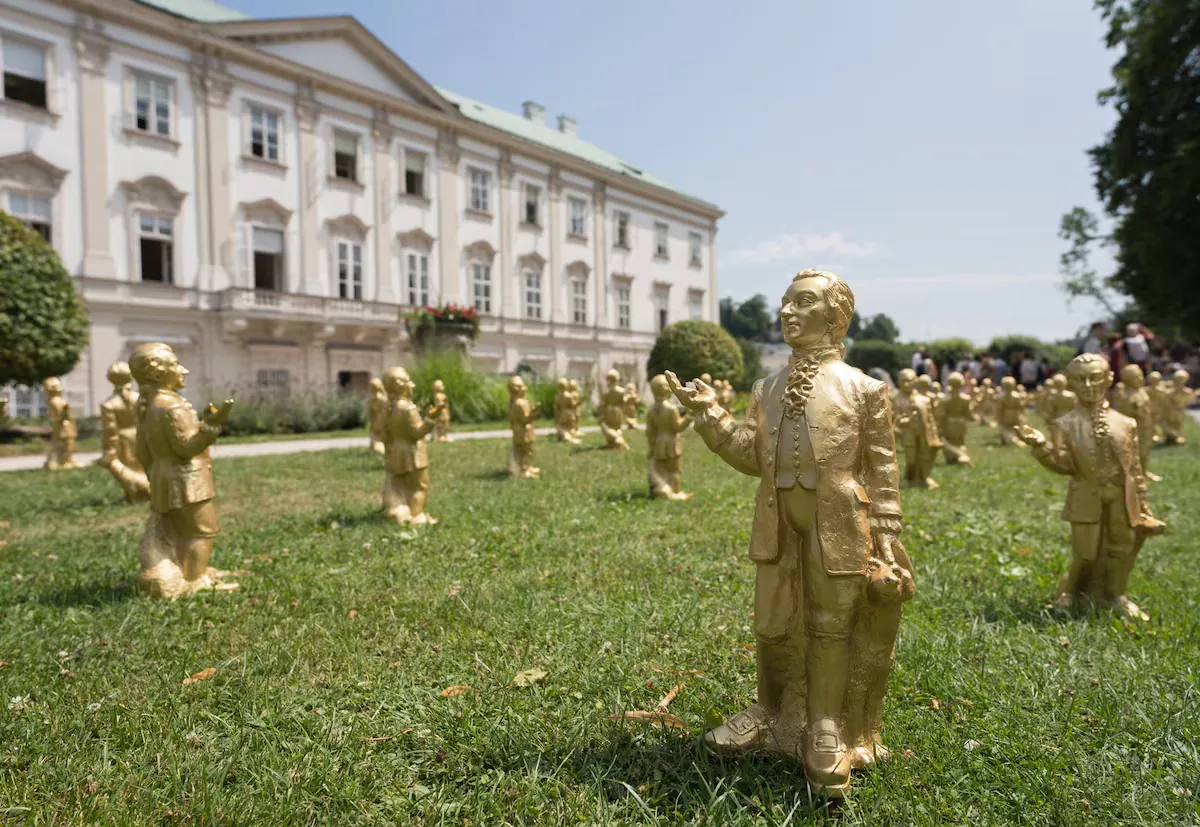
On July 15, two days before the Salzburg Festival began, a legion of 320 golden mini-Mozarts took over the Mirabell gardens and other city spaces at the initiative of the Mozarteum Foundation. The installation was the work of German artist Ottmar Hörl, known for his small-scale figures of great composers and for some controversial dwarfs that parodied Nazi iconography. “In public spaces, it is normal to have a loss of around 10% of the pieces,” Hörl says by email. “But what happened these days in Salzburg requires some organization.”
In the first 12 days, the constant trickle of thefts claimed 86 losses. The Mozarteum Foundation then made a public appeal to stop the removal of figures, but by the end of July more than half were already missing and, in just two more weeks, the number rose to 210. “We are talking about half-meter-high statues screwed to the ground with a metal rod,” details the 76-year-old sculptor. “Each one retains the marks of the fixing system, three holes in the base that allow identifying their origin. It is not something that can be done just like that. It poses a considerable logistical problem.”
For now, the Mozarteum Foundation has no leads on the authorship. “We don’t know who stole the figures and we don’t want to speculate,” they explain from the institution’s press department. In the absence of surveillance cameras in the Mirabell gardens, everything seems to indicate that the figures were taken under cover of night and music-loving enthusiasm. When the plundering became uncontrollable, the organization decided to safeguard the Mozarts still anchored and close the exhibition 20 days earlier than planned. “Replacing them was not an option either,” they add. “The manufacturer had closed for vacation.”
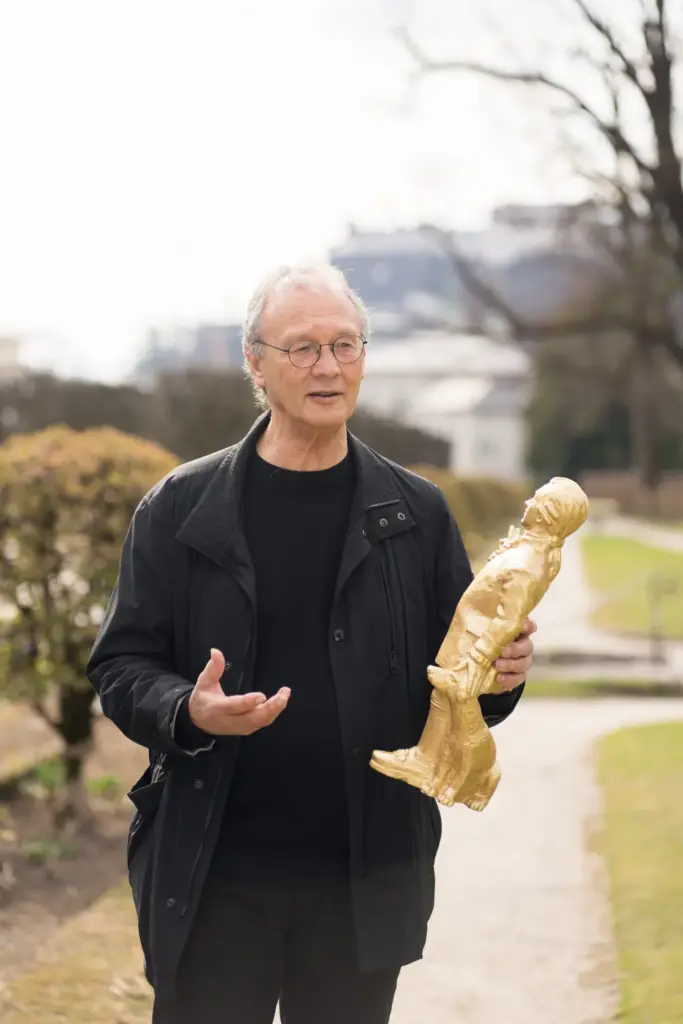
Hörl has reported the events to the police and estimates the losses at about 20,000 euros, which he will have to pay out of pocket, since the sculptures were not insured. The artist rules out that the media impact of the case could compensate for the hole: “The publicity is of no use to me,” he laments. “The economic damage is not negligible and I will have to justify everything that happened to the tax authorities.” He also does not give much credit to the hypothesis of a series of spontaneous thefts. “It is still too early to draw conclusions. But it is reasonable to suppose that no one takes 210 figures this way by chance.”
Read more Irish couple aged 50 and 45 found dead in the jacuzzi of a chalet in Cullera (Valencia)
This is not the first time Hörl’s sculptures have made the crime pages. In 2023, an installation dedicated to Wagner at the Bayreuth Festival suffered a similar fate: 115 miniatures of the creator of the Ring were looted from the Green Hill by anonymous passersby, although the unofficial version points to the mythomaniac zeal of the spectators as a possible trigger. When the episode repeated the following year, the artist took it sportingly: “These spaces always entail a risk,” he acknowledges. “But what happened in Salzburg has taken on a different character.” The dimension of a full-fledged police case.
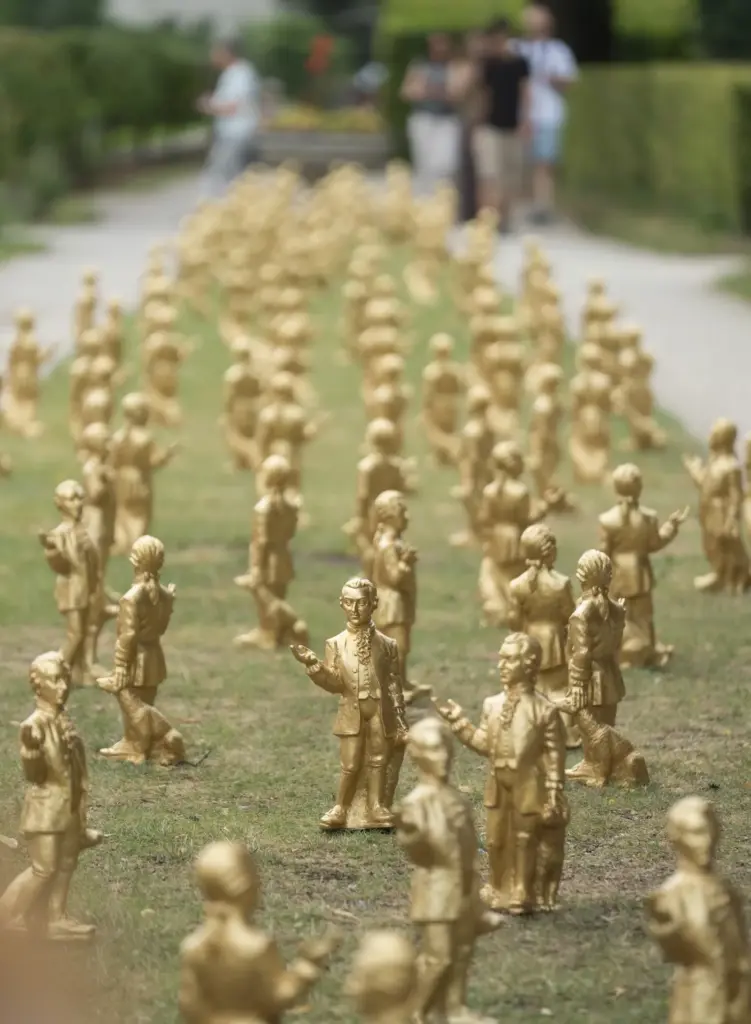
Ruled out are the kleptomania impulses of the most devoted tourists; the investigation will have to determine the use and whereabouts of the sculptures, in which Mozart is portrayed accompanied by his dog Pimperl with the intention of offering a closer and more familiar image of the musician. Against the solemn marble of the monuments, Hörl’s pieces are made of plastic through a special vacuum molding process. “So far, none are for sale in internet bazaars,” he assures. The question is: who would want to bid there for something that could have been legally acquired for 90 euros?
The answer could be very close. The fetishistic cult that Salzburg pays to its favorite son no longer settles for staging his operas or programming his symphonies at the Festspielhaus. Nothing escapes the logic of the souvenir: from the famous Mozartkugeln chocolates to the most exclusive design objects, including those that bear the marks of the crime on their base. “Outdoor works are not always understood in the same way by the public,” reflects Hörl. “Tearing them from the place for which they were created is, in any case, a lack of respect towards my work.”