








The days of hope and excitement that hundreds of thousands of undocumented migrants in Spain are experiencing due to the extraordinary regularization process underway have a flip side in two groups: stateless people and some unaccompanied foreign minors, who are excluded from the process. The former had been included in the draft decrees that emerged in recent days, but the Ministry of the Interior requested their exclusion, and the Council of State sided with them in the legal report that caused the latest changes in the legal text. The second group consists of about 2,500 young people who arrived alone in Spain with a passport indicating they were minors, but have undergone biometric tests—or refused to take them—and the Prosecutor’s Office has determined they are adults. They now have two conflicting legal documents, which is why they are neither tutored as minors nor can they access regularization as adults, a limbo that leaves these young people unprotected and deprived of almost everything. Some are homeless for this reason.
Read more Violence in Congress
Last year, almost 3,600 people applied for protection in Spain due to statelessness, that is, when no country wants to grant them nationality. And 2,242 were resolved favorably, unfavorably, or archived. The 2024 report mentions 2,071 applications and 854 cases managed. The Interior Ministry says it does not yet have the accumulated files from previous years. But it will be several thousand. Why did the ministry led by Fernando Grande-Marlaska not want to include these people in the regularization? Spain has a specific procedure for recognizing stateless status processed through the Directorate General for International Protection, ministry sources say. They add that these people without a legal country already have specific protection and have the right to residence and to carry out work and commercial activities.
The cases of stateless people are diverse; some even have an expired passport that no longer serves in their former countries but would be accepted in this regularization. Another matter is whether they can request their criminal records from those countries, and that is the reason, lawyer Arsenio G. Cores presumes, why they may have been excluded from the regularization decree. “I imagine they don’t know where to request those documents,” ventures G. Cores, founder of Demos, a human rights legal firm. But if someone had the possibility to apply for their residency by arraigo, they would be in similar circumstances to those who have applied for international protection: upon obtaining their residence and work permit, they would lose their stateless status, which already has certain advantages compared to a regularized migrant, something that is not legal, explains G. Cores.
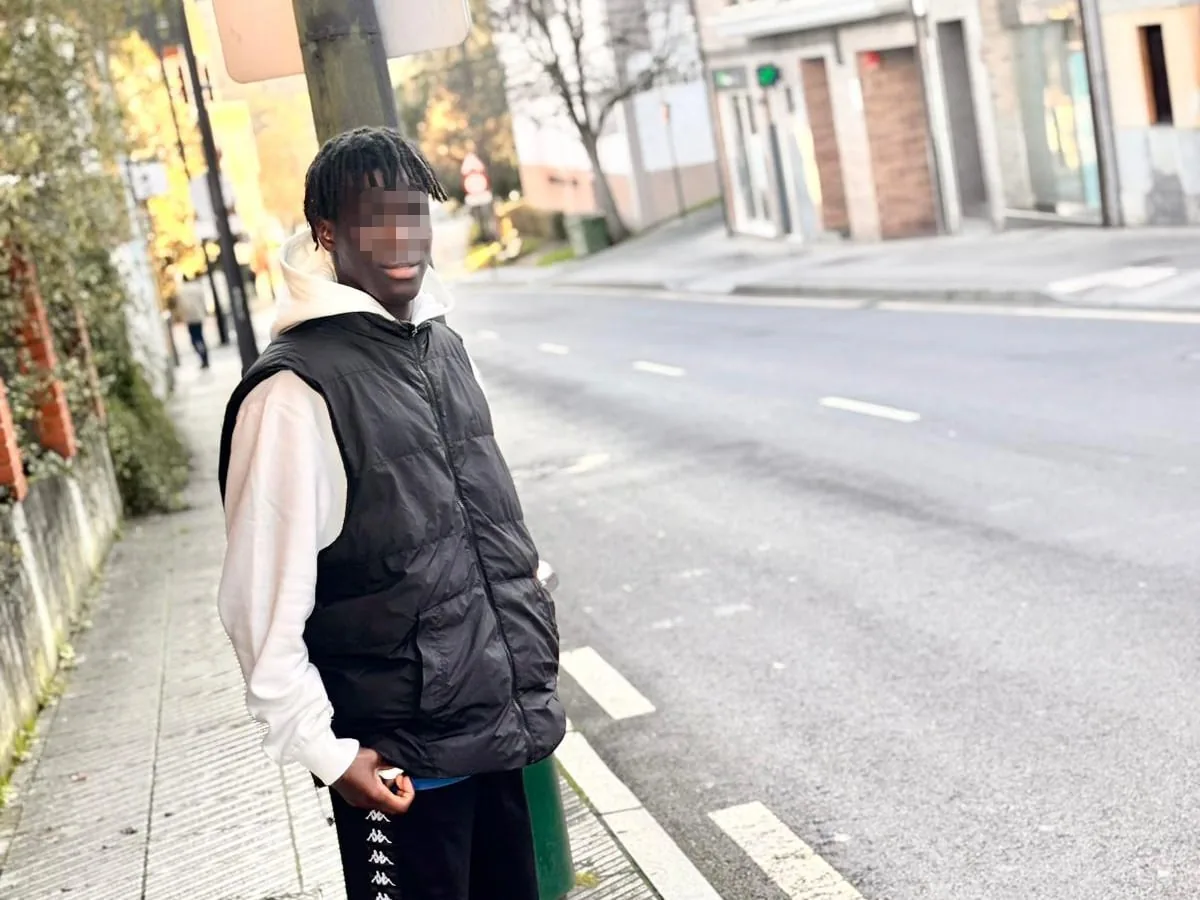
The case of unaccompanied minors is more complicated because their situation is a legal limbo that practically prevents them from doing anything in a society like today’s, where these young people need a guardian’s authorization for multiple life activities, such as joining a football club, enrolling in a high school, traveling, renting a room… Senegalese Mame is one of those boys whose passport says 17 years old but who has been wandering around Spain until being expelled from the minors’ center where he was tutored in Asturias once the Prosecutor’s Office determined he was an adult. He is sheltered at a friend’s house in a more than precarious situation, according to Luisa Pérez, a volunteer with Asturias Acoge, who is closely following his case. The Prosecutor’s Office report indicates that in 2024, 7,562 files of these young people were processed and it was concluded that 2,457 had reached or exceeded the age of majority.
“They are in the most absolute limbo. If they get sick and need an operation, they don’t have a guardian to authorize it, and they need one because their passport says they are minors,” explains Lourdes Reyzabal, president of the Raíces foundation, which has about 90 boys in this situation, so they have raised their voices to urge the Government to prohibit subjecting them to physical age determination tests, which are heavily penalized by international organizations. “Raíces has won more than 20 cases in Supreme Court rulings because the boys had their passport—in which minority was demonstrated—that was issued to them upon arrival in Spain at their country’s consulate. At the United Nations, we have also obtained 14 favorable rulings condemning the Spanish State for these practices, and we are still waiting for a draft law to be dusted off that advances a bit on this issue but still allows these tests when there is a passport,” Reyzabal demands.
These young people are in a completely precarious situation. Had they had parents or guardians in Spain, they would have entered regularization as part of the family, but they have nothing. If they are expelled from the centers due to the Prosecutor’s Office’s document stating they are adults, they could end up on the street with no one renting them a room because the passport says they are minors. More than a limbo, a peculiar hell. The day Mame turns 18 according to his passport, his age of majority will allow him, however, to try to regularize his situation in Spain through an ordinary arraigo procedure, demonstrating his two years’ stay in the country.
Read more ‘Renoir’: Chie Hayakawa, new name to watch in Japanese cinema
Of the more than 3,000 people who applied for protection due to statelessness last year, 1,472 applications were from Sahrawi people. They cannot combine this application with regularization, unlike applicants for international asylum protection. This is the case of Mohamed Salem Dadi, who arrived in Olot (Catalonia) last December and is waiting for the administration to regularize his situation. “Before arriving, our acquaintances who have already gone through this process prepare us to be patient because some companions have waited up to three years to get papers,” Salem Dadi says in a video call.
While waiting, the 43-year-old man is not allowed to work and can only find irregular jobs. “But under what conditions?” he wonders, adding: “I live hungry, the hardest thing is not being sure that Spain will accept my application someday.” “How can the Spanish Government ignore the Sahrawi people and favor those who have a country and the right to live in their land, deliberately discriminating against those who have nothing else?” Dadi asks. “If they reject us, where do they send us?” he concludes.
Applicants for statelessness protection who are still waiting for a resolution face a dilemma. “What do they do?” asks Asier Garría, legal head of the Spanish Commission for Refugee Aid in Euskadi. “They continue in the statelessness process, whose conditions, if successful, are very good, but it is a long process in which they are undocumented and cannot work, only receiving some financial aid. Or they give up all this, apply for regularization, which is a shorter application but with less attractive conditions,” Garría maintains.
Brahim Hadi, a 26-year-old Sahrawi, no longer has to ask himself that question because he got his papers a month ago, but some of his companions have not yet received a response to their statelessness application. Hadi lives in a caravan in Ibiza with them; he is the only one who has managed to get the administration to approve his application after more than a year of waiting. Before deciding to come to Spain, he thought about it for a long time because he knew the path to getting papers would not be easy and would require many sacrifices. “My brother died in one of the Sahrawi refugee camps while my migration status was irregular, and I couldn’t say goodbye or see my family,” he says emotionally.
During that year of waiting, he had a very hard time: “We come believing something else, another life awaits us, but when you arrive you have to wait a long time for a response and meanwhile you cannot work.” The only jobs he could find were under the table, in construction or farming, for very little money. “You have nothing and your family is waiting for you to help,” Hadi explains. While the resolution of a statelessness application can take up to two years, the Government has set a three-month deadline to process extraordinary regularization requests. Those without anywhere to return remain outside it.
Read more The advantage and problems of having AI organize your life: “Comfort is very addictive”