





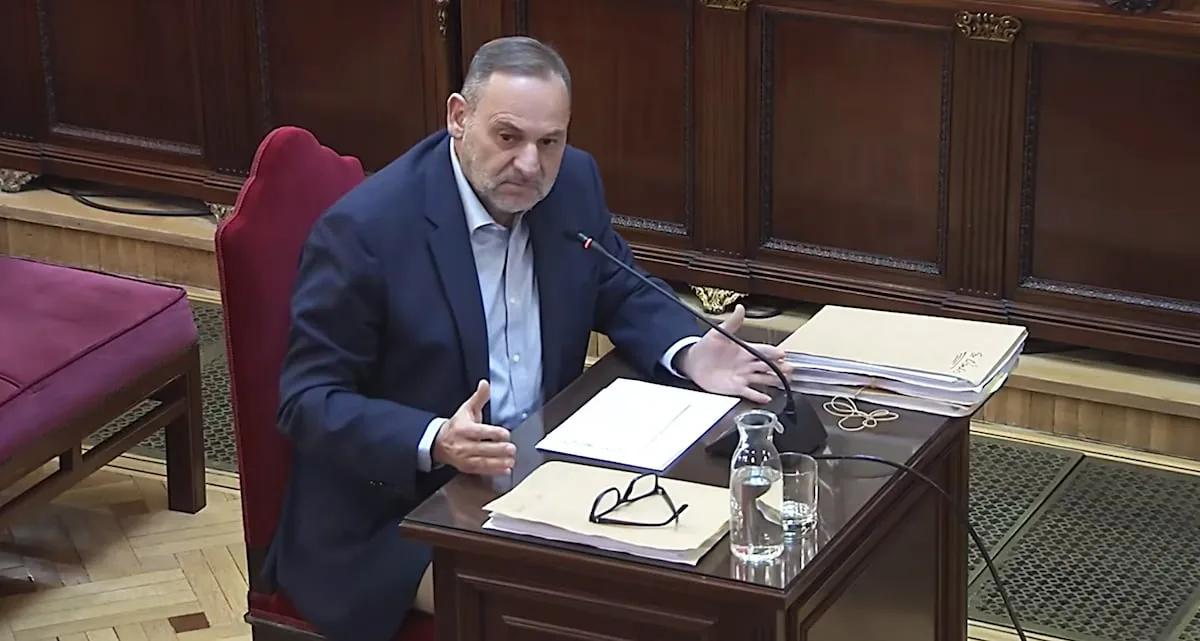
José Luis Ábalos has questioned during his testimony before the Supreme Court the only economic evidence attributed to him by the UCO: “94,800 euros of unknown origin, taken from Koldo’s whatsapps. Is that all they have found in 10 years?”, the former minister ironized, assuring: “They can insist. They will not find anything on me.” Ábalos also expressed his surprise at the denial by his ex-partner Jésica Rodríguez of having met the middleman Víctor de Aldama and suggested that it could be an agreement between them: “I find no reason for her to deny knowing him, unless there is some matter they have settled.” Previously, he had spoken about his relationship with his former advisor Koldo García, who accompanied him “24 hours a day” and whom he incorporated into his ministerial cabinet as a reward for his “dedication and loyalty.”
EL PAÍS offers the latest news of the trial free of charge. If you want to support our journalism, subscribe.

Ábalos protests having to explain the requests for “folios”
The former Minister of Transport protested before the Court about having to “demonstrate the normal terminology because it is assumed that criminal language is used.” “It is up to me to reverse the burden of proof, to have to prove that when I ask for folios, they are folios. And I have to request a diligence from the Ministry to observe the level of folio consumption and see if it matches the dates of the whatsapps,” explained José Luis Ábalos, who said that the Congress also reported the high consumption of folios – “I have that paper culture!”, he exclaimed. He also explained that he had the printer at the Ministry’s house, not in the office, and it was at night when he printed and consulted the reports. “Sometimes I needed folios or boxes of folios; if it were money, I would ask for ‘give me boxes of money’. But, by the way, I had bodyguards and drivers who brought me those boxes of folios, it is not difficult to find out if they were folios or not; what happens is that if someone wants to accuse you of criminal organization, then you have to behave like a criminal.”
Ábalos, on his alleged cash income: “They will find nothing”
The former Minister of Transport assured the Supreme Court that “it is time to speak rigorously about the UCO report,” which concludes with a table of the amounts attributed to him in the case: “Of all, I am attributed 94,800 euros [in cash] of unknown origin. That is all the evidence against me,” Ábalos indicated. “And they are all taken from Koldo’s whatsapps, from nowhere else,” the former minister pointed out, exclaiming that “even admitting that this may constitute evidence, this is what they have found in as many millions as it is said I have taken. With each statement, the millions increase. Mr. de Aldama the other day added more millions, and I am delighted because the more millions they put, the more it is required to identify and locate that money.”
“In 10 years they have found 94,000 and I have done the math and it comes out quite less,” explained José Luis Ábalos. “Of so much money, 94,000, taken from Koldo’s whatsapps? Is that what they have found on me in 10 years?” the former minister asked, ironically pointing out that the cash income “for the great mask corruption case” averages “500 euros a month.” “And not counting other cases, I have public works, I have Air Europa, I have everything… but they have found 94,000 because there was no way to find anything else on me. And they can insist. They will find nothing on me,” assured the former Minister of Transport.
Ábalos, on the Air Europa bailout: “We were late” and “quite stingy”
The Koldo case trial resumed with questions to José Luis Ábalos about the Air Europa bailout. The public prosecutor asked the former minister if he exchanged messages with Víctor de Aldama in August 2020 about this matter. Ábalos indicated that yes, he spoke with him as an “advisor” of that company. However, he pointed out that he does not like to call it a bailout, but “a loan that, by the way, had very harsh conditions compared to the aid given to all other companies.” Ábalos emphasized that “the money was repaid” with interest and very harsh conditions because “the company risked what others had not risked.”
“I remember that before the pandemic, the issue of Iberia’s purchase of Air Europa, that company was worth 1,000 million and due to the pandemic was worth nothing. So much so that IAG at the board meeting proposed abandoning the purchase and assuming the cost of the compensation because it was better for Air Europa to disappear,” explained the former Minister of Transport before explaining that “it was the only truly Spanish flag company we had.” “There was anguish and a lot of interest. I have said many times, a government has to attend to the needs of its companies when they are strategic. And for that the fund [recovery fund] was defined, and if the fund is defined as one of the policies, then it must be executed and the only thing we can say is that we executed it late. And comparatively with Europe, the CEO himself said, compared to what other airlines could receive, Spain and I included as part of the government, were quite stingy,” he indicated.

15-minute recess
The president of the Court has decreed a 15-minute recess. After the break, José Luis Ábalos will continue testifying
Ábalos: “My only obsession, my only concern, is that we had protective equipment”
The former minister José Luis Ábalos indicated that his obsession in the early days of the pandemic was the urgency to obtain masks: “My only obsession, my only concern is that we had protective equipment already. And I gave no further instruction, besides the order was made for them to try to do it well, but that we had the material already.”
“I always said that masks had to be brought as soon as possible, that they put all means for it. Now, those who contract have to contract as they see fit. And as they know, I have never contracted, I have never been part of any contracting body and ports have the mandate to buy, mandate to contract with no one in particular. Therefore, they have to contract whoever they think should be contracted, because in the end they are the ones who will have to answer for whom they contract,” he recounted in response to prosecution questions.
He also assured that the decision to buy eight million masks “comes from the needs forecast” evaluated by different units, departments, and companies of the Ministry of Transport. “Then an order is presented to me and I would probably approve it because I am the one who has to make the political decision,” he indicated before pointing out that “with the difficulties of arranging a contract of this type. Asking [for masks] for 15 days is like asking for nothing.”
Ábalos indicates that an advance payment system was established to “prevent the Ministry from being deceived” in the purchase of masks
The former Minister of Transport José Luis Ábalos indicated in the Supreme Court that the acquisition of masks was “a success” because there was “no supply problem.” Ábalos recounted that he went to the Minister of Health, then Salvador Illa, to ask “what equipment should be bought and from whom. And what I found was that the problem was even bigger than ours, that they did not know from whom, they had no one.” Ábalos assured that Illa told him to be careful with “scams.” “That was what worried me most, being scammed. I went to the ministry, addressed the undersecretary and left the undersecretary in charge of processing this and he did it through a ministerial order,” he said.
Ábalos recounted that the decision for the purchase of masks to be made by Puertos del Estado was not his, but the undersecretary’s “as was also the idea of the advance payment system, so that the Ministry would avoid being deceived, that there would be no embezzlement. A mechanism was put in place and someone involved here even suggested asking if there was any other similar experience that would prevent money from being embezzled.” The former minister said that the money was deposited in a “blocked” account and once delivery was verified “in quantity and quality, the release of that money was arranged, and that was something proposed by the undersecretary, and the proposal was sent to Puertos del Estado from the Directorate General of Organization and Inspection, dependent on the undersecretariat.”
He pointed out that “those were very intense, very accelerated days” because between the State of Alarm decree and the 20th “all procedures accelerated” and assured that he did not know “any” of the offers submitted, but that there were some because “although the decree [of the State of Alarm] did not require it, it would look good if there were some more offers to include in the file.” And that it was Koldo García who told him that they had submitted “up to four.” The former minister said he did not speak with Víctor de Aldama before buying the masks: “He used to visit Koldo frequently and probably knew of our need, but at that moment one interprets it as help.”
Ábalos: “This is clearly a media case, judged a long time ago and with a clear sentence”
The former Minister of Transport José Luis Ábalos has denounced that his case “is clearly a media case, judged a long time ago and with a clear sentence.” Asked about his relationship with Claudia Montes, Ábalos assured that he never had a relationship with her, that he only saw her a couple of times, that she never formed part of his personal circle, as a UCO report claims. “The report talks about personal circle; personal circle, none,” he denied firmly. He then lamented that this woman declared the opposite on television. “A lot of television, that is part of all the misery of this process, paying production companies to vulnerable people to script them and make them say everything they can say,” he lamented, adding that “this is clearly a media case, judged a long time ago and with a clear sentence.”
Ábalos assures he did not influence hiring Jésica at Ineco and that she may have arranged her testimony with Aldama
“Was it your idea that she was hired at Ineco? And if so, who did you talk to so that Jésica could start working?” the public prosecutor asked former minister Ábalos, who assured that he did not consider it: “It was not proposed to me, because, if she was to be at Ineco, why not somewhere else?” Ábalos indicated, pointing out that he told Koldo that Jésica wanted to work, “but not really thinking officially, but rather in a more private sphere and I did not give [her resume] to anyone else. I did not do anything with anyone, I did not talk to anyone.” “There is no one who could say that I sent anything to whoever gave the resume, but public companies had no need, in fact, it is where the worst pay was.” José Luis Ábalos explained that Jésica did not notify him when she was called for an interview at Ineco: “If a person wants to work, they will have to go through the processes they have to go through.”
The former minister also assured the court that he “does not like” seeing Jésica in her testimony before the Supreme Court “saying what she had to say. Jésica said she was not going to work without anyone asking her that. She said she was paid without going to work, without anyone asking, she said she did not know Mr. de Aldama when I met her through him. I am convinced that she does not say that if she has not been coerced. She cannot incriminate herself if she has not been told beforehand ‘say this and nothing will happen to you.’ I am convinced. I know her and no one else does that. No one says they will not work when they have taken care to clock in every day, to appear as if they were going to work.”
Read more Rita Segato in Colombia: “Men have to mock the mandate of masculinity”
“I would like to clarify now that I am here, if this person has been coerced. I assure you that I know her and I find no reason for her to deny knowing Mr. Aldama, unless there is some matter they have settled,” José Luis Ábalos pointed out.
Ábalos assures that Jésica Rodríguez’s apartment was paid for by Escolano and that he never had keys
José Luis Ábalos contradicted businessman Víctor de Aldama who claimed to have paid for Jésica Rodríguez’s apartment in Plaza de España and said it was paid for by a partner of the middleman, Luis Alberto Escolano. The former minister also assured that he did not have keys to the property and never stayed overnight there. “I simply was there on occasions. If I ever had lunch with her I obviously had to go to the ministry because my schedule was tremendous,” he assured.
Ábalos placed his relationship with Jésica Rodríguez between October 2018 and November or December 2019. He added that they saw each other again in February 2020 on the occasion of her birthday. But from then on “they had no further relationship,” that Rodríguez accused him of ghosting her. “It was indeed a very abrupt breakup, but it was not, at least on my part, any discomfort, simply because the relationship could not continue. It was an extramarital relationship,” Ábalos acknowledged, adding that Rodríguez would maintain some communication with Koldo García.
“It was a very difficult year with two election calls with the risk of a public scandal that unfortunately, as can be seen, not only did I not avoid, but it has served for all kinds of mockery for all of us who could be linked: me, her, my ex-wife,” he declared.
Ábalos indicates that he “does not have a precise date” of when he met Víctor de Aldama
The former minister assures that he “has the impression” of having met businessman Víctor de Aldama “in the last quarter of 2018.” “I cannot specify when. I know it was a very rushed introduction by Koldo and I remember I was getting into the car, but it cannot be August 31, I am sure of that, as the UCO report says and has been established here,” Ábalos indicated, who stated that on that day, according to the Civil Guard investigators, he was in London with his wife and children accompanied by his bodyguard, where the businessman’s brother, Rubén de Aldama, was, although Ábalos confessed he did not know he was his brother.
José Luis Ábalos spoke of a meeting with the governor of Oaxaca in December 2018 in Madrid, where he was introduced to Víctor de Aldama as an “advisor,” not as a “counselor”: “This meeting was arranged on my agenda, I did not participate in the planning or preparation. They simply told me that the governor of the State of Oaxaca was in Madrid and wanted to have a meeting,” the former minister indicated before pointing out that it was around that meeting that he learned that he “held a representation as of commercial cultural relations,” although it seemed “very informal” to him.
Regarding the trip to Mexico in February 2018, Ábalos indicated that “it was not convenient for him to make it” because it was “very rushed” and that it was organized between the cabinet and the Spanish Ambassador in Mexico, who “participated in everything.” “Mr. de Aldama did participate in a visit and, well, a very protocolary one, without content, to the Senate that a friend of his who was a senator managed. And then the meeting with Oaxaca. In the rest, no. The Mexico mission was not at all for Oaxaca; it did not have the entity to move a minister and the president of INECO, who was part of the delegation. Our objective was to finish the visit that the Prime Minister had made shortly before to try to restore relations with the new president of Mexico, who had a somewhat, well, I do not think anyone would call it hostile, but reluctant attitude to Spanish interests,” Ábalos explained.
Ábalos denies sending Aldama to mediate with Venezuelan opposition leader Juan Guaidó
The former Minister of Transport José Luis Ábalos has denied sending businessman Víctor de Aldama as a mediator with Juan Guaidó, the Venezuelan opposition leader who ran in the 2019 elections and was recognized by Spain as the legitimate president of the country. He called the account given last week by Aldama a farce and imposture, who said Ábalos sent him, through his contacts in Venezuela, to negotiate with Guaidó and that he obtained from him oil quotas for Spain with which, moreover, money would be paid that would illegally finance the Socialist International. He said he never signed a letter that the middleman claimed to have taken to the opposition leader. “It is a story of imposture” that the businessman inflated to “give it a certain rigor,” he said.
Ábalos says Koldo García “accompanied him 24 hours a day” and rewarded his “loyalty” when he became minister
José Luis Ábalos began his testimony in the Supreme Court talking about his relationship with his former advisor Koldo García. The former PSOE Organization Secretary indicated that Koldo accompanied him “24 hours a day,” that he met him in the 2017 primaries and that he became his driver when the party secretary general, Pedro Sánchez, entrusted him with the PSOE Organization Secretariat. “The party was in a very delicate situation of confrontation, and my role was to rebuild the party and I dedicated myself to those who had lost the option that apparently was going to be the winner, and I traveled a lot. I had to move a lot, travel a lot and I needed a driver who could endure, let’s say, those uninterrupted hours, because the staff at the headquarters has some limitations regarding rest and hours, and I needed someone who, besides being a driver, also did activism and had that full availability,” Ábalos commented before the Second Chamber of the Supreme Court.
“He accompanied me 24 hours a day, and so we were for months. He was a driver, but he also did security and increasingly intense personal attention,” the former minister recounted, indicating that when he was appointed minister, “in gratitude for all this time of dedication and loyalty,” he incorporated him into his cabinet. Furthermore, Ábalos assured that “during all that time,” Koldo participated in his “intimacy” and his “personal life,” which generated “unique bonds” between them that he did not establish with other advisors.
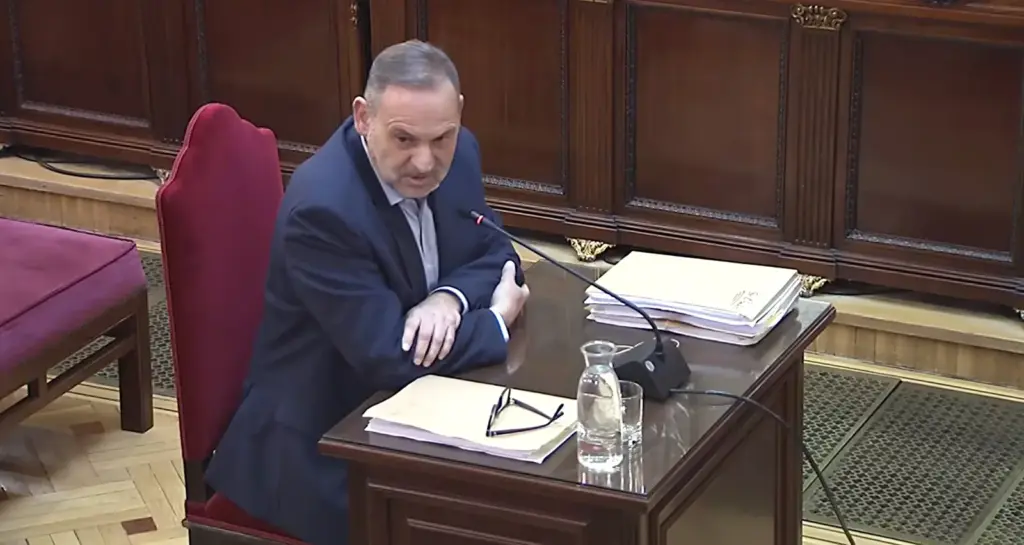
José Luis Ábalos’s testimony begins
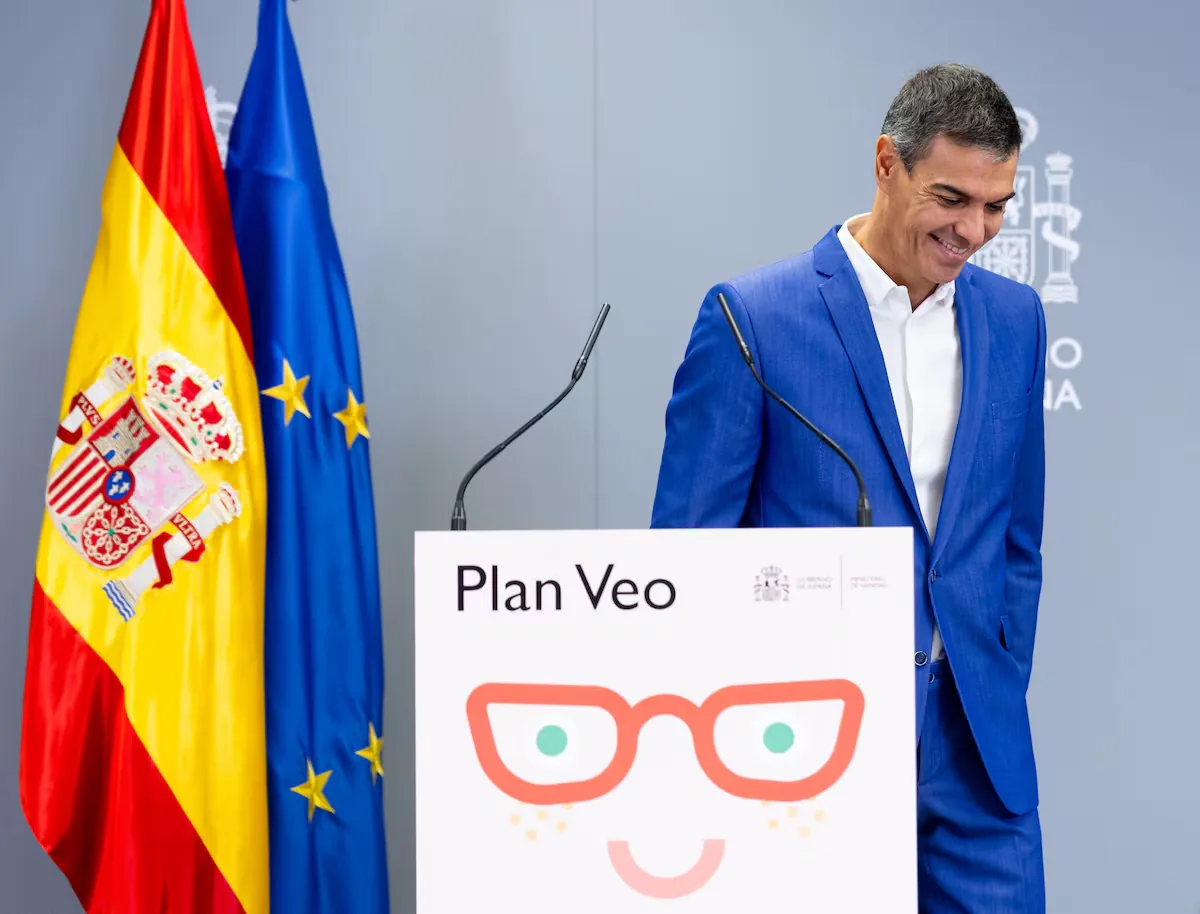
The former Minister of Transport and former PSOE Organization Secretary, José Luis Ábalos, begins his testimony before the Supreme Court. He is the last of the three accused to appear before the Second Chamber of the high court in the first trial of the Koldo case, focused on the mask scheme.
The Anti-Corruption Prosecutor’s Office placed Ábalos as “the boss” of a criminal organization allegedly formed together with his former advisor, Koldo García, and businessman Víctor de Aldama. According to the indictment, the former minister “provided the authority conferred by his highest responsibility in the Ministry of Transport and his direct influence when necessary.” However, the two accused who have testified so far about the alleged kickbacks paid in exchange for contracts awarded from Transport to Soluciones de Gestión ―a company favored by Aldama― to buy masks during the pandemic have dismantled the accusations’ narrative. Both the middleman and the advisor agreed that Ábalos was not the boss.
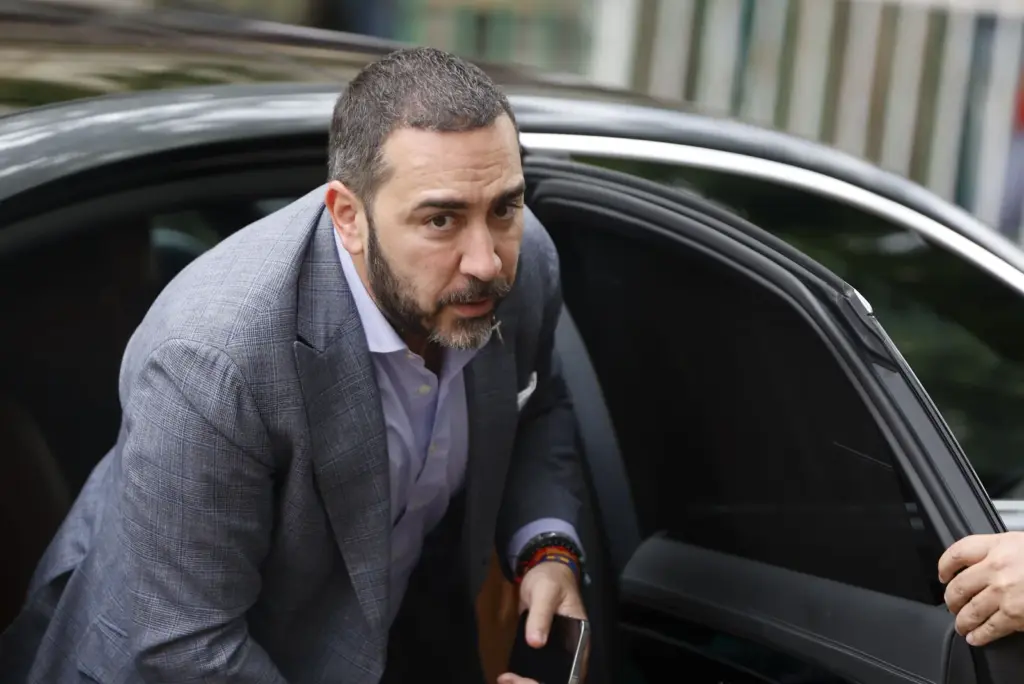
Javier Lizón / EFE
Aldama, arriving at the Supreme Court
Middleman Víctor de Aldama has already arrived at the Supreme Court to hear the testimony of former Minister of Transport José Luis Ábalos. The businessman accused the president, Pedro Sánchez, last week of being in the “rank 1” of the “organized gang” and Ábalos in number two, for being the one “who gave and granted,” and pointed to the collection of kickbacks from construction companies also intended to finance the PSOE through donations, said the middleman, and even to the Socialist International with “oil quotas” from Venezuela.
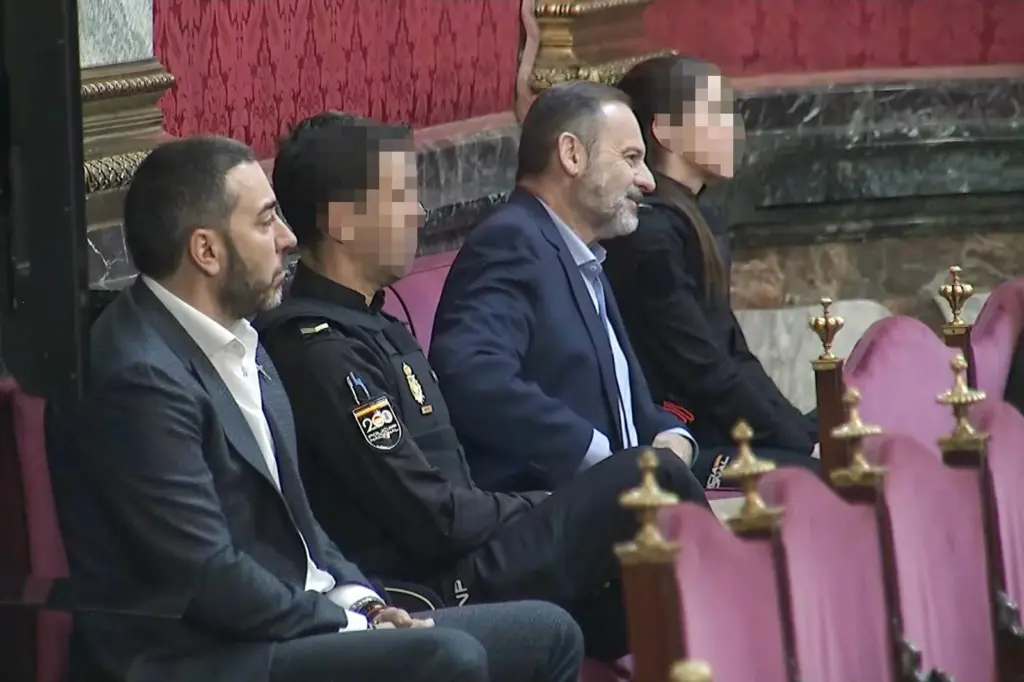
Koldo case
Ábalos takes the floor in the final stretch of the mask trial
The former Minister of Transport José Luis Ábalos will take the floor this Monday in the Supreme Court. He will be the last of the three accused to do so, so it is expected that he will respond to the battery of accusations from the alleged fixer, Víctor de Aldama. He will also have the opportunity to distance himself, validate, or qualify the words of his former advisor, Koldo García, although judging by the latter’s appearance, it seems they will come as a united block until the end. That outcome is near, as the first trial for the Koldo case, focused ―at least legally― on the mask scheme, is scheduled to be ready for judgment this Tuesday.
You can read the full information here
Good morning. The trial of former Minister of Transport José Luis Ábalos enters its final stretch this week with the turn of the also former socialist leader, who will respond this Monday to the accusations of middleman Víctor de Aldama about the collection of kickbacks also -he said- to finance the PSOE. It will finally be this Monday when the former lieutenant of Pedro Sánchez in the PSOE as Organization Secretary, currently in preventive detention, takes the floor in the trial in which he faces a 24-year prison sentence for alleged rigging in mask contracts in exchange for kickbacks from Aldama.