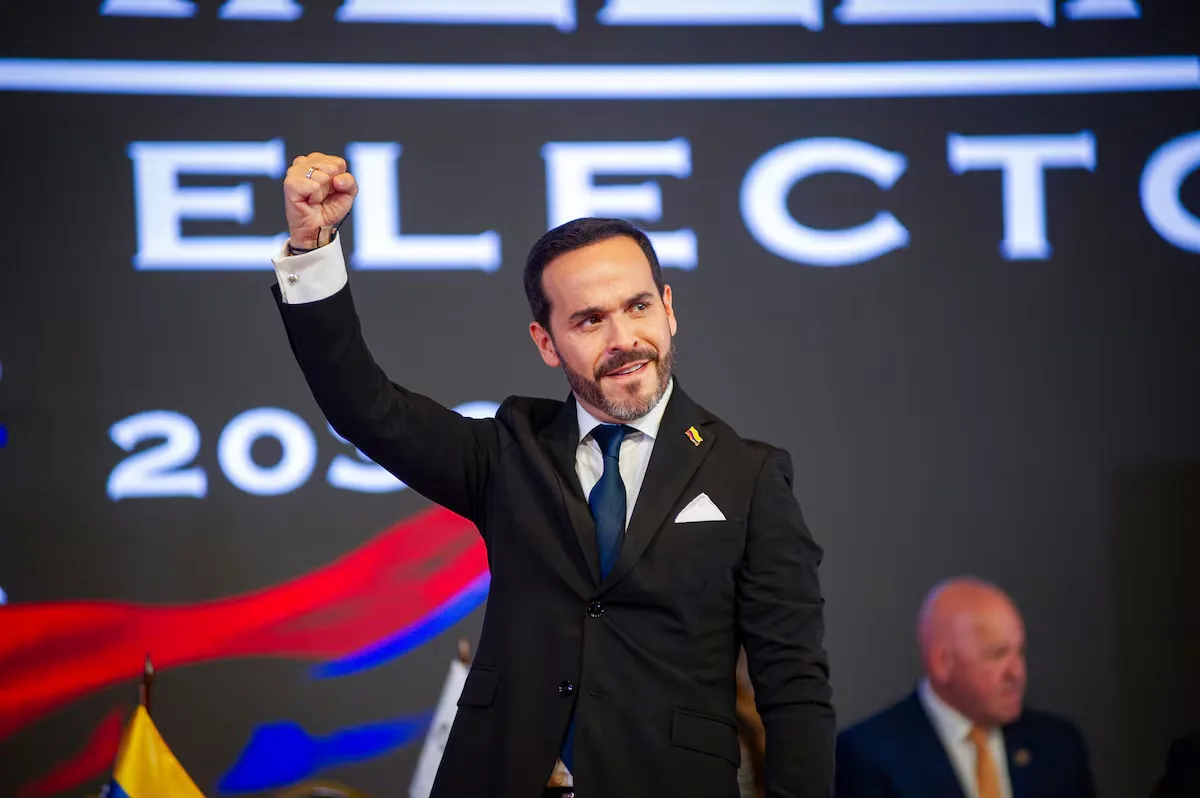








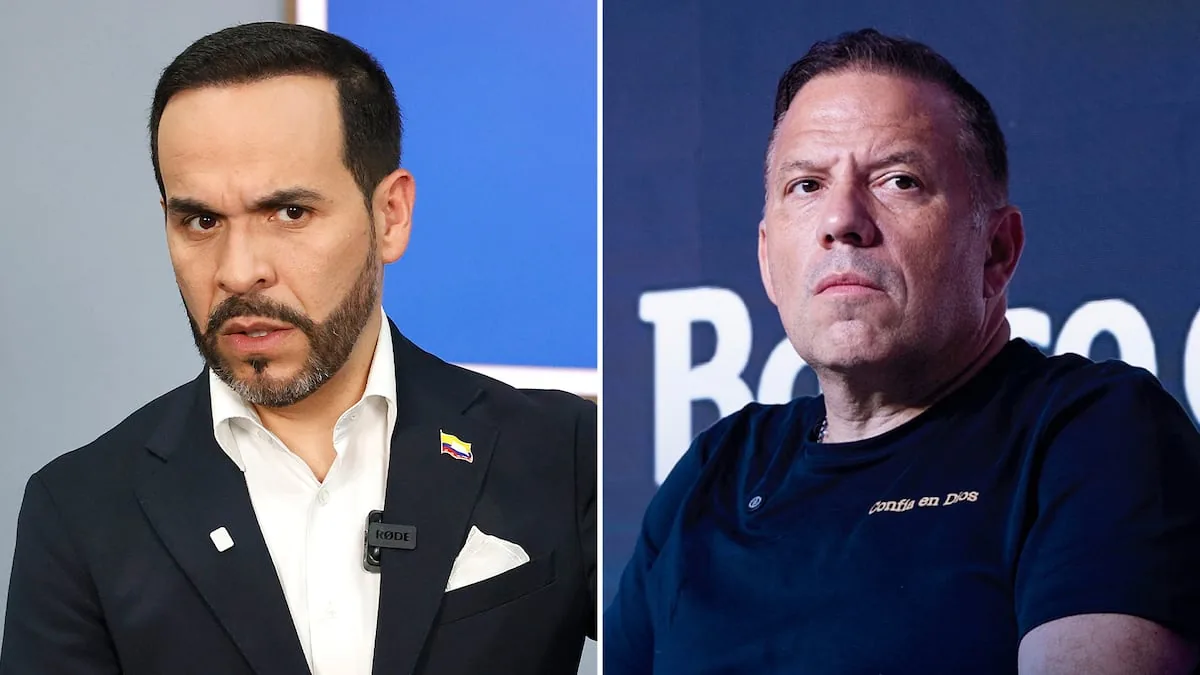
A trip to Mexico on a private, all-expenses-paid flight to watch the Colombian National Team’s first match in the Football World Cup, or the delivery of 10 million pesos (about 2,800 dollars) for those who want to open their own business. Both promises, which seem straight out of a game show, come from the far-right presidential candidates in Colombia, who have used them to boost their names and attract voters. Abelardo de la Espriella and Santiago Botero, who campaign with similar formulas —declaring themselves outsiders and boasting about their wealth—, are once again using these methods. Electoral and transparency organizations have questioned whether all of this is ethical and legal.
Read more Chile faces the challenge of converting its mining waste into a new source of critical minerals
De la Espriella, who is fighting for second place in all polls with right-winger Paloma Valencia, was the first to promote these striking maneuvers. His movement, Defensores por la Patria, shared a video in mid-April in which the candidate announces a contest with three prizes: a trip to the World Cup, attending the candidate’s campaign closing with access to the dressing room, and spending a full day with the aspirant.
The contest is not left to chance: those who wish to participate must get referrals to register on the movement’s website. The second requirement is to send a message answering “how they imagine the miracle homeland,” the nickname De la Espriella has given to Colombia if he wins the elections. The comments with the most likes will win.
A few days later, Botero, known as “the bullet man” for his tough-on-crime proposals, launched his own raffle. At the presentation event for his government plan, the candidate from the Romper el Sistema movement gave away 25 million pesos (about 7,000 dollars) in a raffle. Botero asked attendees to fill out papers with their personal data and a business proposal. The flyers were placed in boxes, from which five winners were randomly selected.
The lucky ones would not be the only ones to receive money from the candidate. His campaign launched an advertisement promising large sums for those who “have or want a business.” “Within our government plan, all those who register [on the campaign website] will be given up to 10 million pesos to set up their business or make it grow,” reads the brochure, signed by “the billionaire Santiago Botero.”
Andrés Hernández, director of Transparency for Colombia, an NGO that promotes the fight against corruption, indicates that these methods raise major legal and ethical questions about political campaigns in the country. “We must question where these resources are coming from because they are, in essence, campaign acts. Candidates are treading a very thin line with committing something illegal if they propose promises of payments to increase their vote,” he points out in a phone conversation.
Electoral law does not prohibit mobilizing voters, as it is the core of political campaigns, but it is clear in classifying “voter corruption” as a crime when money or a particular benefit is given “with the purpose of voting for a specific candidate, party, or political current.”
Personalization of campaigns
The director of Transparency does not believe that these contests prove a crime is being committed, but he thinks they are a symptom of a questionable strategy that is gaining popularity. “These raffles reflect what is happening in world politics with the excessive personalization of campaigns. Candidates use tactics that seek to strengthen the figure of the sole leader who can solve everything and try to become a kind of rockstar. Spending a day with a politician and having access to the dressing room is more akin to an advertisement made by a singer,” he considers.
The raffles held by the now Argentine president, Javier Milei, when he was a deputy, are well remembered. He raffled off his salary, which was around 2,000 dollars, among almost 2 million people. Although justice investigated him for potentially having infringed the personal data protection law, this method catapulted his name in the race to the Casa Rosada.
Read more Tech magnate Peter Thiel strengthens ties with Milei in Buenos Aires
The Electoral Observation Mission (MOE), a network of civil organizations specializing in electoral issues, also spoke out on the matter. Its director, Alejandra Barrios, stated in a video that the raffles and contests held by De la Espriella and Botero are “atypical ways of campaigning.” Even so, she rules out that the strategies constitute propaganda or an electoral crime, as “their purpose is not to induce a specific political or electoral decision towards citizens.”
The only entity that has raised serious doubts about the legality of one of these strategies has been Coljuegos, which regulates games of chance. Its president, Marco Emilio Hincapié, asserted —after the news of the raffle held by Botero— that no campaign “has authorization for conducting raffles or promotional activities for financing purposes.” “Any activity of this nature that does not have prior approval from the entity is considered illegal and, therefore, will be subject to investigations and sanctions provided by law,” he emphasized in a statement. Coljuegos added that the law prohibits cash prizes in raffles.
Two ‘outsiders’ who question the system
Both candidates have undeniable similarities. In their proposals: they represent the far-right and advocate for an end to Gustavo Petro’s total peace government, a tough stance against criminals, and a deep liberalization of the economy. Also in their way of doing politics.
Botero is an entrepreneur and De la Espriella a lawyer, so both deny being “politicians.” With this distinction from the other aspirants, they emphasize their calls for independence and their refusal to receive support from traditional parties. Both collected signatures to launch their candidacies. And both claim to be financing themselves mainly with their own money and through personal loans. Although the exact figure of their assets is unknown, it is known that Botero is the founder of companies such as Finsocial, a fintech, and SBO Lab, an investment holding; and that De la Espriella owns a large business network in various sectors, such as legal assistance, liquor sales, and men’s fashion.
The main point of convergence between the two aspirants is their harsh criticism of the system. Botero does so radically and explicitly. His program states that only by “breaking the system” will Colombia become “a just, efficient, and prosperous country.” His proposals range from the construction of mega-prisons, the imposition of the death penalty for the corrupt (prohibited by the Constitution), the implementation of Bitcoin as legal tender, or the reduction of VAT to 7% from the current 19%.
De la Espriella also intends to modify the system from within, but more focused on the economy. The lawyer wants to reduce the state by 40% and achieve a 6% annual increase in the country’s GDP. His program states that an Executive under his leadership will resemble a “corporate government” more than a political institution.
But what distances them most is their popularity. While De la Espriella has maintained a comfortable second place in most polls, with an average voting intention of 23%, Botero barely reaches 1%. Even so, “the bullet man” believes that by being the most followed of all candidates on the social network TikTok, he can make a splash and has distanced himself from his direct rival: he claims that the criminal lawyer is a “buffoon” and a “bandit.”
Read more Milei, corruption, and the end of libertarian innocence