









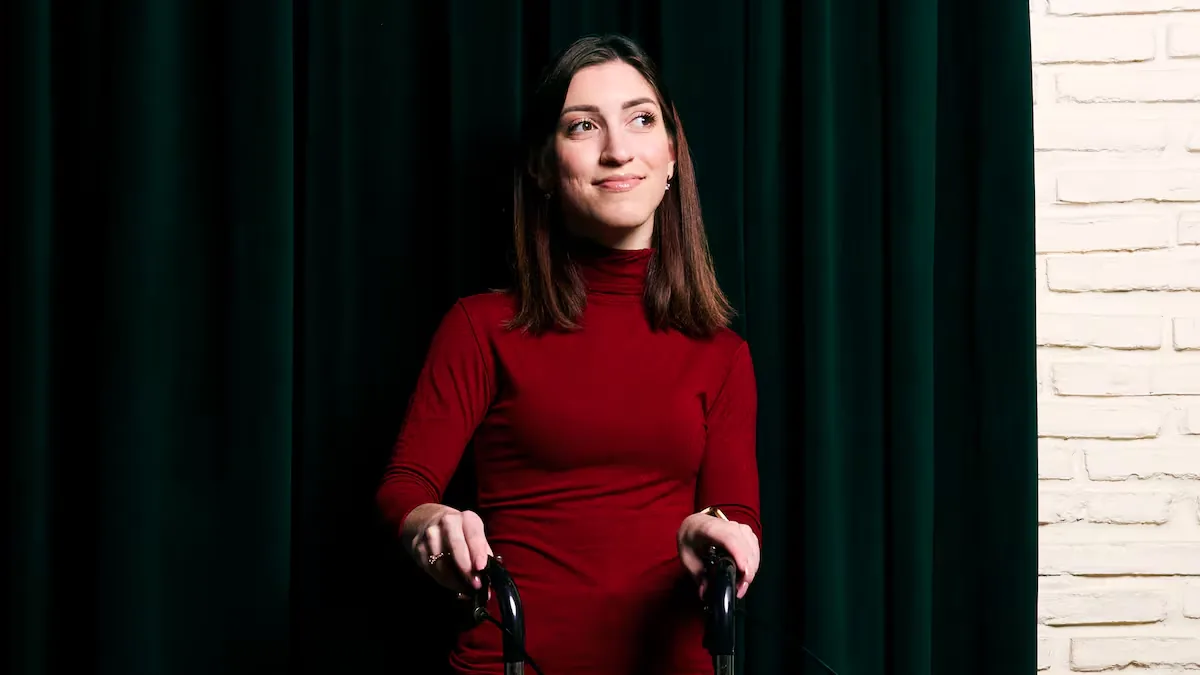
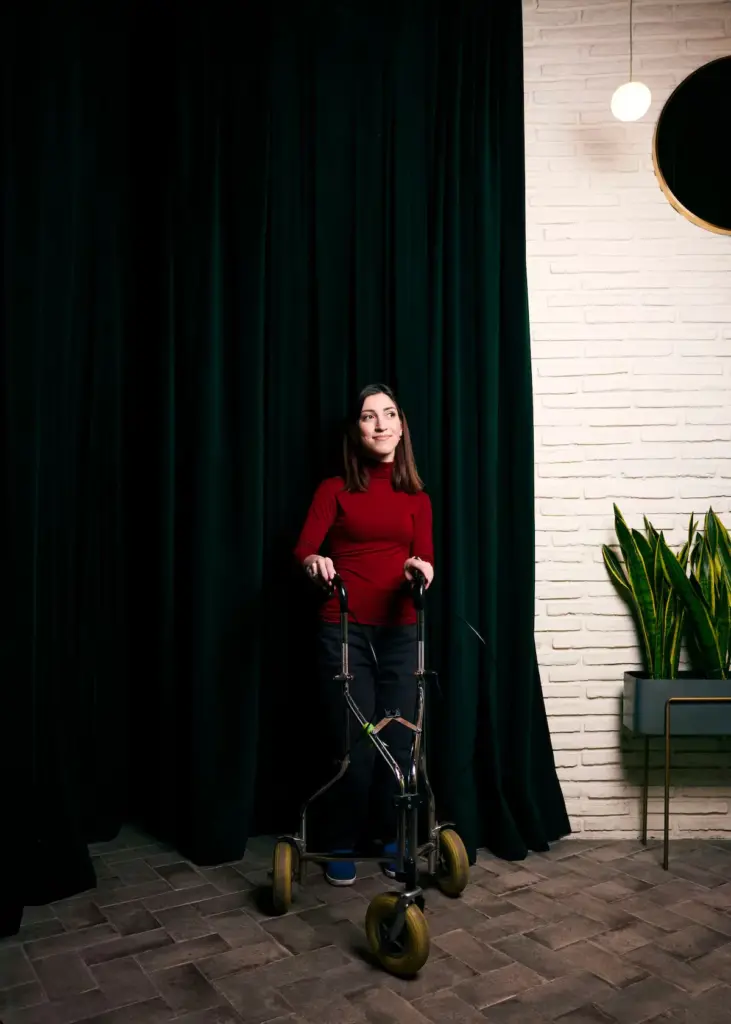
Not being a mother represents a conquest for many women. That conquest is, in any case, the ability to choose, which means having several alternatives given by material conditions, physical factors, or cultural capital. For Victoria Bodean, her cerebral palsy has not prevented her from exercising that ability to choose. To the surprise of those around her, this 27-year-old Moldovan English teacher has become the mother of a girl, a capital-V victory that she now wants to crown with a career as a content creator to show the world what it is like to live with a disability.
Read more Robles will reaffirm the work of the Armed Forces and the Spanish identity of Ceuta in Congress
“My city, Străşeni, was in shock. They were curious about how a person with a disability could get pregnant. They wondered how I was going to raise my daughter,” she says in Madrid, during a visit with her sister for a UNICEF and EL PAÍS event. “I am still a human being, and having reduced mobility did not limit my desire to be the mother of a healthy baby,” she states. After her daughter’s birth, she separated from the father and is raising her with the help of her family, with whom she lives in the same house from her childhood, in Moldova.
We met her again after 17 years. She had been interviewed by El País Semanal in 2009 as part of the report “Children of the World,” and she said what excited her most was having a giant doll. As back then, when she was ten years old, she remains independent and does not ask for assistance unless it is indispensable. She walks with a walker and goes up and down steps with minimal help. But Bodean came into the world through a complicated birth in which doctors prioritized saving her mother’s life and forced her birth with the conviction that the baby would die within days. She survived. And although she began to speak and her intellectual development progressed, some of her basic movements were delayed. She could not sit, hold her head up, or chew. Throughout her life, she underwent repeated surgeries and learned to live with pain.
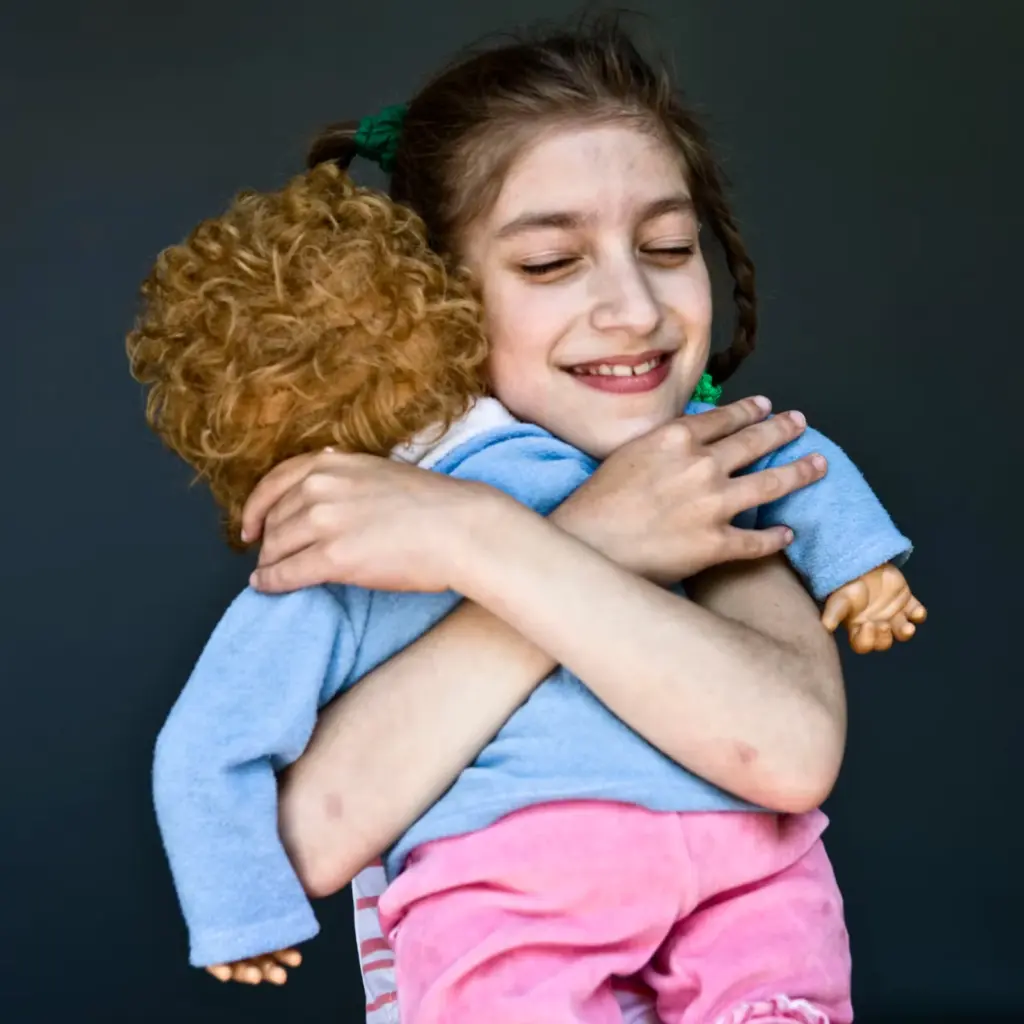
Since the diagnosis of cerebral palsy at two years old, her parents adapted so she could lead a normal life. Her mother learned to give massages and her father changed the design of the family home. At five years old, the first laser surgery she received was fundamental to start chewing food, seeing better, and going from walking on her toes to supporting her whole foot. “They operated on every muscle in my body. It was very painful to move afterward. And I remember every type of pain I went through. But I don’t focus on it,” she says. Even so, and after so many other surgical interventions, there are problems she has gotten used to living with: “If I had a lot of water in my mouth, I would panic. It still happens, but I have learned to control it.”
Read more Ceuta, the Supreme Court and the anxiety of the PP
In Moldova, one of the poorest countries in Europe, educational institutions are not prepared to accommodate people with reduced mobility. At eight years old, Bodean attended school for a week. She could not continue longer because her only concern was moving from one place to another as quickly as possible. She was not discriminated against, but she felt like a burden to her classmates, who accompanied and helped her. “It was horrible. I told my mother: ‘This is too much.’ But then I went alone to the United States, and I forgot that I had a disability.”
After a childhood and adolescence spent with distance education, she learned there was a scholarship for students that allowed living in that country for a year. With doubts, she applied, got it, and traveled to Pennsylvania at 16 years old. “The country is so adapted that you forget you are different. There are ramps everywhere, and they are practical, something that does not happen in other places. The doors are automatic and the subway is adapted. If I couldn’t take notes in class, I could use a recorder. They gave me simple solutions to daily problems. It was an experience different from what I had lived.”
Upon returning from the United States, Bodean studied special education and began teaching English to children, which she does today. As the social model of disability states, exclusion is caused by social barriers—such as education and urban design—and not by physical and functional differences. Working and having a daughter are, for her, an effort to break those barriers.