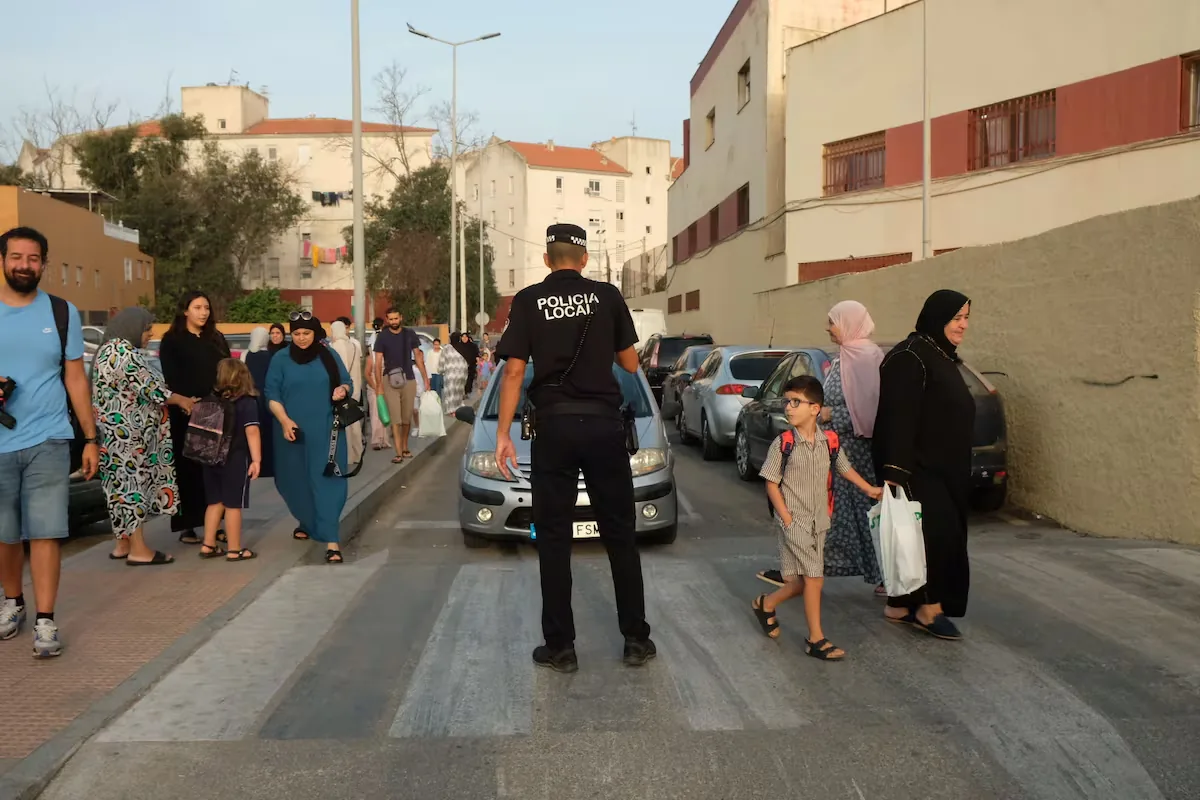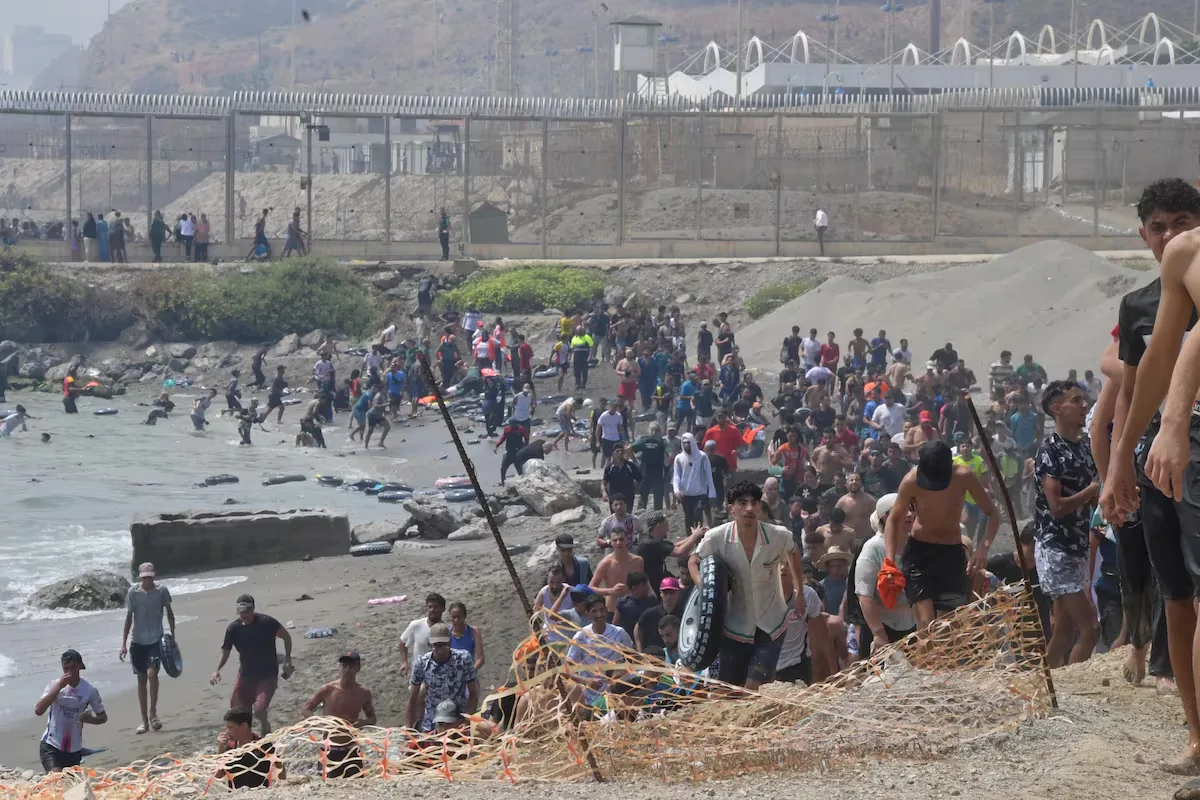





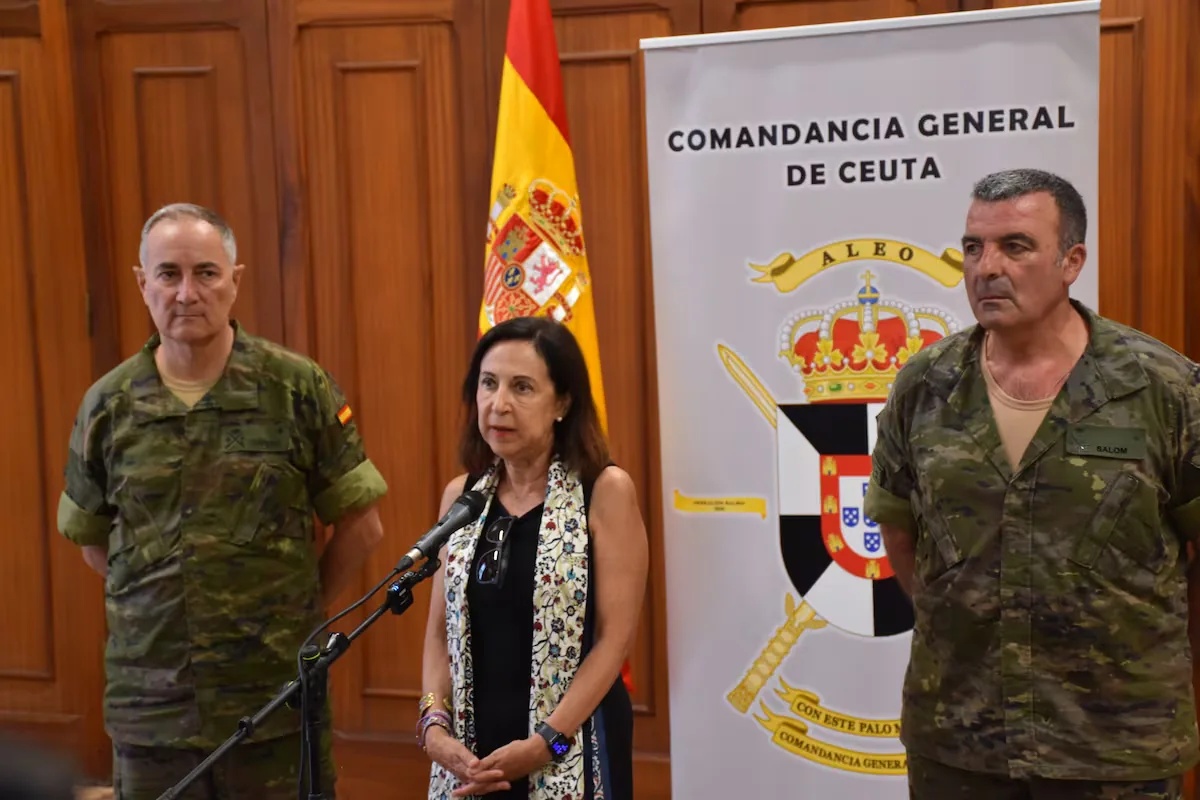
Defense Minister Margarita Robles will reaffirm this Tuesday in Congress the “good work” and “professionalism” of all the Armed Forces and the National Intelligence Center during the crisis suffered in Ceuta since July 30 and will take advantage of the session in the lower house, after 26 days of the migrant influx, to reiterate the unquestionable “Spanishness” of that city and Melilla. This was what she did during her visit to Ceuta on August 12. Robles already warned then that both Ceuta and Melilla are “very Spanish” and sent the message that the crisis unleashed by the sudden arrival of 80,000 migrants in a few hours “cannot happen again.” This idea was reinforced this Monday by the First Vice President, Carlos Cuerpo, in situ, in Ceuta. The Government wants to use the eight ministerial appearances in the next seven days to emphasize that they have managed this crisis “from the first moment in accordance with the principles of legality, institutional collaboration, and respect for human rights.”
Read more Ceuta, the Supreme Court and the anxiety of the PP
The minister’s team is clear about the goal of Margarita Robles’ presence and explanations this Tuesday in the Defense Committee of Congress: “She will thank the work, willingness, and effort deployed by the Armed Forces in support of the State security forces and bodies from the first moment.”
The minister will face, in her staunch defense of the work carried out by the Army units, criticism mainly from the PP and Vox, regarding the lack of foresight, the shortage of means and resources, and the lack of available information from Spanish intelligence, as well as the poor management by the Government and the lack of pressure on Morocco. These criticisms have been made by the PP and Vox in recent weeks and will be repeated in the coming days during the scheduled appearances of the ministers of Foreign Affairs, Interior, Defense, Justice, Health, Equality, and Youth.
In the case of Defense, some military associations have denounced these days the poor working conditions and overcrowding suffered in Ceuta and have focused on possible contagions of various diseases.
Although most ministers and the president himself have emphasized that the Spanishness of Ceuta and Melilla will not be questioned and that what has happened these days has been an attack on the integrity of the national territory, the Defense Minister has been the one who has most strongly stressed this statement, which connects with a very particular feeling of the citizens of Ceuta. Robles will repeat this position in Congress. Neither announcements nor proposals are expected from her, as these correspond more to other departments, although several of her colleagues ―and this Monday the Vice President Cuerpo himself― have acknowledged that among the plans to relaunch the city is also a greater presence of the State in all its aspects.
An authorized spokesperson for the Executive summarized the objective of all the appearances scheduled for the next seven days as follows, after the Popular Party unsuccessfully demanded the presence of almost all those ministers first in the Senate: “The Government will demonstrate that it has managed this crisis from the first moment in accordance with the principles of legality, institutional collaboration, and respect for human rights.” In Pedro Sánchez’s Cabinet, they intend to emphasize, with this idea, that the difficult solution to the crisis unleashed in Ceuta is not resolved with the slogan “let them all return to Morocco,” as the PP proclaims and its national spokesperson, Borja Sémper, repeated this Monday. The PP reiterates, and has registered it in various initiatives in Congress, that its priority is that all the immigrants who entered illegally on July 30 and 31 return to Morocco.
The Government is aware that this total return will not be possible, because Morocco will not accept it despite what some of its ministers publicly indicate, because minors and asylum seekers must legally complete a series of procedures, and because it does not yet have the exact number of migrants currently in Ceuta fully defined. After a few days of more or less veiled criticism of the president of the autonomous city, the Popular Juan Jesús Vivas, the ministers have now opted to emphasize that coordination between administrations will be fundamental.
Read more The alternative left to the PSOE stakes out its own ground with a harsh message against Morocco