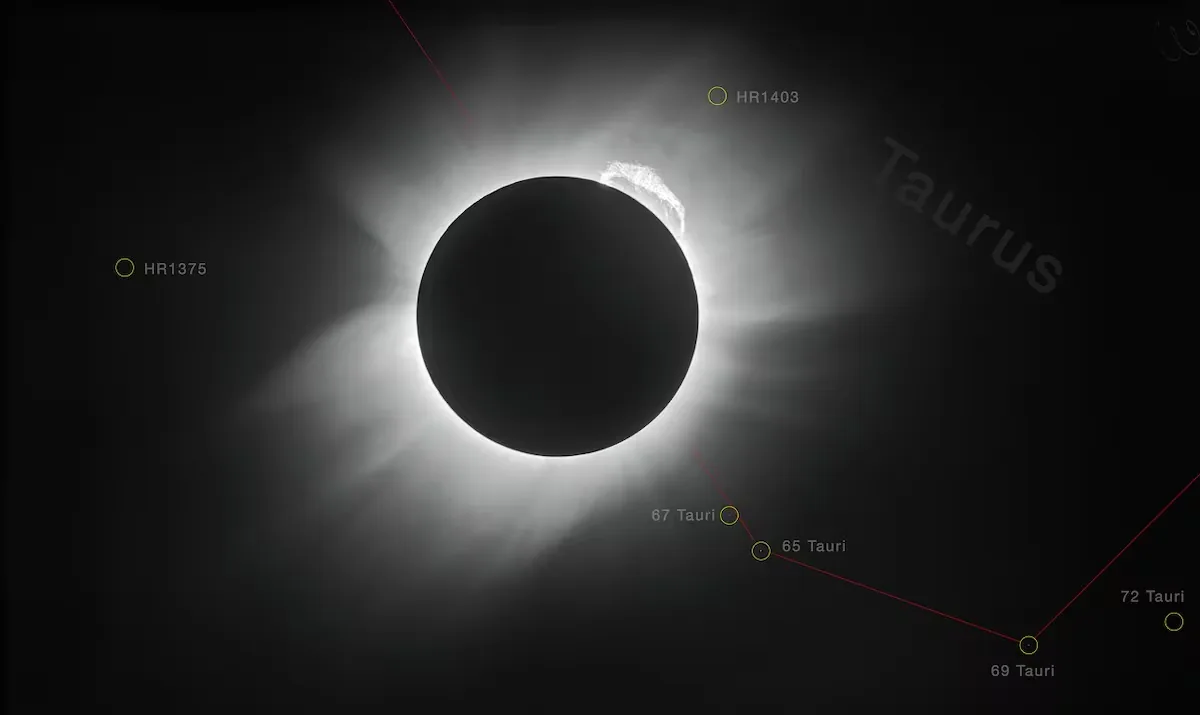
I wonder from where Andreas Karaolis, a photographer who spends his life traveling to places in the world where the night is as black as the hadal zone, the usual residence of the anglerfish, will watch the total eclipse. His specialty is capturing celestial bodies. Thanks to his commendable activity on social media, I have learned that there are commercial cameras with which any citizen with skill and budget to position themselves in locations without light pollution can capture the multilayered and exuberant splendor of the Milky Way.
Read more Jorge Martín and the Aprilias show muscle in the MotoGP restart at the British GP
There are always those multicolored nebulas full of unknown worlds that he highlights with specialized editing programs. The human eye cannot capture that daily spectacle just by looking up. What a relief. There are things better not thought about or seen every day. For example, how monstrous the creatures that watch us from the ocean floor are, about which we know even less than about the cosmos. Or what Artemis astronaut Christina Koch said: “Earth from the Moon looks like a small marble suspended in the immense darkness of deep space.” One of her colleagues was no more reassuring when he said our planet is a spaceship.
Read more The global trail running scene shows its exponential leap at the Sierre-Zinal Cathedral
Going full throttle spinning through the ether inside a beautiful spinning top is dizzying, but thinking that we are trapped with some influencers and certain leaders on a planet whose increasingly warm blues are cooking us like helpless frogs is terrifying. This week, Musk, like a postmodern Méliès, shot a rocket into Selene’s eye, but for now, the only places where we can breathe oxygen and grow tomatoes are Earth and its soil. The only place where potable water falls from the sky thanks to a miraculous cycle we take for granted is the one we inhabit. The only place where trout can be fished is the third planet of the solar system. Many of them gasp for breath dying in the riverbeds across Europe, which this summer are dirt highways. I now think of a phrase I read in that prodigious essay by Robert Macfarlane titled Are Rivers Alive? After a thrilling river journey by kayak, he reclines on a sun-warmed rock that fits his body perfectly. Below, the hard mineral warms his back; above, the rays of light hit his chest: “It’s as if I had dressed myself with a gneiss stone almost as old as the Earth and with photons that the sun fired just eight minutes ago.” For him, at that moment, time is a Möbius strip, and there is no separation between space and earth. The eclipse is a moment of similar magic, and I will see it from a Templar castle that NASA has named an official observatory. I am so fortunate it is next to my house.