I fell in love with Ceuta as soon as I got off the ferry, the first time I traveled to the city. I carried in my backpack and in my head a jumble of prejudices and readings —various militarisms, novels about the war in Morocco, a lot of bibliography on colonial Morocco…— that dissolved in the water of the Strait and no longer existed when I disembarked and headed towards the Baluarte de los Mallorquines. I discovered a beautiful and complex city, open to the sea and to all the points of the compass, which can be provincial and tedious on a Sunday afternoon in the Revellín, or cosmopolitan and vibrant like the most avant-garde neighborhood of a metropolis. A few trips later, already completely captivated, Ceuta inspired me a book about borders that I count among my most cherished works.
Read more Heads and tails in the search and exhumation of victims of Francoism in Jaén
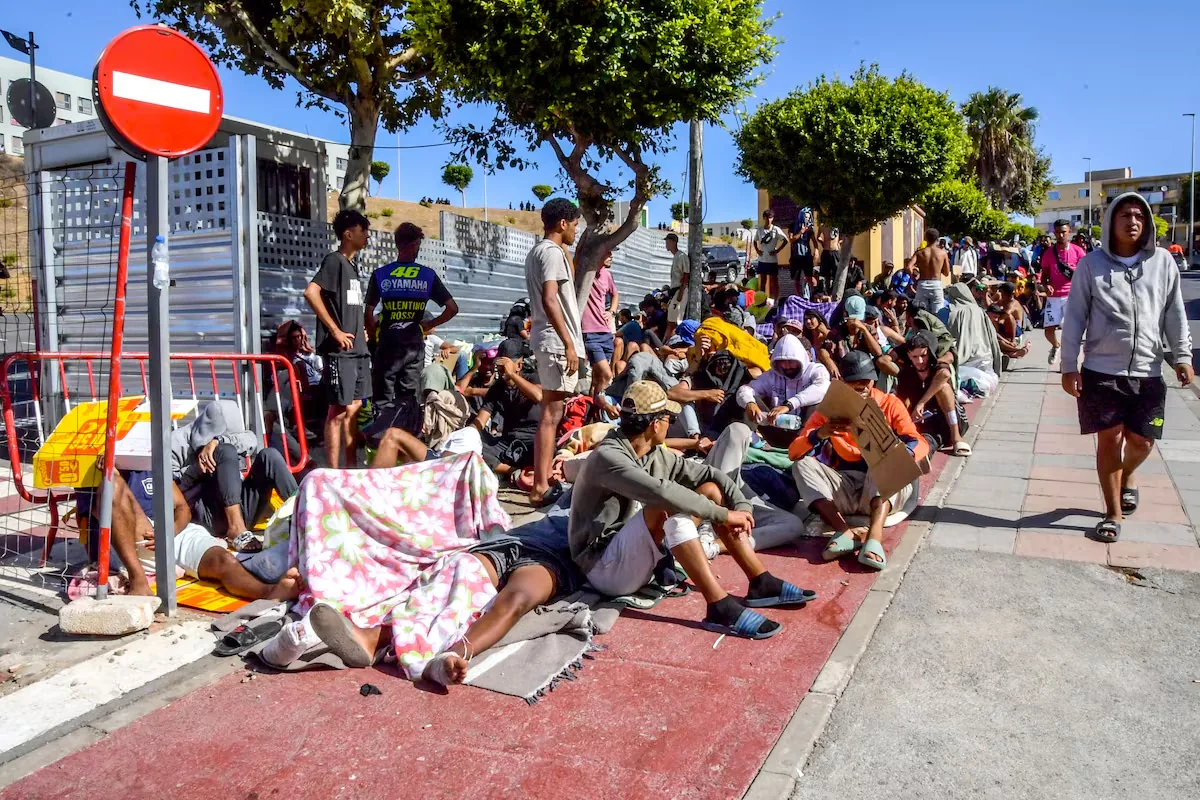
In El Príncipe I have met the most patriotic Spaniards; young people who mix dariya with Spanish and get very offended —rightly so— when someone questions their Spanishness. They were the first to respond to the crisis and the ones who have most felt the fatigue in this tragic August. El Príncipe has a very strong neighborhood solidarity network, and while the ultras of Europe roared and the Government played ostrich, there they fed the hungry and gave drink to the thirsty.
That is the caballa spirit, that of a city that has never waited for someone else to pull the chestnuts out of the many fires that burn it. If there is a place in Spain where they know about negotiation and democracy, it is Ceuta: in a space one kilometer long, in the center, they have a cathedral, two churches, two Hindu temples, a synagogue, and a mosque. The people of Ceuta could travel the world giving seminars and teaching that harmony and peace are imperative when so many languages, cultures, and religions mix in a minimal space that, for empires, is just a Monopoly square.
The Spanish State —both the central Government and the regional ones that refuse to receive the children— has seriously failed a small city that has endured a blow capable of destroying much more powerful places. The ministerial rhetoric and the declarations of Spanishness in superlative mode have only served to underline the loneliness of the people of Ceuta, who deserve much more than they have received so far, which has been almost nothing. Margarita Robles’ apologies are understood, but they are far from being the most urgent thing now that the Government is waking up. No words will deny that certain feeling of abandonment. The facts, if clear and generous, may perhaps mitigate it a little.
Read more The rise in gas to new highs worsens the countdown to stockpile reserves for the winter