







EL PAÍS offers the América Futura section openly for its daily and global informative contribution on sustainable development. If you want to support our journalism, subscribe here.
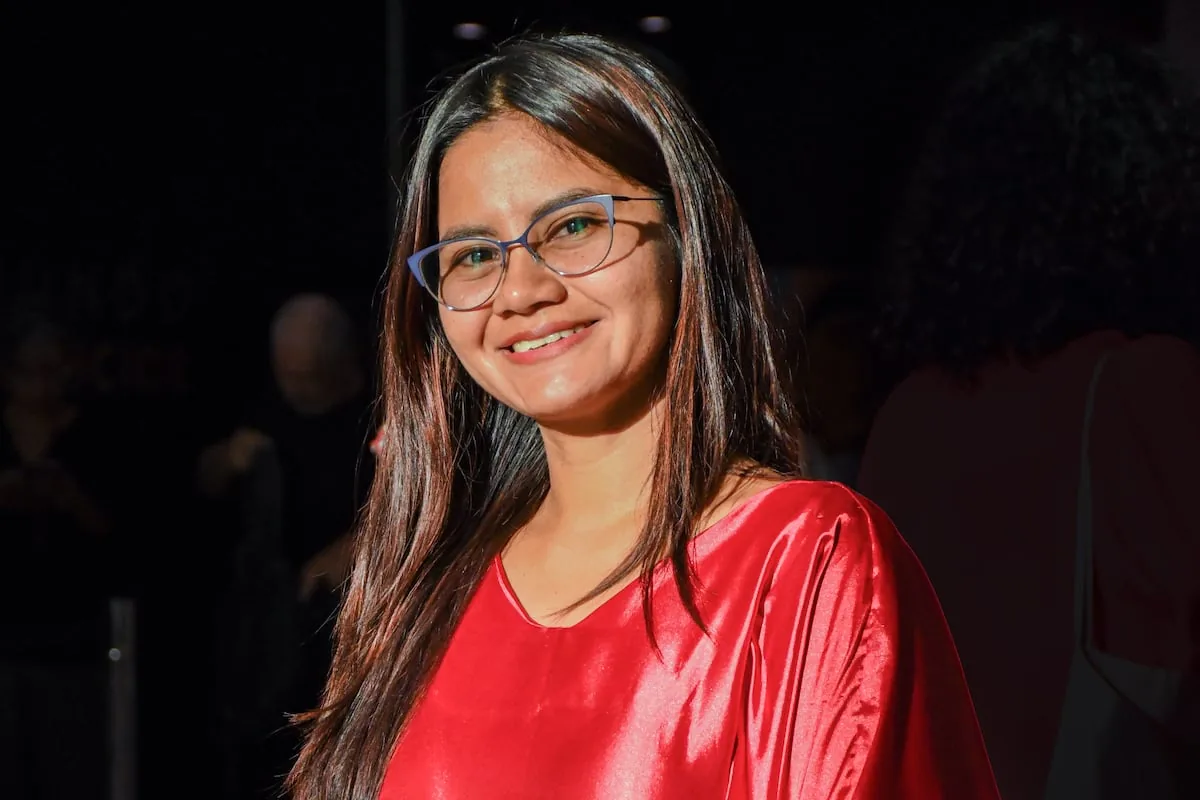
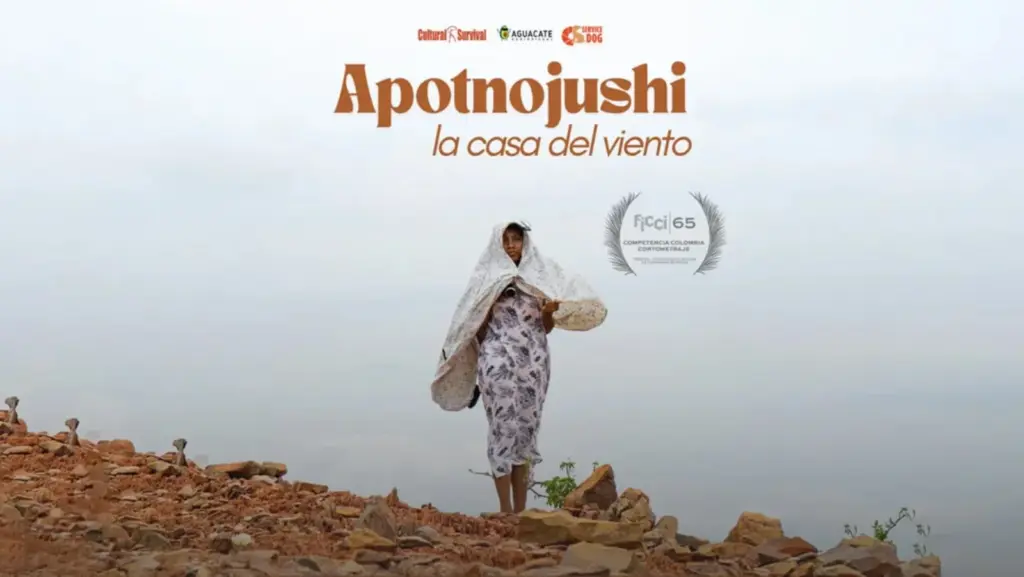
When someone turns on the light at home, they do not imagine that before that electricity sparked a family argument in La Guajira. However, the differences about the transformation of their territory — a desert bathed by the sea at the northern tip of Colombia — into a wind turbine park, have fractured the Wayuu from within. The short film The House of the Wind, directed by indigenous filmmaker Marbel Vanegas Jusayu and presented within the framework of the 65th edition of the Cartagena de Indias International Film Festival (FICCI), held from April 14 to 19, addresses how an environmental and ideological discussion that takes place globally has become a domestic matter. Among the Jusayu, some defend the arrival of capital, and others, maintaining their territory as it is.
“At first, I used to ask the company people: but at least are you going to give us light?” Vanegas says in a phone interview.
—No, the light goes to Medellín.
―How are you not going to give us light if we generate light? Can’t you bring down a transformer for the community where you will take it from?
—No, impossible!, they answered.
—And are you going to give us access roads?
—No… The idea is that you do productive projects, like planting.
“And how are we going to plant if we don’t have water?” she asked, who in her productions reflects the aridity of the land, and how harsh her people can sometimes become. While the eyes of Gustavo Petro’s government are set on La Guajira, a department it seeks to turn into an energy generation hub to supply not only Colombia but also Venezuela, as proposed to U.S. President Donald Trump, the Wayuu continue resisting. “What greater act of resistance is there than being in the desert!” the filmmaker states. Due to the lack of consensus among the Apotnojushi community, located in the Serranía de Jalala, in the rural area of the municipality of Uribia, the wind park construction project was halted and remains under investigation. “They cleaned up their things but left all the division,” comments Vanegas, who chooses not to mention the company’s name.
The arrival of large multinationals to extract resources is a story that repeats itself over and over in La Guajira. In a previous short film, titled That November 4, Vanegas narrated the story of her paternal grandparents, from the communities of El Espinal and Caracolí, who were victims of forced displacement between 1990 and 1992 due to the discovery of the Cerrejón mine, the largest coal reserve in the department and one of the largest open-pit mines in the world. Decades later, when political and scientific discourse turns towards decarbonizing the economy and transitioning to renewable energies, the good sought to be exploited is more ethereal: the wind.
Although through a scholarship Vanegas has trained to understand what clean energy is from a Western point of view, she cites what already happened with the mine as an example: “One thing is the realities behind a desk and another is waking up to the noise of the train every day,” she explains. Apotnojushi is located in a geographical relief where air currents are extremely strong. “The breeze will always be there,” she comments, as well as the possibility that another company might take up the licenses again.
Memory and mother tongue
Vanegas maintains that making this complaint is fundamental, but with The House of the Wind she mainly sought to preserve her family memory. This stance is consistent with the path indigenous cinema has been taking. While denunciation and environmental horror have been some of its intrinsic characteristics, increasingly films from these communities seek to tell stories from everyday life and address a more universal audience. This is pointed out by Chilean curator and researcher Amalia Córdova, who was responsible for selecting the films in the indigenous cinema section of this FICCI edition, and who has directed the Mother Tongue Film Festival, organized in Washington by the Smithsonian Institute. “There will always be historical debts to indigenous peoples and there will always be issues of inequality, but they are beginning to be worked on differently, more narratively. They become less a legal case and more a human situation.”
Each community has found its own style, and the academic world is beginning to study their differences, instead of grouping all Latin America into the same category. Little by little, regional cinemas are being discussed: Wayuu cinema, Tzotzil cinema, Quechua cinema, or Mapuche cinema. Although the boundaries between one and another still need to be well defined, perhaps the one now most defined is Guaraní cinema, which has displacement as its central theme. “It is a people who have been very displaced, crossing borders between Argentina, Brazil, and Paraguay,” Córdova points out. In that sense, “it is a very immaterial cinema, for that reason, because its population moves a lot.” Then the Guaraní language “becomes that texture that affirms them when there are constant pressures on the territory.”
The researcher explains that, because much of indigenous documentaries have been denunciations, many times they were recorded or dubbed directly in Spanish to facilitate international dissemination. Currently, thanks to streaming, which allows productions in all languages to circulate, the film industry has become more open to the idea of native languages. “The use of indigenous languages has become a political and cultural statement,” assures Ansgar Vogt, artistic director of FICCI. Hence the native language is key in several of the other four productions selected in this year’s indigenous cinema showcase. Runa Simi, by director Augusto Zegarra, narrates how from the Peruvian Andes a man and his son embark on an ambitious mission to translate the Disney movie The Lion King into Quechua; a story in which the search for permits becomes the great antagonist.
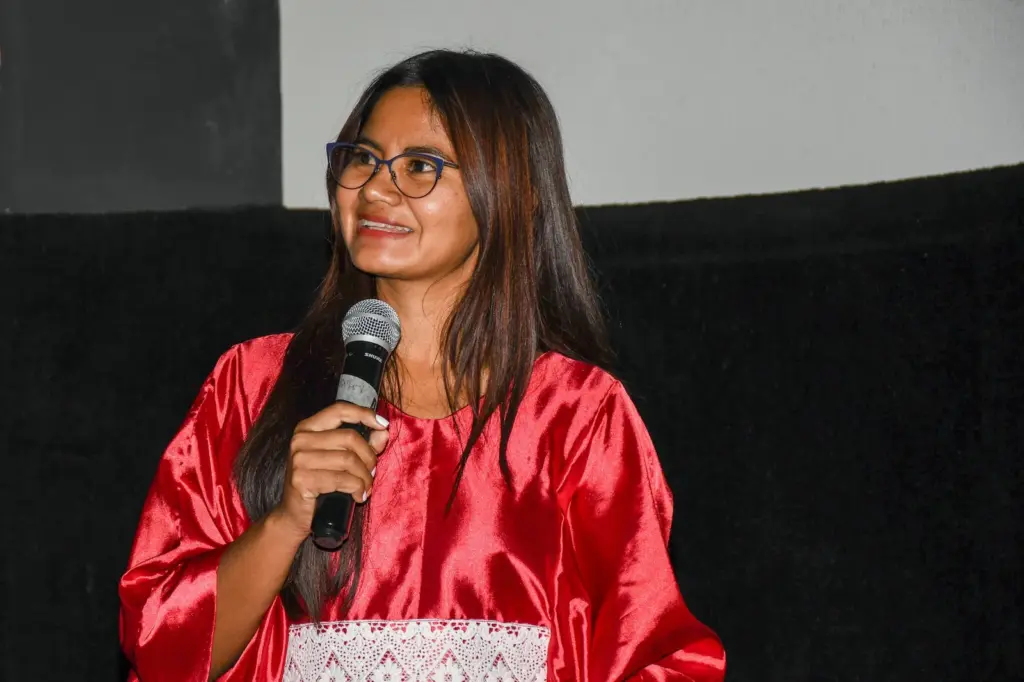
Founded in 1969, FICCI is the oldest film festival in Latin America. Although indigenous directors and themes have increased significantly in the last twenty years, it was not until 2020 that the indigenous cinema section was formally introduced, explains David Montenegro, head of programming. This year’s selection also includes the documentary The Value of the Word, by Marta Restrepo, a Colombian filmmaker who for decades has portrayed the problems faced by these communities in the country. Co-directed by Fernando Restrepo, the film investigates the murder of leaders Ángel María Torres and Napoleón Torres, from the Arhuaco people of the Sierra Nevada de Santa Marta, who disappeared in the nineties and whose loss shook the entire movement.
Experts agree that indigenous cinema is based on collaboration and exchange. The director is not always from the community, but must work hand in hand with it. “It becomes a collective work, which has to do with a more generous spirit, and less with the vision of a single person,” Córdova adds. In Vanegas’s case, her tools were her family and Wayuunaiki, her mother tongue. The director maintains that “the best actors are the Wayuu”; that is why everyone in the cast carries the surname Jusayu. They are the ones who narrate their own rupture. And they are also the ones to whom the film is addressed. Vanegas made the short film thinking, above all, that the next generations of her lineage, her nephews and grandchildren, would see it, so they would not forget that the nature of their home had always been reciprocity. The goal is clear: “We are going to recover our brotherhood.”