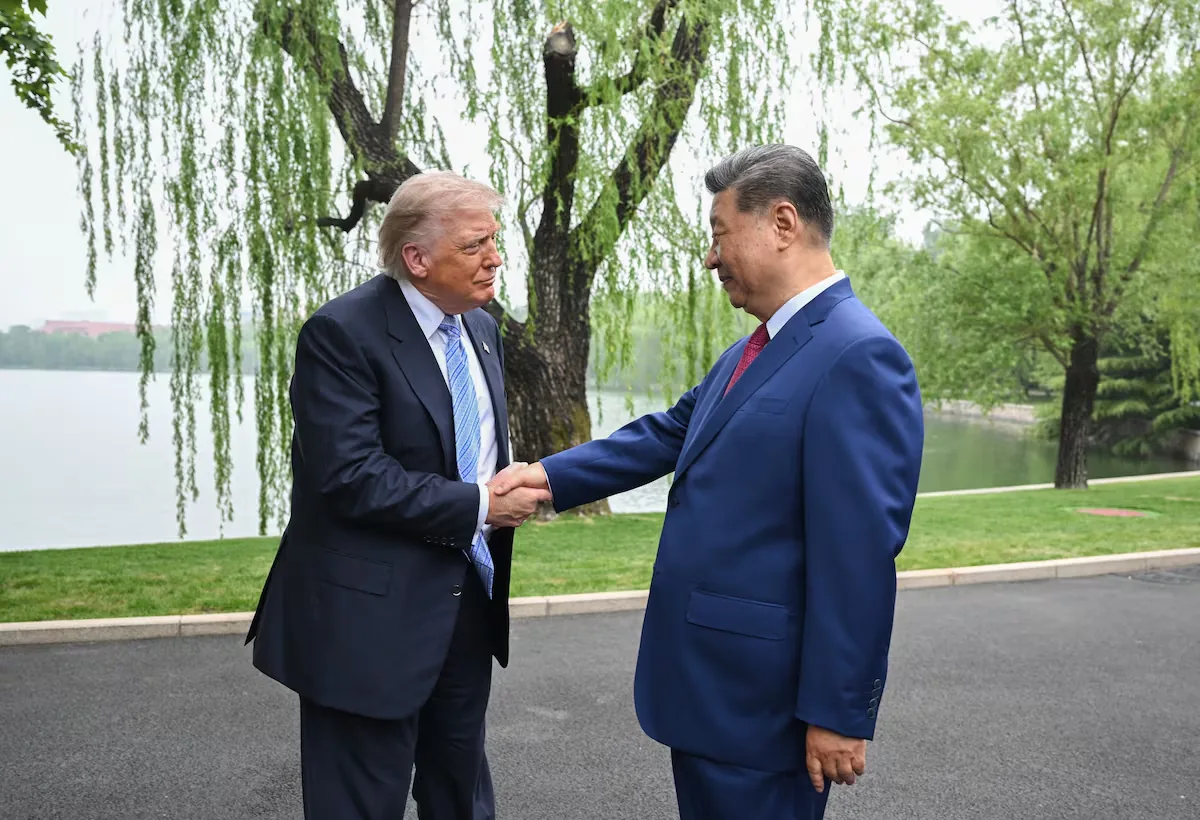





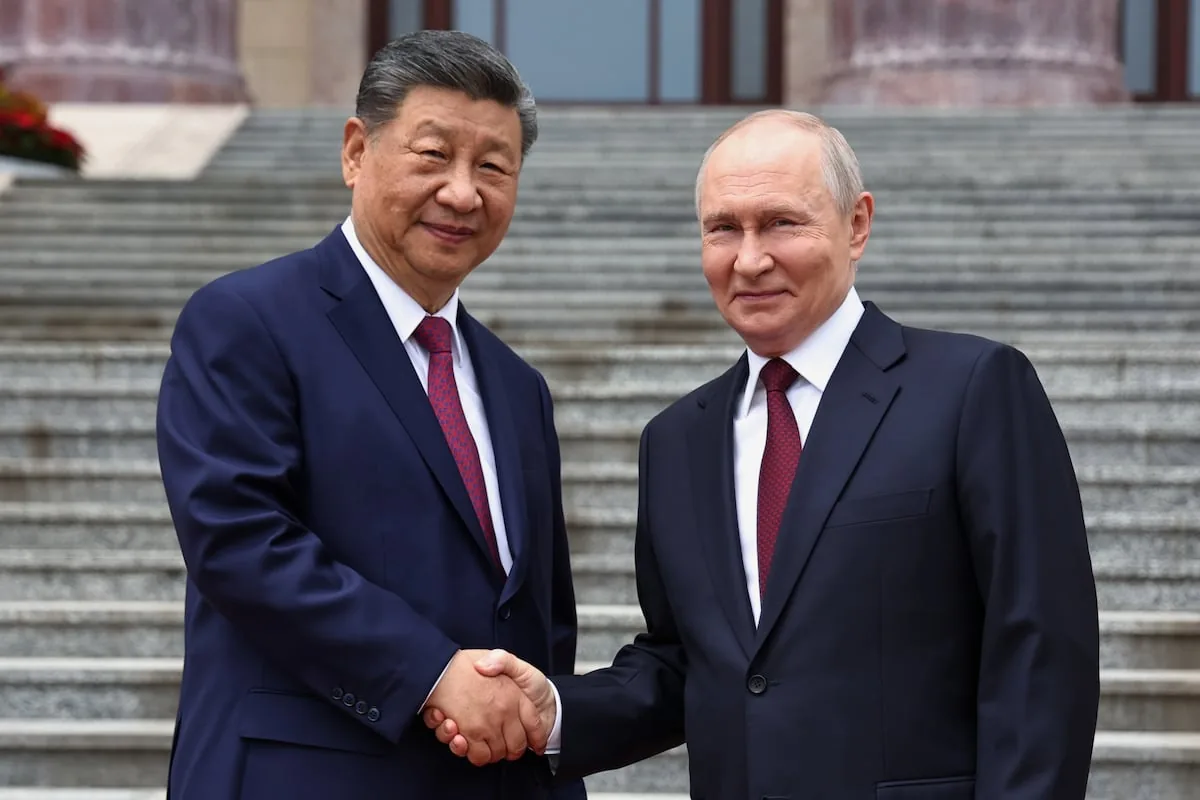
Beijing has once again rolled out the red carpet this Wednesday to remind that, in the current geopolitical landscape, all roads lead through China. The leader of the Asian giant, Xi Jinping, received his Russian counterpart, Vladimir Putin, this morning with a staging almost identical to the one he offered less than a week ago to the U.S. president, Donald Trump. The background, however, is quite different. While Trump’s visit was choreographed to the millimeter to stage an attempt at thawing relations between the two largest economies in the world, Putin’s visit served to underline how far China and Russia are willing to maintain a harmony that both present as a counterbalance to an international order dominated precisely by the United States.
Read more Barcelona suspends the granting of 24-hour supermarket licenses
The Russian leader arrived in the Chinese capital for his 25th trip to the Asian giant on Tuesday night, just four days after Trump left the city. This diplomatic sequence has reinforced the image that China wants to project as a power capable of setting the pace and speaking with all decisive actors in an increasingly fragmented world.
The welcoming ceremony held in the morning at the gates of the Great Hall of the People, the massive building reserved for major political events, located on the western side of Tiananmen Square, had all the major elements of Chinese protocol: red carpet, honor guard, a 21-gun salute, and children waving the flags of both countries. The military band played Moscow Nights, a Soviet classic with strong symbolic weight, while Putin greeted the schoolchildren welcoming him. Afterwards, the two leaders held a restricted-format meeting intended for more sensitive matters, and later an expanded meeting with their delegations.
Xi set the political and personal tone of the meeting from the start by referring to Putin as a “dear friend.” He has met with him more than 40 times since taking the reins of China in 2012. Although during last week’s meetings with Trump the Republican showered Xi with compliments—and on several occasions highlighted the friendship between them—at that time, the Chinese leader made no mention of that bond. Before Putin, however, he emphasized: “You and I have cultivated a close relationship that has helped shape the deep and fruitful ties between China and Russia.”
He also stated that bilateral ties have entered a “more proactive and accelerated” stage of development and called to seize the “historic opportunity” to broaden the trust base between the two countries, raise the quality of cooperation, and expand the path of friendship, according to the state broadcaster CCTV.
Putin, who thanked Beijing for the “warm welcome” and hospitality, returned the gesture with a carefully crafted phrase to underline his personal closeness to his host, quoting the Chinese proverb a day without seeing each other seems like three autumns. He then elevated the message to the political level: the bilateral relationship is, he assured, at an “unprecedented” level and has maintained a “strong momentum” despite “unfavorable external factors.”
Furthermore, he emphasized that the comprehensive partnership between Moscow and Beijing is governed by the principles of equality and friendship and that the goal of the relationship is the well-being and prosperity of the two peoples. Putin extended an invitation to Xi to visit Russia next year, as another sign of continuity in a relationship that both governments present as mature and stable.
According to Chinese state media, Xi defended that Beijing and Moscow raise the quality of their comprehensive strategic cooperation at a time of international “turbulence” and warned of the risk that the world could regress to “the law of the jungle.” As permanent members of the UN Security Council and great powers, he argued, China and Russia must adopt a long-term strategic vision and contribute to building a “fairer and more equitable” global governance system, a common phrase in Beijing’s language to reject U.S. hegemony and defend a multipolar order.
This harmony was reflected in the signing of 20 new cooperation agreements as well as in the decision to extend the Treaty of Good-Neighborliness, Friendship and Cooperation between China and Russia, signed in 2001 and turned into one of the legal pillars of the bilateral relationship. For Beijing, the anniversary also has symbolic value: it marks 25 years since that agreement and three decades since the establishment of the strategic partnership between the two countries. Xi defended that the treaty remains valid in a world marked by profound changes, while Putin claimed that both countries will continue coordinating on international platforms and expanding cooperation that, he said, has passed “many tests.”
Unlike Trump’s trip—the first by a U.S. president to China in nearly a decade—Putin’s visit is not a novelty on the agenda of the two leaders. They see each other at least once a year and have woven a dense network of bilateral mechanisms. Beijing and Moscow describe their ties as the best in their history, although the relationship has become more unequal since Russia’s invasion of Ukraine.
Russia needs China today more than China needs Russia. Since 2022, Moscow has increased its economic dependence on the Asian giant, which has become a key buyer of its energy, supplier of industrial goods, and an indispensable partner to cushion the impact of Western sanctions. Beijing, for its part, has avoided condemning the invasion, maintained trade with the Kremlin, and repeated a position of neutrality that the West criticizes for being tilted toward Moscow.
China, however, also manages the limits and tries not to appear as a formal military ally of Russia nor get trapped in a war that strains its relationship with Europe. Hence, Beijing has been moderating the language of the relationship. The “limitless” friendship that Xi and Putin proclaimed shortly before the invasion has become, with the passage of the war and increased Western pressure, a more measured formula: cooperation, rather than a formal alliance, not directed against third parties and based on non-confrontation.
The energy component has occupied a central place in the visit. Putin traveled accompanied by a large delegation of officials from major Russian oil, gas, and nuclear energy companies. On the table remains the Power of Siberia 2 gas pipeline, a project discussed for nearly two decades that would allow sending up to 50 billion cubic meters of gas annually to China from Arctic and Siberian fields through Mongolia.
The crisis in the Middle East has provided additional arguments to push the project forward. On the conflict, Xi told Putin that the situation is at a critical moment “between war and peace,” and advocated an immediate cessation of hostilities and the continuation of negotiations. A quick end to the fighting, he added, would help reduce disruptions in energy supply and preserve the functioning of international trade.
Read more Henry Todd or how the ‘king of LSD’ ended up creating the first low-cost agency for Everest tourists