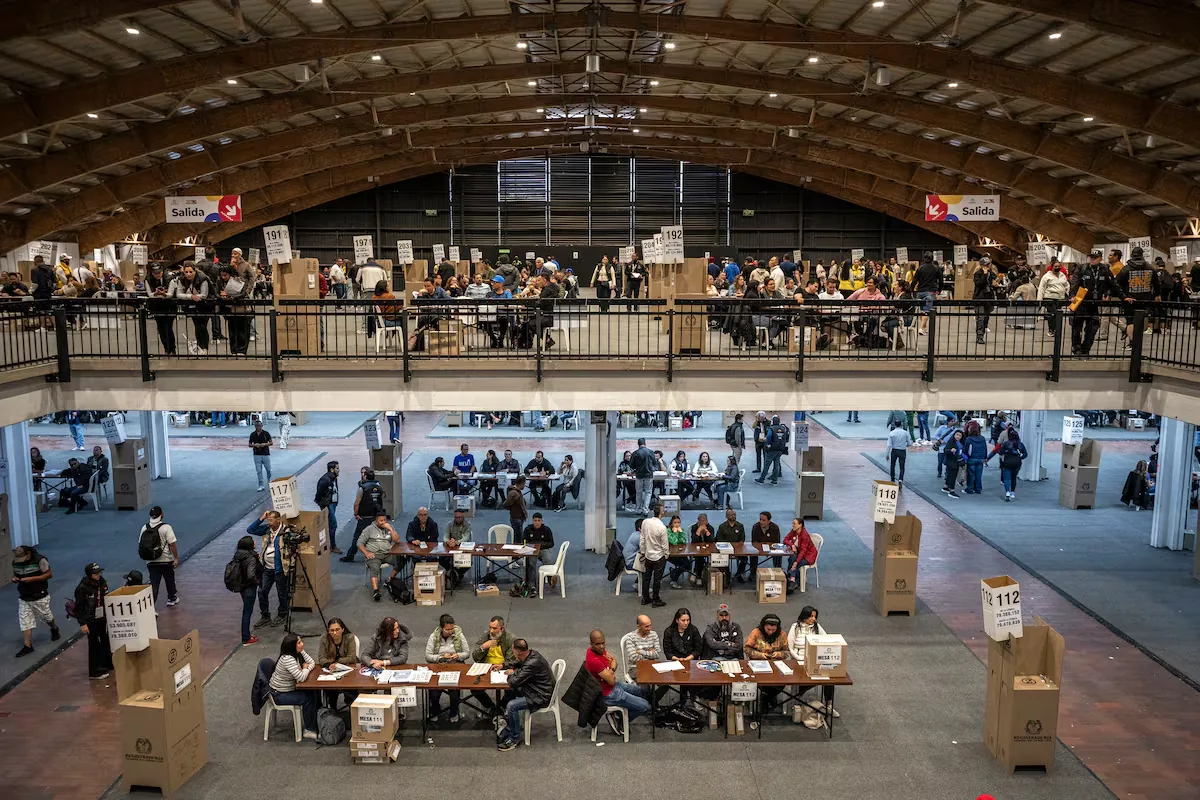



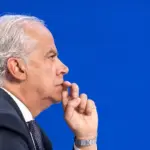


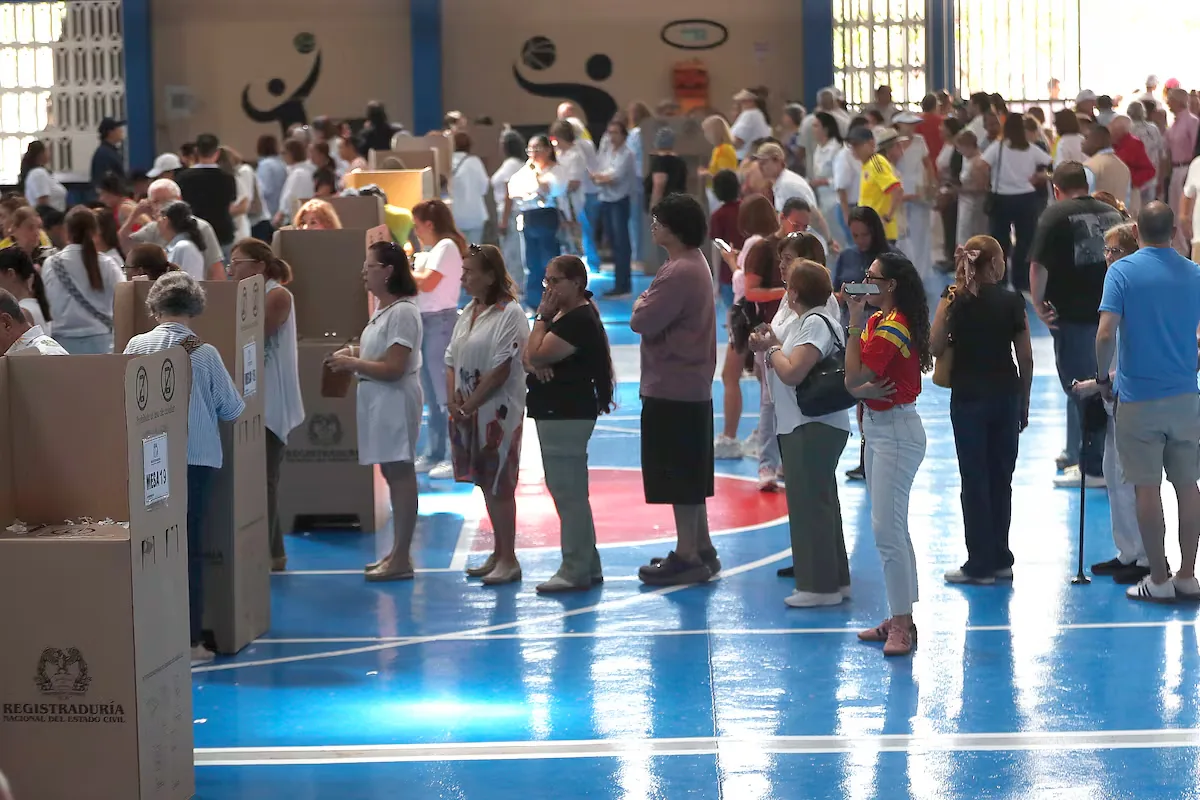
The tensions and polarization of the weeks leading up to the presidential elections in Colombia have turned into calm and long lines at the polling stations this Sunday. The first round of voting began at eight o’clock in the morning, when the national registrar, Hernán Penagos, declared the official opening of the day. The report has been one of calm. Beside him, in the iconic Plaza de Bolívar, in downtown Bogotá, President Gustavo Petro briefly spoke about the need to protect citizens’ votes and avoid external pressures.
Once again, the head of state placed particular emphasis on the possibility of fraud and requested that the Registry assume, for future elections, the software that allows vote counting and which today is subcontracted to a private company. Petro reiterated his request minutes later, after casting his vote in the ballot box at table one in the Plazoleta Mosquera, at the National Capitol. The president showed his ballot on which his vote for Senator Iván Cepeda could be seen, with whom he hopes the project he started four years ago will continue.
In a country known for being an early riser, a large part of the 41 million Colombians began to go to the polls from the opening. The streets of Bogotá woke up full of people strolling after casting their vote. Participation promises to be high, according to sources monitoring the electoral day who spoke to EL PAÍS.
Like much of the citizenry, several presidential candidates approached their polling stations early. Centrist Sergio Fajardo, far behind in the polls, appeared confident that his bid will surprise this Sunday after four in the afternoon, when the polls close and results begin to be known. After voting in Medellín, the city where he was born, he announced he would fly to Bogotá to await the verdicts at his headquarters in the capital, a large house in the Chapinero neighborhood.
Minutes later, the ultra Abelardo de la Espriella approached his polling station in Barranquilla, surrounded by supporters shouting slogans in his favor, from the generic “Yes we can” to the chorus of one of his campaign songs, “Put the line on the Tiger.” They also shouted “Out Petro” against the president of the Republic. The city, the largest in the Caribbean region, is one of the president’s and generally the left’s strongholds, but De la Espriella, who has his headquarters and main residence there, has promoted his strategy with the slogan “coastal votes for coastal,” as he recalled on Saturday night in an interview with influencer Westcol. The Caribbean has not had its own president since the 19th century, when Rafael Núñez held power. Although Petro was born and raised there, he has a style more typical of the Andean interior of the country. The ultra will receive the results in a public space area in Barranquilla and not in Bogotá as is traditional in a centralist country.
Almost simultaneously, senator and traditional right-wing candidate Paloma Valencia was seen in Rionegro, outside Medellín. She went there to accompany former president Álvaro Uribe, head of the Colombian right for more than two decades and whom she has called “dad” throughout the campaign, to vote. Playing her political capital for a candidacy that falters in the polls, Uribe resorted to the specter of Chavismo, which he has used since the 2016 plebiscite, to attack the official candidate, Iván Cepeda: “Petro and Cepeda do everything possible to install a Chavista branch in Colombia,” he said before voting. After accompanying her boss and mentor, Valencia moved to Bogotá to vote shortly after noon. There, where she was born and resides, she will await the results, not at her permanent headquarters, but at a convention center.
Later, mid-morning, Senator Iván Cepeda approached his polling place at San Lucas school, in the Kennedy locality, southwest Bogotá. “We invite you to honor the Colombian people, to honor democracy, to respect it. We are convinced that this afternoon we will celebrate the second progressive government,” he said upon leaving the room where the frontrunner in all the polls voted. A few minutes earlier, Aida Quilcué, his vice-presidential running mate, had voted in the city center, who upon leaving the polling station invited citizens to go to the polls as a constitutional right: “The call is for you to exercise the right to vote today within the framework of the Political Constitution of Colombia, that this right to vote be calm, free, conscious, and democratic.”
Until noon, and despite weeks of threats, attacks, and even assassinations of campaign members in regions where illegal groups have presence, the security report was one of calm. The main risk for this electoral day, according to Defense Minister Pedro Sánchez, is vote buying, a battle that is permanent in Colombia election after election.
Read more Spanish rugby legitimizes its stronghold in Valladolid in the World Sevens Series