




With the aim of facilitating the choice of books for Sant Jordi, the collaborators and critics of Quadern have selected a list of titles worth keeping on the radar. Below, a selection of works divided by genres, from Catalan, Spanish, or foreign narrative to poetry, classics, comics, music, children’s and youth literature, and gastronomy.
- Narrative in Catalan
- Narrative in Spanish
- Translated narrative
- Poetry
- Catalan classics
- Universal classics
- Essay
- Memoirs
- Comics
- Children’s literature
- Youth literature
- Theater
- Gastronomy
- Music
Narrative in Catalan
By Ponç Puigdevall
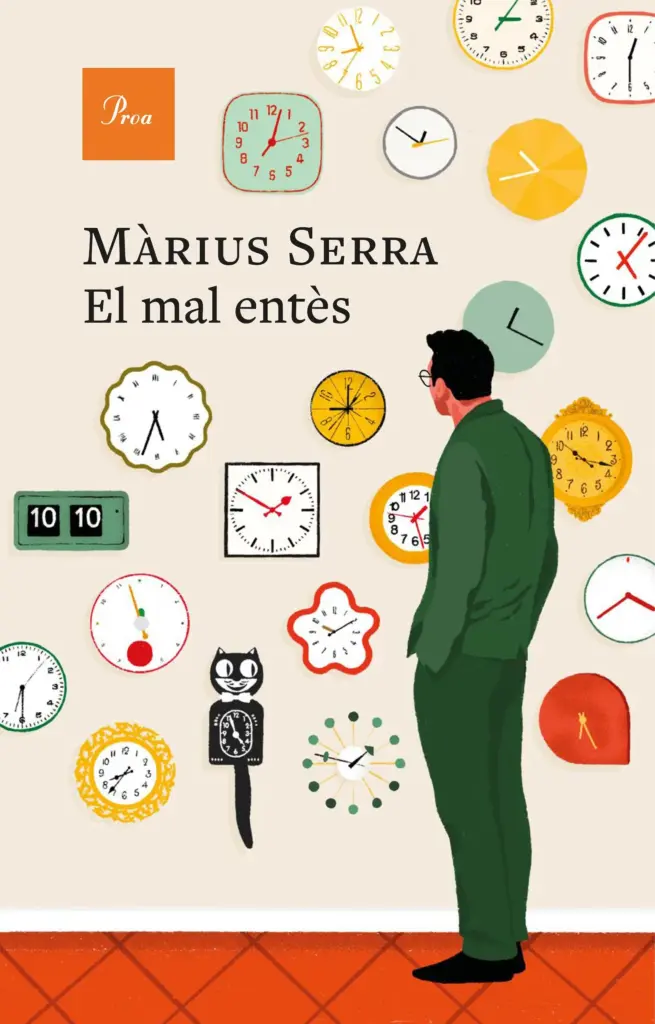
The Misunderstanding
Màrius Serra
Proa. 504 pages. 22.90 euros
Brimming with unexpected adventures and unforeseen actions, layered with sudden twists of fate, rigorous coincidences, and abrupt shocks, and as if the music of the passage of time could not stop for a single moment, it is impossible to summarize the multitude of primary and secondary plots, never at odds with the ambition of reality, that unfold with the speed of a well-aimed arrow throughout The Misunderstanding from the very beginning, starting from the moment Joan Ferrer’s wife dies in a car accident shortly after catching him in the shower with the babysitter of their five-year-old daughter. The unmistakable inventive potential of Màrius Serra ensures that we never know what comes after each episode, and we keep wondering what we will read next, even culminating in gifting us a rich epilogue of adventures and suspense where the imperfections of the world seem to be nullified thanks to a reconciliation with life comparable to a moment of perfection.
When Joan Ferrer’s lawyer realizes that her client is the boy she and her friends called the Quatrulls during adolescence, “she cannot help but think about the web of chance events that the past always forms.” More than ten years and many pages later, wildly filled with unfortunate dramatic catastrophes and countless everyday trivialities, locked in a penitentiary center in Mexico City, Joan Ferrer receives a visit and thinks that “life has always seemed to him a chain of contradictory events.” A few chapters earlier, we witnessed a conversation between the lawyer and a friend, in which one states that “events happen and only afterward do we apply our analytical capacity and establish their reasons,” while the other, disagreeing, argues that “everything has a cause (…), and we must aspire to discover it. Civilization is that: knowing the causes of things. It is not that difficult. We just have to dig a little inside ourselves.” Màrius Serra narrates what happens when a limit situation fractures us with a before and after — should we cling to the past, resign ourselves, start a new life? —, causes us the vertigo of being submerged in the bottom of an unstoppable and bustling vital whirlpool, and at the same time asks us if our experience is determined by major cataclysms or if, perhaps, these are only the result of infinite minor incidents that, together, prove to be much more consequential.
> Read Ponç Puigdevall’s full review
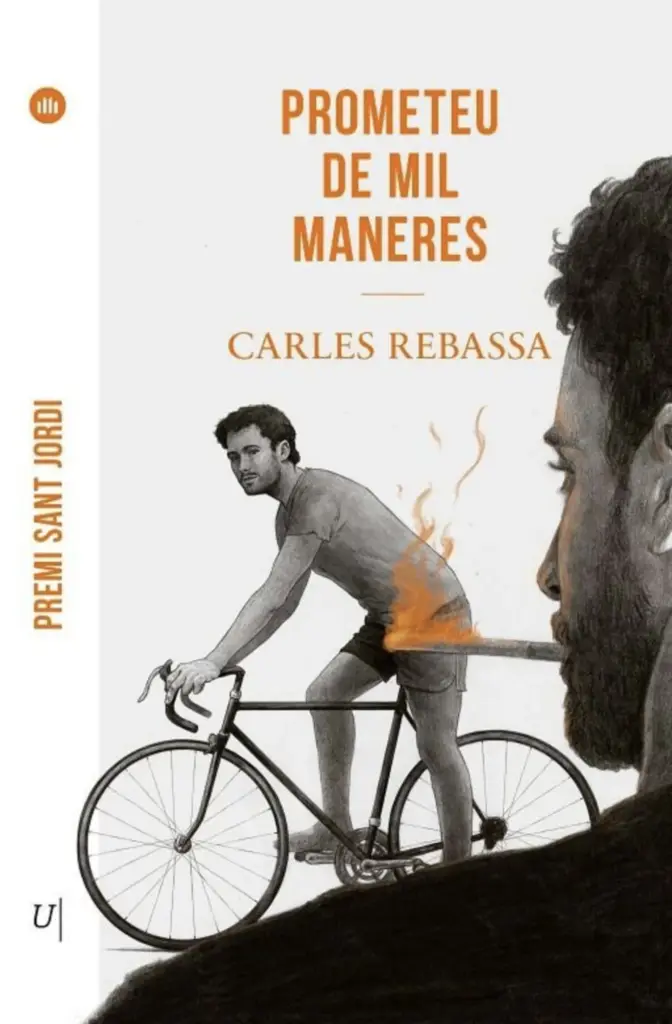
Prometheus in a Thousand Ways
Carles Rebassa
Univers. 486 pages. 24.90 euros
In Prometheus in a Thousand Ways, Carles Rebassa constructs an intricate social and detective plot that keeps us in suspense until the end, ensures that the more than twenty characters involved become parts of a delicate mechanism integrated into a whole so cleverly woven that no individuality can be isolated, as if each element were in solidarity with the rest and acquires full meaning once inserted into the general mechanism, and portrays any type of relationship — romantic, friendship, family, and work — as if it could only function according to the laws of market economy: the city of Palma becomes a random nest of selfishness, hypocrisy, intolerance, discord, coercion, fear, and guilt.
> Read Ponç Puigdevall’s review
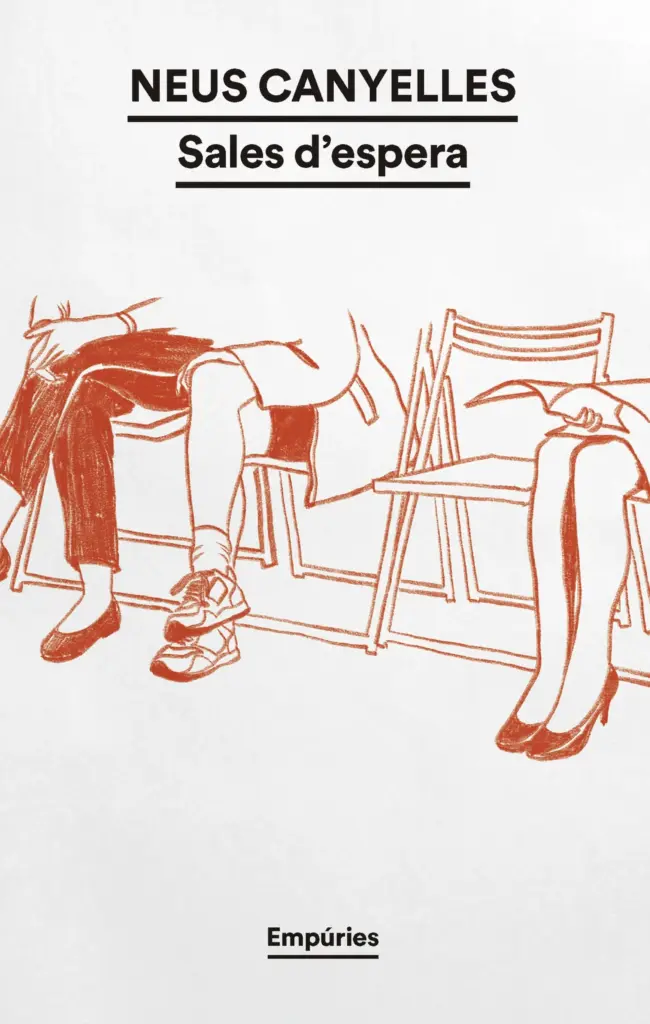
Waiting Rooms
Neus Canyelles
Empúries. 136 pages. 18.90 euros
The grandly minimal art of Neus Canyelles to capture affliction, to face the hostility and indifference of chance, to describe that not knowing how to live day to day, that not finding the right place to cry just because, the misfortune of being ashamed of being happy even if only for a fleeting moment without any rational consistency, is always painful. In the stories of Waiting Rooms, both concrete things and abstract emotions tend to flee, as if they dislocated or fragmented, in search of combinations that subvert conventional perceptions: it is the author’s way of provoking a remarkable estrangement effect to end up destabilizing the boundaries of reality.
> Read Ponç Puigdevall’s review
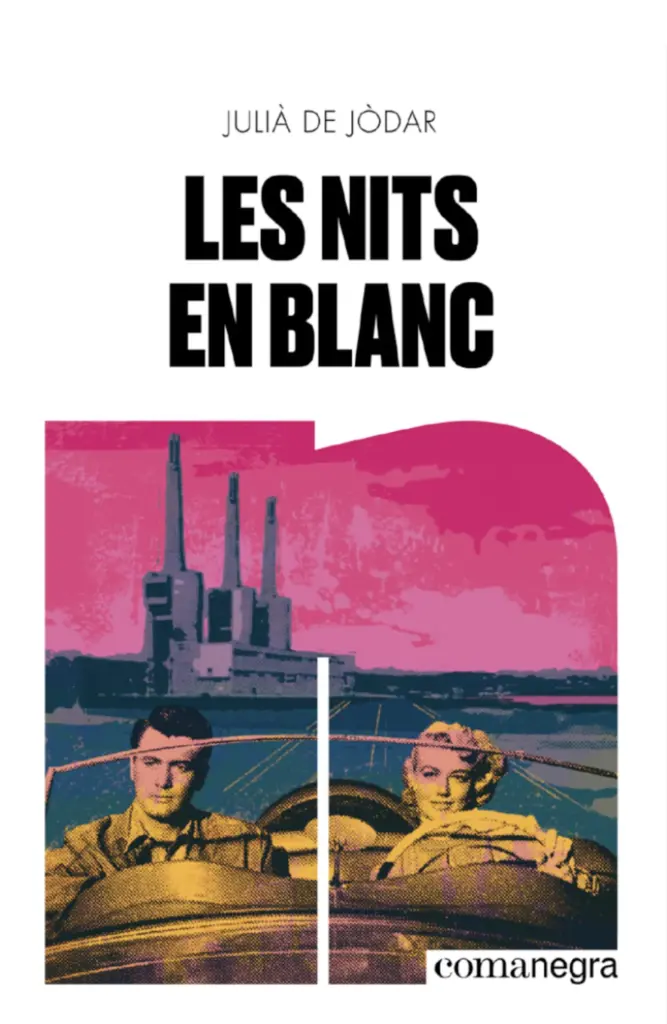
White Nights
Julià de Jòdar
Comanegra. 369 pages. 23.90 euros
Beyond the Barcelona rushing towards the change of ideological and social models that the Olympic exaltation will bring, at the absolute center of White Nights are the overwhelming and suffocating relationships of the protagonist — Gabriel Caballero, the mythical writer created by Julià de Jòdar — with the women who surrounded him at the time, as if he never forgot his literary vocation and pursued and seduced them because of what Stendhal considered his profession, the study of the human heart, or as if resentment or spite were masks of love, or as if he realized that what happened could not have been otherwise and that each blow of chance only acquires its full meaning when the past is viewed from a timeless present.
> Read Ponç Puigdevall’s review
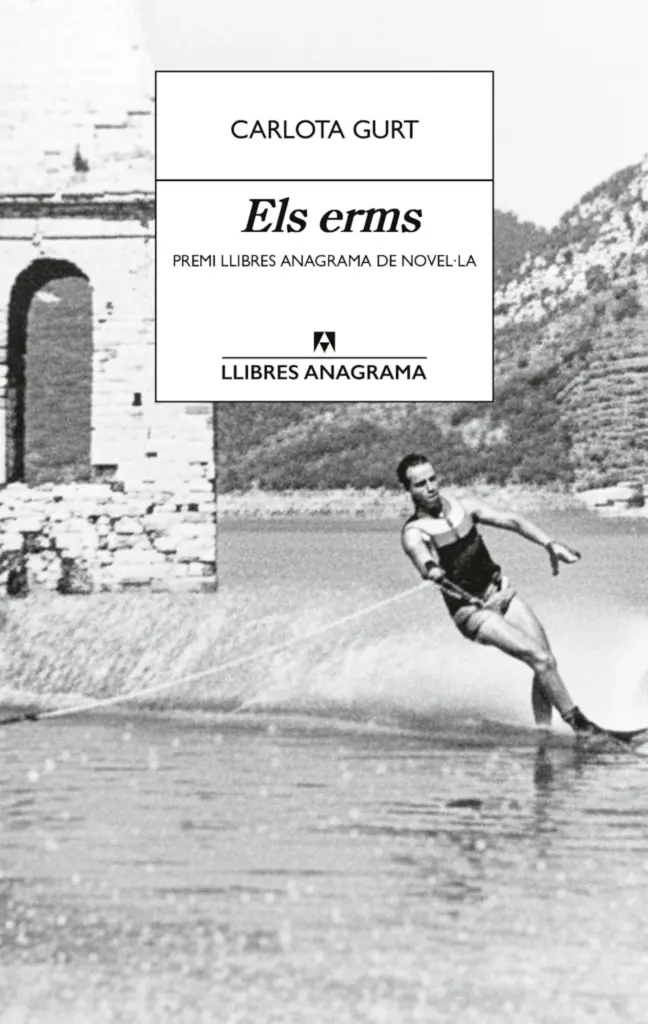
The Wastelands
Carlota Gurt
Anagrama. 248 pages. 18.90 euros
Since the night a writer and the head of the Sau dam coincided at the inn in front of the reservoir, they have not stopped thinking about each other despite having maintained only a brief and sober eye contact, immersed from then on in a mutual obstinacy impossible to relate to sexual impulse, any sentimental or intellectual bond. “Sometimes an incidental fact, a fleeting and wordless coincidence, can change the trajectory of a world. Or two worlds”: this is favorable chance. Unfortunate in love, troubled by an undefined anxiety, feeling guilty of some irregularity of the spirit, both agree with what a meteorologist says on the radio: “we need a great disturbance that gives us joy.”
> Read Ponç Puigdevall’s review
Narrative in Spanish
By Nadal Suau
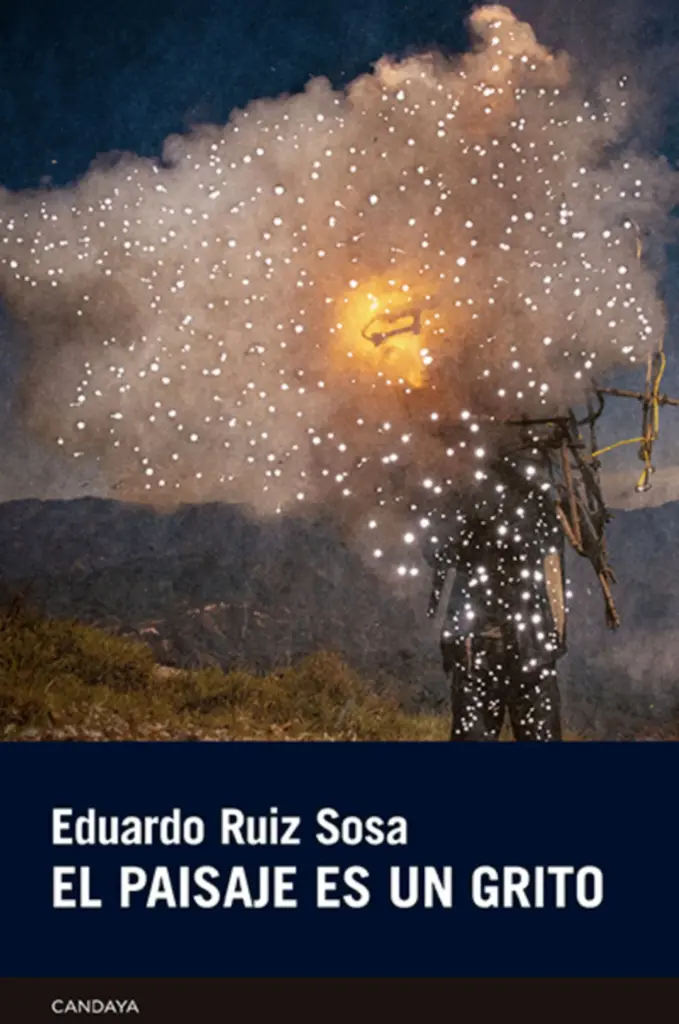
The Landscape is a Cry
Eduardo Ruiz Sosa
Candaya – 398 pages. 21 euros
From Barcelona, Ruiz Sosa (Culiacán, 1983) has long been building one of the fundamental works of the new Latin American literature. Dense, wild, intense novels that drag you with demanding prose to the depths of great unresolved issues: violence, memory, death. The landscape of his narrative is heavy, borderland, and dangerous, with echoes of Rulfo and Bolaño, but with an undeniable personal style.
In The Landscape is a Cry, Ruiz Sosa confesses to having drawn from his biography and those of some loved ones to address the issue of migration, one of the great themes of the line separating north from south on the American continent and the world. He does so through a weave of extreme and fleeing characters across a delocalized, confused territory where past, present, and future seem like geographical coordinates, and geography, another form of time.
Baldor, who has lived many years in a space the narrator calls “the other side,” is deported and sent to the desert, to Sierra Madre (a name synonymous with literary adventure), right where an ancestor aspired to name and civilize the land. A man who mirrors another; perhaps they are two uprooted and desperate destinies.
In fact, the very reality of this territory is mysterious. Does it still exist? Does it not exist? Could it ever exist? And it is surprising that some approaches that may have something metaphysical are concretized in such physical and material prose, that makes you gnaw the dust, feel exhaustion in the muscles, and fear in the spine. In many ways, Ruiz Sosa’s novel is prototypically Mexican: here death dances and the words “narco” and “hitman” are pronounced. But it is also a dream or a European mirroring, with the name Paris functioning as a sign and mirage.
Complex, harsh, and fascinating, a true map of the obsessions of an author who has directed his career with impeccable independence from the industry, if not a certain disdain, The Landscape is a Cry joins the previous Anatomy of Melancholy and The Book of Our Absences to round out an essential idea of the world and the human being. In Eduardo Ruiz Sosa’s universe, characters live in search of a home, some certainty that allows us to speak of a “home of ours,” and the mixture that travel entails is a way to build them. And one last thing: notice how, in the novel, the theme is indistinguishable from the language, from the style. The old sign of literature.

Cutting Hair
Rosario Villajos
Seix Barral – 264 pages. 19.90 euros @9.99
Now that story collections seem to be conquering the space they deserve in our country, it is worth approaching this volume by a narrator as skilled and daring as Villajos. The death of the father is the trigger and, in some way, also the thread, but the author has gone further than ever in applying a whole range of multiple fantastic and symbolic resources. There is the desire to be Sioux, the fear of loss and the possibility of rebirth, vampirism… The book ends up confirming that imagination has returned to literature to give, again and as always, a very broad flight to intimate confession. For all this, it may be Villajos’s best book.
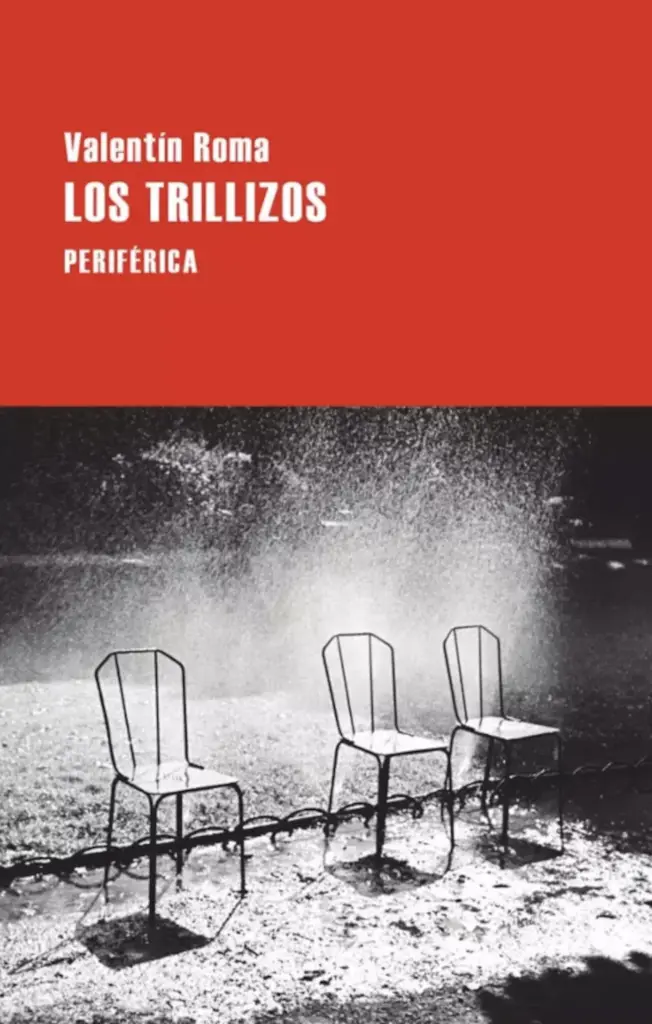
The Triplets
Valentín Roma
Periférica – 184 pages. 18 euros
I suspect I won’t be the only one approaching this novel from a personal resonance, as Roma pays attention to a character who is getting to know the three children of his new partner. The protagonist is already fifty years old, has never been a father, and considers, with a criterion difficult to dispute, that “family is an oppressive document.” And yet, he ends up delving into it to try to understand how things work at the heart of this document. Thus, Roma (a writer) discovers a peculiar, close, and everyday point of view from which to pose many political questions that are a constant in his work. Above all, at the core, one: how do we relate to others?
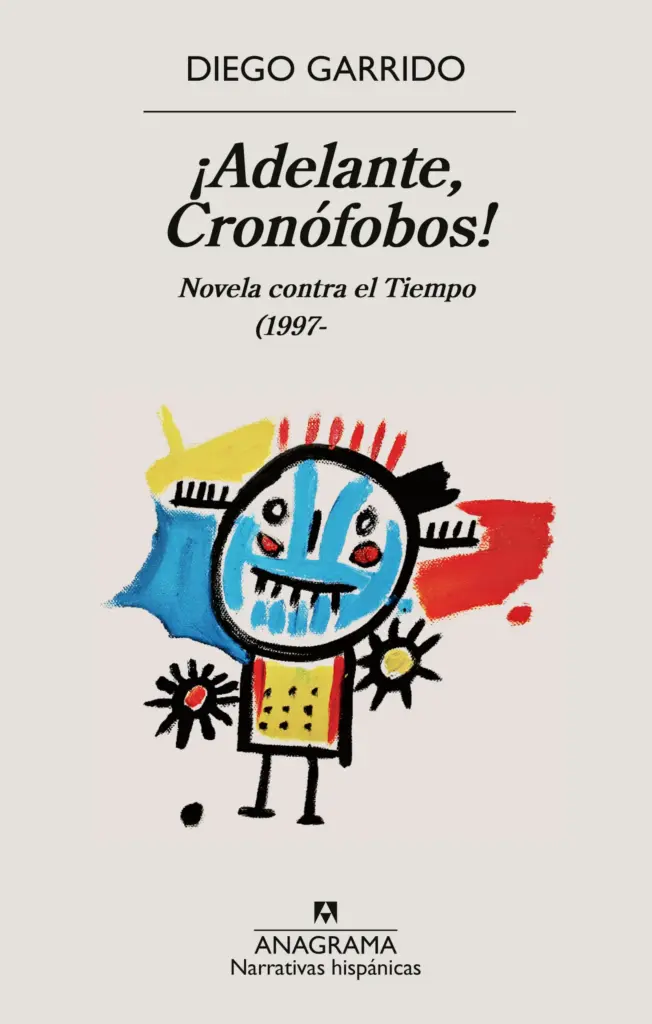
Forward, Chronophobes!
Diego Garrido
Anagrama – 232 pages. 18.90 euros
Contrary to the typical quote from Saint Augustine, Diego Garrido does not know what time is, whether asked or not. What he does know is that he is very much against it. That is, he hates and fears that everything passes, that everything remains behind, that nothing keeps its promise (as Philip Roth said). In these pages, he sets out to explain and document this chronophobia of his, in a wonderful text that we do not know if it is a novel, essay, diary, joke, or tragedy, confession or judgment. There are very few Spanish authors of Garrido’s generation with such personality, who write so literarily and make it so much their own. Here we face his second book, and it seems a great moment to discover him and count oneself among the happy few.
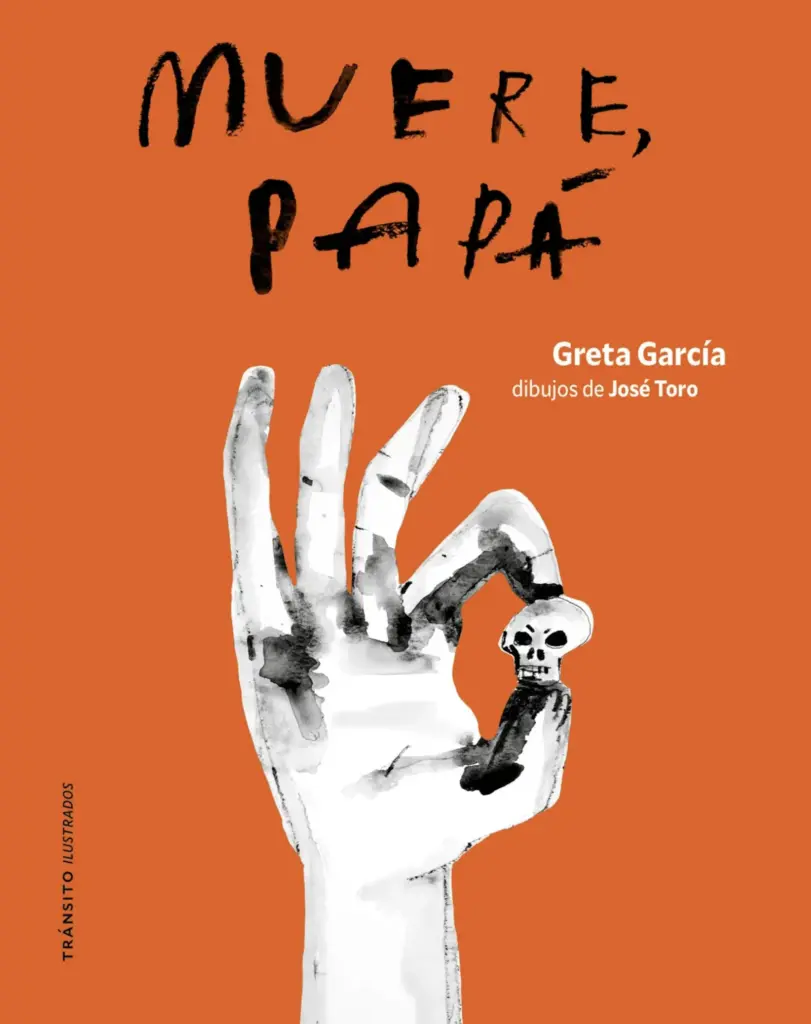
Die, Dad
Greta García
Tránsito – 120 pages. 23.95 euros
Another second novel to close our Sant Jordi selection. Greta García is a young master of language, cheeky, funny, sharp, and pungent like the mother who gave birth to her. Or like the father, well, who is co-protagonist of the action and who here illustrates with his drawings the bombs his daughter throws at him. Die, Dad is a kind of dialogue between the two, or a constant bombardment from her to him, with the purpose of dismantling the totemic father and turning him into a failed but also very tender skin. And, by the way, we travel to the only serious, deep, and magical region of the Iberian Peninsula (forgive me the provocation!), that is, Andalusia. Greta García makes us all dance.
Translated Narrative
By Anna Maria Iglesia
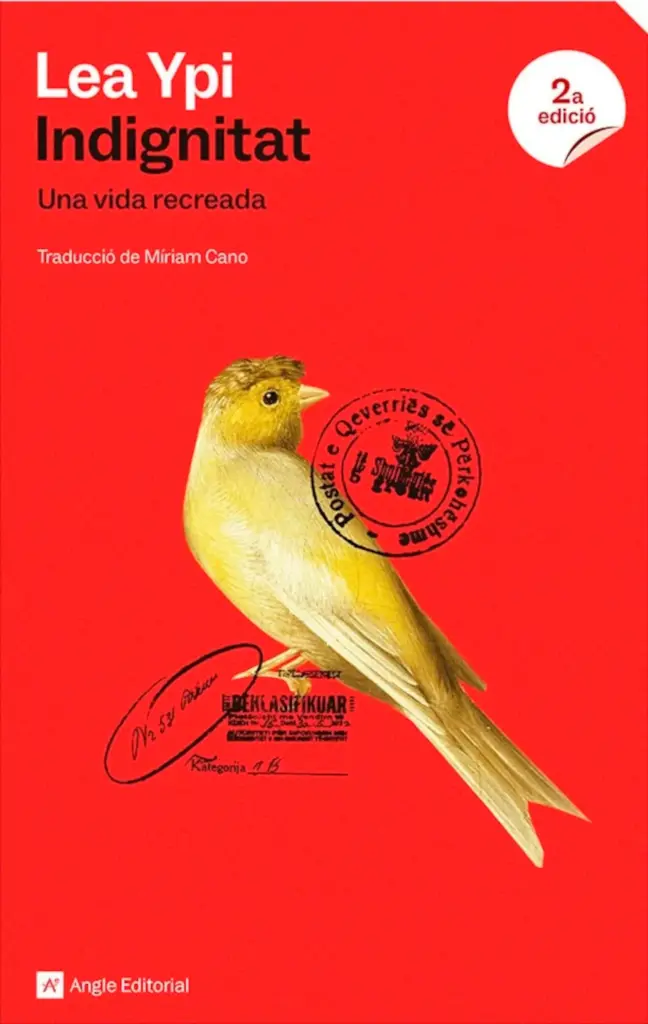
Indignity
Lea Ypi
Translation by Míriam Cano. Angle 368 pages. 21.90 euros
Indignity is an extraordinary novel written by an essayist. And we say this because Indignity goes far beyond the plot: it is a work that takes the form of a novel to think about how the narrative of collective memory is constructed, which also ends up shaping the different individual and family narratives. The starting point is a questioning of archives: if what is preserved there is the material the system wanted to keep to build a narrative comfortable for it, what do we do with everything left out, how do we approach the gaps and silences surrounding the imposed narrative? Imagination, Ypi tells us, is the first tool to explore all that remains outside. The author claims imagination as a novelist, but also as a historian: long before postmodern historians, Collingwood already claimed imagination as a speculative tool for the historian. Ypi also starts from a photograph that began circulating on the internet, in which her grandmother appears marked as a spy.
The silence of the photo is the silence of the grandmother, who can no longer tell her story. Reduced to a label, the archives perpetuate the violence of the Albanian dictatorship, which neutralizes individuals, turned into pawns watched by the system. The novel is an attempt to restore the individuality of the grandmother, her complexity, and therefore her story, because the issue is not to remember her, but to question how to remember her. And in this “how” Indignity is partly summarized, because it is precisely the question about the “how” that allows us to think about the dignity of the person, the dignity that must be preserved when the person is no longer there and the dignity to which one must never renounce.
And this was well known by the author’s grandmother, in her persistent resistance to the communist regime, a resistance that materialized in daily life and had to do, as Imre Kértesz pointed out, with not being reduced to a victim, not being absorbed by cynicism and lack of alternatives, not being emptied of all principles and trust. Resistance is, above all, the defense of a complex and multiple identity, impossible to reduce or neutralize. Also for this reason, Ypi questions how to rescue a history that archives do not collect, how to rescue the figure of a grandmother irreducible to archival documents. And here imagination appears as a tool for investigating a truth that documents do not preserve, a truth that only literature can tell and defend.
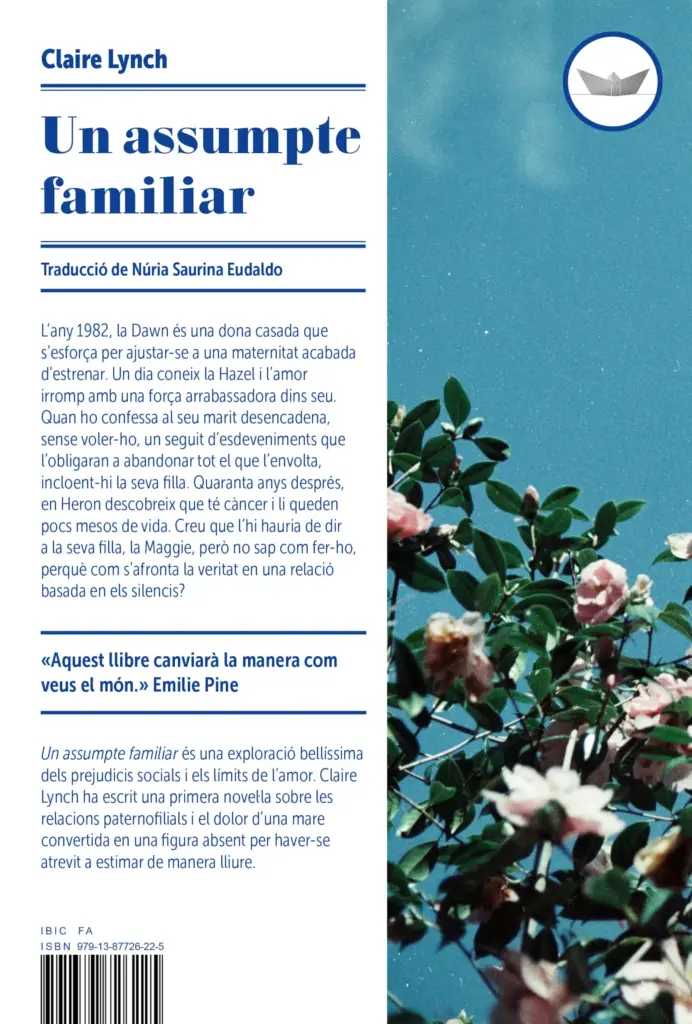
A Family Matter
Claire Lynch
Translation by Núria Saurina. Periscopi. 246 pages. 20.50 euros
Probably one of the best novels of this year. Lynch takes us to late 1980s England, where Dawn, a married woman, falls in love with another woman, leaves her husband, and loses custody of her daughter. The narrative of events is interspersed with the present narration of the daughter, who, now an adult, has to unravel the manipulated story her father always told her, a story that coexists with the protective silence of the mother. A Family Matter is, in reality, a collective narrative: the story of the social and legal criminalization suffered by many lesbians, for whom loving another woman meant losing custody of their children, and renouncing affections was the only option to escape stigmatization.
> Read Carlota Rubio’s review
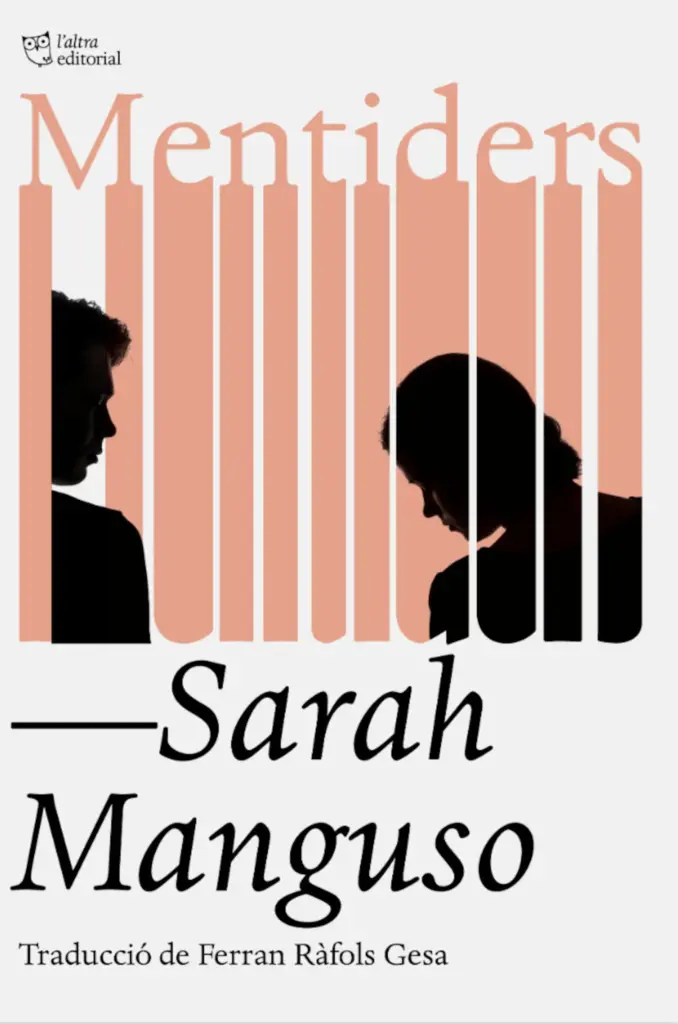
Liars
Sarah Manguso – Translation by Ferran Ràfols
L’Altra Editorial. 280 pages. 20.90 euros
A suffocating novel with which Manguso manages to introduce us to the toxic relationship of a couple playing at being happy. But lies not only do not save, they reveal even more the fragility of a relationship in which the protagonist no longer feels fulfilled but subjected through mental load. Liars is also an interesting portrait of the midlife crisis and a depiction of the clash between desires and the archetypal family model to which one tries to cling. With a concise and sometimes fragmentary style, the author escapes autobiographical writing to observe the violences reproduced within the relationship and hidden behind an idealizing rhetoric around marriage.
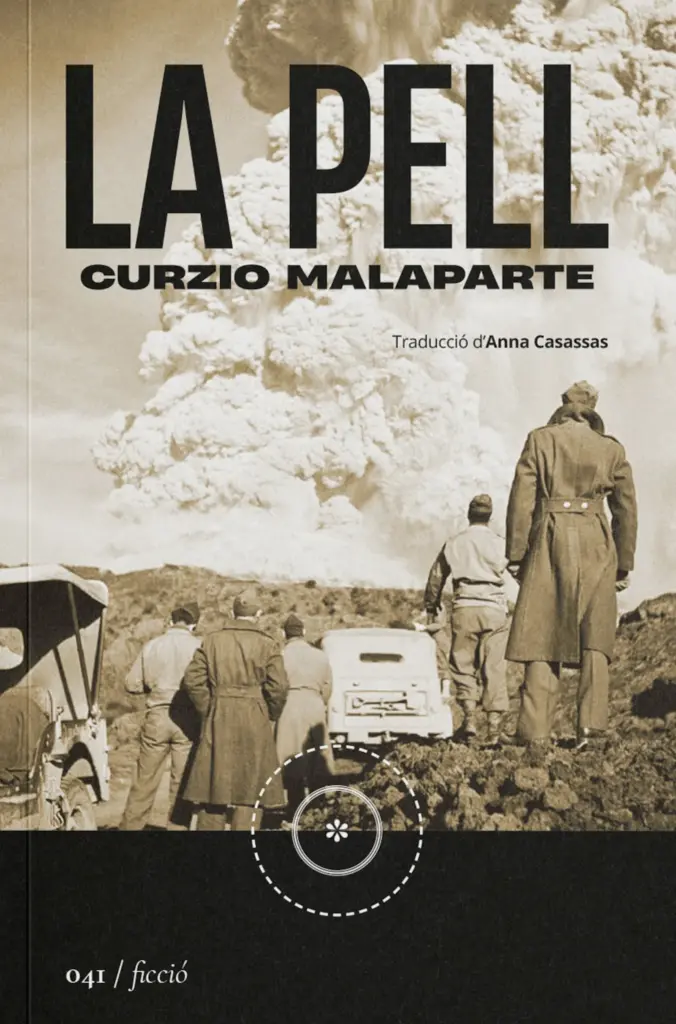
The Skin
Curzio Malaparte – Translation by Anna Casassas
La Segunda Periferia. 448 pages. 23.50 euros
One of the great novels of Italian literature. Set in postwar Naples and during the presence of the American army, The Skin turns the capital of Campania into a metaphor for a dead Europe, a continent that has gone from dying defending ideals to fighting to survive, to save its skin. Leaving aside the author’s controversial political oscillations, the novel is a portrait of the moral corruption left by the war, rooted in the desperate need to survive. Malaparte, however, does not fall into cynicism: the representation, full of symbolism, of barbarism and misery, both material and moral, does not lead to cynicism but to the question of the possibility of rebuilding a Europe in ruins.
> Read Anna Maria Iglesia’s review
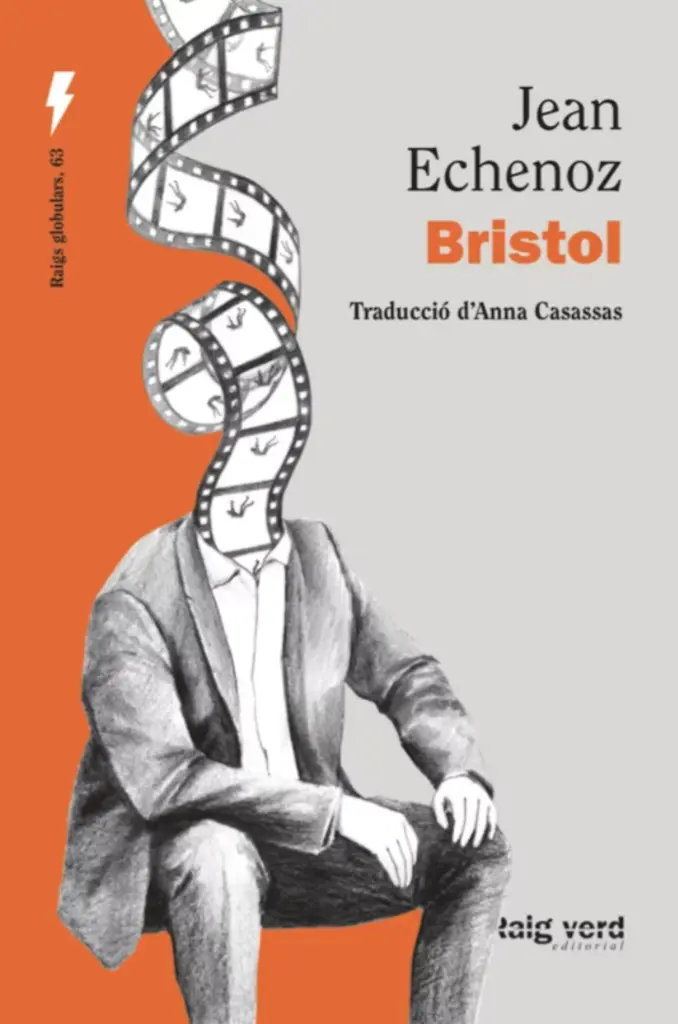
Bristol
Jean Echenoz – Translation by Anna Casassas
Raig Verd. 192 pages. 21.95 euros
Those who have read previous works by Echenoz will find in Bristol his concise and direct style, and also the humor. For those approaching for the first time, this is the best entry. It presents a mediocre filmmaker with a mediocre script in hand, and also a gray life, characterized by impossible loves, disappeared lovers, and constant frustrations. With mastery, Echenoz transfers cinematic language to the novel — shots and counter-shots, actions and off-screen voices — to stage boredom, but also the absurd humor of contemporary life with a character reminiscent of the inept figure. Intelligent humor that makes us smile and forces us to rethink the grayness around us.
Poetry
By Manuel Castaño
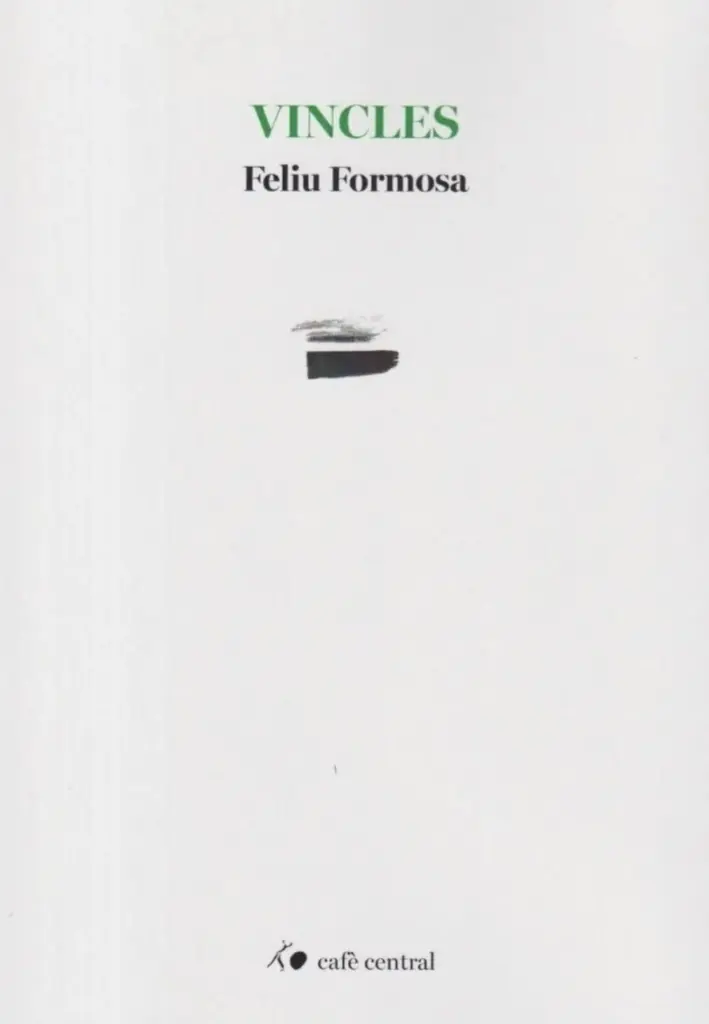
Links
Feliu Formosa
Cafè Central. 45 pages. 15 euros
With age, the distance between the literary self and the real self blurs. Each of the thirty-two poems gathered in this new book could head chapters of a hypothetical biography of Feliu Formosa (Sabadell, 1934), who already collected the titles published over thirty years in Behind the Glass (Edicions 62, 2004), but that did not close his poetic work because since then he has been releasing various pamphlets that confirm the magnitude of who is now the greatest of our living poets. The title Links refers to a poem by Joan Vinyoli, partly quoted at the beginning: “We are instruments of some force / that holds us in its hands, / delivering us to each other, / guarding us from each other.” At the end is Goethe’s verse “Die Leidenschaft bringt Leiden” (‘Passion brings suffering’). Passion and pain thus frame the book. Overall, we find the contrast between the present situation and some singular moments throughout life. Now he finds himself “living reluctantly / a sordid reality” in which Goya’s half-sunken dog and Munch’s scream become emblems. From what happened in other times, he evokes the relationship with poets Espriu, Estellés, and Àlex Susanna, and the reading of writers like Kafka, Brecht, Antonio Machado, and Miguel Hernández. Also scenes of love, friendship, relationships, cities like Heidelberg and Turin. Judgments about the past, with emotion and gratitude, alternate with a lucid and serene look at the present.
Formosa’s poetry has always been centered on reflection and driven by intimate impulses, apart from fashions and models. Despite his militant commitment, he avoided falling into so-called social poetry and moved, in his words, “from a strictly ‘critical’ and supposedly political stage to a declaredly aesthetic stage.” He has experimented with various forms, from sonnets to prose poems, including haikus. In Links all poems are in six-syllable verses, like the Book of Meditations (1973), and it is remarkable, despite often being long phrases, the naturalness with which they flow. This collection arrives timely as a Sant Jordi gift inviting us to appreciate Formosa’s entire work. “The past asks me / to give way to verses / that I never know if save me. / I feel a strange calm. / I never know if I say it all.” It is never all said, but there remains the satisfaction of having said essential things in those “very dark times” — the expression is from a Brecht poem versioned by Formosa — times that return, if they had ever gone away.
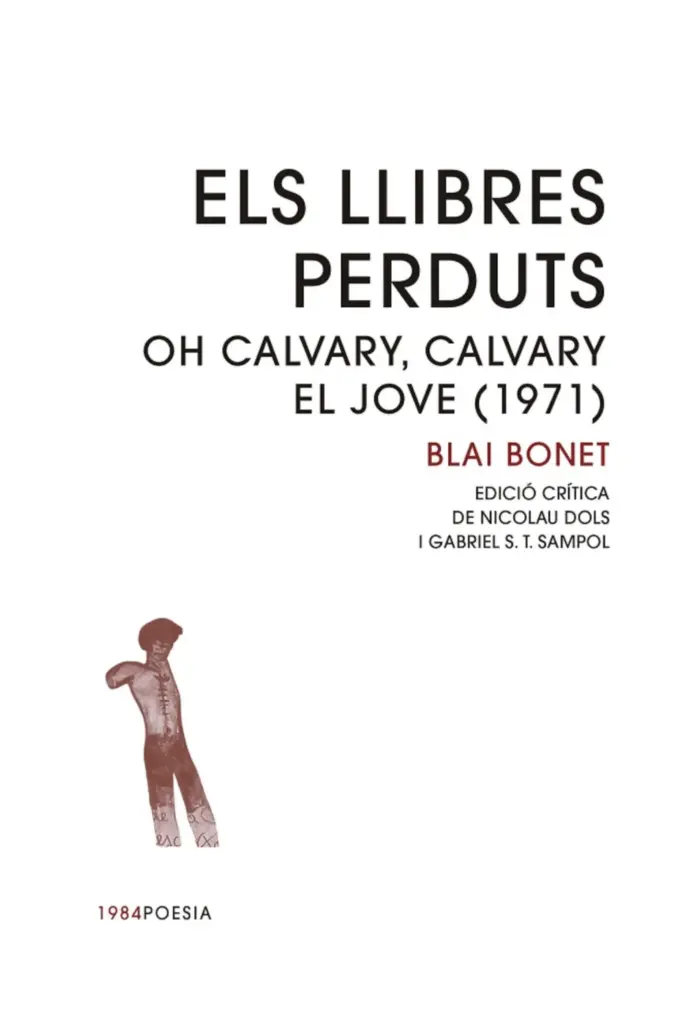
The Lost Books
Blai Bonet
Edicions de 1984. 304 pages. 20 euros
More than lost, they are two recovered books. Blai Bonet (1926-1997), as alien to the Mallorcan school as to the then-current social realism, won the Carles Riba prize in 1962 with Oh Calvary, Calvary, but censorship prevented its publication. The Young Man, from 1971, was not published due to editorial problems. In both cases, the poems appeared in later books. The content is therefore not unpublished; what is new is the recovery in two collections as they were originally conceived by the poet. The same publisher now also publishes, in separate volumes, New York and The Gospel According to One of Many. A good occasion to recover a vitalist, eclectic poetry sensitive to the sacred dimension of everyday life.
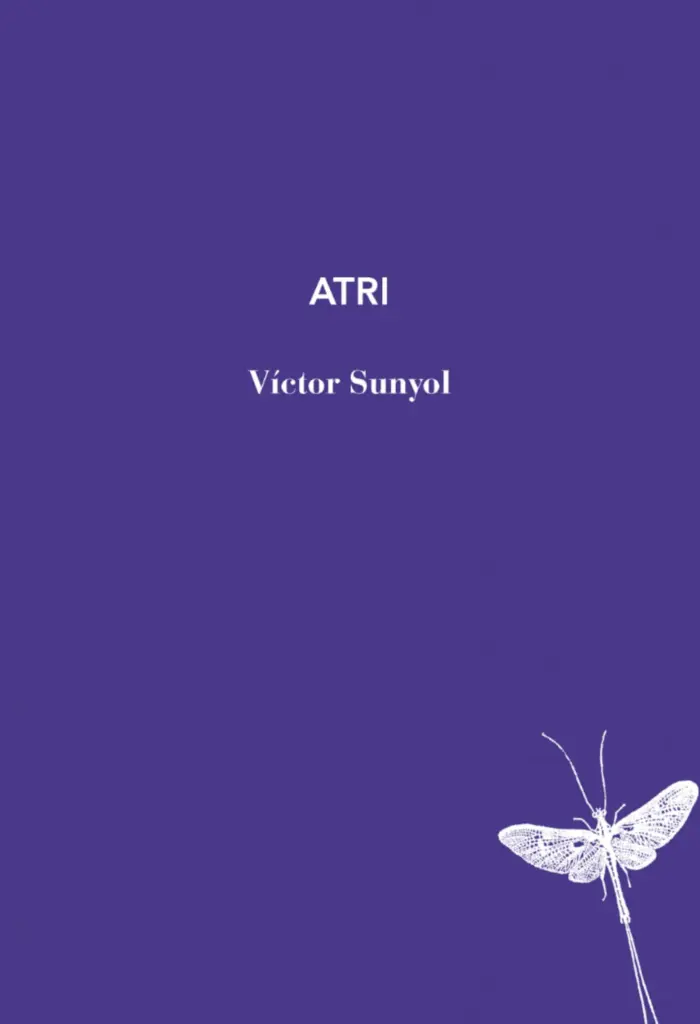
Atri
Víctor Sunyol
LaBreu. 130 pages. 16 euros
He is one of our most experimental writers, as he has demonstrated during half a century of literary activity. Víctor Sunyol (Vic, 1955), who has defined himself as “a tongue-less, a homeless of language,” continues his mission as an unclassifiable researcher. Attempts to transcend the realm of logic or to say what cannot be said, which brings him closer to mysticism, culminate in word games scattered on the page that require an extra effort that not every reader feels like making; but he believes that where there is no difficulty there is deceit. The dismemberment of syntax and the degrammatization of words — it is a way of putting it — ascend a new step in this new collection.
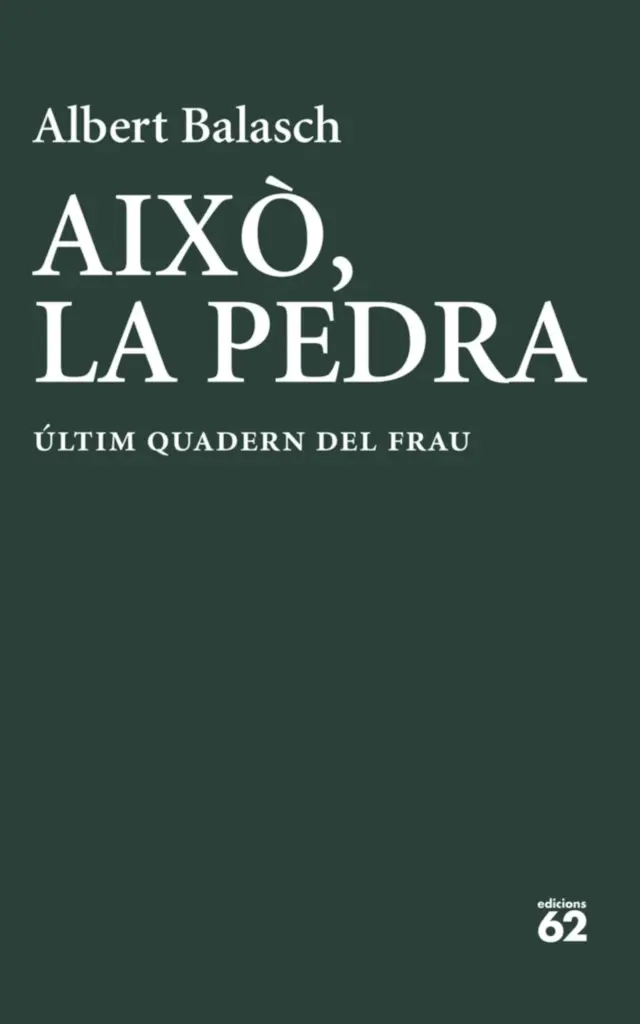
This, the Stone
Albert Balasch
Edicions 62. 144 pages. 18.90 euros | @ 9.99
Albert Balasch (Barcelona, 1971), having published four books of dense and abrupt poetry, revised and gathered them in Quadern del frau, with the manifest intention of not writing more because he had already said everything. Ten years later he returns with a collection containing “three books of verses, some notes, and an elegy.” He probably returns because as long as there is life there is writing, and because his is a search without end. Although he presents the new texts as attempts, and these merely “as proof of a small disconcerted life,” he continues his investigation into the limits of language and the meaning of existence with different writing styles, increasingly complex and ambitious.
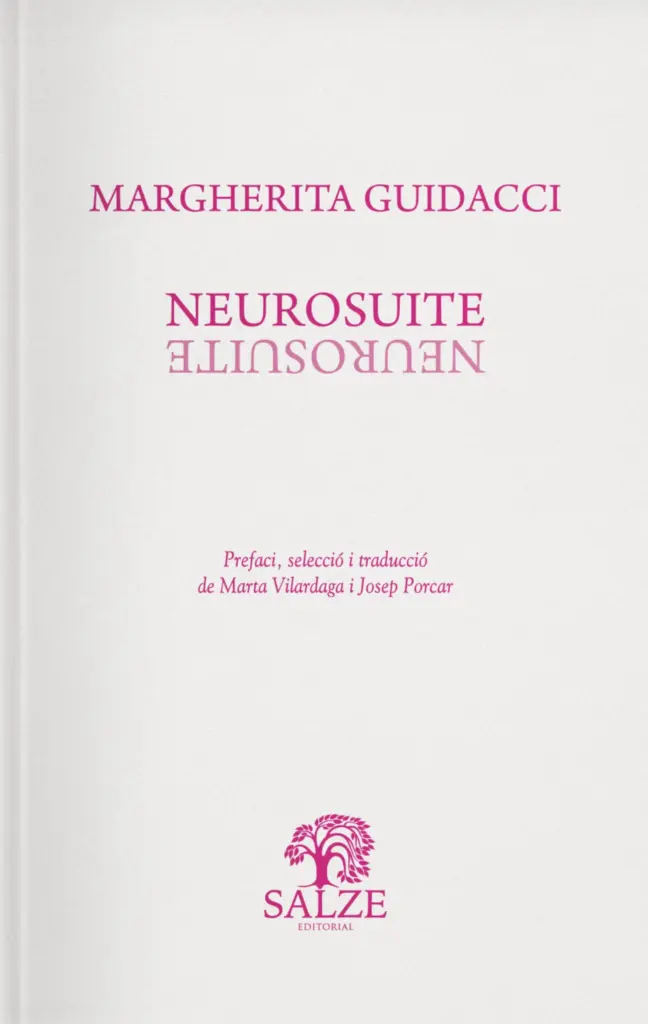
Neurosuite
Margherita Guidacci
Selection and translation by Marta Vilardaga and Josep Porcar. Salze Editorial. 208 pages. 20 euros
It does not seem a coincidence that Margherita Guidacci (1921-1992), of refined sensitivity and tending to introspection, translated Emily Dickinson into Italian. Despite having done a thesis on Ungaretti, her poetic works remain distant from hermeticism, while opting for a simplicity with classical echoes, prioritizing the word as a communication instrument rather than a piece of literary goldsmithing. There is a religious dimension, but not confessional, and a striving for existential truthfulness in her poems. Now we can discover her in a wide anthology of her poetic work that contains in full the book titled Neurosuite (1970), which arose from an internment in a neurological clinic.
Catalan Classics
By Maria Dasca
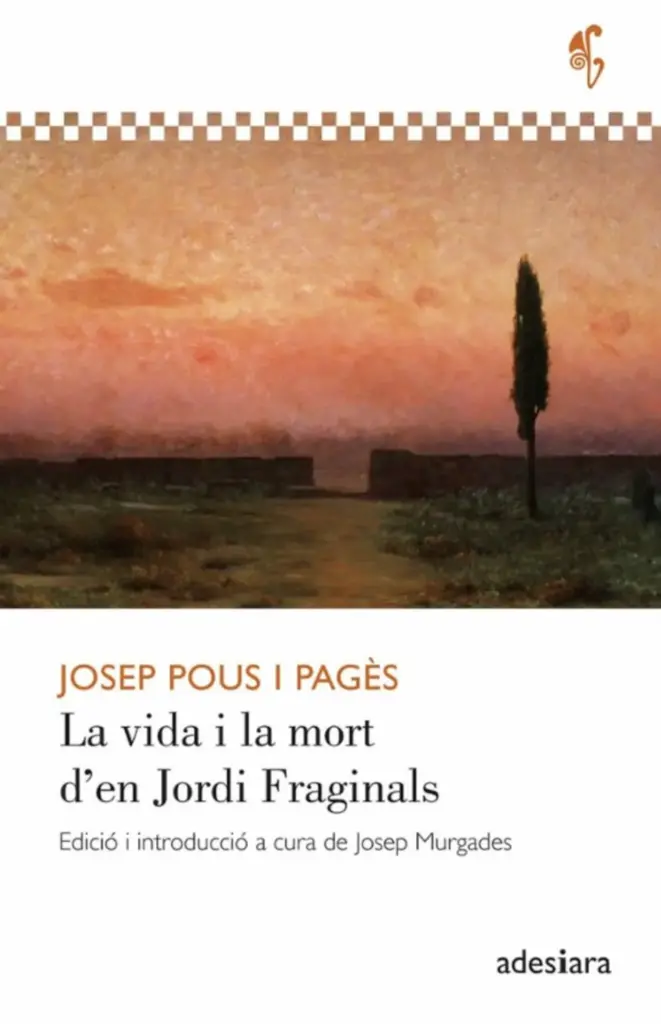
The Life and Death of Jordi Fraginals
Josep Pous i Pagès
Adesiara. 400 pages. 22 euros
Less known than Mila from Solitud, or mossèn Llàtzer from Els sots feréstecs, Jordi Fraginals shares with these characters the same existential conflict: he must face a marked destiny. Of enterprising and hardworking nature, he is driven to rebel against his father, who wants him to be a priest, upon falling in love with Alberta, a woman “full of sense.” Josep Murgades, editor and author of the introduction, presents him as a man of action who revolts at two moments: when he must face family tradition and when illness strikes him. Due to its philosophical background, the novel can be related to the work of Miguel de Unamuno (who considered it “very Catalan”) and Albert Camus.
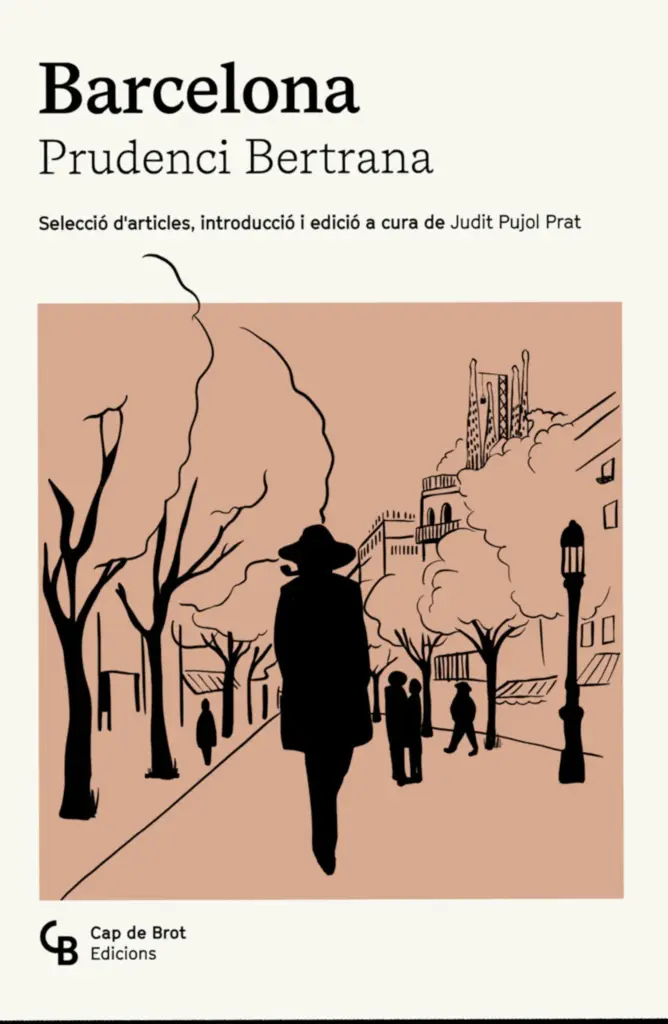
Barcelona
Prudenci Bertrana
Cap de Brot. 399 pages. 21.90 euros
Contrasted with the Barcelona of Eugeni d’Ors, Josep M. de Sagarra, or Josep Carner, Bertrana’s Barcelona is bitterly humorous. The book collects part of the 2,700 articles he wrote, published in L’Esquella de la Torratxa, El Poble Català, La Publicidad, and La Veu de Catalunya. Dizzy from the “burden of civility,” the writer explains the contradictions of an unhealthy and dirty city, devoid of calm and provincial flora. In the midst of the opening of Via Laietana, he laments the dust and “catarrhal residues,” seeks refuge on rooftops and tiles, sees sparrows and rats as lions, and is critical of social inequality. Judit Pujol, the book’s editor, presents him as a “hunter hunted,” lucid, expressive, and tender.
> Read Adrià Pujol’s review
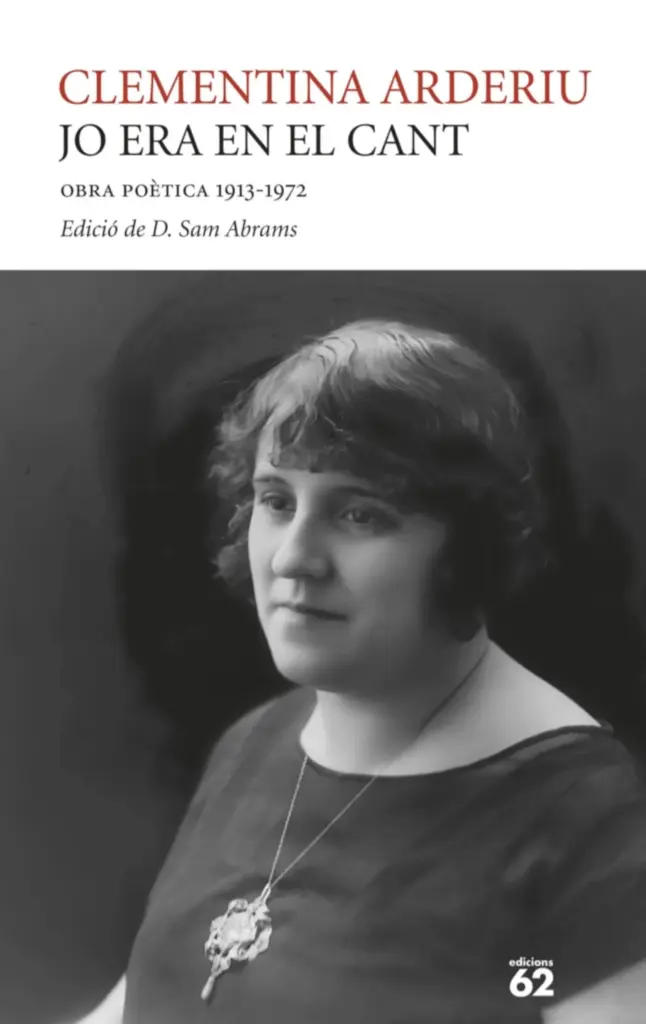
I Was in the Song. Poetic Work 1913-1972
Clementina Arderiu
Edicions 62. 440 pages. 21.90 euros
For Clementina Arderiu, poetry was, above all, song. This premise, which links her lyric to popular source, runs through the anthology I Was in the Song, where the six poetry books she published between 1916 and 1968 are collected, plus some unpublished ones. Wisely chiseled, the poems show an apparent simplicity, expressed in the right measure of verses and rhythms. Alongside the well-known ‘Song of Will and Unwill,’ with very Carnerian echoes, we find ‘The High Freedom’ or ‘Pass, Wind,’ focused on sweetness and everyday annoyances. ‘My name is Clementina, Clementina called me,’ she says in ‘The Name,’ where the marvel is produced by the “sweet rustle” of the beloved when he calls her.
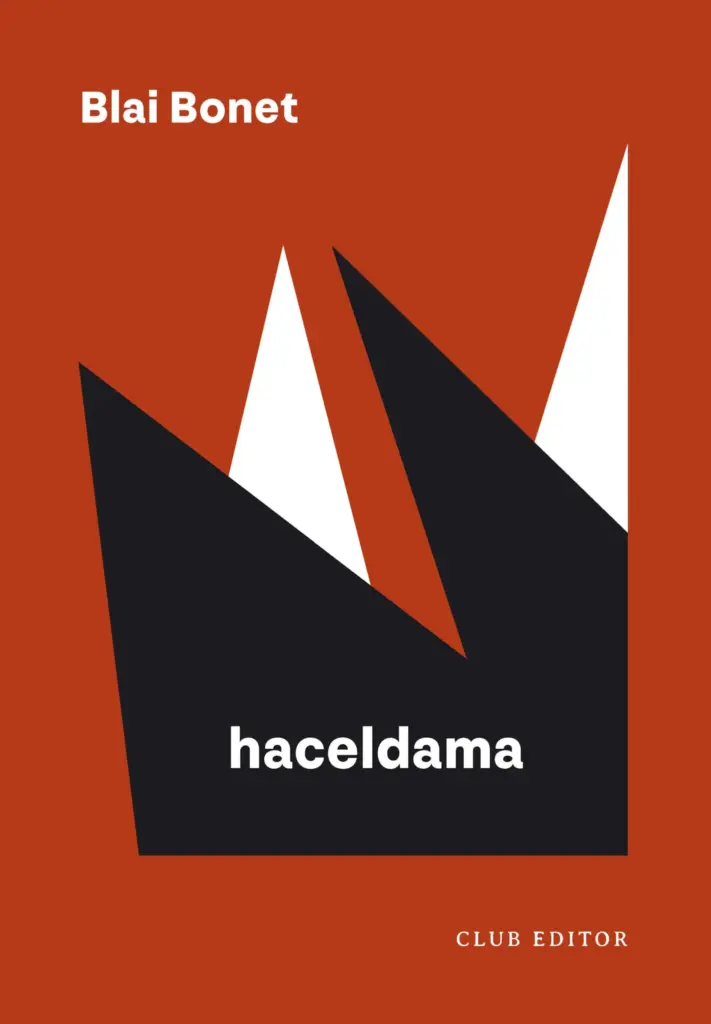
Haceldama
Blai Bonet
Club Editor. 224 pages. 21.50 euros
Haceldama is the field of blood bought with the coins of the apostle Judas, the traitor. In Bonet’s novel, it is the bloody world where Andreu Crous lives, a young man of deep sadness, orphan of a father and with an already old mother. Bonet, the chronicler-evangelist of the narrative, places him in two spaces: on the battlefield, where Andreu humanizes and recognizes himself as part of the lives of others, and in his hometown, where he will cause a fatal accident. Of raw and devastating beauty, Haceldama tells the “exceptional moan” that is Andreu’s life, including dazzling metaphors, like “thinking is sharpening the knife” or the idea that the blood of soldiers can only “furiously look at the sun.”
Universal Classics
By Gonzalo Torné
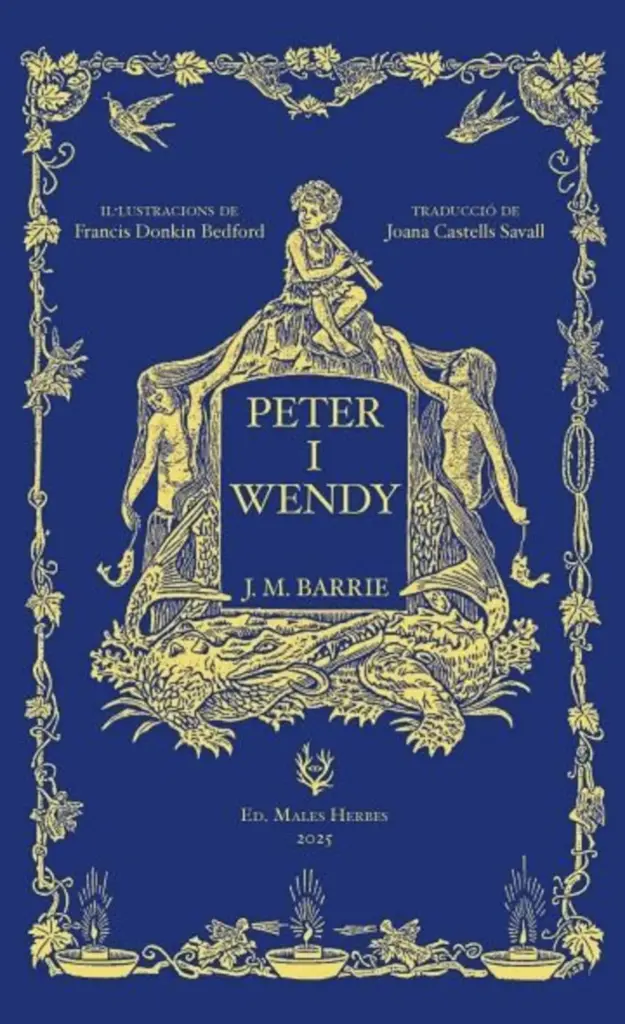
Peter and Wendy
James M. Barrie
Translation by Joana Castells. Males Herbes. 240 pages, 24 euros
If you only know the enchanting movie Peter Pan and Wendy (who hasn’t heard of Peter Pan, the sprite halfway between Robin Hood and Puck?), then you do not know Barrie’s book. It is one of those cases where Disney’s cheerful magic distorts the story. Fortunately for all readers, this edition is a good opportunity to correct the situation because the book is very juicy. The relationships between children and adults are harsher here, and Peter is a more ambiguous and dangerous character. Wendy is stricter, the villains have their reasons, and the danger of becoming an adult and integrating into the gray routine and the unepic harassment of daily life seems at times… inevitable?
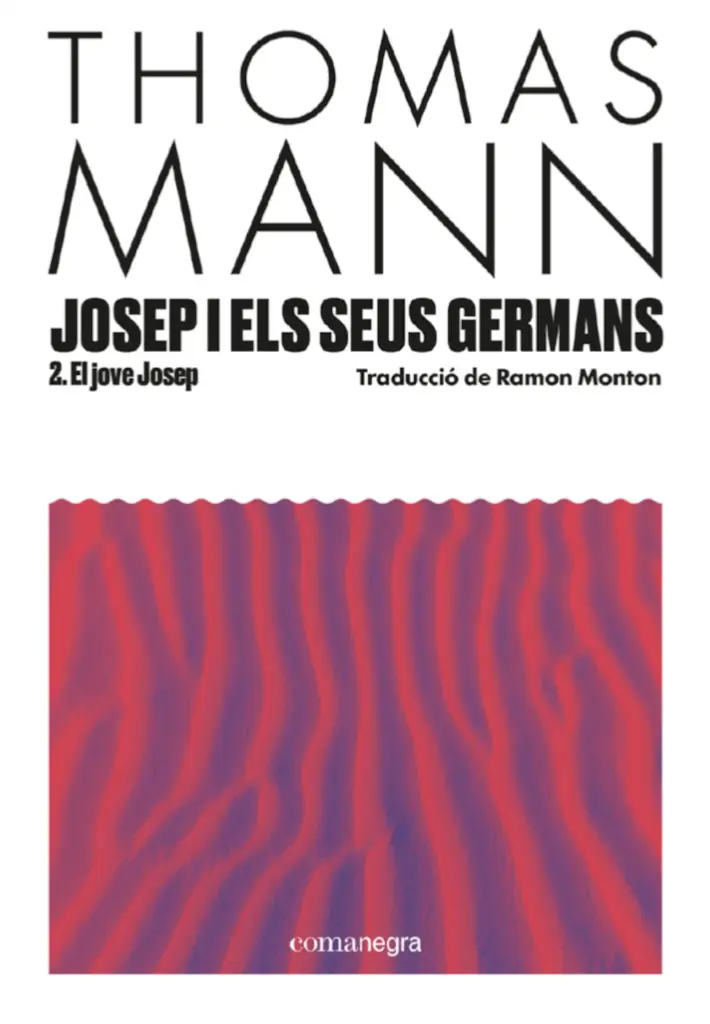
Joseph and His Brothers
Thomas Mann
Translation by Ramon Monton. Comanegra. 490 pages. 24.90 euros
For reasons beyond my understanding, Thomas Mann has a certain reputation as a boring writer, even a literary mummy. Big lie! It takes vitality and tireless humor to turn twenty pages packed with biblical text into a sumptuous four-volume narrative. Starting from the unfathomable and heart-wrenching depths of the well of the past (where everything is lost without trace, as if dissolved into nothingness), Mann combines descriptions, psychological notes, extensive plots like rivers, dialogues, and geographical color in the service of one of the boldest novel cycles known. The result of combining a handful of archaic myths with modern novel techniques.
> Read Víctor García Tur’s review
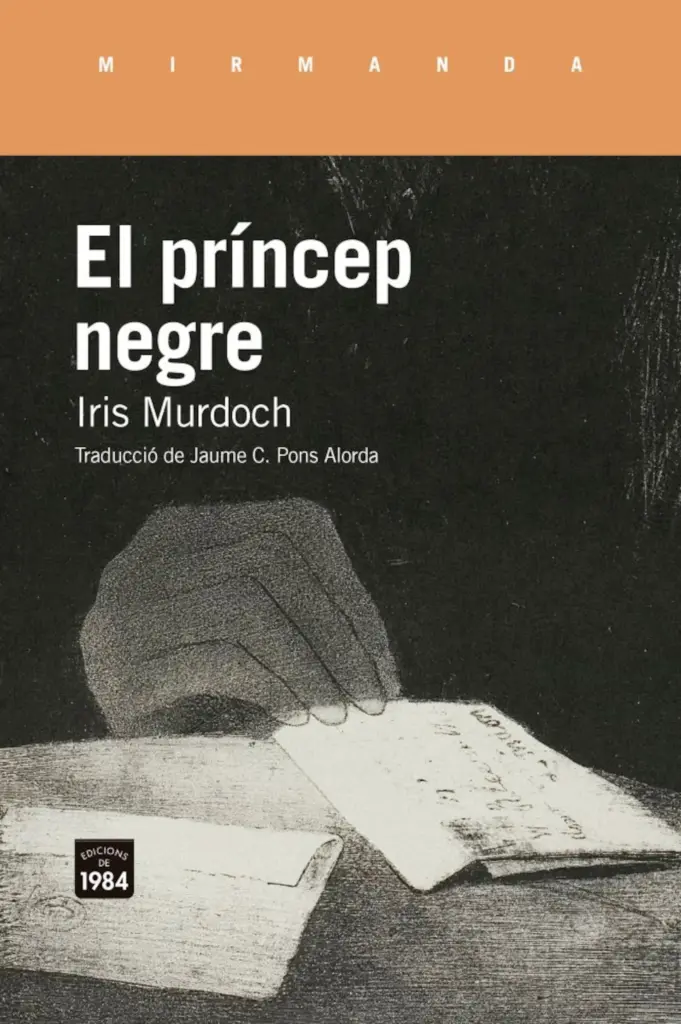
The Black Prince
Iris Murdoch
Translation by Jaume C. Pons Alorda. Edicions 1984, 672 pages. 23.50 euros
If you were asked to choose a single Iris Murdoch book to read in your life… reject the proposal! Life is long enough and there are too many bad books not to go through at least seven Murdoch novels. And among them, this one is essential. Here converge Murdoch’s main talents: her moral imagination, her theatrical vision, the auscultatory dialogues… and this irresistible vision of love as a wild transformative force that crosses us to disorder everything: education, customs, decorum, and beliefs. No one like Murdoch has portrayed the servitudes and enthusiasms of the middle years, to put it in Henry James’s style. And you will laugh, I promise you, you will laugh.
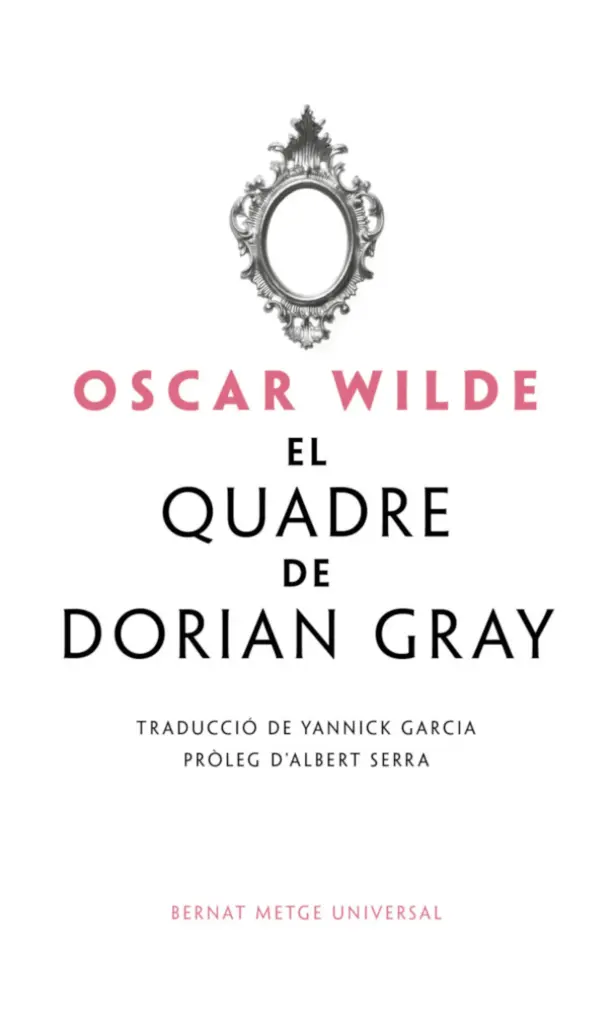
The Picture of Dorian Gray
Oscar Wilde
Translation by Yannick Garcia. La Casa dels Clàssics. 328 pages. 18 euros
Oscar Wilde, our beloved Oscar, will go down in history, deservedly, as the writer (almost the composer) of a series of memorable dialogues, as intelligent as they are cruel, which following the shortcut Shakespeare opened in his comedies of maturity reached the peak of high comedy. But Wilde mastered other literary powers: he was a melodic poet, an implacable letter writer, and, in his narrator facet, a creator of disturbing and vivid myths that still concern us. In this short novel, Wilde asks what we would be willing to do to prolong life, and even more terrifying: what we would be willing to do to others and, alas, to ourselves.
Essay
By Joan Burdeus
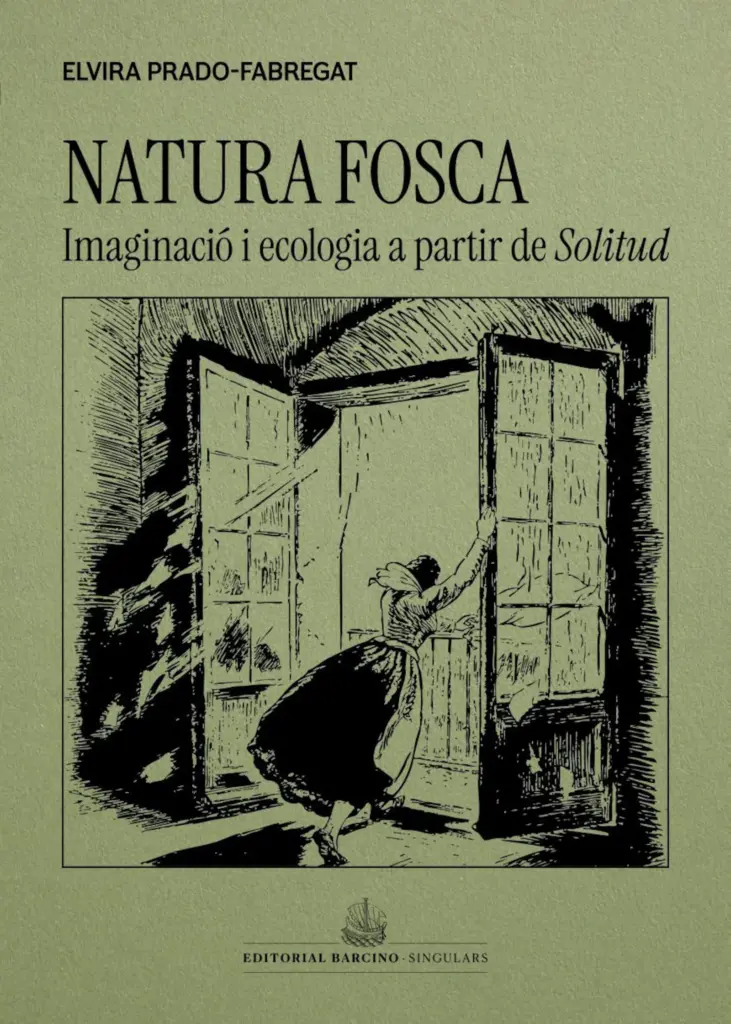
Dark Nature
Elvira Prado-Fabregat
Barcino. 475 pages. 24.95 euros
To stay alive, a culture must constantly return to tradition and be able to find answers to contemporary questions. And this is even more important when we talk about language: strong and normalized languages mythify their writers in an inevitably chauvinistic way that, at the same time, allows certain forms of wisdom to be within everyone’s reach. There is nothing more provincial than not knowing the authors of your language who have explained the world from your place, and being cosmopolitan is not just quoting Shakespeare, but knowing how to make him dance with Ausiàs March. Well, the essay Dark Nature, by artist and researcher Elvira Prado-Fabregat, rereads Solitud and brings it to the present, showing that Víctor Català’s great work is an infinitely fertile classic that all Catalans should have more at hand. At a time when the adaptation of Wuthering Heights to cinema has renewed certain imagery, Prado-Fabregat wants us to realize that the Gothic nature fundamental to European romanticism can also be found at home, and that there is no need to go to Emily Brontë to delve into female claustrophobia.
The grace of the darkness claimed by the essay’s title is that in Víctor Català we can find a very current desire to save the human condition from the excess of light of modernity, which takes forms such as the destruction of nature and the loss of freedom in an overly technological and rationalist world. Today, as the ecological crisis and social control of algorithms are putting humanism in crisis, Prado-Fabregat proposes discovering the tools with which Català tries to reconnect with the irreducible otherness of things. To do this, the monologue of Mila will be key, after the Soul, the hunter, raped her behind the altar of the chapel one night when she was alone in the hermitage: a soliloquy that takes advantage of the liminal space of the night to escape the prevailing ideas of the moment, doubt the dogmas of society, and open the door to a new way of being in the world. Certainly, the reader should be warned that Prado-Fabregat has a serious and somewhat academic register. That is why, to fully benefit from this essay, the complete recommendation includes reading it with Solitud on the nightstand. We know that Mercè Rodoreda’s work spent too much time asleep among clichés and that in recent years we have seen that recovering it keeps bearing fruit in the present. Víctor Català could be next.
> Read Marina Pintor’s review
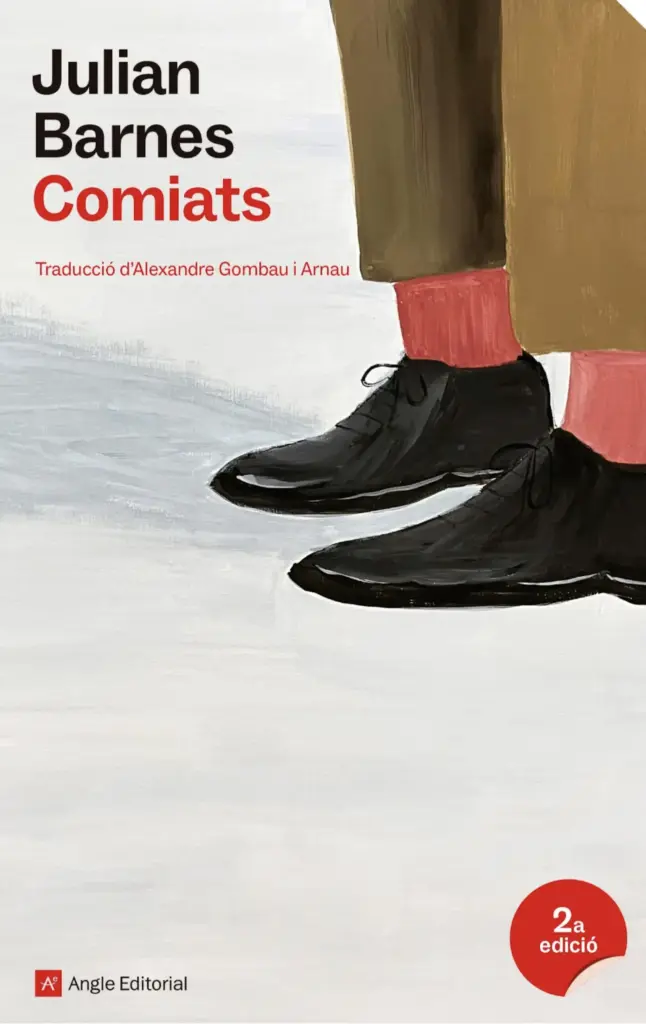
Farewells
Julian Barnes
Translation by Alexandre Gombau and Arnau. Angle Editorial. 208 pages. 19.90 euros
Julian Barnes always jokes that in his books you never know which part is fiction, essay, or memoir. But the “Barnes way” of thematizing it consists of turning things over so that layers of perplexity and lucidity are added each time; a pleasant back-and-forth between paradox and certainty that, due to the impossibility of separating play from depth, deserves the name of essay. On his eightieth birthday, Barnes gifts his readers a treasure: an open letter with which he directly says goodbye to us, as always mixing fiction, essay, and personal experiences, to talk about memory, love, and death. Goodbye, Julian: we will listen and keep watching.
About God. Thinking with Simone Weil
Byung-Chul Han
Translation by Guillem Gómez Sesé. Edicions 62. 128 pages. 14.90 euros
On the label of Lux, Rosalía’s album, there is a quote from Simone Weil: “Love is not consolation, it is light.” At a time when everyone talks about the return of spirituality, Byung-Chul Han offers us the intellectual face of the phenomenon with the tone of an author we could well call the Rosalía of contemporary essayists. More than innovating, Han returns with his critique of positivity and acceleration of the current world, but this time guided by Weil’s thought and her categories (attention, decreation, emptiness, silence, beauty, pain, and inactivity). Whether read coinciding with the diagnosis or from a distance, this is a good document to understand a trend of our time.
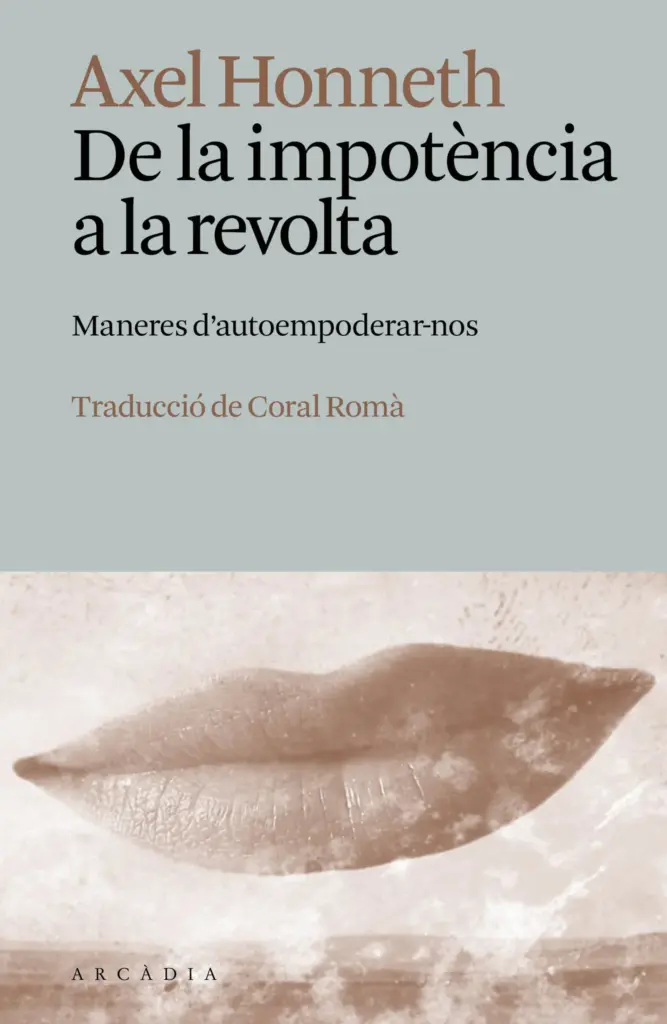
From Powerlessness to Revolt
Axel Honneth
Translation by Coral Romà. Arcàdia. 144 pages. 19 euros
The death of Jürgen Habermas coincides with the publication of a brief text by his most recognized disciple, ideal for thinking about the relevance of German critical theory. Like any good follower, Axel Honneth was both a continuator and a critic: if Habermas defended that the key to moral progress is reasoned communication among equals, Honneth adds that the struggle for recognition is the internal tension that keeps open this conversation that Habermas considered key for humanity to reach maturity. A book that reminds us that paying attention to intimate experiences of contempt and social shame can lead us to self-empowerment and initiate collective revolts.
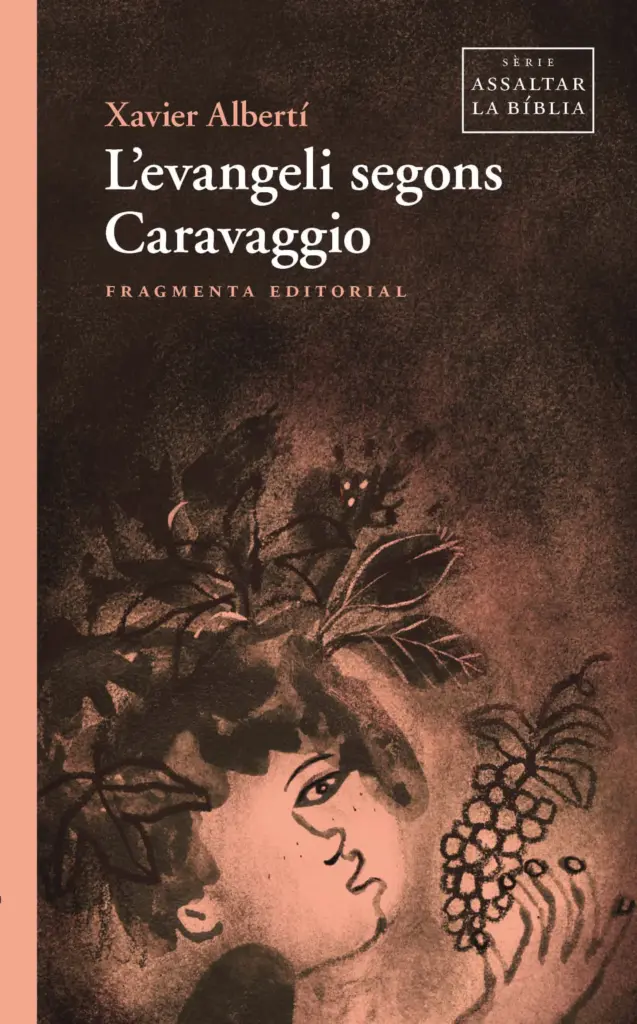
The Gospel According to Caravaggio
Xavier Albertí
Fragmenta. 88 pages. 11.50 euros
“People in theater know that emotions, like light, are not seen,” says Xavier Albertí. And it is reflecting on these invisible emotions we feel when contemplating a painting by a master of light like Caravaggio that one of the key figures of contemporary theater in Catalonia talks to us about the search for God in art. It is a radically popular and grounded God, God understood as something found inside every normal and ordinary body, like the Christs and Virgins painted by the Italian genius. A free essay that turns the passion of a current artist for a past artist into a motor to better understand the great questions of art and the human condition.
Memoirs
By Adrià Pujol
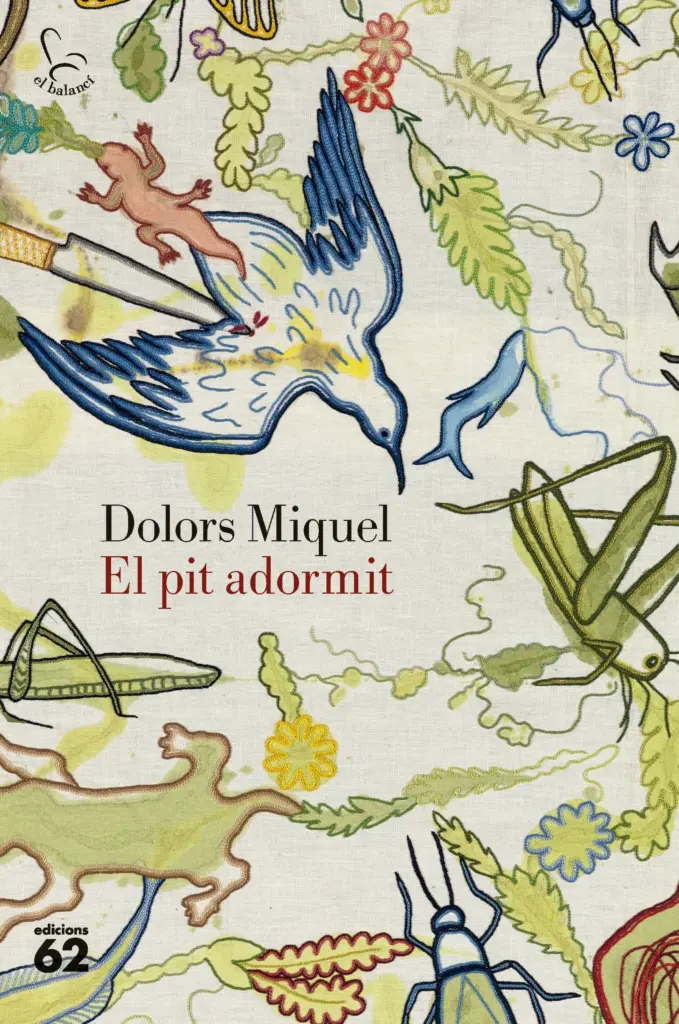
The Sleeping Breast
Dolors Miquel
Edicions 62. 472 pages. 21.90 euros
Here is a memorable book, crafted under the black storm of illness, like a lifebuoy. Miquel has given birth to a literary mosaic written in a state of grace, and it has come out scratched, sweaty, and happy. However, there is no need to talk about any compositional order, because personal experience, thought at work, memories, and cultural baggage intertwine with sanguine naturalness.
On one hand, there is breast cancer and the author’s medical vicissitudes, elements that serve to attack the dehumanization of the health system, rampant capitalism, and the trafficking of goods, minds, and bodies. On the other, the almost dreamlike narrative of two poetry tours in the late nineties, a string of wild recitals — with the scent of a road movie — that consolidated a swarm of passionate poets and left some on the verge of resentment. Thirdly, Miquel dialogues with the North American Beat generation, while challenging it and recognizing its influence, and finally there is an archaeology around the female breast, sprinkled with philosophical notes on flesh, spirit, essayistic outcry to denounce male silence, deliberate concealment, erasure of women, here and there, in any field.
The Sleeping Breast gallops full of fierce images, astride prose that captivates for its fluency, rhythm, and the author’s ability to sustain — it seems — a constant breast gift. It gives no respite, does not slow down, does not lower the tone, does not falter anywhere, it is a self in the red heat. Movies, poems, creeds, points of view, maxims, historical characters, friendships and enemies, loves and family, there is a whole heart gathered at Dolors Miquel’s head, and she, who wields the baton like a sorceress, puts it at the service of a formidable work, unsentimental, elevated and grounded, sometimes dark as charisma, sometimes shining like lightning.
This book is also a reading of the literary tradition itself, but in a feminist and critical key, which implies a good bunch of reproaches, an ironic reckoning, recognition of the risk and genius of others, and, hand in hand, denunciation of certain complacencies, professional flatterers, some slackers of the Catalan literary system. Writers who spoil themselves in the wake of awards parade, those who become bureaucrats peek in, big shots collapse, and there are the crazies and those who, against the current, float deaf to the siren songs of the market, etc., all with some names, surnames, and postal codes.
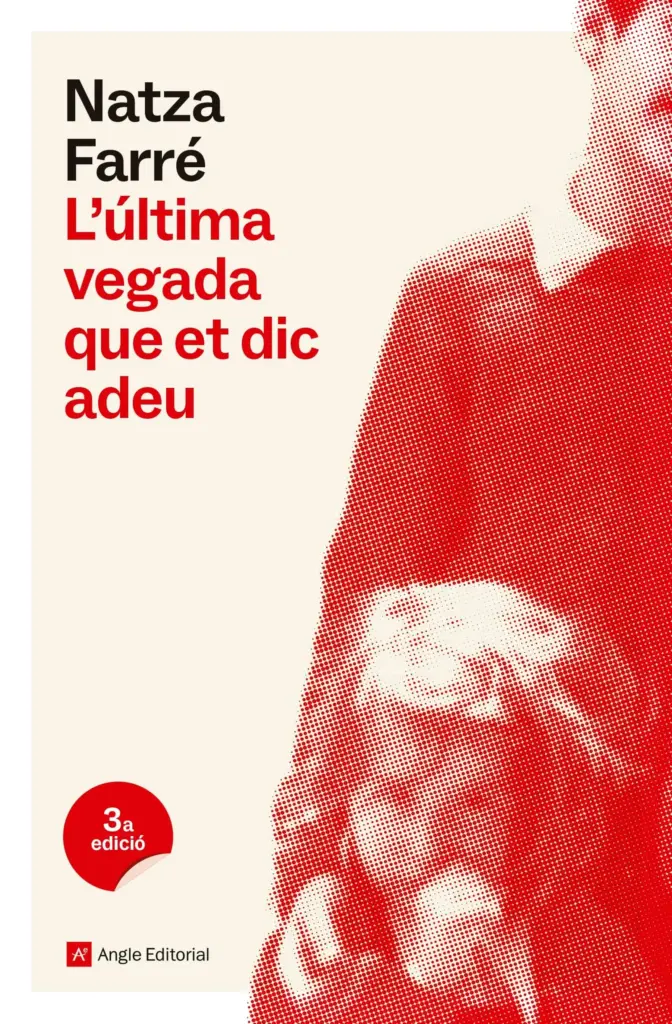
The Last Time I Say Goodbye to You
Natza Farré
Angle Editorial. 176 pages. 18.90 euros
The well-known journalist opens herself up completely to address the rage and pain that marked her forever, due to having a brother addicted to heroin during the eighties. Starting from family correspondence and the mangrove of memories, she weaves a harsh, cold, and sharp narrative, a story that rises from the thorny personal experience to sketch the portrait of an era, of a whole generation torn apart by drugs. The book spares nothing, neither the unpleasant physicality of the junkie, nor the slow destruction of the clan, nor, above all, the internal wounds and turbulences of the author, which, all things considered, are of atmospheric blackness. For lovers of raw chronicles, without embellishments.
The Memory of the Earth
Various authors
L’Avenç. 144 pages. 17 euros
Eleven writers of various ages reflect on the passage of time in relation to the places where personal memory often rests. Each one takes their own path, from lamenting having had to leave a neighborhood or a house reluctantly, through epiphanies, to fascination with that place that marked us, a landscape to which we can only return by fictionalizing it in the name of memory. Roser Vernet’s prologue and the list of authors underpin the quality of the miscellany and the diversity of sensibilities. None is above another, but the pieces by Roser Cabré-Verdiell and Raül Garrigasait are excellent. For lovers of confessions with literary intent.
The Language of Friends. Linguistic Autobiography
Joan-Daniel Bezsonoff
Empúries. 160 pages. 18.90 euros
The Northern Catalan author once again displays his characteristic sadness, intelligent and cheerful, and halfway between nonchalance and bitterness addresses his own linguistic identity, that is, the primordial stuff of any human being: we are the language, the languages. Thanks to sumptuous memory and sharpness for high-level portraiture, Bezsonoff scrapes family blood against the grain and airs the violences of the French state as one reads the booklet to a delinquent. The book is entertaining, political, experiential, very funny, and quite sad, a cocktail we have seen in other works by this spearhead of Catalan literature. For lovers of anthological conversations, with a sting.
Garlanda
Maria Rovira
Blackie Books 176 pages. 19.90 euros
In the literary debut of screenwriter and humorist Oye Sherman, we witness a florilegium of obsessions, joys, memories, and personal disappointments, a kind of memoir that lifts one corner of the mouth towards a smile and lowers the other towards a tragic grimace. Written, very well written, with biting and tender intelligence, Garlanda is one of those books that, once finished, leaves the reader wiser, more human, and above all closer to a surprising clairvoyance, that of the author, who invites us into her universe to have a good time. As a bonus, we come out with a pocket cultural map of her generation and country, of the ship of fools we call the world. For lovers of fighting hypocrisy.
Comics
By Víctor García Tur
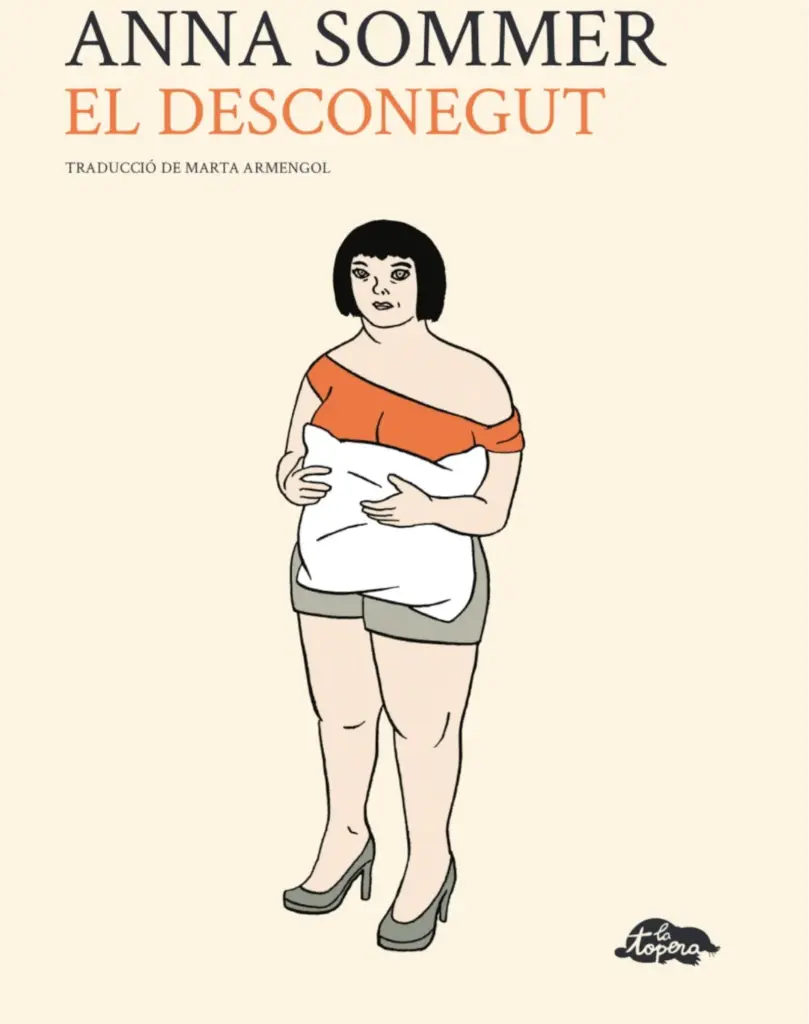
The Unknown
Anna Sommer
Translation by Marta Armengol. La Topera. 96 pages. 17.50 euros
Anna Sommer was born in German-speaking Switzerland and, as a good comic author, lives quite connected to Francophony and the clear line tradition. In 2024 she was awarded the Max & Moritz prize for best German-speaking author. In Catalan, we can read a very fine book that is as suggestive and succinct in its pages, less than a hundred, as in the title: The Unknown.
Hélène’s story must interest us by force: one day, unexpectedly, she discovers a baby in one of the fitting rooms of her clothing store. Babies are not born in fitting rooms, we know that now that we are grown-ups, and Hélène must also know it, but she decides not to ask what happened or who the mother or father are, and to live in the fantasy that a gift from heaven has fallen on her. Hélène’s situation, at forty years old, is complemented by that of young Vicky, a student who seems to have trouble assuming the responsibility of adulthood. They are two interconnected plots, and you would say they run in parallel before our eyes, but that does not mean they happen at the same time…
Sommer’s proposal focuses on the description of human relationships, what we do to each other (this includes love and sex), what we tell ourselves and what we do not say to deceive others or ourselves. With the only exception of the abandoned baby, all the characters in The Unknown are incomplete or directly broken people, because they have lost a child (or what could have been a child) or because they do not know what to do with adult life.
To develop the thread of the two stories, the author uses the drawing style of the newspaper cartoonist, who has no need for color, shadows, lines, and unnecessary ink stains. What can be solved with a line is solved with a line and that’s it. In the refinement of the drawing to achieve perfect communication, Sommer even dispensed with a line that seemed indispensable: the frame of the vignette. And despite this effort of restraint, attention to detail is maximum, fills the page with life, and gives volume to the narrated facts. The detail can be a dog with the face of humiliation for pooping in front of the owner, or a stone lion indicating that we are at the door of a house with rooms, or the tears of the candles illuminating a ménage à trois, or the line of the vulva marked on the panties. Sommer, who has total control over the details, guides us through a story about moral ambiguity and the desire for fullness.
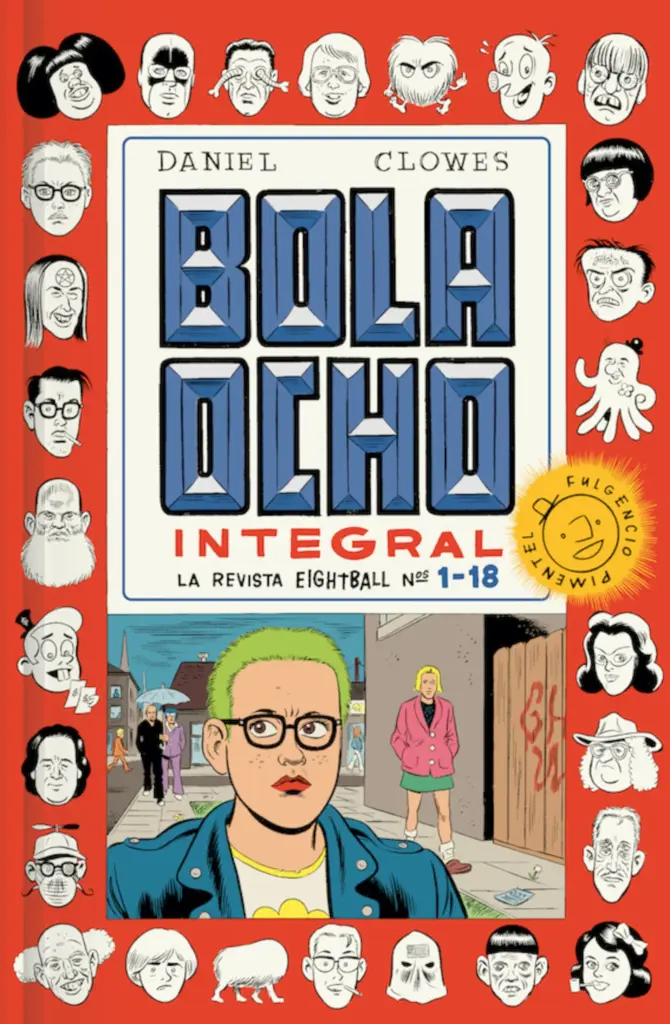
Patience
Daniel Clowes
Translation by Montse Meneses Vilar. Finestres. 192 pages. 28 euros
In hardcover or paperback, in four-color or two-tone, when we open a Daniel Clowes book we expect all details to be obsessively calculated. From the cover to the back, through the endpapers, credit pages, and lettering of titles and onomatopoeias, everything has been designed to set the atmosphere and accompany the story: in the case of Patience, a love story combined with a detective plot, also combined with time travel. Nothing clashes in this triangulation of genres, because Clowes is an old hand in adult comics; he knows the rules of storytelling and when to break them (have you seen the half-cut and perfectly readable speech bubbles?) in favor of drama and surprise.
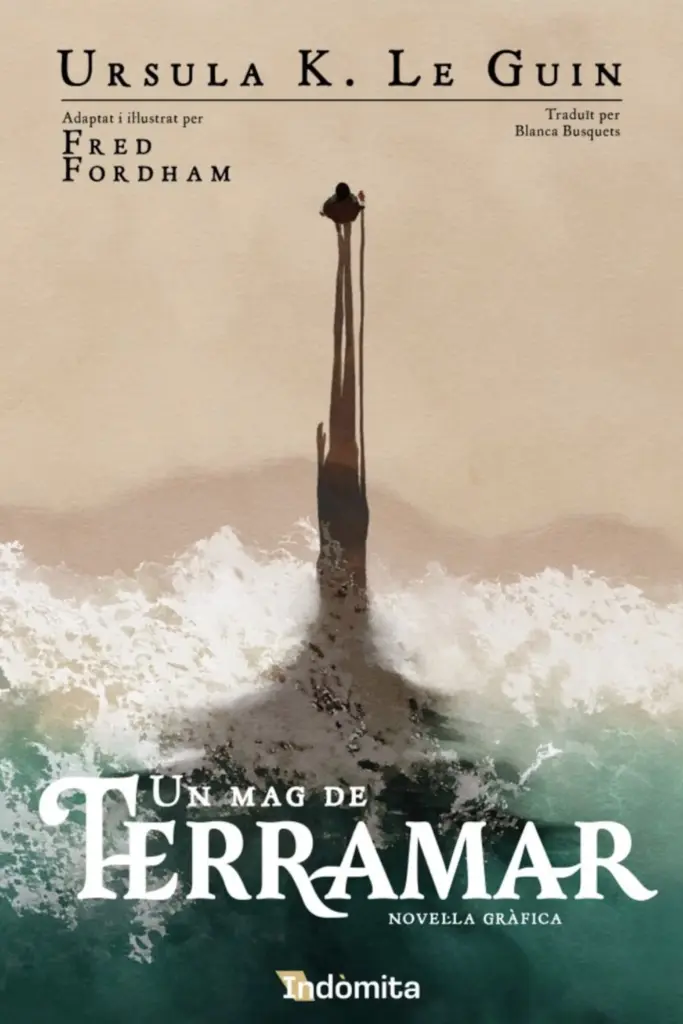
A Wizard of Earthsea
Fred Fordham (based on the novel by Ursula K. Le Guin)
Translation by Blanca Busquets. Raig Verd. 288 pages. 28.90 euros
Let’s call things by their name: darkness. It is understandable that Fordham’s drawing is so dark and tenebrist, after all we read the adaptation of a Le Guin novel, A Wizard of Earthsea, which, in fantasy form, unfolds the theme of lights and shadows of the human mind: the protagonist must face his Jungian shadow. Without the epic of great wars against great villains (think Tolkien), Ged’s hero journey is as psychological as mystical, where wizards speak in cryptic language and dragons are blurred fantasy beings: Fordham has understood that dragons were not born to be ridiculous in audiovisual media, but to let imagination fly.
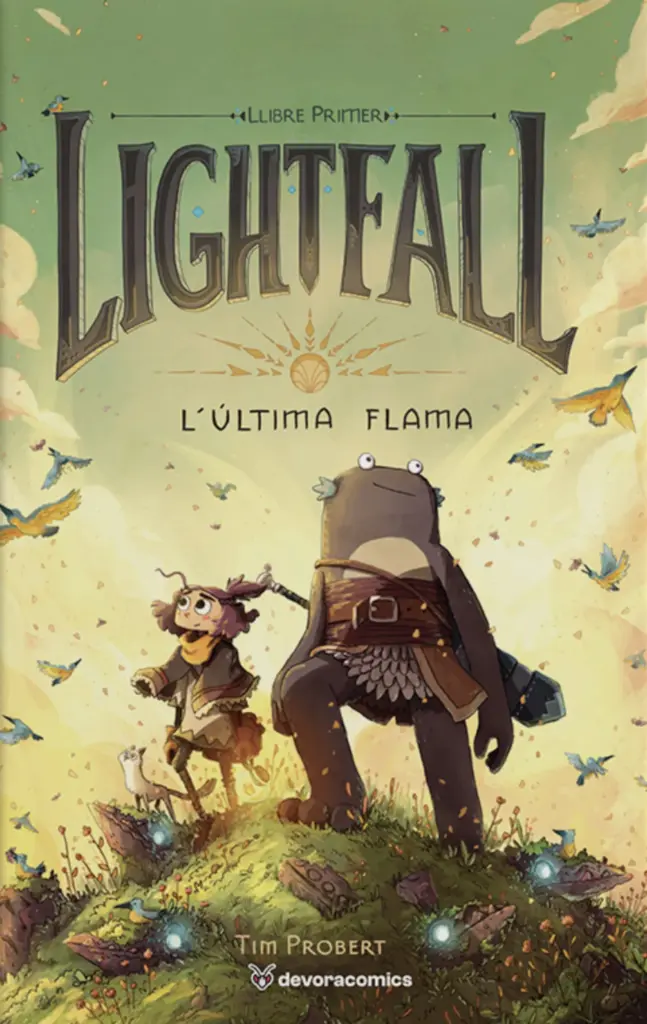
Lightfall. The Last Flame
Tim Probert
Translation by Yannick Garcia. EntreDos. 256 pages. 19.90 euros
When children’s literature is made with passion for the fantasy genre and the possibilities of human imagination, adults also enjoy it and quickly join the adventure. This first volume starts a tetralogy that has captivated all kinds of readers (and has even been awarded at the Angoulême festival). Bea’s quest (a neurodivergent heroine overwhelmed by the pressure of external stimuli) and Cad’s (a big frog full of optimism and warrior drive) is guided by the most roller spirit and told balancing between epic and comedy. Tim Probert excels in world-building (don’t make me say worldbuilding) and in the use of color to create lights and fantasy atmospheres.
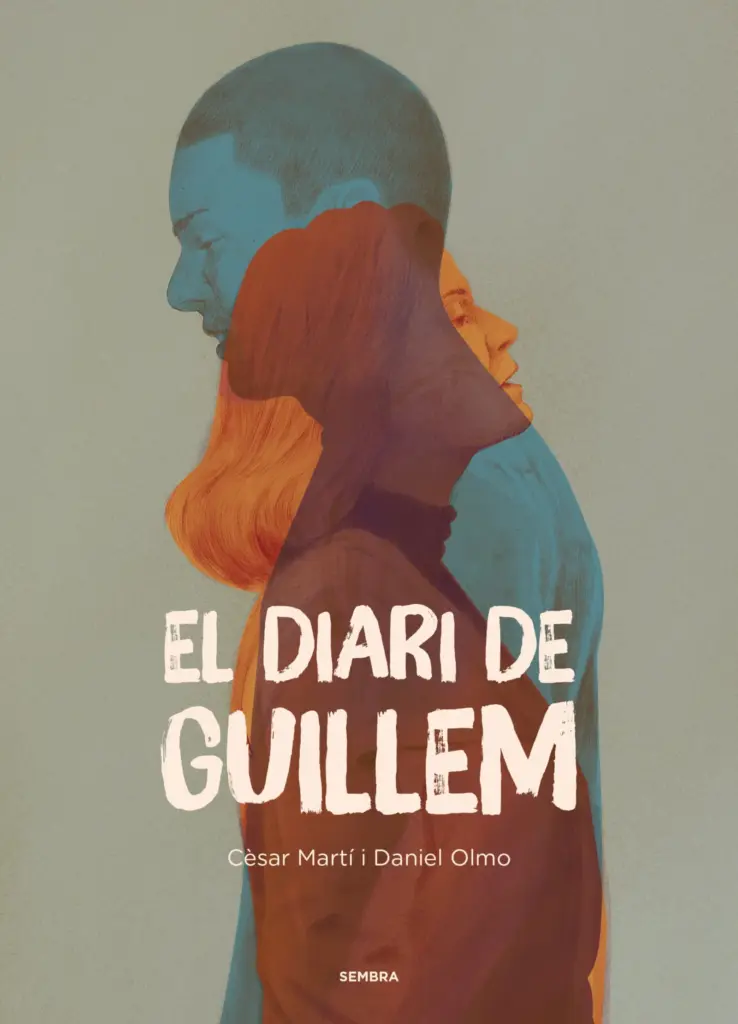
Guillem’s Diary
Cèsar Martí and Daniel Olmo
Sembra Llibres. 160 pages. 25 euros
With the hypothetical license of a manuscript hidden in a drawer, the main episodes of the emotional and political life of Guillem Agulló i Salvador are reconstructed, before he became a victim of a fascist murder in 1993. The point of view is that of Betlem, the sister who survived the young activist and who, looking at it from our present, observes how ultra-Spanish nationalism and racist hatred remain alive in the Valencian Country and elsewhere… The muted colors, and the faces that are not fully drawn, contribute to the nostalgic tone. The collaboration between scriptwriter César Martí and illustrator Daniel Olmo bets on antifascist memory, so we do not forget or forgive the unforgivable.
Children’s Literature
By Pep Molist
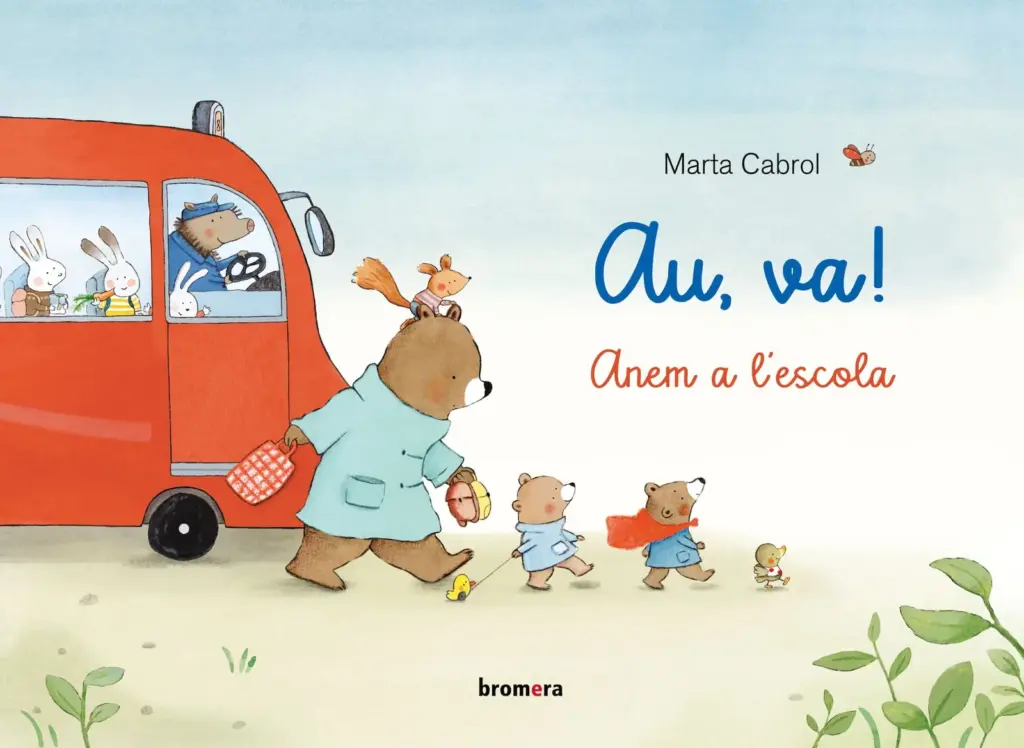
Come on, let’s go! Let’s go to school
Marta Cabrol
Animallibres. 32 pages. 17.50 euros
Marta Cabrol, one of the Catalan illustrators who best connects with the little ones and best describes their small universe, gives us a story for which she is both author of the text and illustration. The adventure narrated is the day-to-day of many families, the path to school of a mother bear and her two children, Tina and Timó, always in a hurry to arrive on time. An ideal story to share with the little ones and spend time noticing and marveling at the many small details and characters that Cabrol delicately and carefully grows in this journey that, with all this, becomes slower but much more attractive and entertaining.
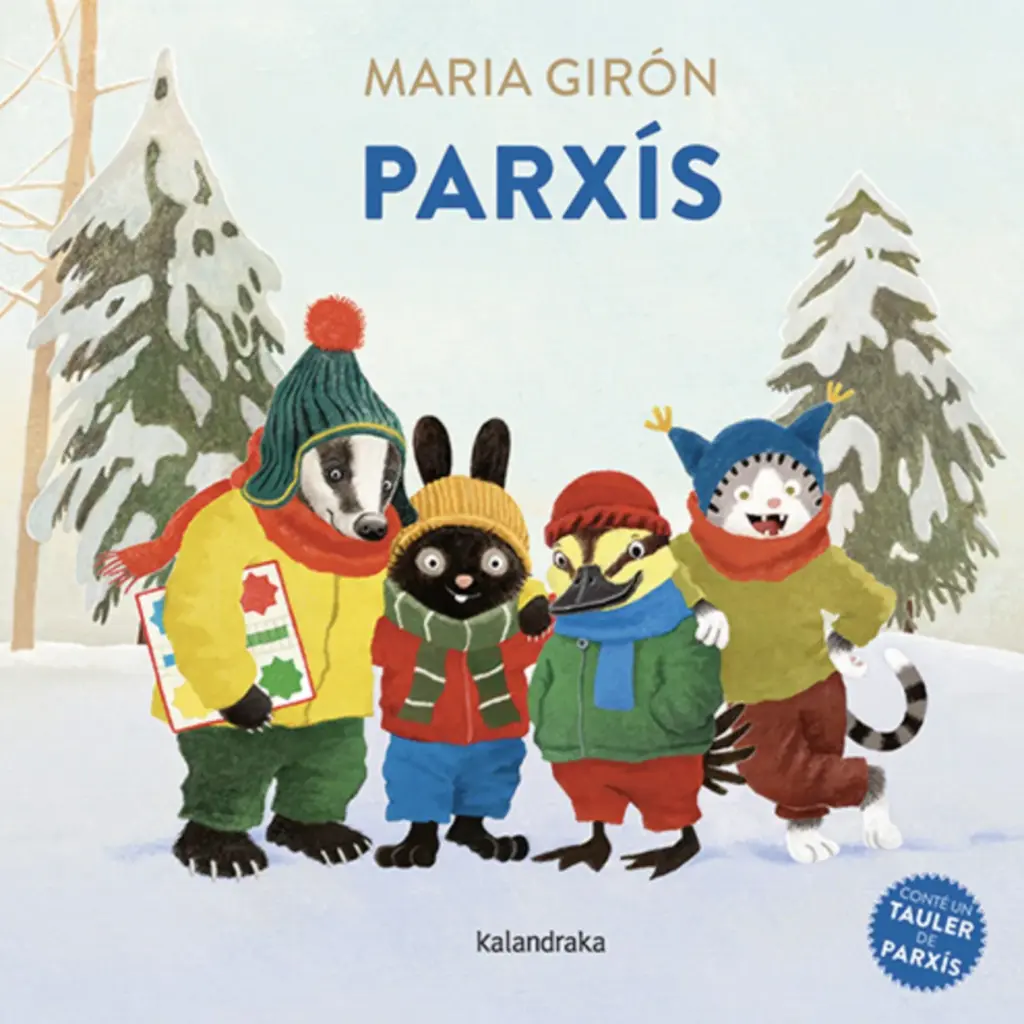
Parcheesi
Maria Girón
Kalandraka. 36 pages. 17 euros
Recently, illustrator Maria Girón has changed her artistic style and trajectory and dared to write her own stories. The first proposal she made earned her one of the most prestigious illustrated album awards in the world, the Compostela, and marked a path to follow. Parcheesi, her new proposal, deliciously delves into the theme of friendship. Four friends look for each other to share a moment. Each arrives at the meeting bringing something: a bowl of milk, a cake, a ukulele, and a parcheesi game. They play, enjoy, and complement each other, with a touching way of communicating that often things experienced in company have a different taste.
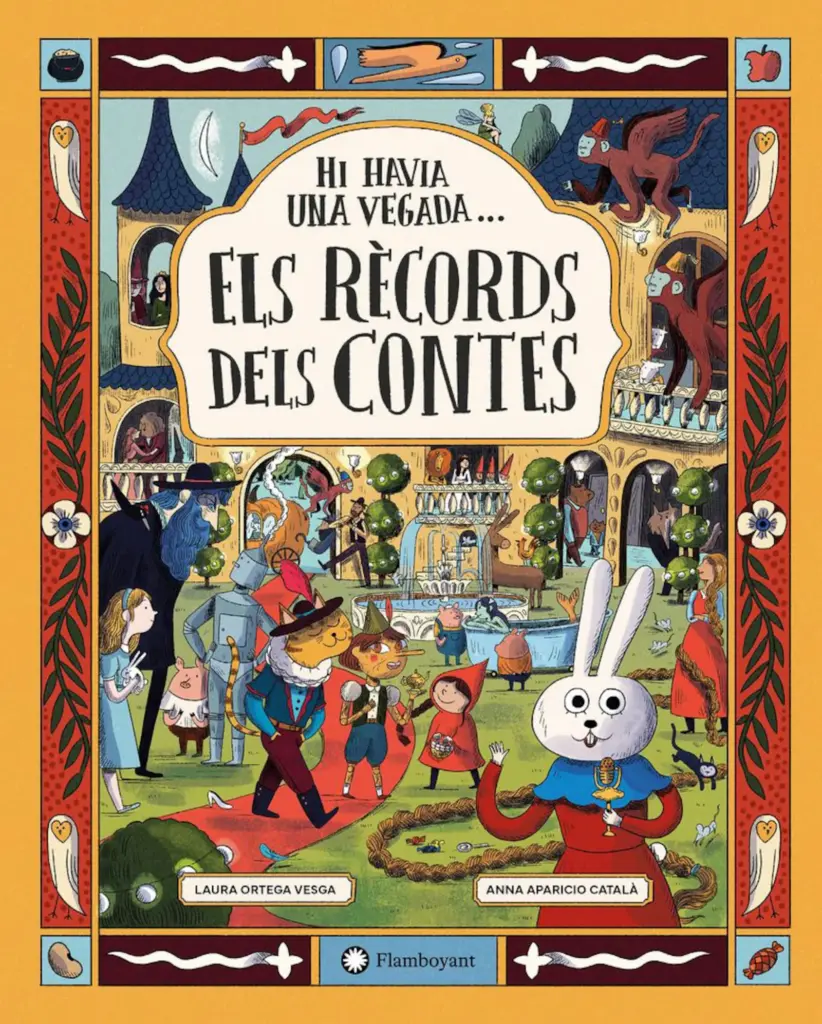
Once Upon a Time… The Records of Tales
Laura Ortega Vesga
Flamboyant. 64 pages. 18.90 euros
Laura Ortega debuts by inviting the reader to a great record gala, just as if it were a movie star gala, where we will meet the finalist characters of traditional tales competing for the prize in various categories: the most impressive body parts (Rapunzel’s hair, Blackbeard’s beard, Pinocchio’s nose…); the sharpest senses (the flutist’s hearing, Goldilocks’s palate…), etc. With dynamic illustrations by Anna Aparicio, it is a book introducing traditional tales, or a work to test our knowledge of them, or even to discover some we knew nothing about.
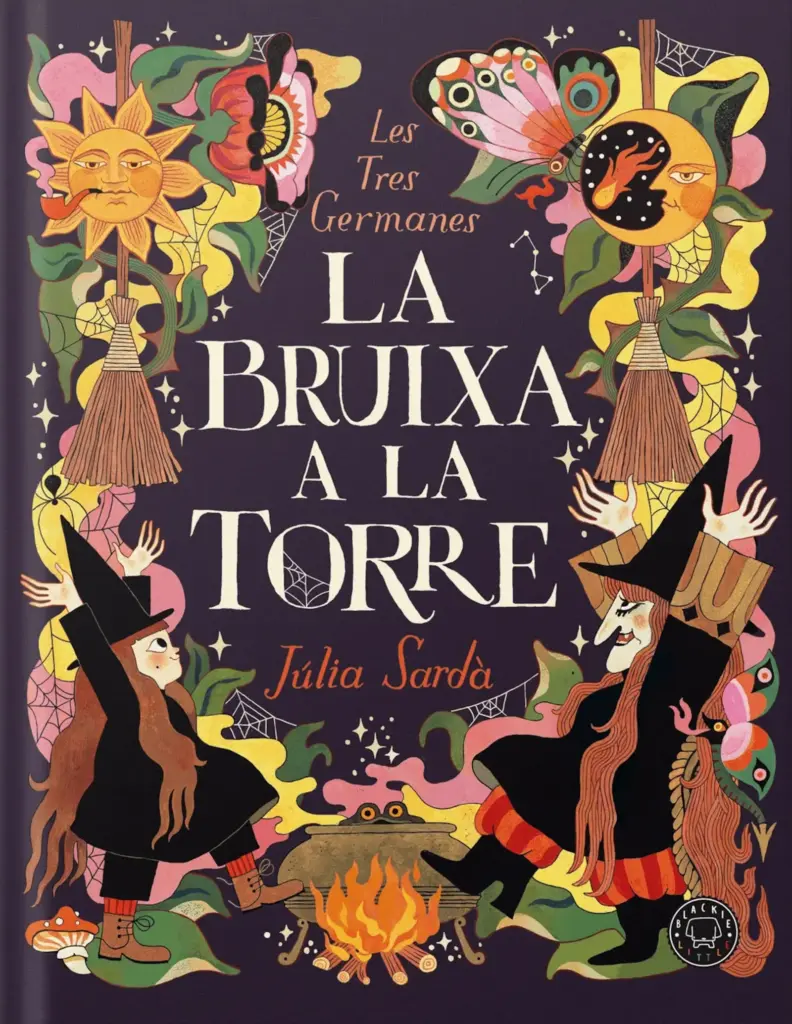
The Witch of the Tower
Júlia Sardà
Blackie Books. 64 pages. 17.90 euros
This is the second complete work — text and illustration — by one of the most international Catalan illustrators, Júlia Sardà. And the second installment of a trilogy with three sisters as protagonists: Franca, Carmela, and Tomasina. In The Queen in the Cave, the three ventured into the forest in search of a mysterious queen who appeared in the dreams of the eldest sister. In The Witch in the Tower, the middle sister will embark on a trip in search of a witch and also the place she herself occupies in the world. Sardà’s books are stories of adventure and fantasy, drawing from folklore and great references, rich in details, stories, and meanings in which to get lost, just as the three protagonists do.
Youth Literature
By Pep Molist
A Thousand Blouses a Day
Serena Ballista and Sonia Maria Luce Possetini
Translation by Maria Luna. A fin de cuentos. 52 pages. 23.50 euros
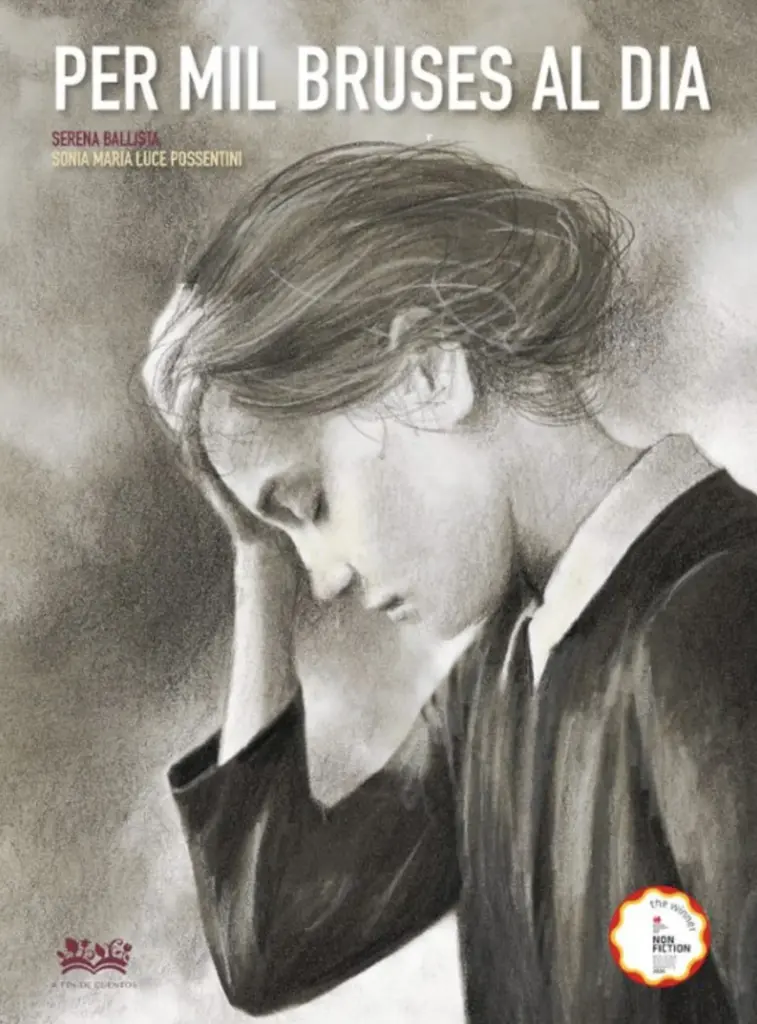
In A Thousand Blouses a Day, the reader delves into a true story: that of a ship carrying many European immigrants to America. And later, that of many women working at the Triangle Shirtwaist factory in New York, making a fashion product: the tight blouse. The story is told from a shop window by a blouse that sees the terrible fire on March 25, 1911, that caused the death of 129 workers. It was the biggest workplace accident of the time and led to women’s struggles for their rights, and later, to the celebration of March 8. The illustrations and retouched photographs alternate to offer an impactful work, considered the best nonfiction work at the 2025 Bologna Book Fair.
The Firebird
Maite Carranza and Júlia Prats
Jollibre. 400 pages. 13.50 euros
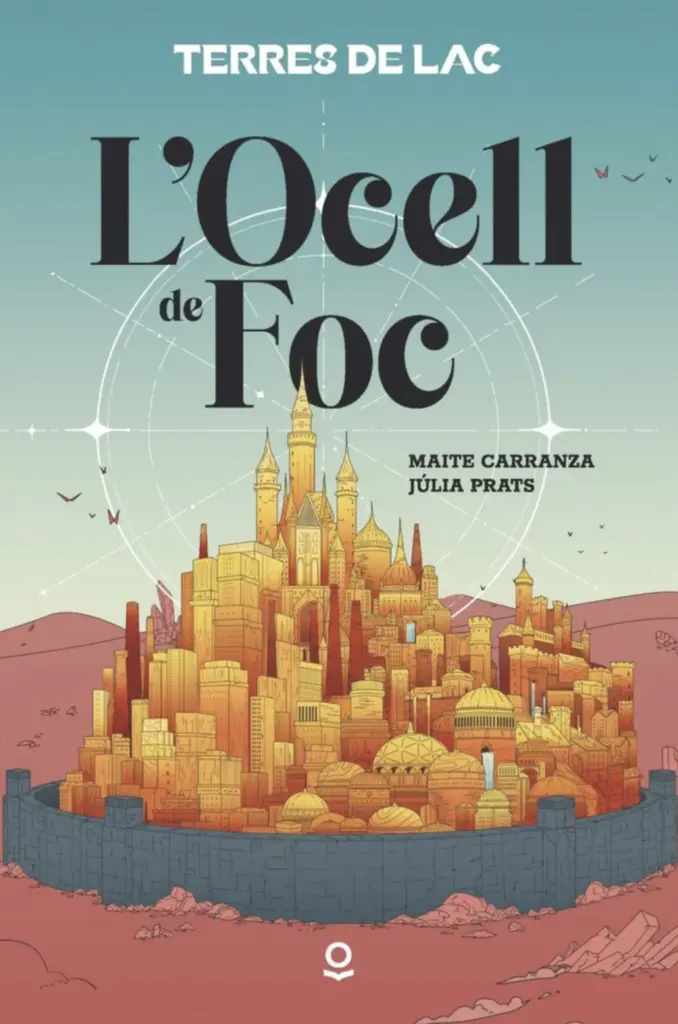
The tandem formed by Maite Carranza, one of the most relevant Catalan writers of recent times, and her daughter Júlia Prats, with whom they have already created several novels for young people such as Sisters, Dogs, Freaks, and Other Specimens, begins a science fiction duology called “LAC Lands.” In the first installment, The Firebird, they present a prosperous world that seems immutable and does not admit dissent. With the arrival of The Firebird, four young very different characters will be pushed out of their comfort zone and embark on an adventure full of unforeseen events and uncertainties. And the environment that seemed safe forever seems to turn upside down overnight.
A Truth
Alejandro Palomas
Elastic. 224 pages. 17.95 euros
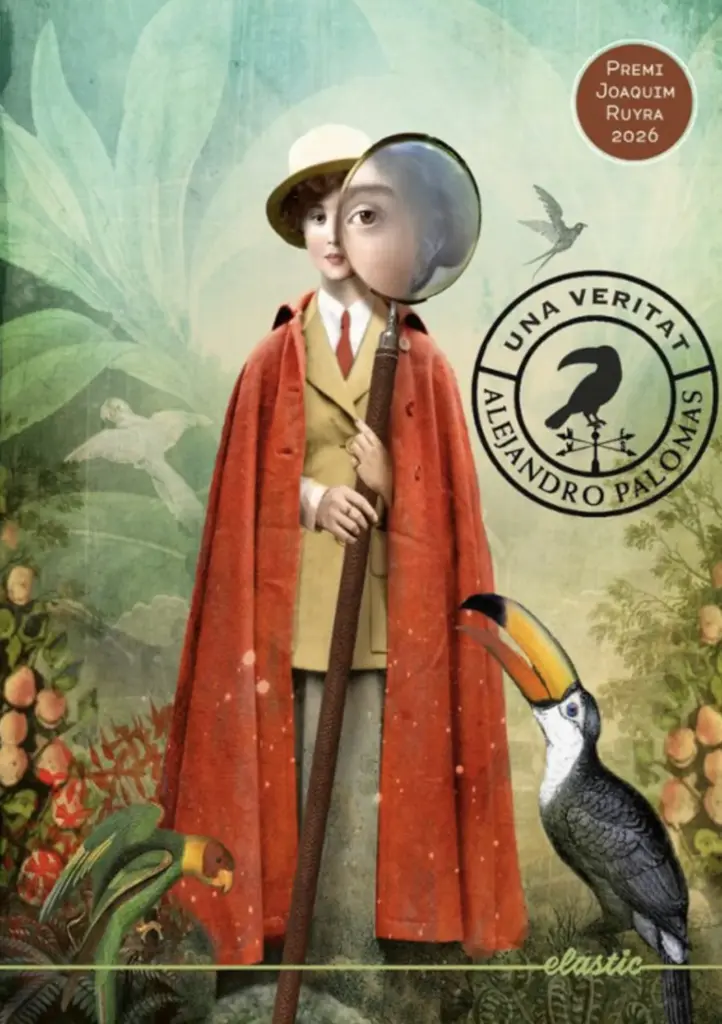
With A Truth, Alejandro Palomas won the last Joaquim Ruyra youth narrative prize and returned to the universe of Guillem, the protagonist of A Son, the work with which he won the same prize twelve years ago, captivating many readers. In between, another novel, A Secret. In A Truth we find a universe expanded with Nàzia, the protagonist of the second installment, and now with Angie, an African albino girl. Throughout the novel, the author delves into Angie’s mysterious story and the protagonists’ feelings, elaborating a precise portrait of the emotional world of young people and subtly advocating the importance of listening to them.
The Wisdom of the Classics
Jordi Rincón and Núria Solsona
Akiara. 72 pages. 18.50 euros
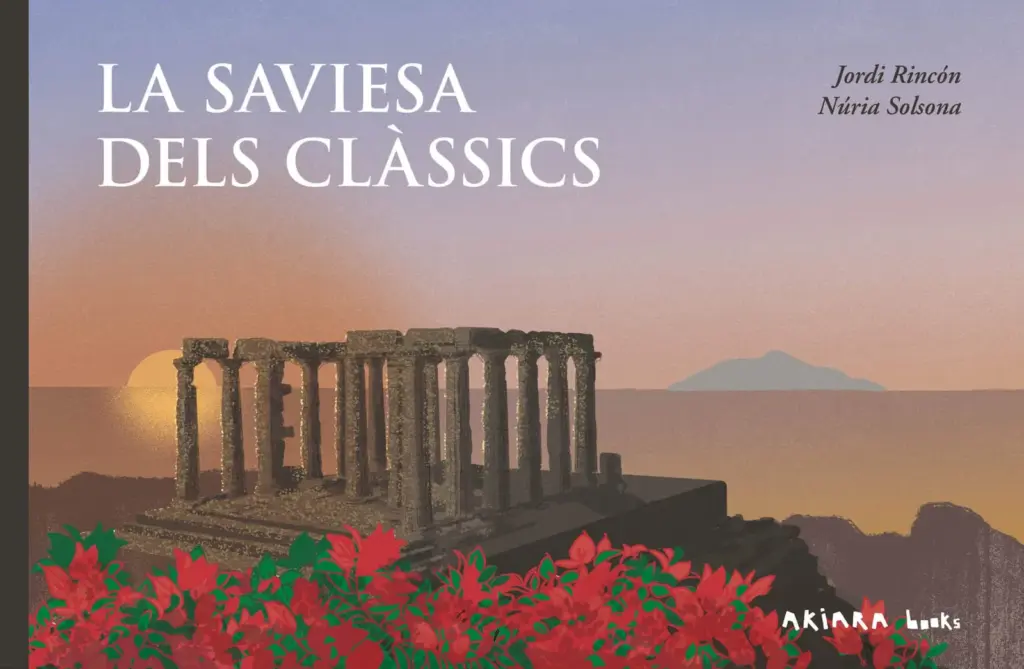
Jordi Rincón, who has dedicated his professional life to accompanying adolescents through the thought and beauty of the ancient world, presents us in The Wisdom of the Classics a selection of thirty aphorisms from the Greek and Latin world — from the famous Carpe diem to Love conquers all, passing through Everyone is the artisan of his own destiny, among others. The author shows us how these aphorisms become authentic pills of wisdom that can help us approach today’s society. Each is accompanied by an illustration by Núria Solsona, like poetic postcards inspired by the Mediterranean landscape. An exquisite gift that helps us think about today’s world without forgetting one of our main legacies.
Theater
By Andreu Gomila
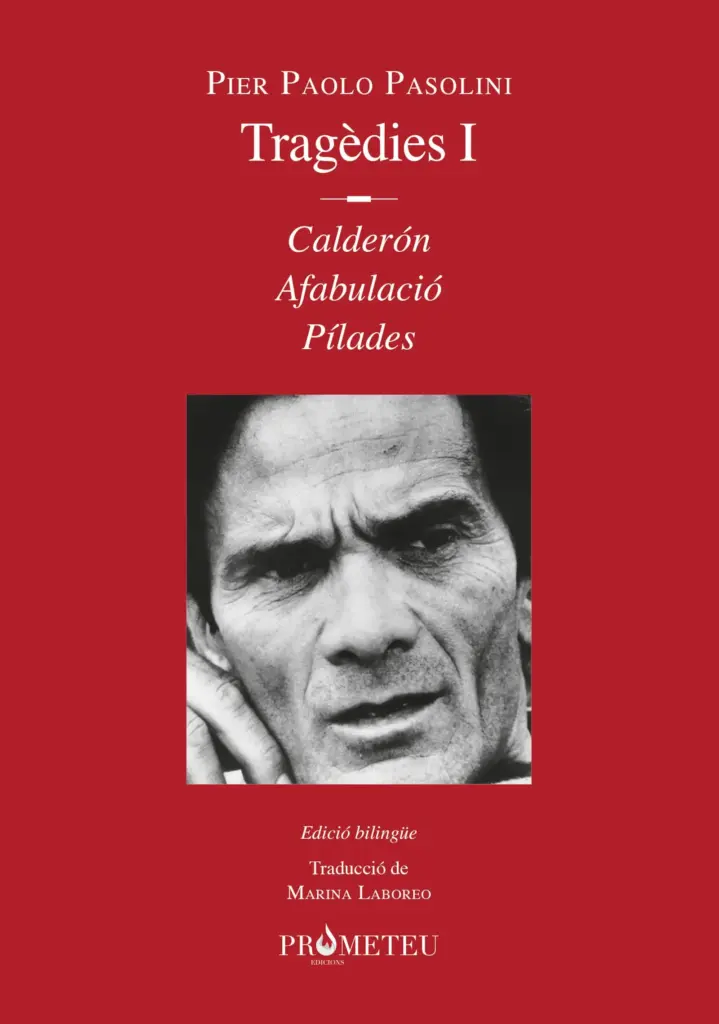
Tragedies I
Pier Paolo Pasolini
Translation by Marina Laboreo Prometeu. 580 pages. 26.50 euros
Little by little, thanks to the work of some translators and some independent publishers, Pier Paolo Pasolini’s literary work is coming to light in Catalan. And his theater could not be left out. A few years ago, Comanegra published in a single volume what are possibly his two most successful and revolutionary works, Orgia and Porcaria, accompanied by the still valid Manifesto for a New Theater. Now it is Prometeu, with translation by Marina Laboreo, who has published his tragedies: Calderón, Afabulació, and Pílades. Three canonical pieces that show Pasolini’s boldness, his mastery of verse, his sagacity, and that he never held back in any art, be it novel, cinema, or poetry. But, as Davide Carnevali says in the prologue of these Tragedies I, “theater interested Pasolini because it was already a lost cause,” something “for few,” which he always related to orality.
Since he considered theater lost, Pasolini tackles it with terrifying freedom. And he is capable of taking Life is a Dream to reposition Calderón’s work in 1967 and dismantle it by presenting a Segismundo under house arrest, “a being contaminated / by poverty,” whom the state authorities would do well “to put against the wall.” A revolutionary friend of Barthes who spent years in exile with Goytisolo and Alberti, of whom Rosaura falls in love before a “beautiful life.” But all this is nothing more than the dream of a rich girl who fantasizes about workers’ revolutions.
Pasolini conceived Calderón as a retable, with different episodes and interludes in which he himself appears, the narrator, to say what he thinks. The author considered this his best-finished tragedy. The other two works, Afabulació and Pílades, also follow the path of the classics, but the craftsmanship is different. The first could be a version of Sophocles’ Oedipus Rex, whose shadow appears in the sixth episode. And the second, a kind of sequel to Aeschylus’ Oresteia, since it begins with Orestes’ return to Argos.
Even in his time, Pasolini’s theater was seen as an unrealizable utopia, although Vittorio Gassman and Luca Ronconi staged it between the late sixties and the nineties. Today it still seems as bizarre as wonderful an exercise, perhaps less understood than then, like Heiner Müller’s theater. The question we should ask ourselves is: why was that theater, so daring both formally and linguistically, “a lost cause”?
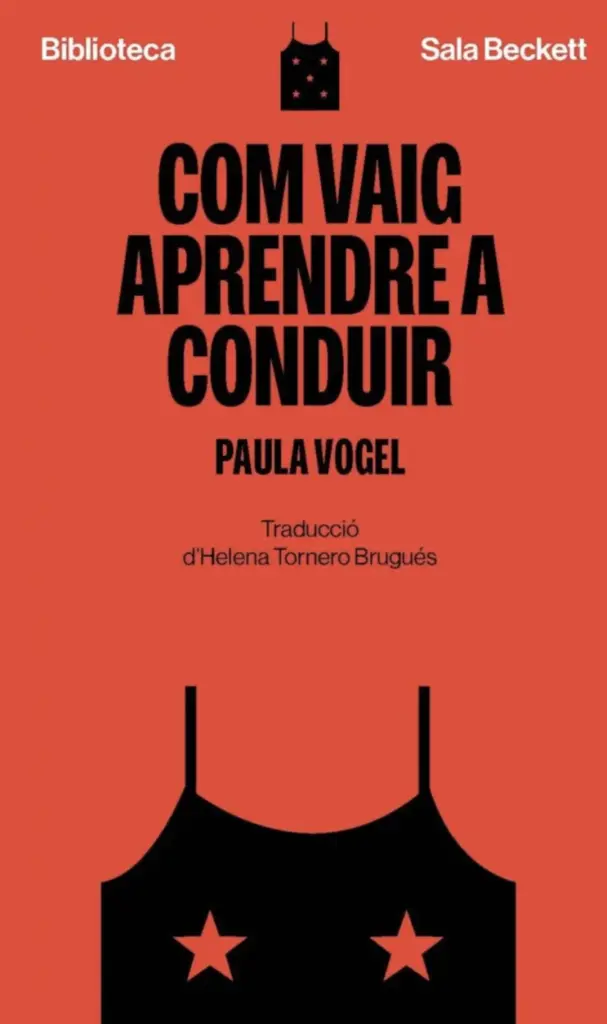
How I Learned to Drive
Paula Vogel
Translation by Helena Tornero. Prole. 98 pages. 15 euros
Premiered in the late nineties in the United States, this work marked a before and after. Its passage this season through the Sala Beckett must have been a milestone in becoming perhaps the best theatrical text of the season, brilliantly translated by Helena Tornero. And this is so because the abuse narrated by Vogel also seeks to delve into the abuser’s psyche: he is not a monster, but a human being who decides to abuse Little Cosette in full faculties, fully aware of what this will mean for him and her. The use of time by the author is splendid, between the present of a Cosette who tells us what happened to her when she was little and a parallel staging that goes back from the girl’s 18 years, in a distressing and terrifying journey.
The Ferryman
Jez Butterworth
Translation by Cristina Genebat. Comanegra. 160 pages. 12.50 euros
There are few plays that, when read, can aspire to be as or more interesting than seen on stage. And The Ferryman by Jez Butterworth is one of them. The plot in Northern Ireland in 1981, in a Catholic family waiting for the return of a brother amid the IRA prisoners’ hunger strikes, is novelistic in every sense of the adjective. This work is undoubtedly one of the best of the 21st century. The Carneys are a family trapped in a spiral of violence from which they cannot escape. And neither love nor passion for the present, nor the desire to turn the page, will save them. Butterworth wrote a very Chekhovian piece, with the mystical touches he usually impregnates his theatrical texts with.
Theatrical Anxieties Collected
Esteve Miralles
Arola. 192 pages. 18 euros
With one foot in and the other out, Esteve Miralles’s look at Catalan theater is lucid and daring. In this book, the author collects twelve essays published in the last twenty years that deal with anxiety and language, about Shakespeare, about Brecht, about Josep M. Miró and Josep M. Benet i Jornet. Sharp, wise analyses that put these authors in their place. The piece dedicated to language is especially current, highlighting the little care for form when Catalan goes on stage, with the struggle between speech and norm. We also highlight the text, from a decade and a half ago, in which he talks about the presence of Catalan theater in public spaces, so current that it is frightening.
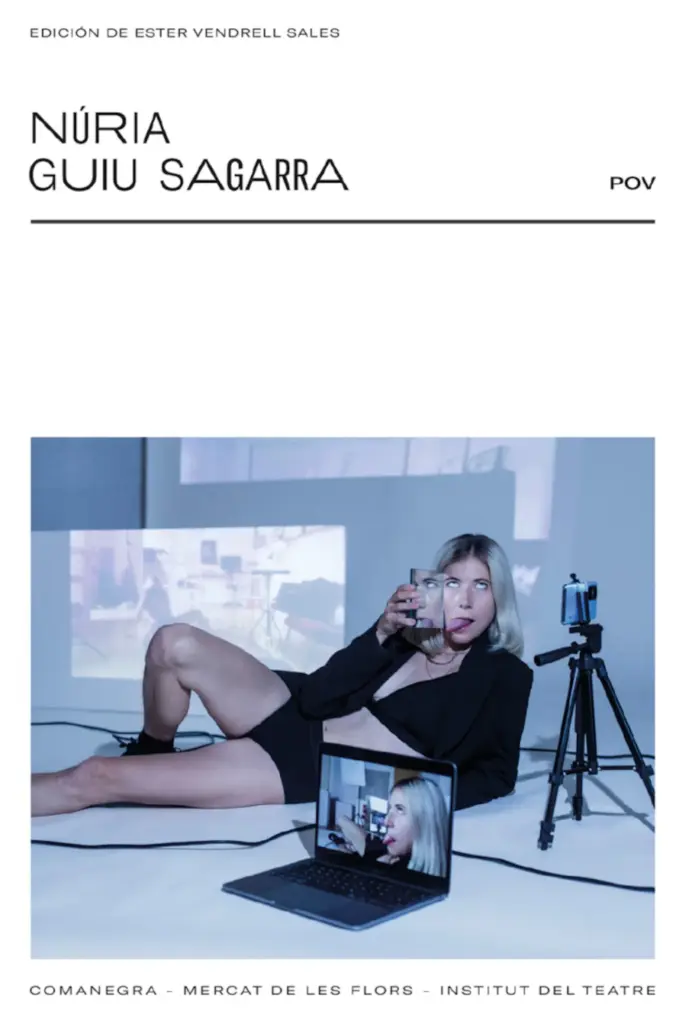
POV
Núria Guiu
Comanegra. 132 pages. 17 euros
Núria Guiu’s work as a choreographer and dancer has focused on body memory and identity, two fields in which she has excelled. Explaining it has never been easy. But this book, POV, achieves the difficult task of giving life with words to what has been thought to create with the body in a space. Roland Barthes, Judith Butler, Paul B. Preciado, and Remedios Zafra, among others, appear so Guiu can exhibit her conceptual ground and expose the meaning of her work. It is a very interesting look back and a book that allows us to enter the apparently inaccessible mind of someone who creates without the need to place adjectives. A warning: “Anthropology has become the best ally of my choreographic practice.”
Gastronomy
By Mar Rocabert
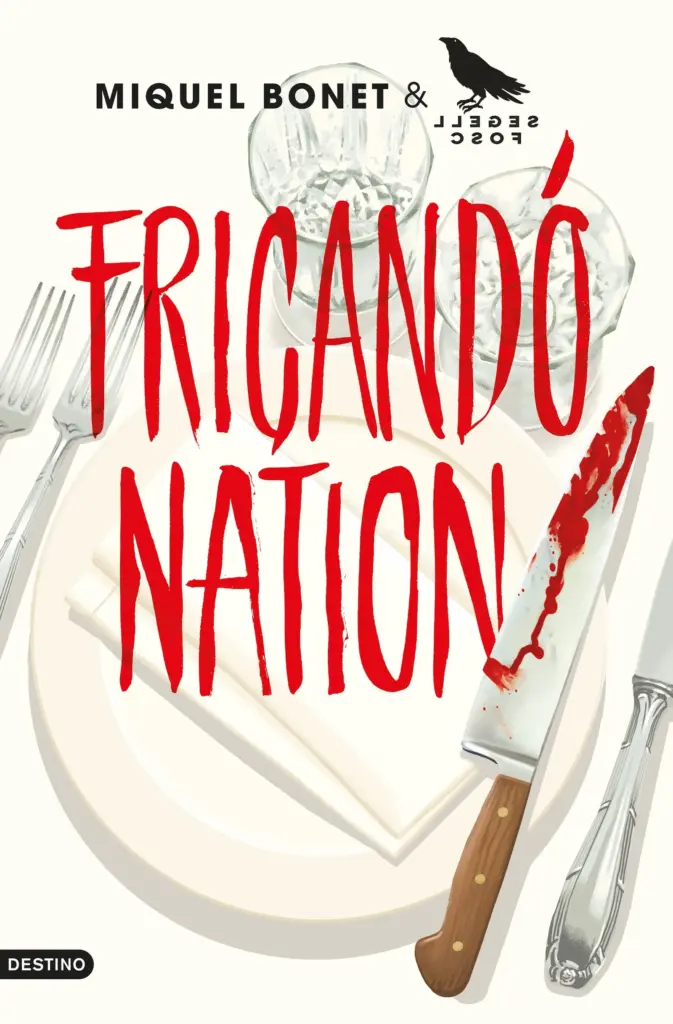
Fricandonation
Miquel Bonet
Destino. 296 pages. 20.90 euros @9.99
This is not an ordinary gastronomy book. You will not find recipes, techniques, or photos of incredible dishes. It is not Miquel Bonet’s style, who, if he writes about food, does so with all the satire of a local chronicler, as he defines himself. In Fricandonation, the real protagonists are two types of cuisine, traditional and considered high, seen as two catastrophically incompatible scenes. With the intention of portraying the era we live in, he weaves a thriller with fricandó as the engine of the story, while satirically portraying the pettiness of a restaurant model he considers rotten. With many echoes to current events, Roc Alafaixa’s story cannot end well.
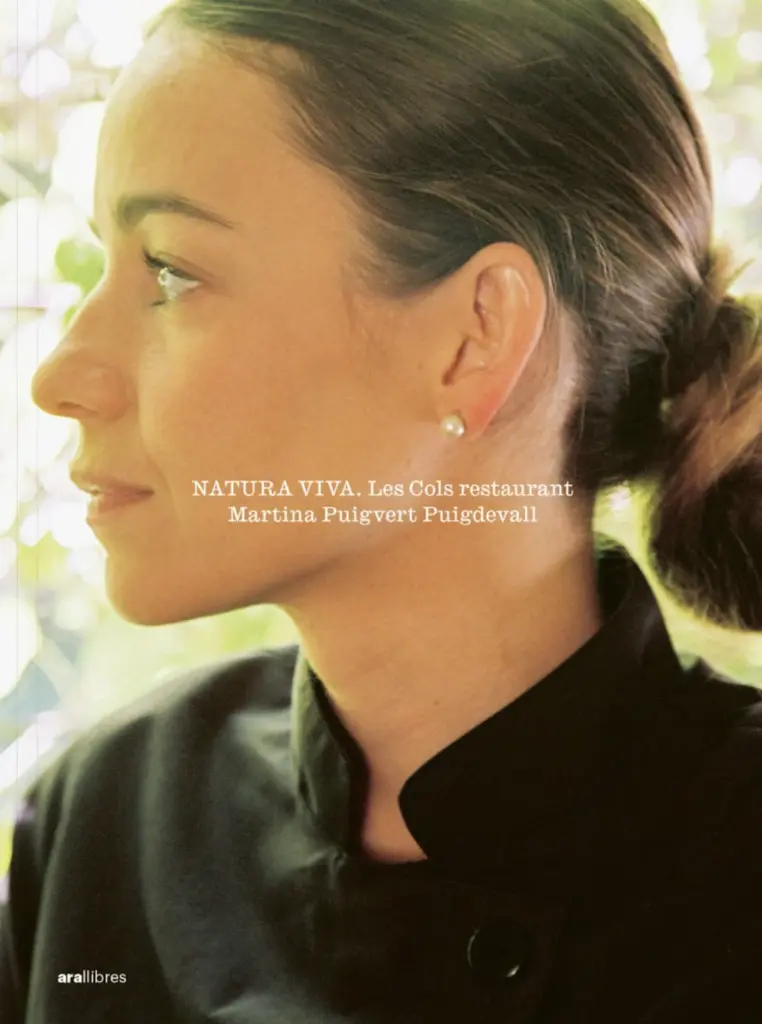
Living Nature
Martina Puigvert Puigdevall
Ara Llibres. 368 pages. 25.50 euros
Delicate in form and sensitive in gaze, Martina Puigvert Puigdevall is the head chef of Les Cols, the Olot restaurant founded by her mother, Fina Puigdevall. In this house, respect for the environment is radical. Their caviar is the beans of Santa Pau, and the flour they use most is buckwheat. You will not find sea fish, but all those products around them. All this and her passion for the natural spaces of Garrotxa is what you will find in this book, which she writes herself, mixing personal and family experiences with gastronomic information about her land, her garden, and her kitchen. Ordered by months, you will find recipes and the fruits that nature gives each season of the year.
Killing a Bar
Carles Armengol
Col & Col. 108 pages. 13.95 euros
Carles Armengol grew up among the tables and customers of his parents’ bar in Collblanc. A vital experience he called a curse in the book Collado. Life has led him to continue behind a bar, but more refined and strategically located at the entrance of the + Bernat bookstore, where he preaches rooted cuisine and has turned it into a reference place for neighbors. From this neighborhood venue, he wrote Killing a Bar, his latest book, a fiction story with Can Porró as the protagonist, which could be his family’s restaurant. It combines autobiography with a custom chronicle and political essay about the years that have stolen the soul of bars, due to labor precariousness and gentrification, leaving neighborhoods orphaned of their parishes.
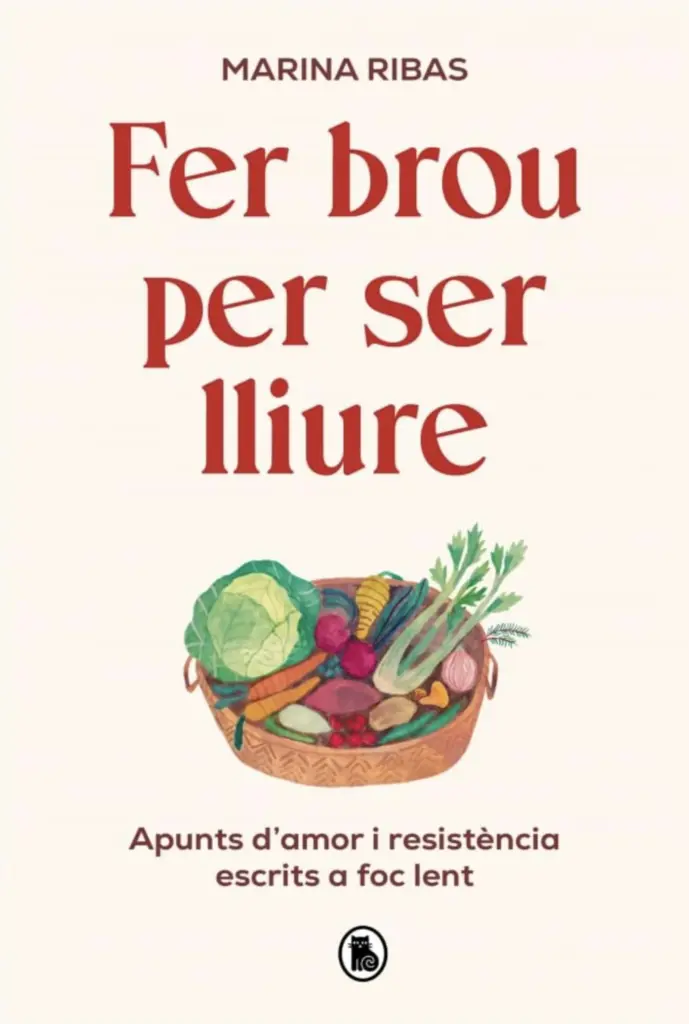
Making Broth to Be Free
Marina Ribas
Bruguera. 192 pages. 19.95 euros
Marina Ribas’s book, subtitled Notes of Love and Resistance Written Slowly, is an invitation to deceleration by entering the garden and kitchen to follow the rhythm of the seasons and live connected to the present. With training in education and nutrition, this Ibiza native (in love with her island) is happy writing about stoves, health, nutrition, and village life. After having published recipes, she now pours many more hopes into a volume that mixes personal chronicle with reflections on lifestyles that have no other purpose than to return to the essential, and not always easy, of seeing the kitchen as an act of love, memory, and resistance. It resonates with Cooking! Or Barbarism, by Maria Nicolau.
Music
By Luis Hidalgo
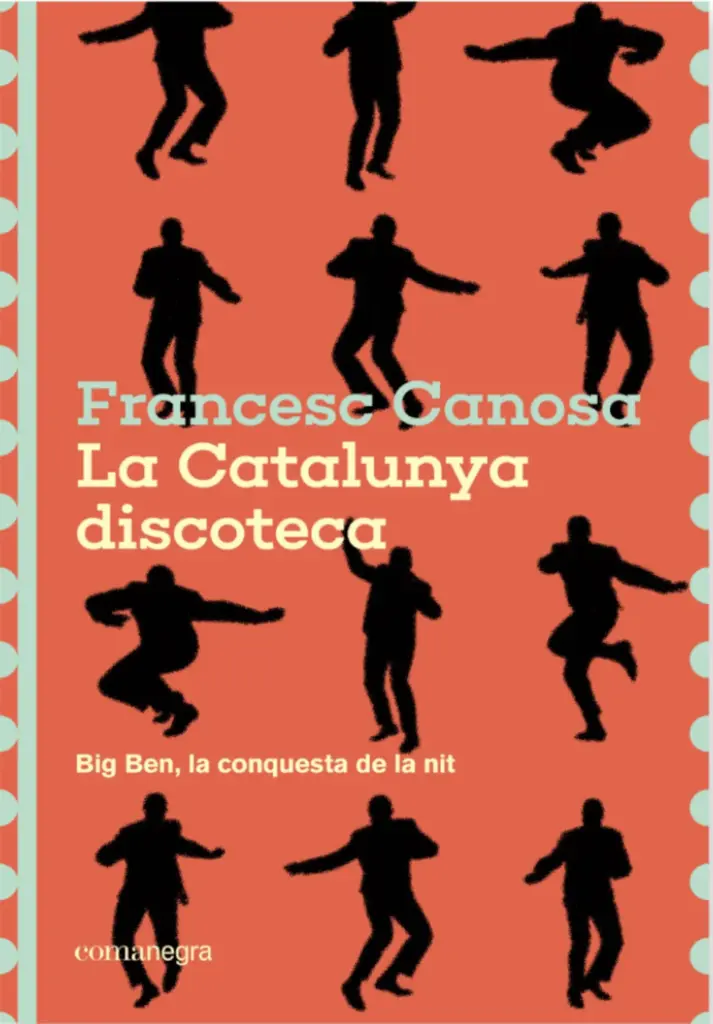
Disco Catalonia
Francesc Canosa
Comanegra. 240 pages. 19.50 euros
In 2010, High On Hope premiered, an excellent documentary that detailed the emergence of the rave phenomenon in Blackburn, near Manchester. Disco Catalonia operates similarly regarding the disco scene of inland Catalonia around Big Ben, located in Golmés, near Mollerussa, along the N-II. Between its opening in 1976 and closing in 2015 — it reopened later, but it was not the same — it was the dance capital and an Eden for those living in nearby rural areas, the place to go, the alternative to village bars. The book tells the birth, rise, and decline of a disco that brought the still-novice New Order to Mollerussa without passing through Barcelona.
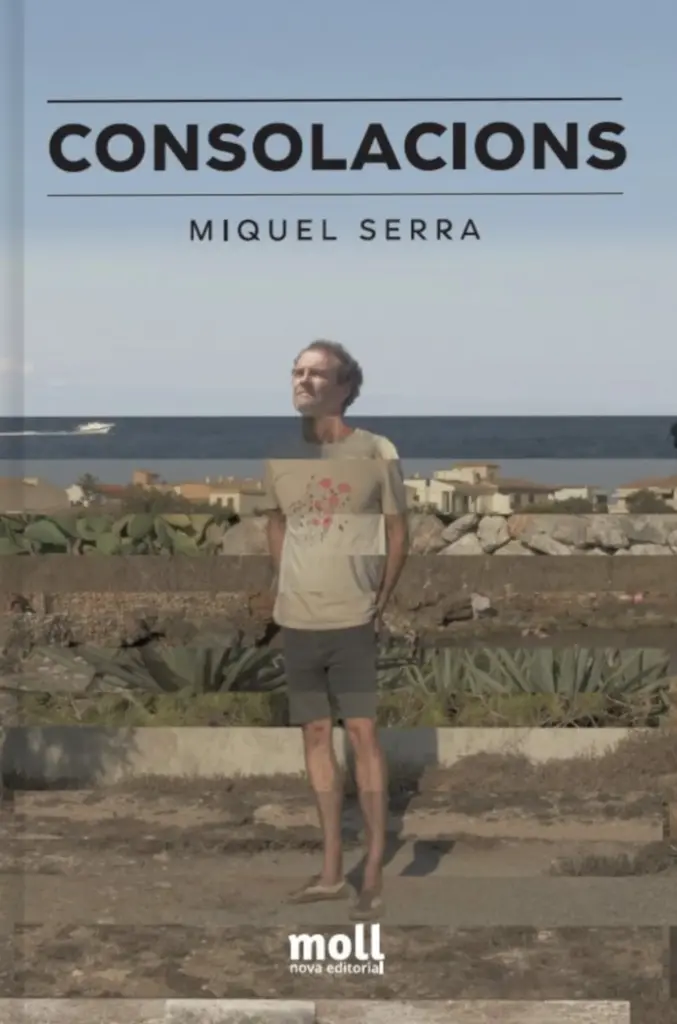
Consolations
Miquel Serra
Nova Editorial Moll. 167 pages. 17 euros
Miquel Serra is a musician, writer, agricultural technician, and bookseller. His third book is not a biography, nor an anecdote collection, nor memoirs, and it is all at once. A monolithic blog without full stops, with rather short sentences firing one after another (there is a reflection of Perec’s I Remember), the text looks at insignificant details that go unnoticed by eyes that only survive overwhelmed by the myriad of daily stimuli. His impulsive disorder does not end with the sentence that would be appropriate, “I will be very annoyed if new brilliant ideas come to me once I have delivered this to the publisher.” Consolations is a book in which it is impossible to lose the thread. And it carries a code to listen to Miquel Serra’s latest album.
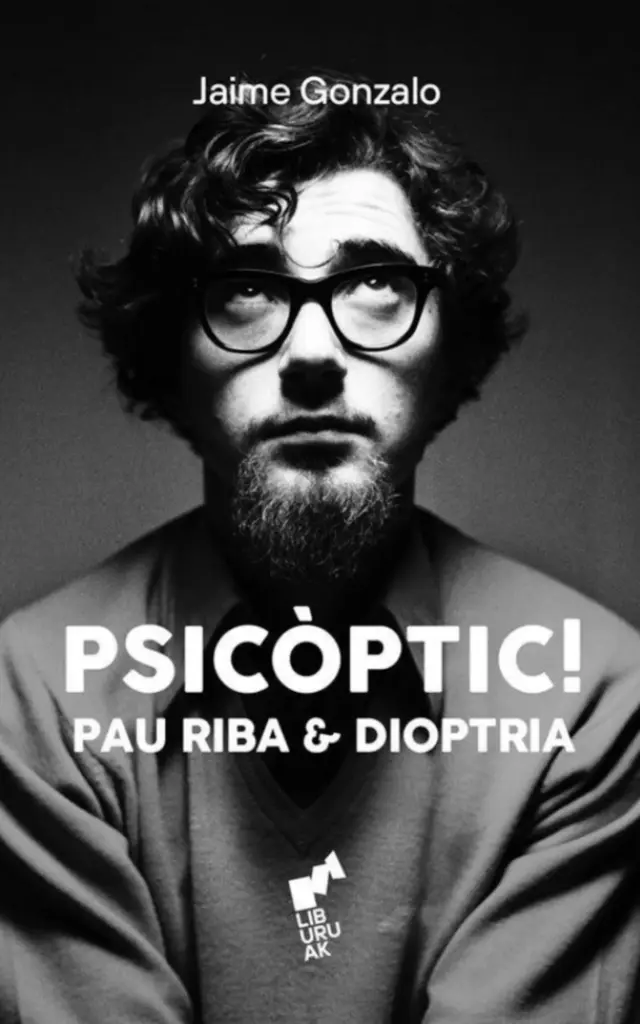
Psychotic. Pau Riba & Dioptria
Jaime Gonzalo
Liburuak. 176 pages. 23 euros
A disruptive album, a scourge to the bourgeois family, a record label that, in an unusual act, expresses its disagreement with the artist in the album’s inner notes. A two-part album that changed course halfway, with LSD in the middle, towards another sound. One of the key albums of Catalan and Spanish music of the 20th century. Jaime Gonzalo, a renowned music journalist, analyzes the context, causes, results, and Pau Riba’s opinions through archival work that manages to dot all the i’s and crosses all the t’s and reaches Me, the Woman, and the Toad. It is complemented with photos of the artist’s youth, who said he helped Catalan culture by destroying it. Such things are no longer said.
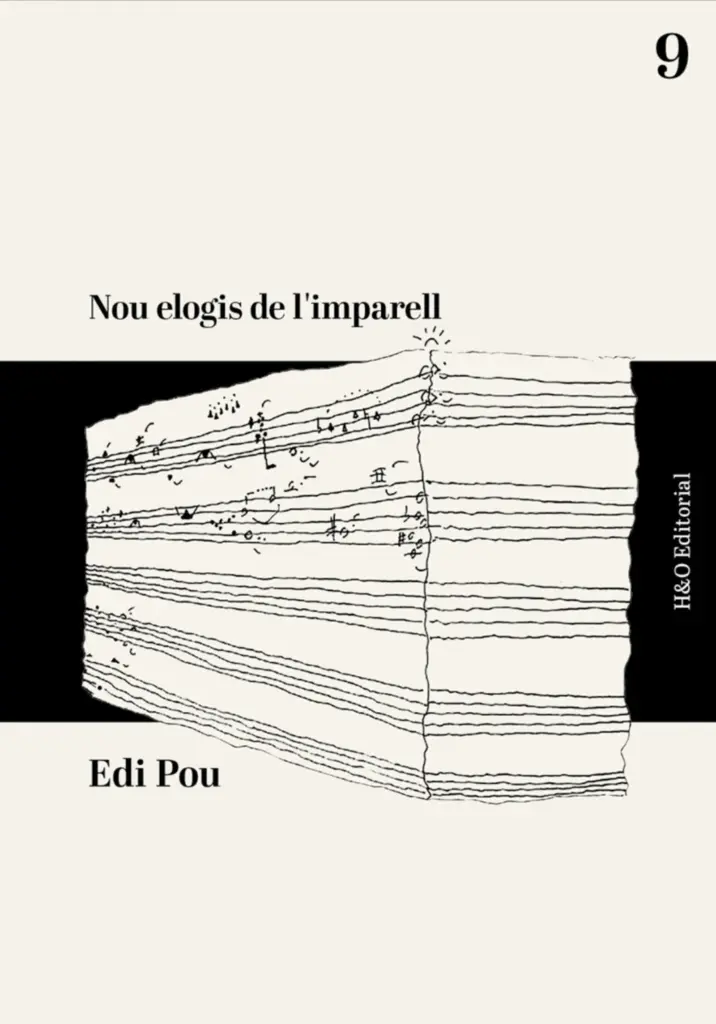
New Praises of the Odd
Edi Pou
H&O Editorial, 132 pages. 14.50 euros
Mongolian shepherds were played all kinds of Western music and at the end of each piece most said the same, whether classical or punk: it is military music. The reason? The binary beats that dominate our musical tradition, except for genres like copla (ternary beat), some flamenco palos (fandango, seguirilla, etc.), and others. In this pleasant and clarifying essay, the musician with journalistic training Edi Pou explains the reasons for this monoculture, its economic and cultural roots, and its consequences. Without catastrophism, suggesting varying the diet to open the mind to surprises. Our brain gets more excited if you break its rhythm. The essay gives clues and a suggestive listening list
Read more The 50 recommendations from ‘Babelia’ for World Book Day 2026