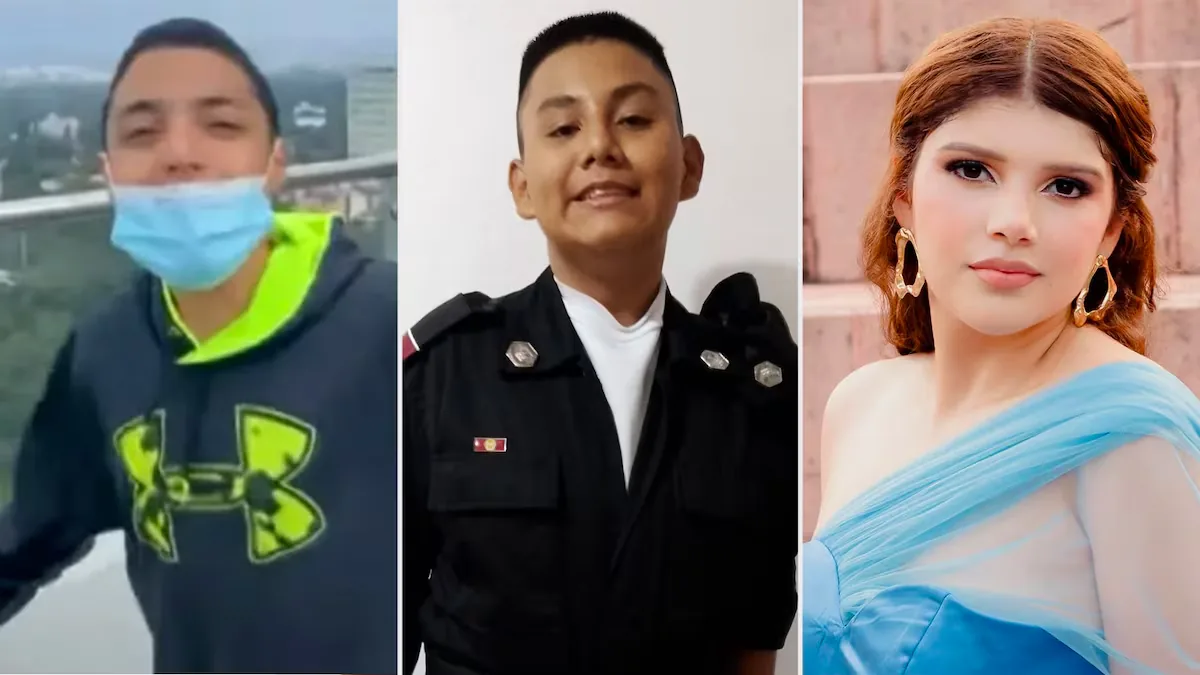





Zamir Pinto, 16, died in 2023 from injuries sustained at a militarized academy in the State of Mexico. Two years later, the directors of a military school in the capital handed Erika Torbellín the body of her 13-year-old son Erick, bearing signs of violence. Last week, Dafne Zapata, also 13, died of asphyxiation four days after starting a militarized summer course in Tamaulipas. Three children dead in three years. Three families shattered. In Mexico, centers with a high-discipline regime to train alleged underage cadets operate like any basic education school, under the umbrella of the Ministry of Public Education, separate from the armed forces, and without specific norms or supervision regulating their operation.
Read more Mexico negotiates the future of USMCA amidst Trump’s tariff escalation
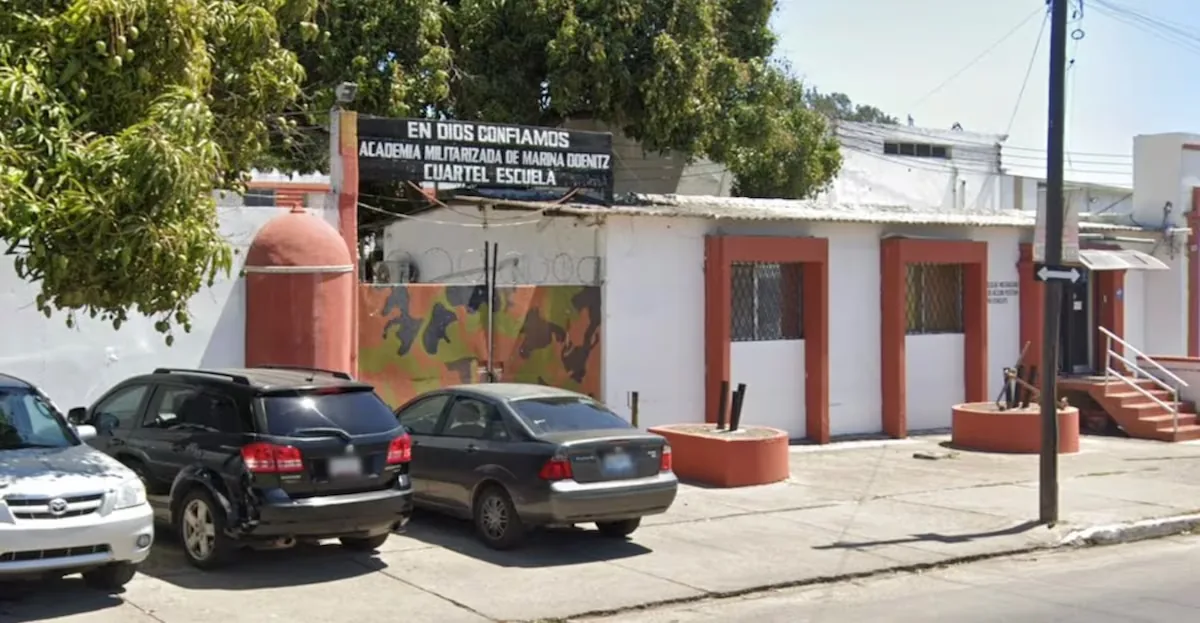
The so-called militarized academies combine academic training with severe discipline, sports activities, and civic-military boarding schools. “Discipline, the best way to make the most of time” and “Tradition, discipline, and honor” are some of the mottos under which these institutions operate. Many boast a link with the Mexican Navy or Army, but none are part of the Ministry of National Defense (Defensa). The agency clarified that it “has no relation whatsoever with the aforementioned academy or with any other facility of this type.” To attract families, they promise to strengthen character and train orderly and disciplined young people. Students take chemistry, physics, or mathematics classes like other children their age, but with militarized training, physical conditioning, military legislation, survival techniques, self-defense, and first aid. Students are called cadets.
In Michoacán, the Militarized Academy Mexico, a boarding school for secondary and high school boys, which started in Mexico City as one of the country’s pioneers, is located. Alonso Bermúdez, first commander and general director of that school, explains in a phone call with this newspaper that the profile of incoming students is “young people with a desire for self-improvement.” He denies that his academy functions as a “punishment” and details that his teachers are retired military personnel with degrees in subjects related to what they teach and with training in pedagogy or the studies required by the authority to teach. Bermúdez assures that beatings or mistreatment are not tolerated and that all training is done with discipline. He himself recognizes, however, that in other militarized academies, directors do resort to hitting students, those, he assures, with “a very great neglect.”
His academy does not accept students who are children of drug traffickers or criminals. “Only children from honorable families,” who are completely healthy and “do not have homosexual tendencies,” he mentions without considering the discrimination this entails. The academy has not shared the costs, although it compares prices with private schools like LaSalle or Tec de Monterrey, with tuition fees ranging between 15,000 and 30,000 pesos per month. The director shares that it receives inspections like other secondary and high schools.
Although they have been decreasing, they have existed for decades. At least 15 are prevalent across 11 states because in some families there is a culture of thinking that tough discipline is an alternative to correct behavioral problems in adolescents, or even as a sexist punishment. “Supposedly so that boys ‘become men’,” shares Juan Martín Pérez García, from the Red Tejiendo Infancias México.
Discipline Without Clear Rules
The cases of Zamir Pinto, Erick Torbellín, and Dafne Zapata, occurring in just three years, expose the turbulent conditions to which minors are subjected and call into question the responsibilities of institutions. The SEP provides registrations to schools, although it does not classify militarized schools under a specific category, something that happens with other educational models that receive Official Recognition of Validity of Studies (RVOE) regardless of the pedagogical scheme. “It doesn’t matter if it’s an active, Cayetana, religious, or militarized school,” assures the specialist.
Read more Video analysis | The cancellation of elections in Nicaragua consolidates Daniel Ortega’s regime
Pérez explains that since 2011, the United Nations Committee on the Rights of the Child requested the Mexican State to separate military dynamics from educational ones for minors under 18. “Early recruitment of indigenous adolescents was also eradicated. From the reforms of that year, it was established that any militarized school or one with military discipline —even if administratively dependent on the Defense Ministry— should be under the pedagogical supervision of the SEP.”
Another aspect contributing to the neglect is that of inspections. The number of inspectors differs in each region, so there may be areas of the country where each official is in charge of about four or five schools, while others must attend to many more, exceeding human capacity to do so. Furthermore, there is no data on the results of these inspections. “There is no transparency about who supervises, how often, and what is evaluated. This generates total discretion that depends on who is in charge or the commitment of the area supervisors, opening the door to possible acts of corruption,” states Pérez García. This newspaper contacted the SEP to request information on the operation of the academies and their management but received no response.
Furthermore, the training of staff in charge of students is ambiguous. In an ideal situation, those working with children and adolescents should comply with the pedagogical standards regulated by the SEP, an obligation that seems to escape military institutions. “In many of these cases, instructors are not certified teachers or pedagogy professionals. They are often retired police or military personnel, self-taught individuals in the subject, which represents a very serious risk to the integrity of minors,” he states. The situation became evident after the death of the three victims, as some of the workers lacked such training.
Behind this, there is also a big business. In addition to high tuition fees, academies offer high-cost summer courses, influenced by the militaristic and far-right culture coming from the United States, as documented by the Tejiendo Infancias network. Some parents enroll their children with the idea that they should not “waste time” during holidays. “Children need rest, free play, and socialization,” Pérez demands. Geographically, they operate almost throughout the country, with a higher concentration in the north and center, and less presence in the south. “Their target audience is usually close to military families or families looking for ‘a firm hand’,” he shares.
Three deaths in three years highlight a problem that has gone unaddressed for decades in the country: discipline, order, and character formation seem to be above the rights of minors. “The SEP’s omission in allowing these models to continue operating is serious. It places the blame on families or solely on schools, when it is a state responsibility,” emphasizes the childhood expert.