








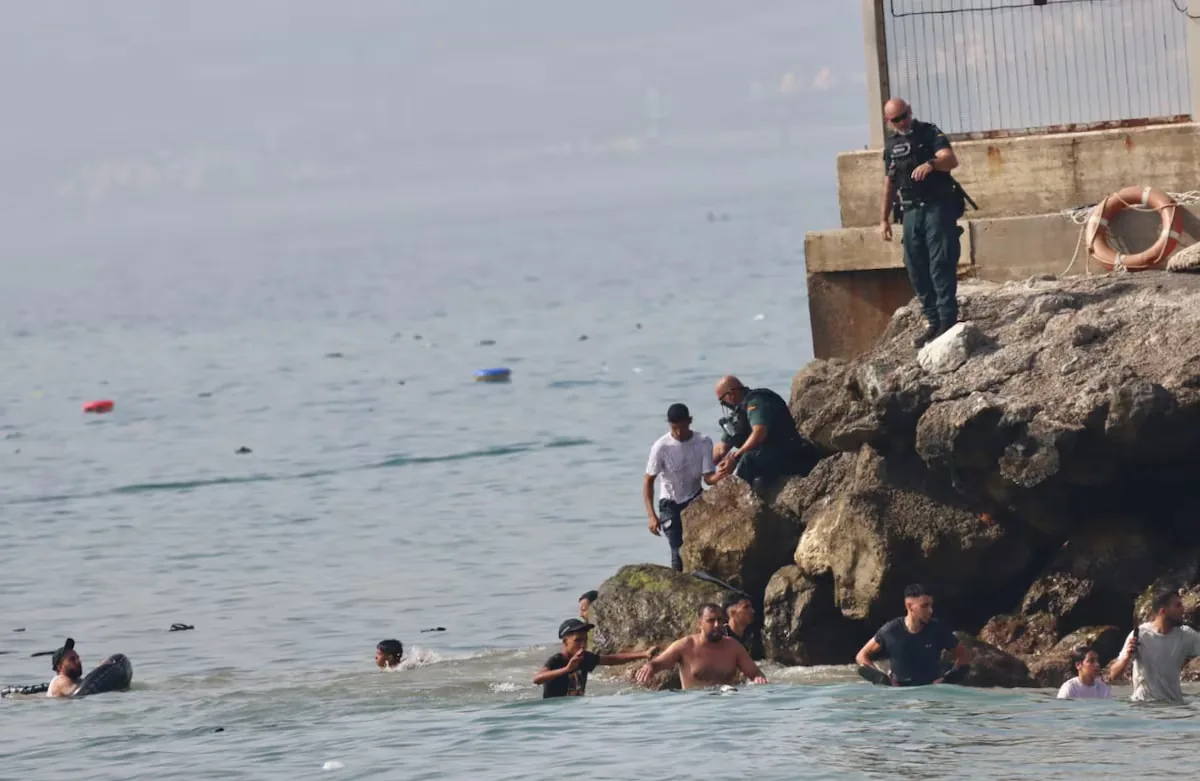
“We are overwhelmed and I fear this will not end in two days.” “We are one step away from operational collapse.” “It is worse than the migration crisis of May 2021.” National police officers and civil guards stationed in Ceuta denounce the situation they have been facing for a week due to the massive arrival of migrants swimming after a recent Supreme Court ruling prohibited applying the expedited rejection at the border to those arriving this way, colloquially known as hot returns. The Ministry of the Interior announced this Thursday that it “is working with more resources, means, and personnel,” but the agents consulted by EL PAÍS emphasize that the security and humanitarian situation “cannot be fixed just by adding more agents.”
Read more Arrested the alleged arsonist who caused the fire that confined 33,000 neighbors in Anoia
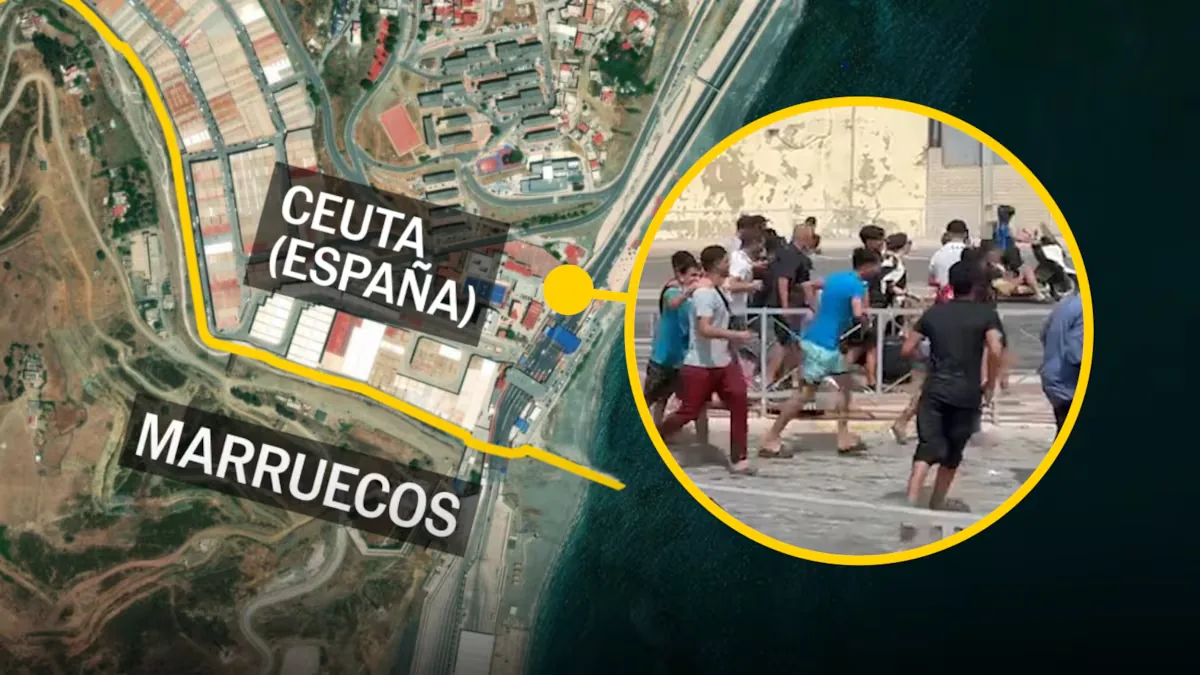
Rachid Sbihi is the provincial general secretary in Ceuta of the Unified Association of the Civil Guard (AUGC, the majority among the agents). While speaking on the phone with this newspaper, he describes what he sees aboard his vehicle: “What we know as the new road, which runs from the breakwater to the city, is completely full of immigrants.” Sbihi assures that this very morning, a dozen agents could not contain the group of 300 people they were guarding after being rescued at sea. “They ran away and there was no way to stop them. We don’t know what to do,” says this agent, who demands that the Interior Ministry provide them with written operational instructions on how to act. “The situation is critical,” he points out, and recalls that in recent days they have recovered more than 25 bodies of migrants drowned while trying to swim to the city.
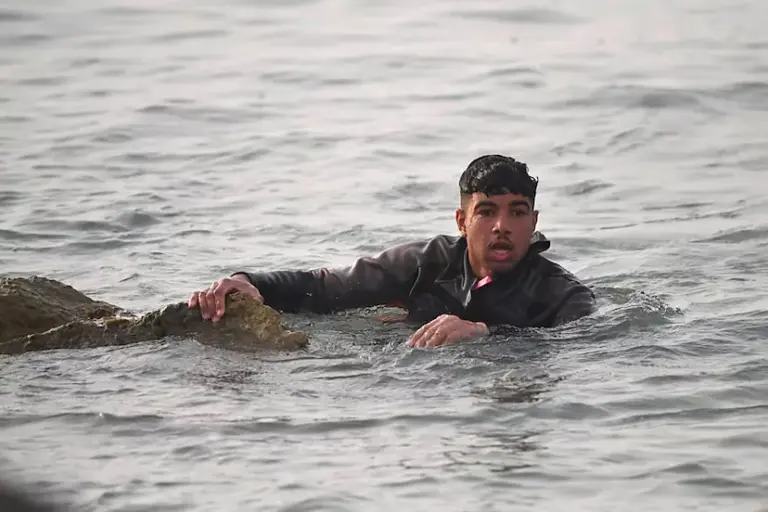
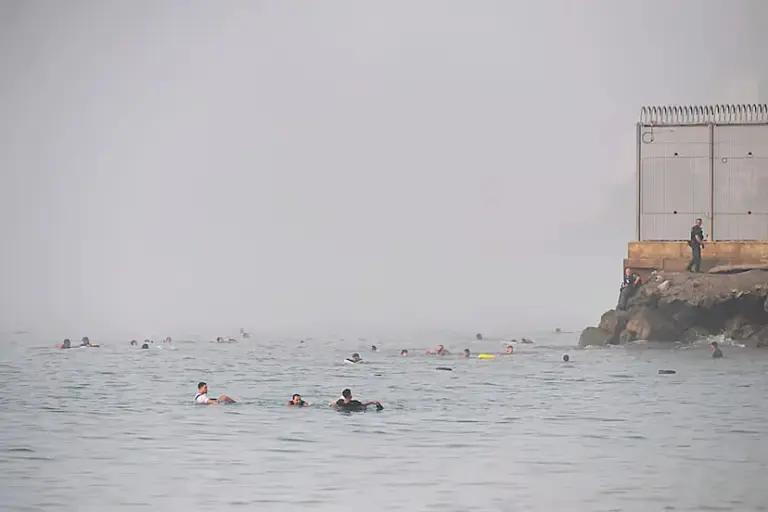
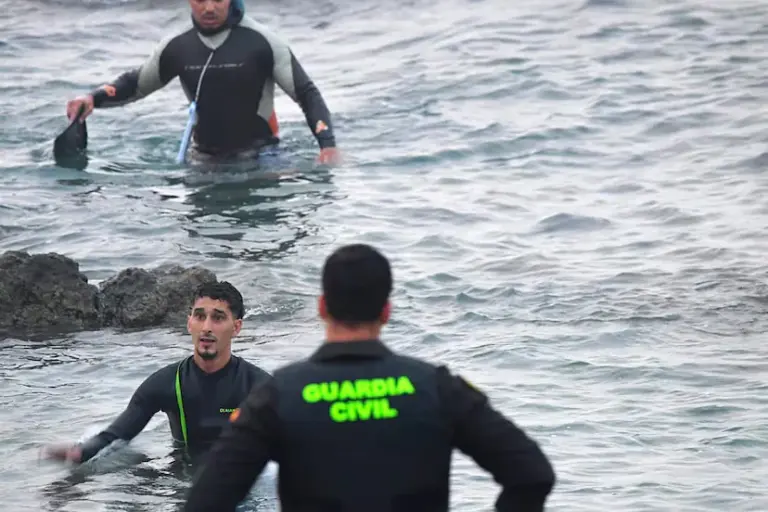
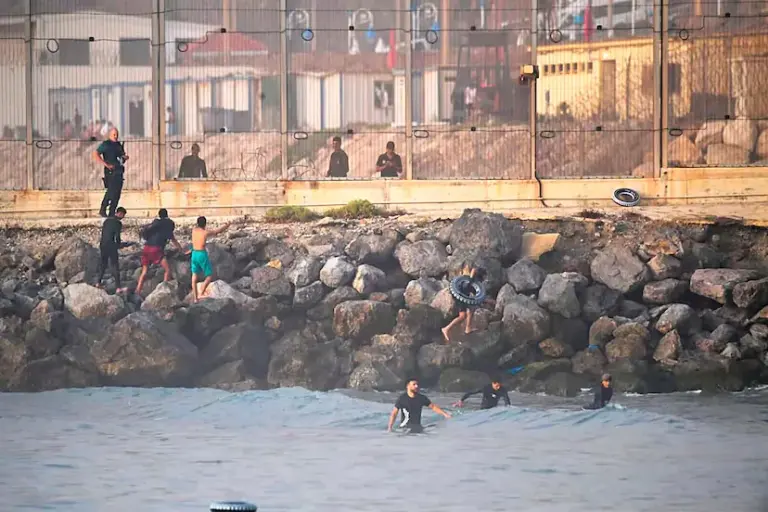
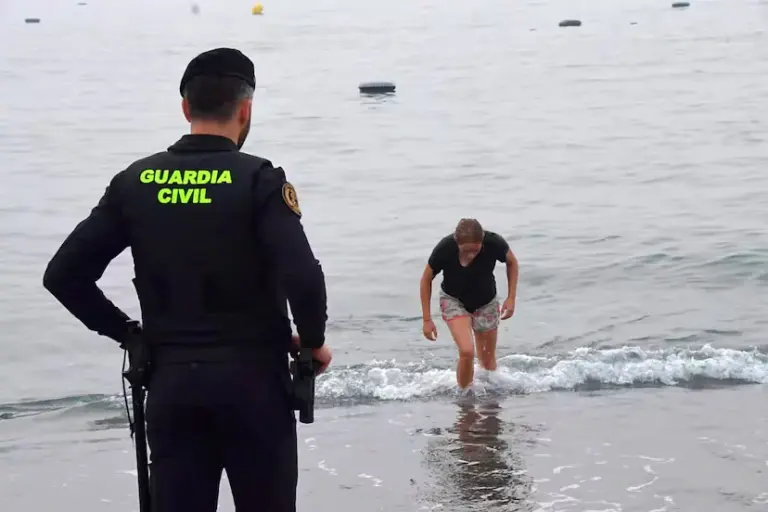

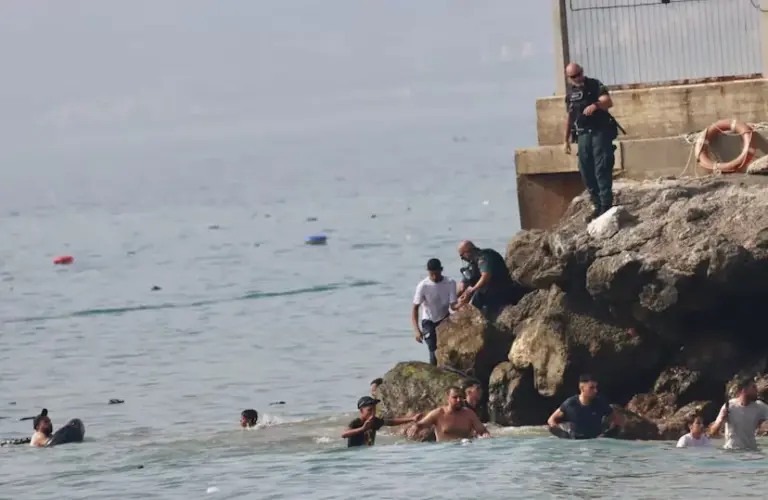
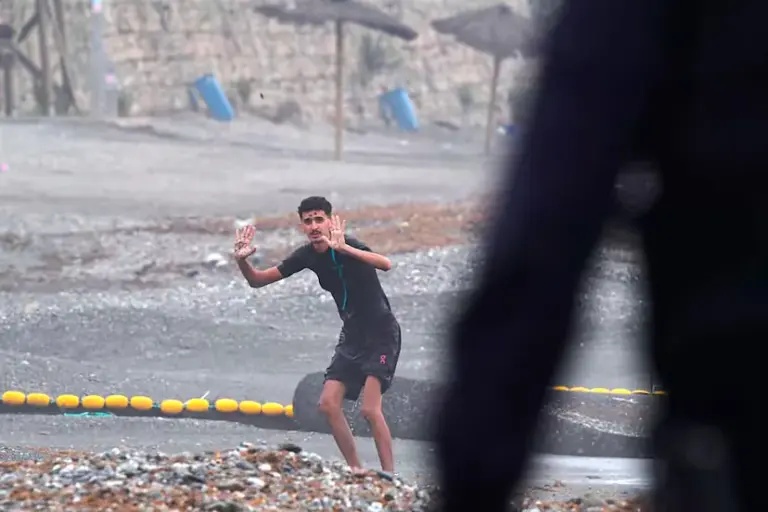
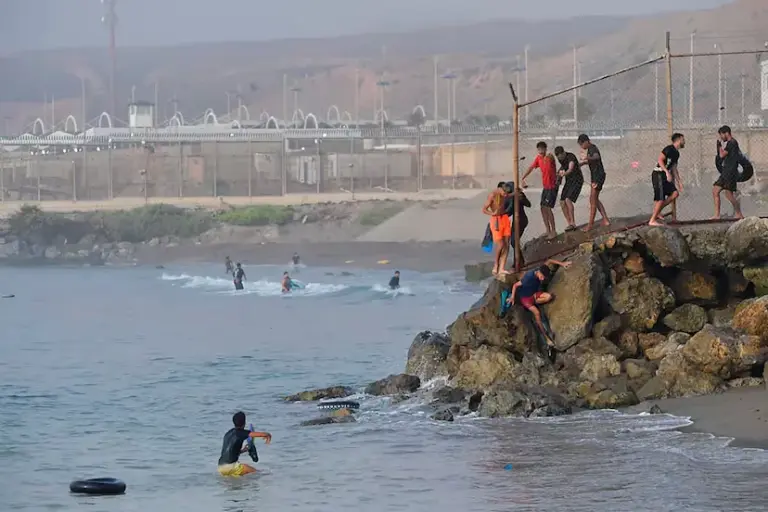


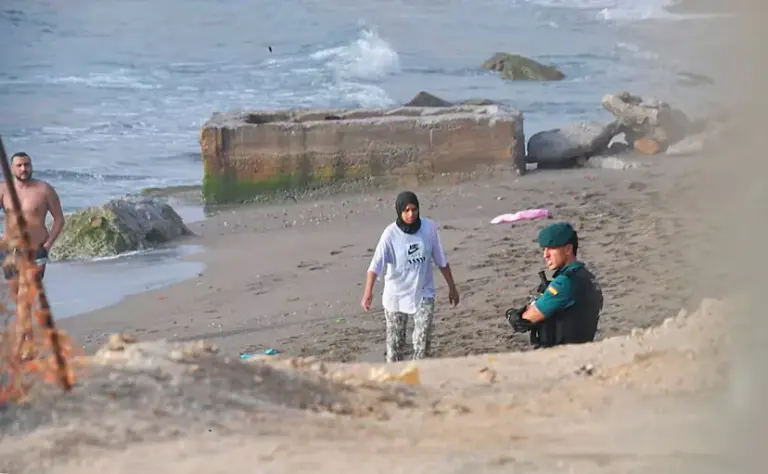
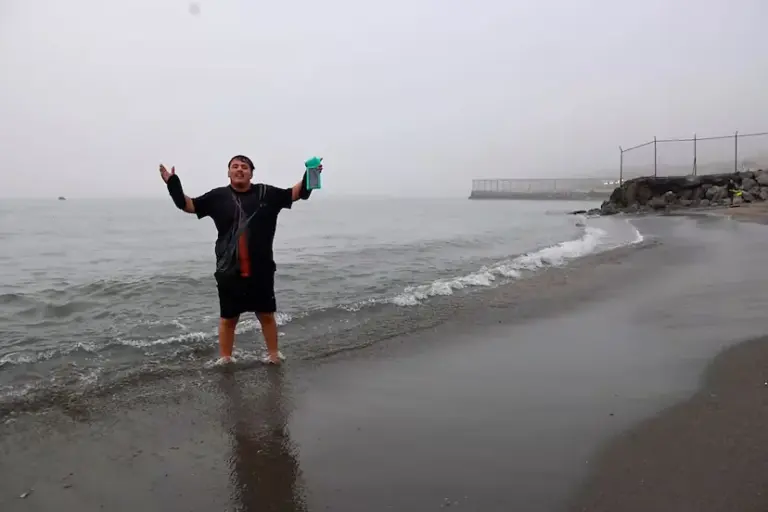

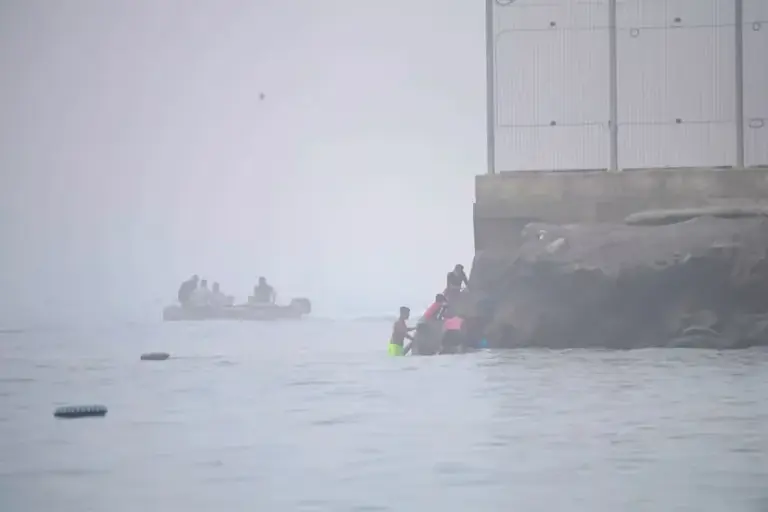
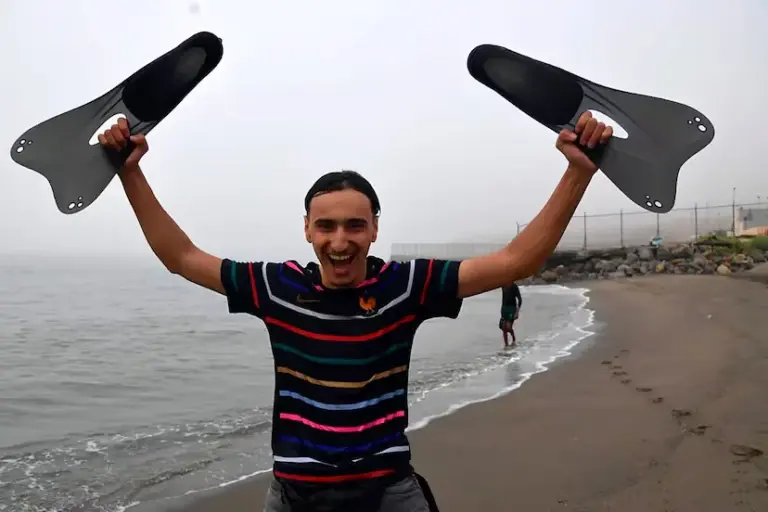


If the civil guards are the first line at sea and then at the breakwater facing the massive arrival of migrants, the national police take on the next step, which is to record, register, and open the file for a future expulsion of all of them. “The Foreigners’ Brigades are overwhelmed,” says Aaron Álamo, Organization Secretary in the autonomous city of the Unified Police Union (SUP). When asked to compare the current situation with what was experienced also in Ceuta in May 2021, when thousands of migrants entered amid the passivity of Moroccan authorities, Álamo does not hesitate to speak of collapse: “The current one is worse. That lasted two days and they could be expelled little by little. Now we have been a week, it doesn’t look like it will stop, and on top of that, we cannot reject them at the border because of the Supreme Court ruling.”
Therefore, besides an urgent and sustained personnel reinforcement, this union representative calls for the immediate opening of a new Temporary Foreigners’ Reception Center (CATE) due to the saturation of the current one, to be able to attend to the migrants who keep arriving and provide them assistance, as well as to identify them and start administrative procedures. And what to do so it doesn’t happen again? “That’s up to the politicians, but the immigration law should be modified so that those arriving by swimming can be rejected again,” he points out.
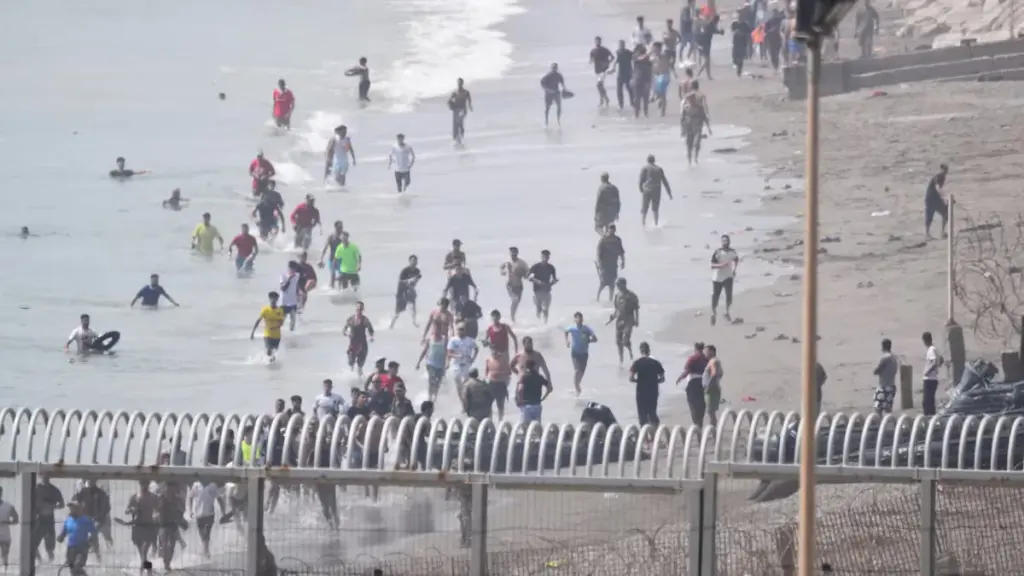
Their union, the SUP, issued a statement mid-morning focusing on one of the short- and medium-term consequences of what is happening these days in Ceuta: the impossibility of expelling many of those arriving due to lack of personnel and means, but also legal resources. “Each interception will mean more identification, more custody, more legal assistance, more interpreters, and more administrative procedures for Foreigners and Borders Brigades that have been working with insufficient staff for years.” For the SUP, one of the worst consequences will be that all this consolidates the perception that “irregularly crossing the border ends up having few practical consequences and that, once on national territory, the return will be extraordinarily difficult to execute.”
Judicial Police (Jupol) also calls for reforming the immigration law and adds the need to sign bilateral readmission agreements with the countries of origin and transit of irregular immigration, starting with Morocco. “Without swift returns or readmission agreements, Spain will continue to suffer this pull effect,” it says in a statement referring to the Supreme Court ruling, which it points to as the cause of what is happening these days in the autonomous city. Its spokesperson, Ibón Domínguez, also uses the term “collapse” to define the current situation and broadens the focus of the consequences by assuring that this massive entry will also affect “citizen security.”
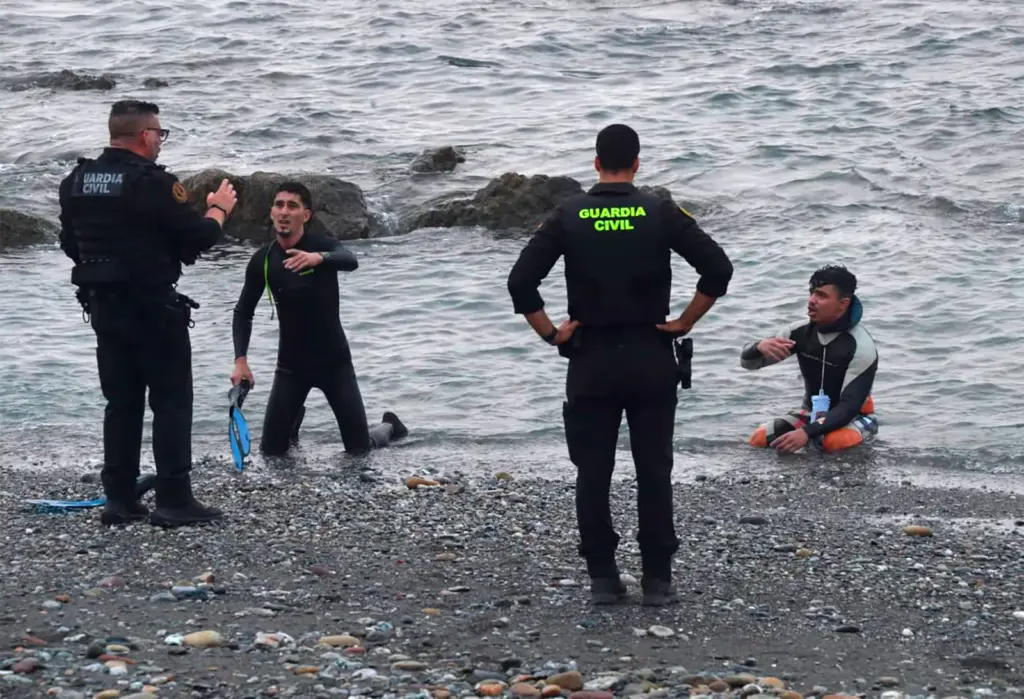
The spokesperson for Justice for the Civil Guard (Jucil), Agustín Domínguez, points in the same direction by denouncing that the current situation “is a powder keg. There is no capacity to control and identify those arriving. They wander around the city.” Domínguez adds that the agents of the armed institute deployed in Ceuta, about five hundred, “are suffering brutal physical and mental wear.” And he talks about the need to immediately reinforce the staff with “400 agents,” almost doubling it. “Those in Ceuta are exhausted.” From the Directorate General of the Civil Guard, they assure that personnel is already being mobilized to Ceuta with a subgroup of the Reserve and Security Groups (GRS, approximately twenty agents) joining the four already deployed there. Another boat has also been sent to collaborate with the eight boats deployed, they add.
The Interior Ministry assures that both this department and the rest of the ministries involved in migration management (Inclusion, Migration and Social Security, Territorial Policy and Childhood) “are acting in coordination to respond with the greatest speed and efficiency to the situation in Ceuta.” Fernando Grande-Marlaska has announced that he will travel this Friday to the city “to follow the evolution of the situation and hold meetings with the authorities of the autonomous city, the Government Delegation, and the commanders of the National Police and Civil Guard.” The ministry also wanted to clear doubts about an alleged lack of cooperation from Rabat, as happened in the May 2021 crisis, and has assured that “the Government of Morocco is cooperating loyally and permanently with Spain and collaborating closely to face this situation. The intervention of the Moroccan security forces is stopping the arrival of numerous people trying to access Ceuta from Moroccan territory,” it added.