






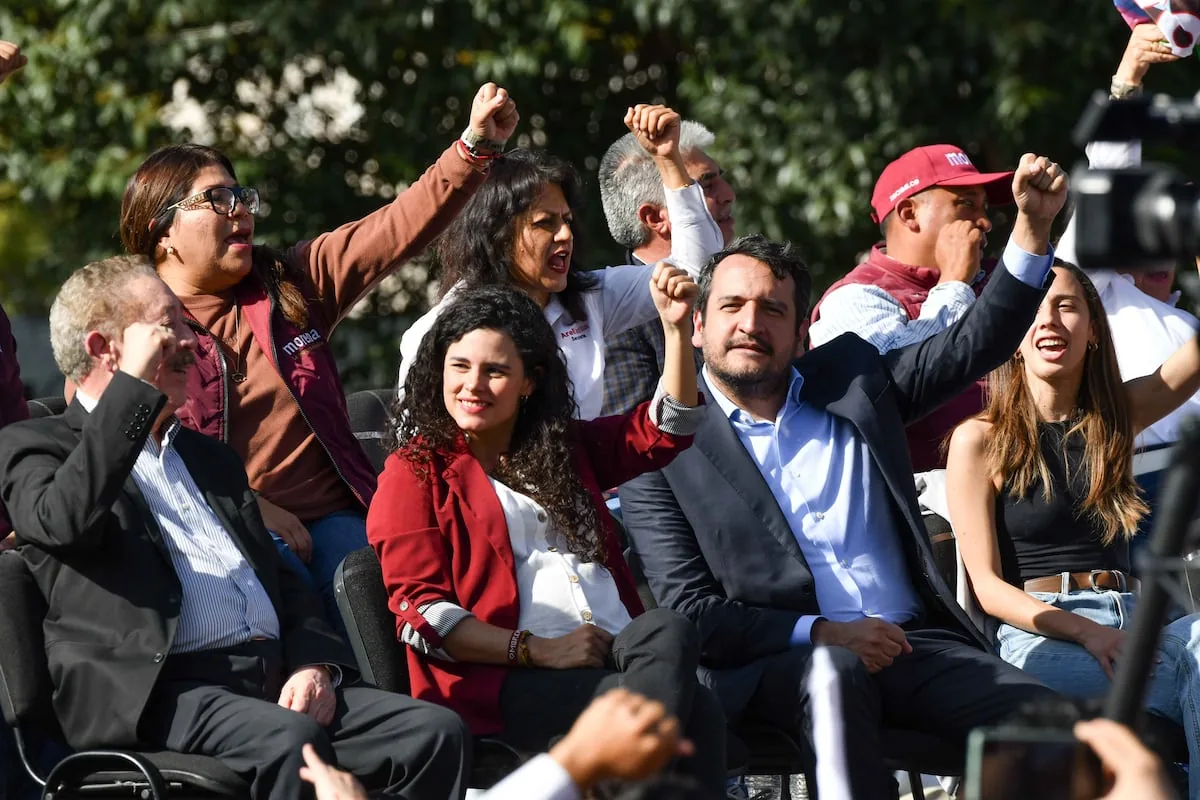
Las Muertas, the indispensable Luis Estrada’s version of the eponymous work by Jorge Ibargüengoitia (1928-1983), has been in theaters for months. With equal success, another online service is streaming La Oficina, the Mexican version of a global classic. Morena could see in both productions clues to understand the urgent return of Citlalli Hernández to the party’s leadership.
It is rightly said that Ibargüengoitia never loses relevance. In the country where nothing happens and when it does, nothing happens, the works of the Guanajuato writer, sharp without betraying a style devoid of loud artifices, were already canon when Morena came to power in 2018, only to increase their indispensability if one wants to understand the delusions of double-morality power.
Filmmaker Luis Estrada delivered in La Ley de Herodes (1999) and El Infierno (2010), among others, portraits that entered the national gallery with great acclaim, denouncing the horror of Mexican politics without ceasing to laugh. In Las Muertas (2025), he borrows from Ibargüengoitia his classic about a crime that marked an era to recreate scenes of the enormous social corruption that did not remain confined to the 20th century.
The original plot — respected — concludes in the government of López Mateos, that strange idol of Obradorism, who vindicates him without frowning over the detail that the hard hand that was always Díaz Ordaz led the police politics of that six-year term (1958-1964) from the Ministry of the Interior. Sixty years later, Morena indulges in nostalgia for the supposed beatitude of the people then and now.
The problem is that that great party took the simulation of forms seriously, while the supposed great party of today imposes a dizzying pace on the work of hollowing out its egalitarian promises, not to mention in substance, but even in the opulence of its public behaviors. Power made Morena dizzy in record time, and they do not even realize that their luxuries are not invisible.
The leadership of Luisa María Alcalde as president and Andy López Beltrán in Morena’s Secretariat of Organization is a longstanding problem, and few things are less efficient than a party leadership with declining performance. And that some of this second generation of Obradorism dedicate themselves to the vie en rose makes a mockery of President Sheinbaum’s promise of austerity.
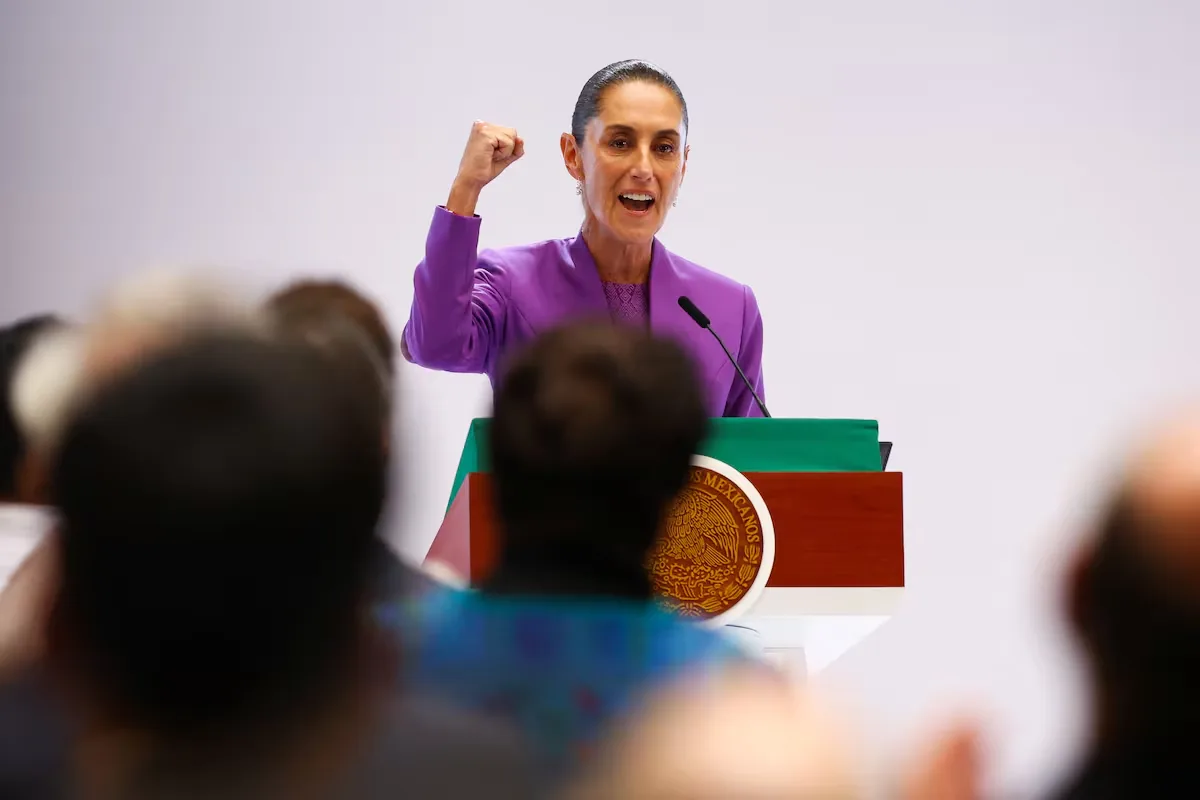
Claudia Sheinbaum needs someone in the party who embodies the promise not only of credible Franciscanism but also free of Instagram posts about trips to Tokyo or weekend getaways while the country’s economy teeters on the edge. If Alcalde and López Beltrán still want to contribute, they can ask the president for some tourism portfolio and promote national gastronomy. That would be a good service.
Las Muertas chronicles, besides a criminal saga about those pimps whose real nickname was the Poquianchis, a society where the people get by as best they can, with accommodating values at the limit of survival while political and economic power patents a sure privilege. Everything that was wanted to be changed since ’68, and everything Morena seems to long for from 2018 onward.
Alcalde and López Beltrán had their chance to reveal themselves as dynamos. And although she can boast her years in opposition while he cannot even dream of it, without being too distant that yesterday of an opposition activist, such memory aged so badly that, in Las Muertas, she and he are more than a warning of a Mexico no one wanted to return to; they have the score of the perfect dictatorship they seem to long for.
Being of a different style, the other popular series can also offer some lesson to the novices who, despite multiple chances, still fail to bear fruit. Alcalde and López Beltrán would not be the first, it must be said, who do not understand what is happening to them, those who believed themselves in the fullness of power, as the PRI member Fidel Herrera once said, so different and yet so similar to any Morena member.
Reducing La Oficina to a portrait of office life does it little honor to an attempt that overflows with good dialogues and punctuality in recreating life in corporations (which could also be bureaucratic offices). It is also the return of the chilango against the province (indeed, it was supposed that we no longer said provincial, that is, “conquered”), but who said satire must avoid discomforting and even offending conventions, old and new.
Read more MoMA PS1 celebrates 50 years of radical proposals and artistic freedom
And since it is not only about office life, in those episodes, amid some laughter, Alcalde and López Beltrán might understand that, “guys, the president just did what in English is called a ‘take over,’ or in pure Spanish: a hostile operation to take command away from you even if you remain in your positions for the moment. And what remains for you will be dynamics like La Oficina but in charge of public funds.”
To continue in the eighties language, in La Oficina a daddy’s boy torments an entire team condemned to mediocrity of results not because of the lack of quality of the collaborators, but because of the absence of packaging and leadership of someone who is not removed because family is family and living off the budget, it was known since the times of Las Muertas and anyone knows, even office workers, is a mistake.
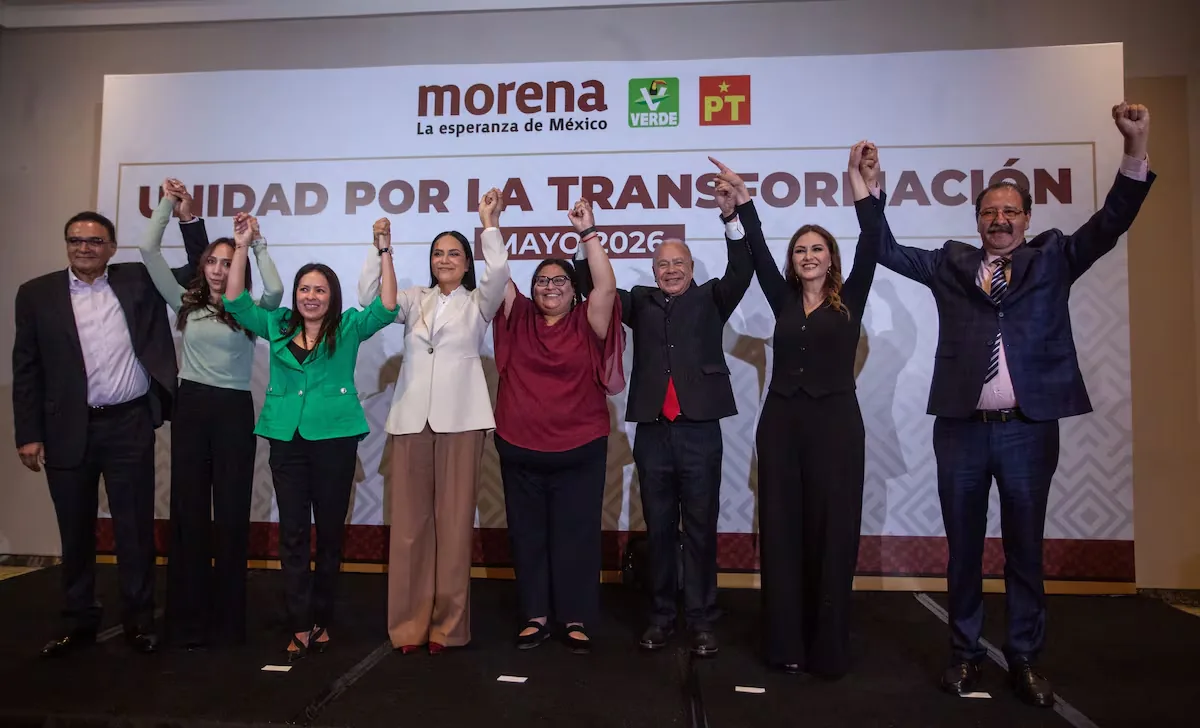
Since President Sheinbaum cannot afford her party’s legions to suffer a major setback in the elections, especially in an environment where gasoline prices have soared while tomatoes and tortillas pretend to become luxury items that Morena austerity supporters flaunt on their networks, she decided, as she said in 2021, the sharp turn of “back to the basics.”
Citlalli Hernández is that return to the base whether Alcalde and López Beltrán stay or not. She returns because the National Palace urgently needs to align the squads towards 2027, the year not only of the renewal of 17 governorships, San Lázaro, and hundreds of municipalities, but the date that will mark for the president the possibility of consolidating a government that in its own name can think about defining the succession in 2030.
And Sheinbaum cannot do that, trace a route, if Alcalde believes that the columns singing to her the swallows came only from the grim minds of reporters like La Alarma, excellent protagonists in Las Muertas; nor could she head towards the midterm referendum of the 2027 legislative elections if she has in the party’s second place someone who, like in La Oficina, believes that blood gives eternal rights.
Because as Germán Labrador Méndez said in an article in El País, “a generation ages socially when it learns to reproduce — in its own terms — the world it once confronted.” Only Alcalde and López Beltrán know if they are still in time to rejuvenate.
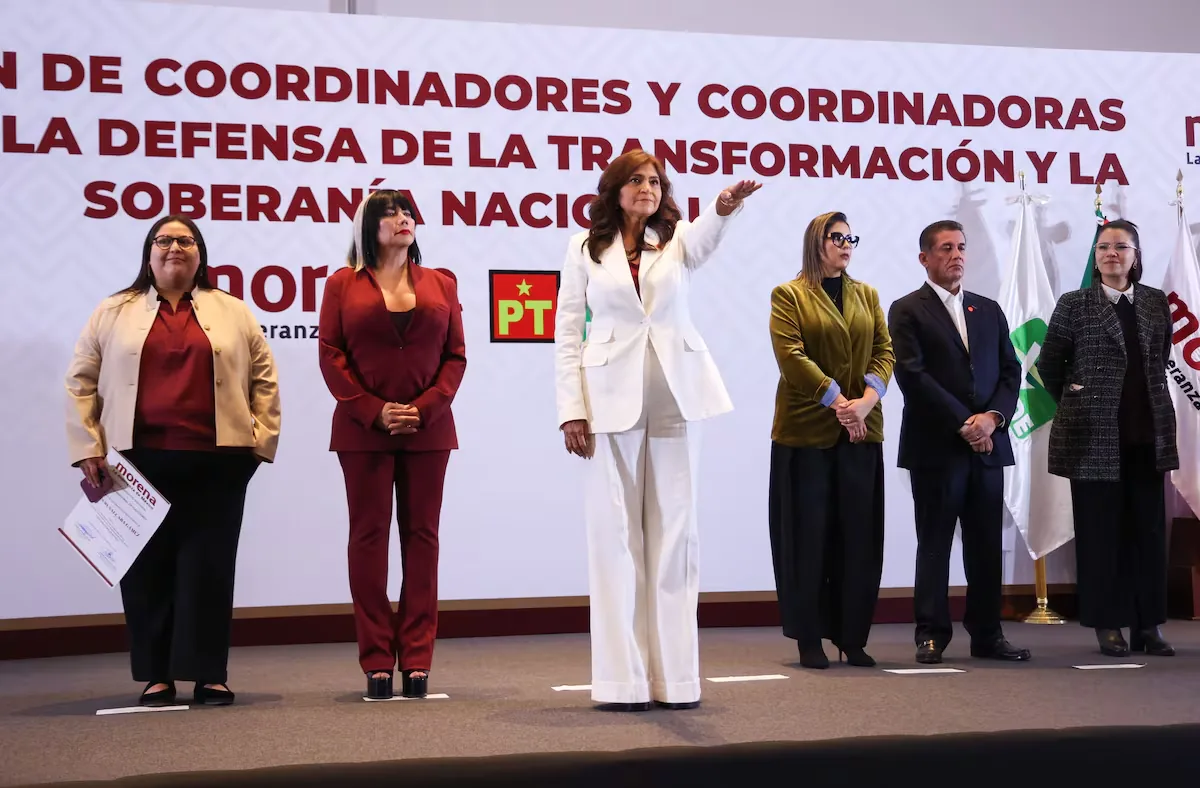
Citlalli Hernández takes over the Secretariat of Women, which is so important in the six-year term of “we all arrived,” through a trench where the first obstacle is an Alcalde who conditioned her departure in exchange for a position in Sheinbaum’s team, and a López Beltrán who is better known for his too many uncomfortable friends than for any electoral feat even at the state level.
With good timing, while going on an important tour that distances her from global isolationism and Andrés Manuel López Obrador’s anti-Hispanism, the president embeds Hernández in Morena’s leadership, who has desire and experience, and a dialoguing attitude within the coalition that won in 2024 and even outside, where she does not plan to give up but also does not close herself off to debate.
The Mexico of Las Muertas must remain in Ibargüengoitia’s pages and Luis Estrada’s scenes as a memory of what was a country that has better plans for tomorrow. The life of teams, in corporations and government offices, cannot be condemned to those who have the privilege of birth or connections being on top. La Oficina entertains as much as it warns.
Sometimes fictions carry heavy truths. For Morena, Las Muertas and La Oficina are, a friend would say, a must. Especially after they let President Sheinbaum’s reforms die twice. To arrive at a new political culture, one must move away from the leopard change of the juniors of well-being and the teams of dysfunctional leaders who remain despite not delivering results.
Read more Cazzu makes the leap to cinema days before starting her ‘Latinaje Tour’ in the United States