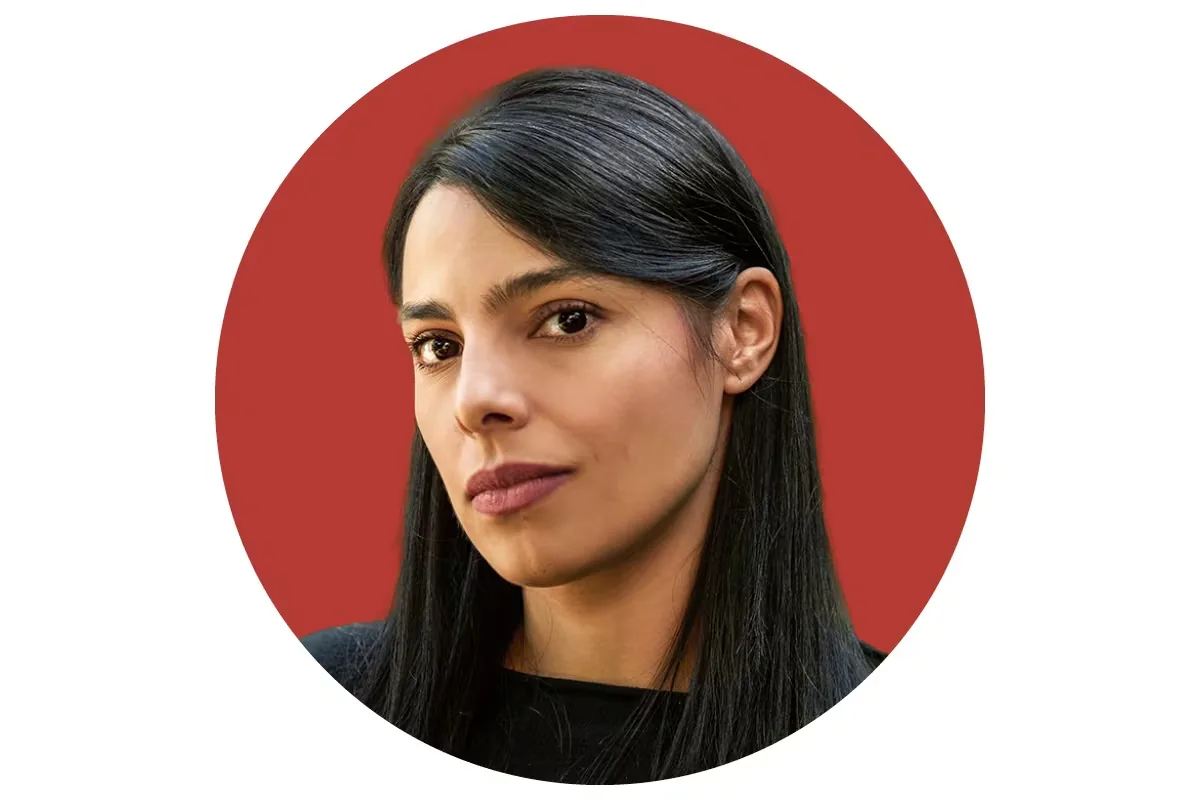
The writer Margarita García Robayo (Cartagena de Indias, 1980) reissues First Person (Anagrama), a collection of autobiographical texts about motherhood, home, and family written since 2011, to which she has added two recent stories.
Read more The ghost of the civil war looms over Yemen amid the Gulf crisis
This new edition of First Person brings together texts from between 2011 and 2025. How have you changed and how have your texts changed? I have aged, logically, the curious thing is that for me these texts remain fresh. Many of the situations that serve as a focus or excuse to talk about something are no longer current, but I still recognize myself in the observations the narrator makes about them. Perhaps that is because more than observations they are questions. It comforts me to continue recognizing myself in that need to question everything and to seek forms of expression that, instead of simplifying those questions, complicate them.
Is there any past text you would rewrite with the renewed perspective of the present? All of them, but not because I don’t feel “represented,” but because I always feel I could rewrite what I wrote. What happens is that, in this case, it seems much more interesting to expose the arc: texts from dates far apart, narrated in a voice that rises or falls or stumbles, but above all insists. For me, part of the charm of an anthology of years is to see those contradictions and reiterations in the same book.
For years there has been an explosion of autofiction. What does the first person bring to literature? Since Dante wrote The New Life this register has been talked about. It must be an anachronistic trend, because it is neither new nor trendy, rather the opposite, it comes with a tremendous glaze of discredit. But beyond that, I find the procedure that this term (auto-fiction) proposes interesting, and which is generally overlooked. If we stay on the “auto” I would think the register becomes impoverished. If we try to use that living, flammable material that is the real world to build fictions (something every writer does to a greater or lesser extent), the result will surely improve. And the contribution will depend on each author’s skill in shaping that procedure.
When did you know that the texts gathered in this book were part of the same work? I never knew that, honestly. The first version of this book was born from a conversation with a Colombian editor friend whom I respect a lot, Felipe Gonzales (from Laguna publishing). He asked me if I had anything new and I said no, that I was dedicated to writing commissioned texts for literary magazines. “What are they about?” he asked me (the texts had only been published in Portuguese), and when I thought about it I realized that, beyond the framework or specific prompt of each text, they were about the same thing: a search for I-don’t-know-what. I had left my country recently, I suppose I was looking for a place in the world. In this case, when I had to reread them, remove some and include new material, I had the same feeling, that without being very aware of it, I always enter writing as if I needed to reveal something, to clear a path.
What book made you a reader? The first one that made me cry and marvel at the “small shake” effect that I have since sought in everything I read. It’s a mainstream, Alan and Naomi, by Myron Levoy. I was six or seven years old when I read it.
And a writer? Several. Perhaps the first that gave me the feeling that more than reading I was seeing a mechanism in operation and that I was dying to replicate it was The Battles in the Desert, by José Emilio Pacheco. Basically because of the format: a short but deep novella, that which poets do so well.
What is the best criticism you have received? It makes me happy when after reading me someone says: I didn’t know whether to laugh or burst into tears.
And the most extravagant? “Nobody writes ‘shitty’ people quite like her…”, the review continued and was very good, but I stuck with that first sentence and didn’t quite know how to take it. In the end I liked it (I think). If one day I gather courage I will put it on a band. It was made by an English bookseller and critic named Gary Perry.
What book do you currently have on your nightstand? Truce, not peace. By Miriam Toews.
One you couldn’t finish? Joyce’s Ulysses.
What is the most beautiful bookstore in the world? The one that has a children’s section, so I go with mine.
What song would you use as a self-portrait? Ironic, by Alanis Morissette.
What song plays on loop in your head? Dai Dai.
What movie have you seen the most times? Toy Story.
A recent release you loved? A Poet.
What was the last series you binge-watched? The New Years.
In which museum would you stay to live? In none, I’m not a fan of museums, sorry.
Do you have any guilty pleasures in cultural matters? I don’t consume “high culture” because I also don’t have a background that has given me any useful competence to enjoy it. Then, almost all my cultural consumption is what the most intuitive pleasure dictates to me (that is, those that could cause guilt). Maybe at some point I was ashamed to like some Gloria Trevi song so much, for example, but not anymore. Years, luckily, dilute that guilt.
What job would you never accept? Any in which I had to pretend kindness daily.
What is your favorite historical event? The decriminalization of abortion.
What is socially overrated? Greeting.
If you hadn’t dedicated yourself to writing, you would have liked to be… A Brazilian singer.
‘First Person’. Margarita García Robayo. Anagrama, 2026. 240 pages. 18.90 euros.