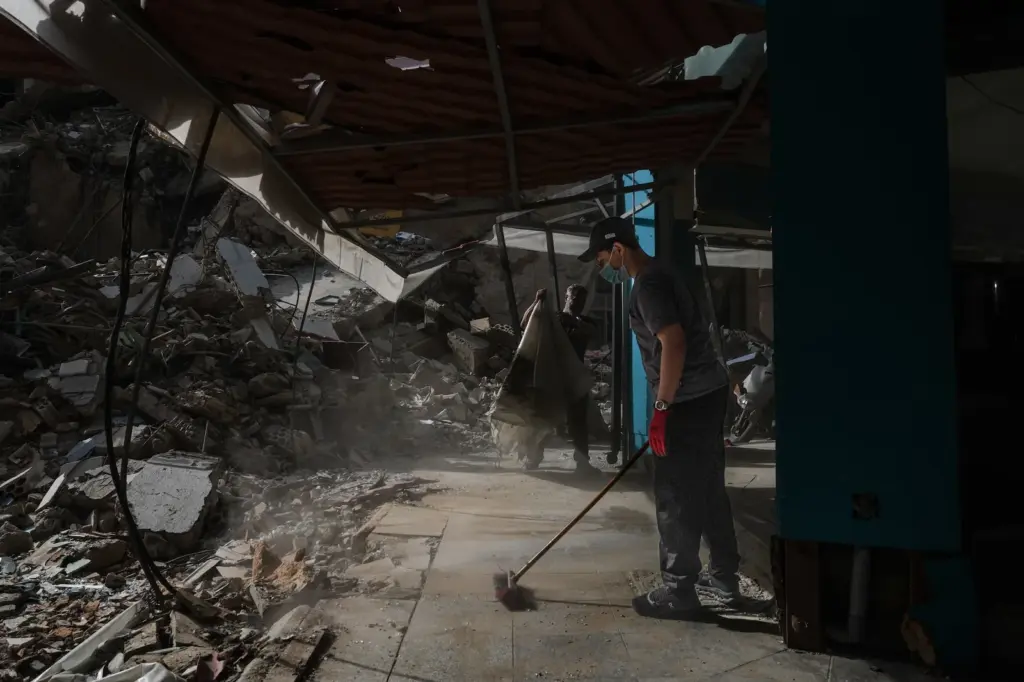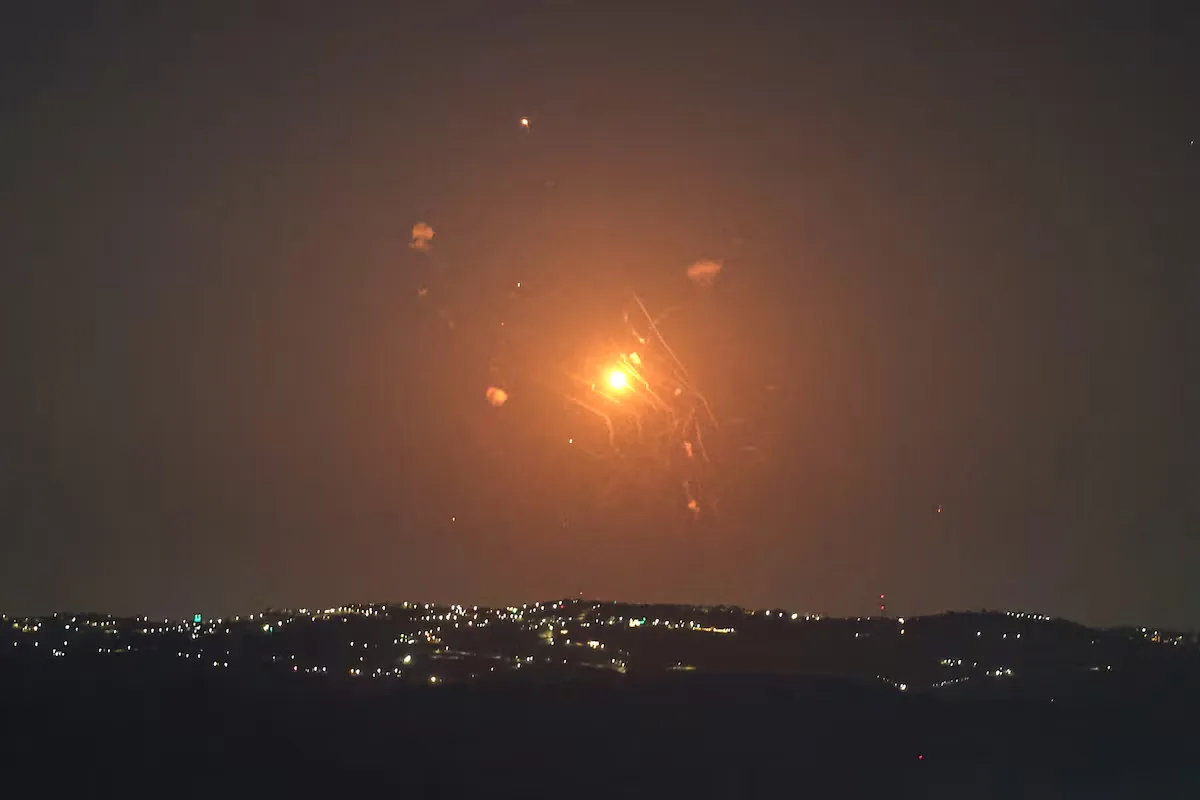








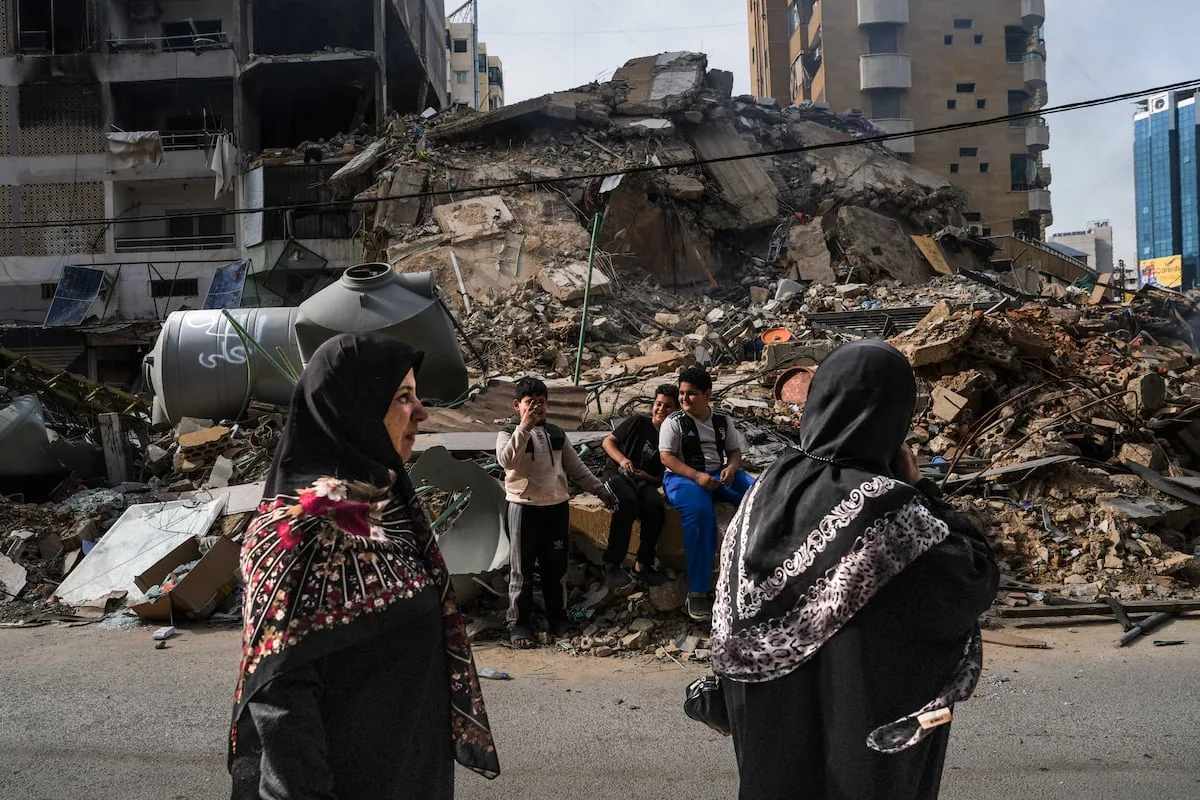
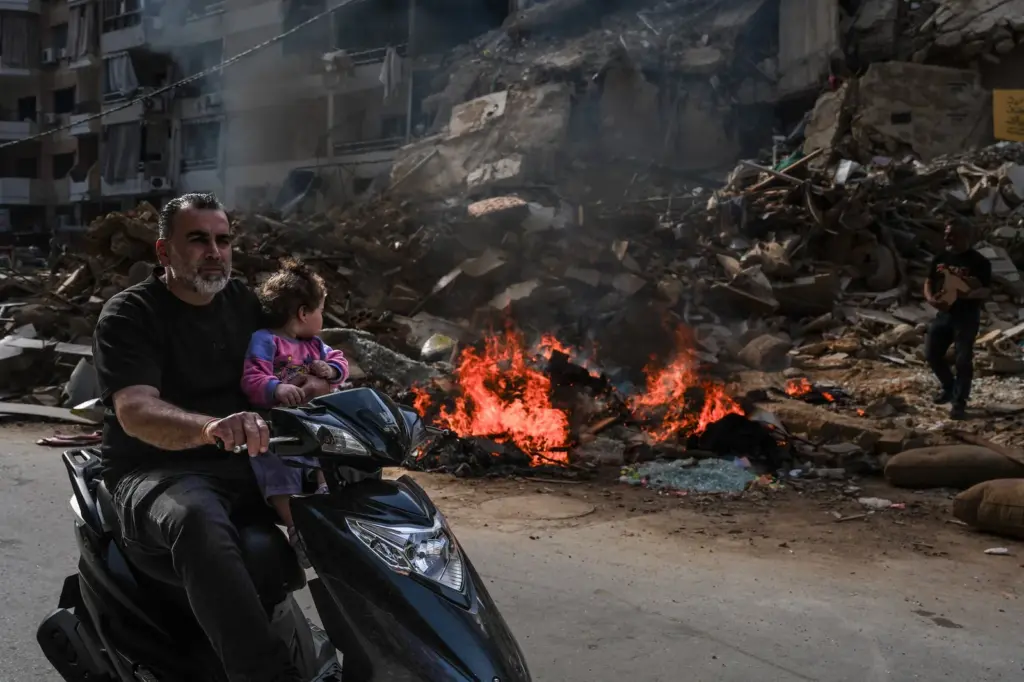
The avenues of Dahiye completely resemble an apocalyptic movie landscape. The suburbs surrounding Beirut to the south of the Lebanese capital – Dahiye means suburb in Arabic – show such destruction after 46 days of Israeli offensive that, in some areas, the return of civilian life seems impossible. This Saturday, thousands of residents returned to the area to assess the damage, unsure if the 10-day truce that the United States announced on Thursday — and which came into effect on Friday — will provide enough diplomatic leeway, as the Lebanese government desires, to turn the cessation of fighting into a permanent one, and prevent the resumption of war between Israel and the armed movement Hezbollah.
Read more Everything adults can learn from youth culture
In Haret Hreik, Laylaki, Hadath, and the rest of the municipalities that make up Dahiye, an urban sprawl of 22 square kilometers where 700,000 people live, it is difficult to find two consecutive streets without buildings destroyed or damaged by the shockwaves, which have torn apart awnings and windows. A cloud of dust engulfs the area, amidst machines moving rubble and residents sweeping their piece of street. Pedestrians walk away from residential towers to avoid the possible collapse of blocks miraculously still standing and the buckets of glass and concrete that residents throw down while cleaning their apartments.
Most of those circulating in Dahiye this Saturday had returned from their forced displacement to check the state of their homes and businesses. Some chose to confirm their return and got to work. Others collected some belongings and left. Wael, 30 years old, is among them. He explains that during the war, he visited a friend who lives in a tall building in downtown Beirut. “From his house, you could see ours in Dahiye,” he details. “I could see if it was still there, even if it had some damaged windows.”
Far from the villages in southern Lebanon occupied by Israel, Dahiye, where Hezbollah has a presence and followers, is the place that concentrates the greatest destruction in Beirut. Since March 2, when the pro-Iranian movement fired rockets at Israel in revenge for the assassination of Iran’s supreme leader, Ali Khamenei, the Israeli offensive has destroyed more than 7,500 homes in the Beirut suburbs, according to a Lebanese public institute’s investigation dated April 7. In five weeks, according to that source, Israeli troops destroyed almost a thousand homes a day in Lebanon, almost all of them in areas where Hezbollah receives support.
Near St. Michael’s Church, in the municipality of Chiyah, which belongs to the Beirut suburbs, Hezbollah has set up an information point for journalists while restricting the movement of reporters to guided tours by the Shiite movement. A member of the organization points out to El País the rubble of what was once a 20-story building that housed a branch of Al-Qard Al-Hasan, the financial entity that Israel has bombed on several occasions for being affiliated with Hezbollah’s social arm, alleging that it strengthens its military arm. Next to it, the man claims there was an Islamic school where there is now a mountain of ruins.
Ziad, a 55-year-old taxi driver, is one of the few who remained in the area during the war, disobeying Israeli orders and the urgency of the bombings. “I sleep no matter what,” he says, laughing. He drives through Dahiye on a Vespa that seems too small for him while inspecting the scene: “I’ve done it every day: since I have nothing to do, when there’s a bombing, I go to look.”
He was the only one who stayed on his staircase and helped a “very old” woman who remained alone in the block opposite, while he continued to frequent his usual cafe, where he maintained nights of shisha and debates with some acquaintances. In one of these, a man with several real estate properties who fears for them, and who is “secular” — Ziad, a Shiite and loyal follower of Hezbollah, describes him — even joked that when the war ends, “he will go dance in Tel Aviv,” fed up with being so scared.
Read more Without nostalgia or resignation: a new multilateralism for a world in distress
But not all Shiites support the war. Through the cloud of dust appears Mona, the fictitious name of a young Lebanese woman. Wearing makeup, with loose hair and a leather jacket, she fears that Israel will resume the offensive in a few days “to finish the job they started” if negotiations do not succeed. She claims to have started learning Hebrew “to get to know the enemy,” but she distances herself from the general sentiment of her surroundings. “They are my people,” she says, pointing to Hezbollah: “But I advocate for some kind of diplomatic understanding that brings peace, something that seems controversial nowadays.”
Consolidate the truce
A very short distance away, just across the perimeter with which the Israeli army ordered the evacuation of Dahiye, within its war against Hezbollah, President Joseph Aoun and Prime Minister Nawaf Salam worked this Saturday from the Presidential Palace to prevent the return of war. Both seek to consolidate a temporary truce that expires next Sunday in imminent negotiations in which Israel participates — although the presidency’s statement avoids mentioning it — in which Beirut also demands a total withdrawal of the Israeli army, the release of dozens of Lebanese held incommunicado in Israeli prisons, and the demarcation of a definitive border between the two countries.
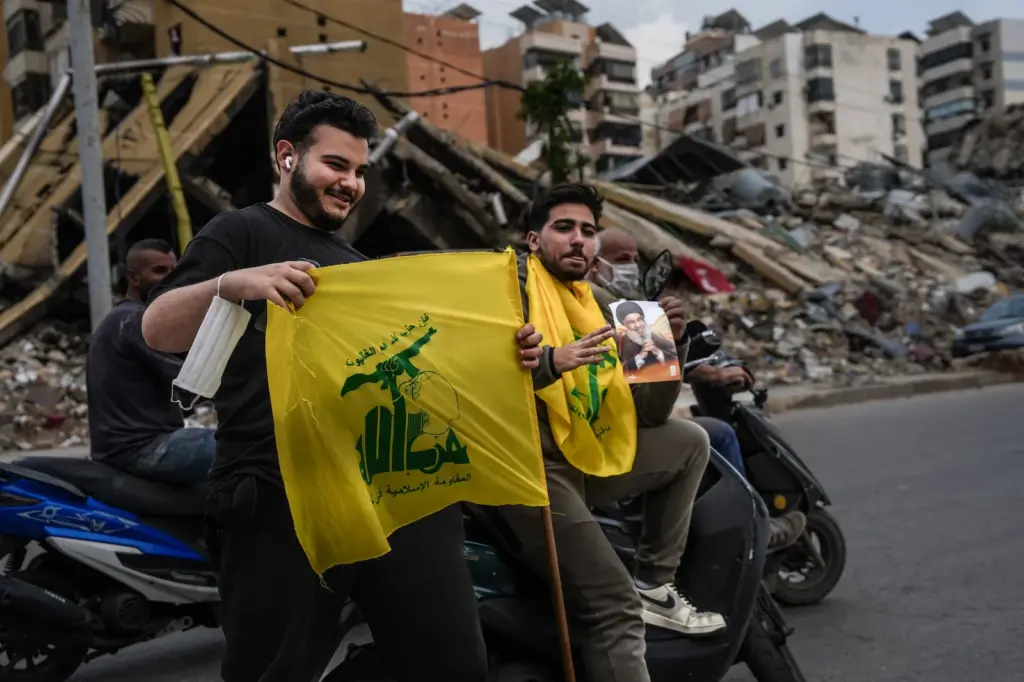
“We trust that we will save Lebanon,” Aoun had proclaimed on Friday during a speech to the nation. Faced with criticism from Hezbollah and its allies, who accuse the authorities of leading the country to submission by dialoguing with Israel, the president defended his refusal “to suicide” his country, in a clear reference to the endless cycle of violence against an overwhelmingly powerful army, and “to die for no one but Lebanon.” “Today, we are no longer anyone’s pawns or battlefield,” he warned, in a clear allusion to Iran’s influence in Lebanon, Hezbollah’s main supporter.
Although these words may please Israeli ears, it seems difficult for Benjamin Netanyahu’s government — which refused to speak with Beirut and accept a truce until Trump imposed it — to get what it wants in a few days of negotiations with Lebanon. Israel has expressed its distrust of Lebanese leaders when it comes to disarming Hezbollah, Israel’s top security concern on its northern border. This makes US pressure for a hypothetical leap to a permanent truce seem essential, while the Israeli army moves in the opposite direction and entrenches its occupation in southern Lebanon.
This Saturday, a military statement justified attacks in the southern part of the country, claiming it was acting within the Yellow Line, a demarcation within Lebanon that the truce does not establish, that Israel had not previously presented or detailed its route, and that copies the ceasefire scheme in Gaza. The cessation of the Israeli offensive mediated by the US last October in the Palestinian Strip divides the territory into two halves. One, inhabited and controlled by Hamas; the other, turned into a ghost territory and serving as a buffer zone, dominated by the Israeli army, and also delimited by a yellow line.
In that border area, the truce has not silenced the weapons. The United Nations peacekeeping mission reported this Saturday the death of a French peacekeeper in Ghanduriya by non-state actors’ fire, in an apparent reference to Hezbollah, although the militia has disassociated itself from the attack. Some residents of southern Lebanon have reported detonations in the press from municipalities under occupation and generally razed, such as Taybeh, Qantara, or Khiam. Izzat Hammoud, mayor of the border town of Beit Lif, has called on the government to act “to stop the demolition of homes and the destruction of land by the Israeli army.”
Read more ‘Son de la Selva’: Indigenous Murui rap in the Amazon triple frontier