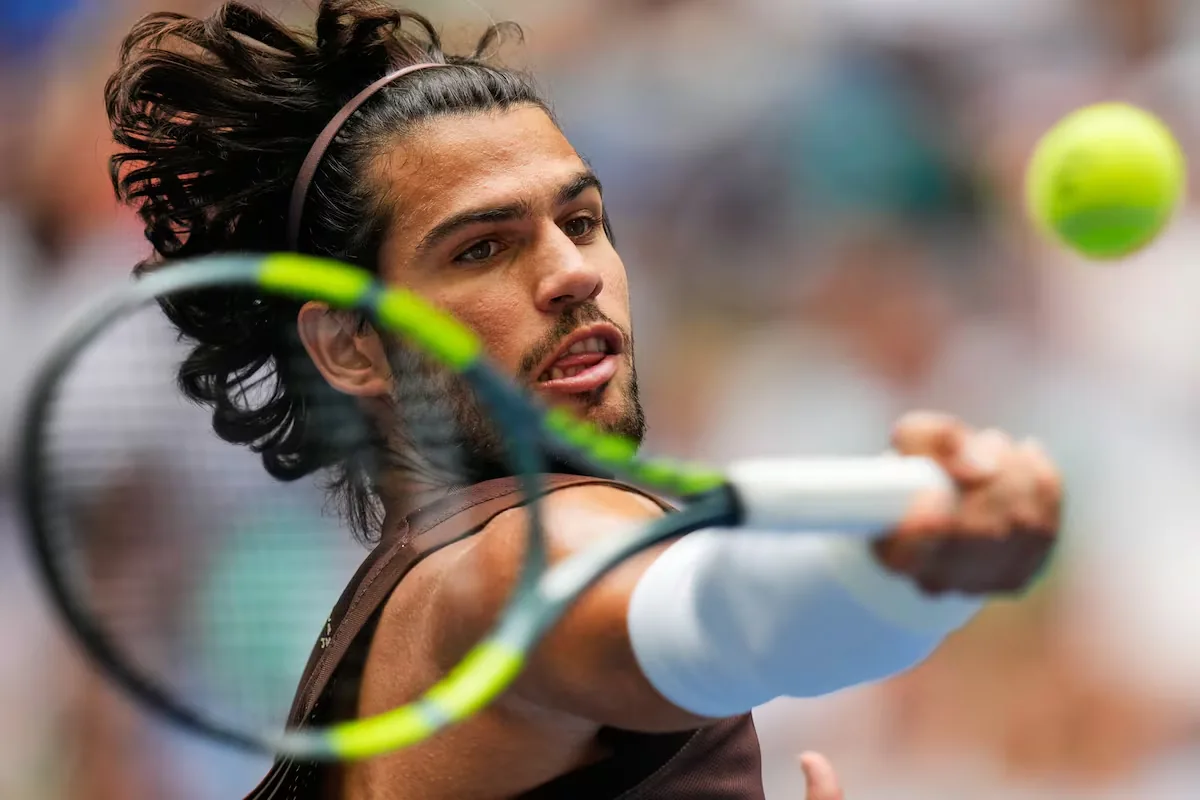
Four and a half months can mean a lot or a little time, depending on how you look at it. Depending on perception. In the case of Carlos Alcaraz, the Murcian considers it a wide enough span for him to have forgotten certain routines. “It was as if I had forgotten what a match day is like. I was warming up and didn’t remember what I usually did…,” he recounts to the special correspondents after having successfully resolved his comeback (triple 6-4 against Roman Safiullin). Behind closed doors, another detail changes: if on other occasions he usually takes longer to attend to the media, to calm his body down, this time he does it barely half an hour after having defeated the Russian heading to the second round.
He looks happy, but at the same time serious. Relieved, too. It has been months of a lot of mental stress (“intrusive thoughts”) and finally the release comes in New York, although the medical parameters force him not to let his guard down. The tennis player must go step by step, who before expressing himself — and having earned an appointment with Jaime Faria — had jumped onto the court with the logical tension regarding the wrist’s reaction. The response has been positive, perhaps even more than expected.
“I felt great. I don’t know how it looked from the outside, but from the inside, my feeling was that I was hitting normally. I was hitting the ball quite normally, in my style; the arm, the wrist… I felt everything great. I will keep taking care of it these days, obviously, but I am really happy that I finally don’t feel pain,” he answers without wanting to go into more details afterward. An American reporter wants to delve into the origin of the injury, asking if it affects the ligaments or the tendon and if it came from earlier, not from a specific moment in Barcelona. And he concludes: “Yes, it was there. I felt something in the wrist. It was more serious than we thought. That’s all.”
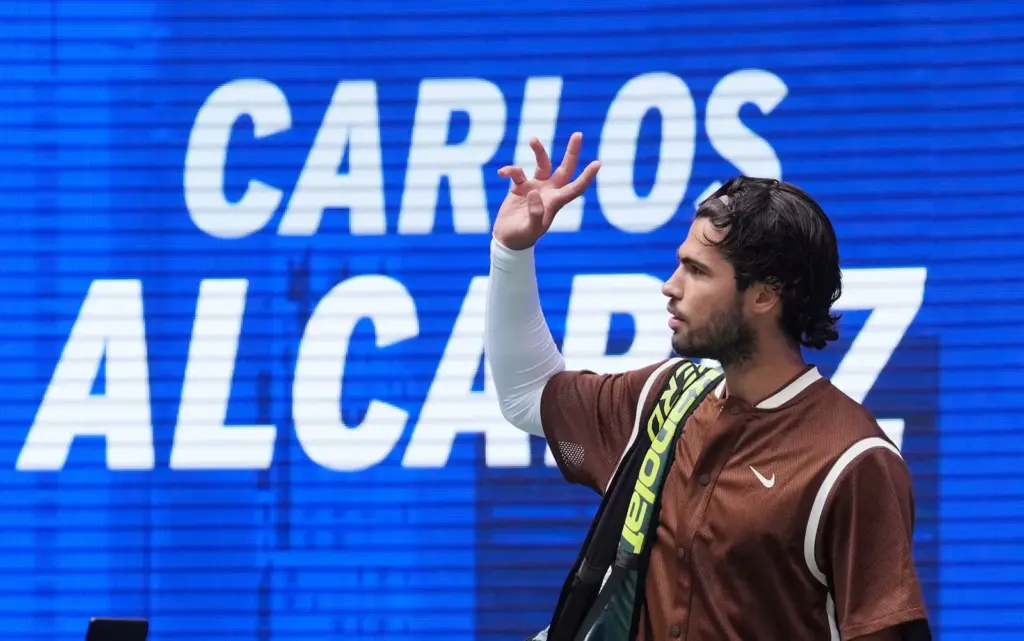
After this time, the mishap still has no name and surname, despite conjectures and the long list of medical opinions that have ventured to make a prognosis without having the necessary information. In any case, Alcaraz (23 years old) is back on the court and rewinds to his beginnings in the elite, when the then kid repeated non-stop (just having reached adulthood) his desire to “enjoy.” He says he doesn’t know how far he will go in this tournament, but emphasizes that just having come is enough for him and that the results, sooner or later, “will come.”
For that to happen, Alcaraz will have to get rid of the “fear” that logically appears there. Asked by this newspaper, he indicates that he has not resorted to any specific mental technique, and that the best remedy is the guidelines and advice of his team: “I lose it with the confidence I have in my team. If they tell me I have to go full, I will go full; if they tell me I have to do something, I will do it… The full confidence I have in my team is what makes me calmer, what makes me not think about anything beyond what I have to do on the court. It’s what we have been doing until this tournament and what we have tried to do here.”
From point to point
The last time he played a five-set match was on February 1. That afternoon he defeated Serbian Novak Djokovic and won the Australian Open for the first time, thus completing the circle of the four Grand Slams. Logical, then, the nervousness derived from such a circumstance, since training is one thing and performing under real fire is another. Finally, the test arrived, and the verdict is more than satisfactory. Thumbs up, green light for now. “A tournament like this demands a lot from you and dealing with it is not easy,” he recalls. “I think I played at a good level, but I need to get competition rhythm; have proper control of the point-to-point pace,” continues the world number three, who also points to the serve as another area to work on.
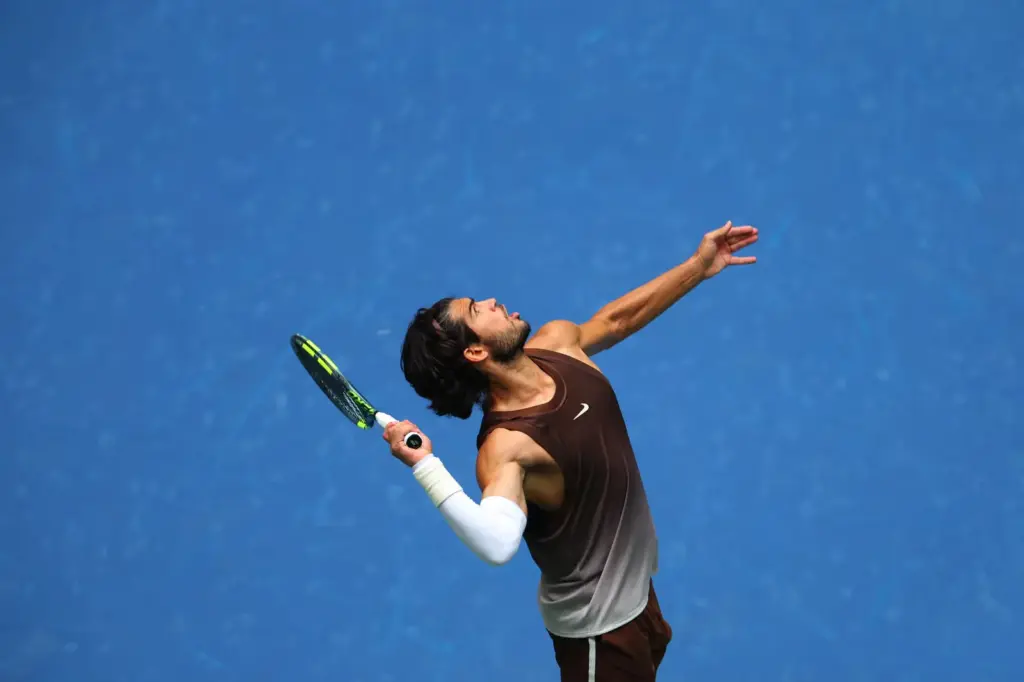
“It was probably the hardest thing for me today, but I will try to do better from now on. The idea is to try to serve normally, although it always costs me a bit. But it will come out again, for sure,” he assures, while hinting that the loss of speed — between 10 and 15 km/h less than usual — was intentional and essentially responded to a “kind of tactic,” since returners like Safiullin take advantage of the force with which the ball comes to be more damaging.
Read more Techniques to save on food during the September slump, spend less, and eat well
Before retiring to the hotel, located next to the trees of Central Park, the tennis player states that he will respect superstitions and will not cut his hair in the middle of the tournament. “After that, I don’t know… But once I start with a hairstyle, I have to keep it until it ends,” he says knowing that he will not be able to pick up golf clubs for a good while. The twist required by the swing can harm the wrist, so “not this year” will he be able to clear his mind between holes, a habit he acquired when Juan Carlos Ferrero coached him. “I would like to be able to play,” he emphasizes, “but I would say that this year I have to look for something different. It’s over… at least for now.”
FROM DJOKOVIC TO FILS, TWO LESS OBSTACLES
The night before his debut, Alcaraz saw the immediate elimination of Novak Djokovic, knocked out in the first round by Argentine Mariano Navone. He says he could only watch the last set and that the Serbian’s exit unsettled him.
“To be honest, it’s a big surprise. For someone like him to lose is surprising, although this is a Grand Slam and every round is very difficult. You have to earn it from the first ball to the last,” he tells reporters, who remind him that he could have faced the Serbian in the semifinals.
“They are too far away, so I think round by round,” he emphasizes. Regardless of what happens, there will no longer be a match between them nor another hypothetical one with Arthur Fils. The Frenchman, recent champion in Cincinnati, bowed out this Monday against Stefanos Tsitsipas.
The record between the two was completely unfavorable to the Greek (0-5). However, he came back: 4-6, 7-6(3), 6-1 and 6-4. The Frenchman and Alcaraz could also have met in the semifinals.
On the other hand, Tuesday’s session will feature several Spanish players. Among them, Paula Badosa and Rafa Jódar. The Catalan will face Daria Kasatkina (around 7:00 p.m., Movistar+) and the Madrilenian Thanassi Kokkinakis (afterwards). Both will play on Court 17.