







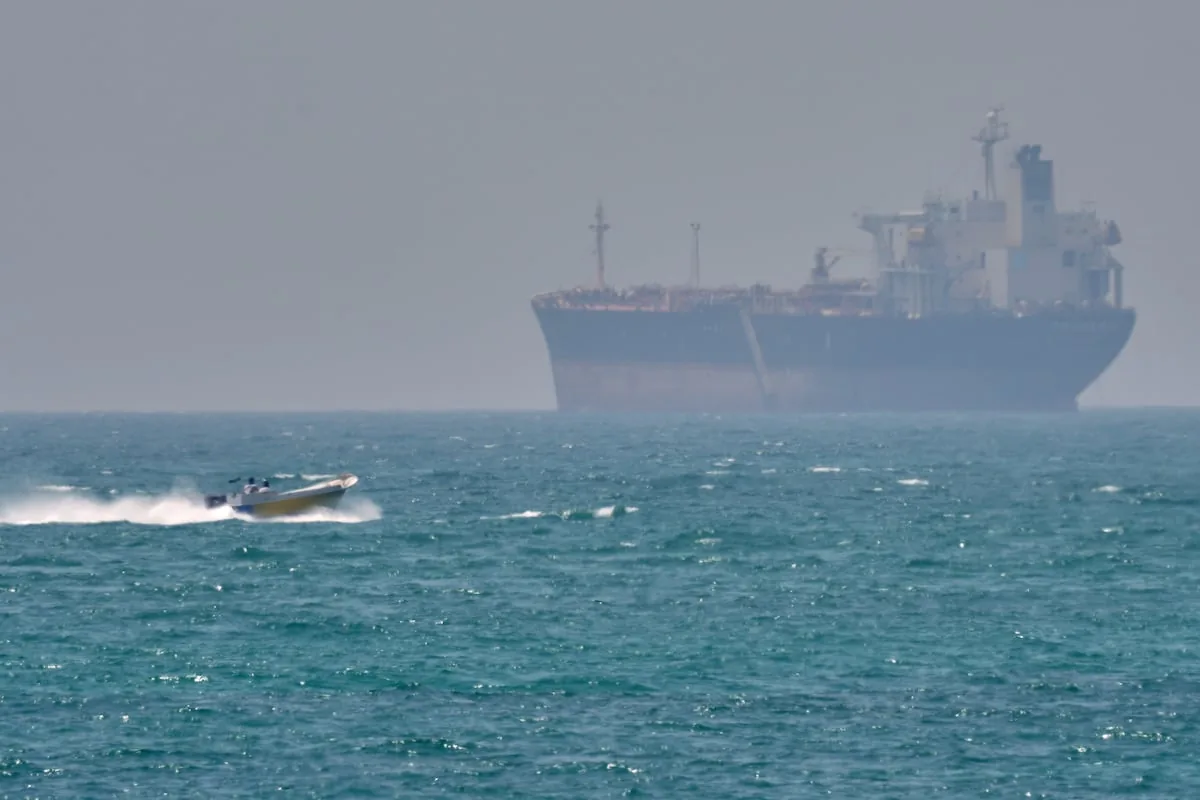
Trapped between steel walls, on ships anchored several miles off the coast, watching missiles and drones strike around them, their nerves frayed by news of the Strait of Hormuz reopening one day and its new blockade the next (this very Saturday), and, in some cases, with provisions about to run out, some 20,000 sailors have been stuck in the Persian Gulf for over a month and a half due to the war unleashed by the United States and Israel against Iran.
Read more From caution to denunciation: Leo XIV’s first year on the global stage
“Today more than ever, seafarers need and require protection. Priority must be given to their basic needs for food, water, medical care, and nautical fuel,” urges Mohamed Arrachedi, coordinator for the Arab world and Iran for the International Transport Workers’ Federation (ITF).
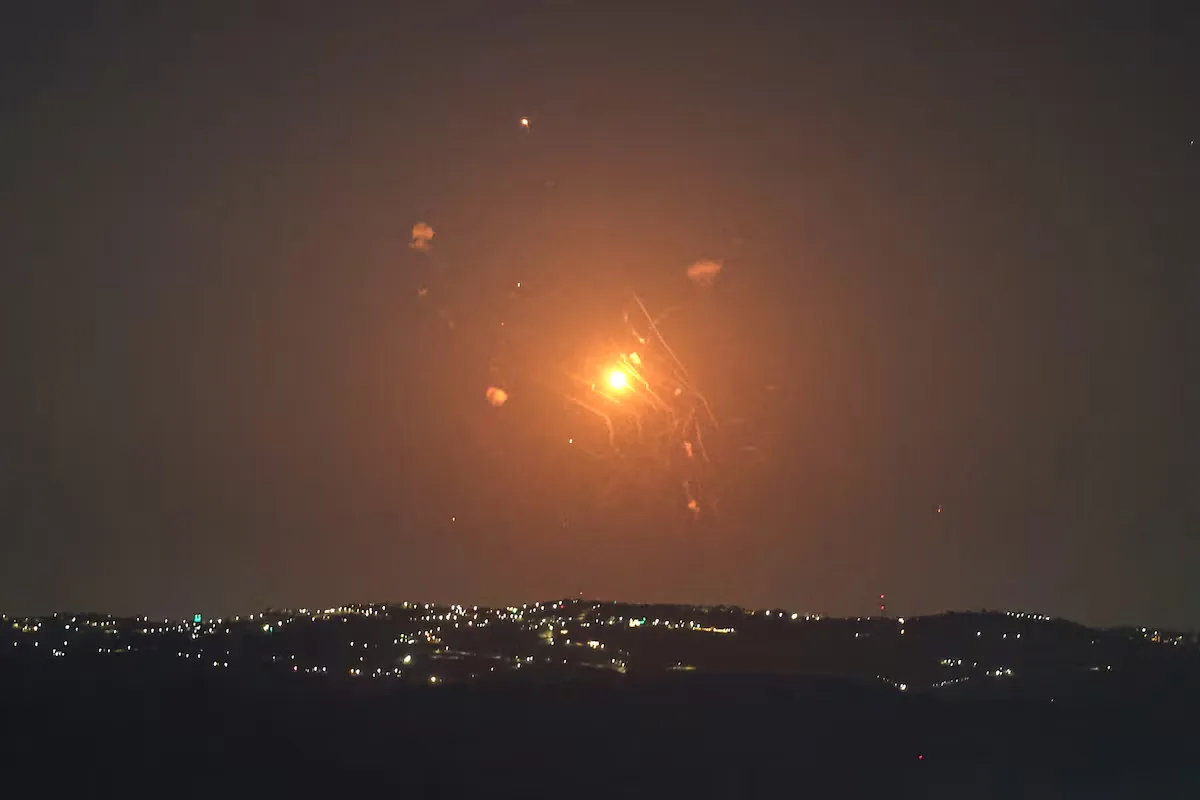
Arrachedi’s phone hasn’t stopped ringing since the conflict began. Calls, messages, WhatsApp audio from trapped sailors sending out an SOS. “Seafarers call at any time, when they have internet access because someone shares the connection with them, or because they suddenly have coverage [depending on weather conditions]. All the messages we receive carry that emotional burden of panic, fear, uncertainty. They send me photographs and videos of bombs falling at night and tell me: ‘My life is in danger. Please get us out of here’,” he recounts by phone.
Since the start of the conflict, the International Maritime Organization (IMO) has confirmed at least 21 attacks on commercial vessels in the waters of the Persian and Oman Gulfs, which have resulted in the deaths of ten seafarers and injured many more. The UN estimates the number of trapped vessels in the area at around 2,000, although maritime intelligence firm Vortexa reduces the number present only in the Persian Gulf to 823. Of these, just over 300 are tankers and the rest are cargo ships, container ships, and even six cruise ships, whose passengers have been evacuated.
Earlier this month, IMO Secretary-General Arsenio Domínguez demanded in a virtual meeting with foreign ministers from over 40 countries that diplomatic efforts be renewed to achieve the evacuation of trapped seafarers who request it. The organization is also in contact with riparian countries to ensure the provisioning of ships and facilitate the “safe passage” of those ship workers who require evacuation. Although the main obstacle is not the governments.
“We have received 1,800 requests and inquiries from seafarers affecting some 400 vessels,” explains Arrachedi. In total, more than 400 seafarers have asked them to intervene to guarantee repatriation, of which ITF mediation has successfully completed just over half. But it’s not easy. There are logistical issues, such as transporting workers ashore, guaranteeing them entry and visas to the riparian country and passage through it to the nearest operational airport — due to the closure of airspace over several states in the region — which can mean traveling across all of Iraq or all of Iran, to cite some cases this trade union federation has had to deal with.
But, above all, the ITF representative assures, they clash with the complex and not always transparent structure that characterizes the shipping sector, in which the flag flying on the ship belongs to one country, the company that operates it is located in another, the shipowner is from a third, the seafarers have been hired in different ports and by different subcontractors, are of different nationalities, and often do not have the coverage of a collective agreement. Even so, Arrachedi emphasizes that all seafarers have the right to be repatriated in these circumstances, due to the evident risk they face.
Read more Trump becomes a toxic asset for the far-right in Europe
“There are cases where there is collaboration and receptiveness, and rightly so because it is a war situation. But there are other shipowners who refuse, because ultimately they look at the financial cost. If the crew wants to leave, that means they need another crew to relieve them. There isn’t one in the United Arab Emirates, for example, and they have to bring them from Egypt, India, Myanmar, the Philippines… And that entails a cost,” he explains. “Some unscrupulous shipowners believe they can manage their ships in a feudal way. They have their crew on board not receiving their wages, in very bad conditions and clamoring to be paid and repatriated, but they ignore their seafarers’ demands. This is modern slavery,” he denounces.
Among the trapped seafarers are multiple nationalities, from India to Myanmar, from Egypt to Georgia or Ukraine. Around a quarter (4,862 on 463 different vessels) are Filipinos, as explained on Monday by the country’s Secretary of State, Tess Lazaro, in a Senate appearance.
EL PAÍS has tried to contact trapped seafarers, but none have agreed to speak. They are afraid. Among those who send requests for help to the ITF for repatriation, some have been threatened with reprisals or with not being paid their overdue wages after months on board. Added to this is the uncertainty about how long the wait will last, whether they will be able to cross the Strait of Hormuz, or if they will be able to do so with some safety. “I am not in a mental state to carry out my heavy duties after all this [that has happened]. It is the toughest situation I have ever been in,” a seafarer told The Guardian on condition of anonymity.
To the difficult psychological situation of the seafarers are added provisioning problems. Most ships carry provisions and drinking water for five or six weeks, “but there are increasing complaints from seafarers who say they are running out of food, water, or the fuel needed for electricity and lighting on the ship,” explains Arrachedi, adding that 15% of the inquiries they have received relate to lack of provisions, a number that is also increasing.
Supplying ships is not simple: the shipowning company must hire a shore agent to manage it, provisions must pass through customs and be sent to the ship by launches if the ship is anchored and not docked in port. Sometimes, shipowners make excuses not to carry out these procedures. “There are times when seafarers have been asking for food for a week or two. This constitutes a violation of the Maritime Labour Convention. So, once the evidence is gathered, we report it as a case of abandonment to the IMO and the ILO [International Labour Organization],” adds the ITF representative.
Read more The quiet revolution of Zohran Mamdani completes 100 days