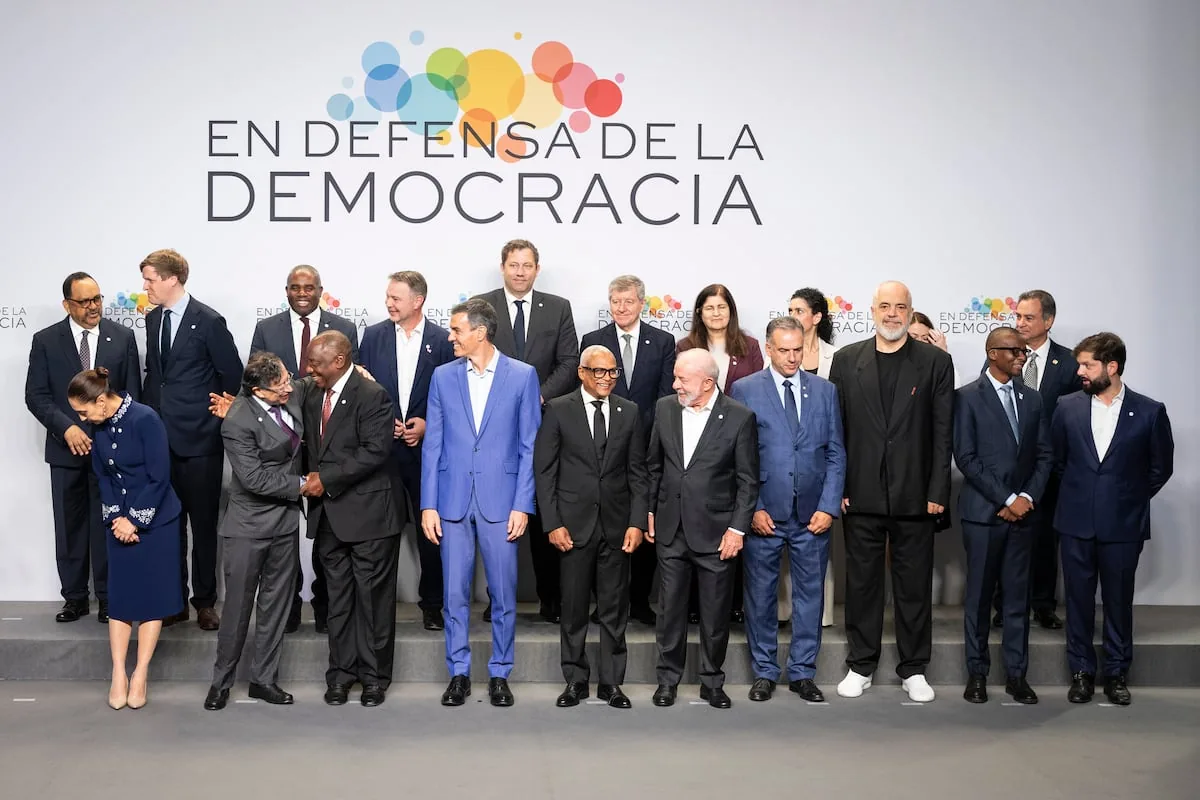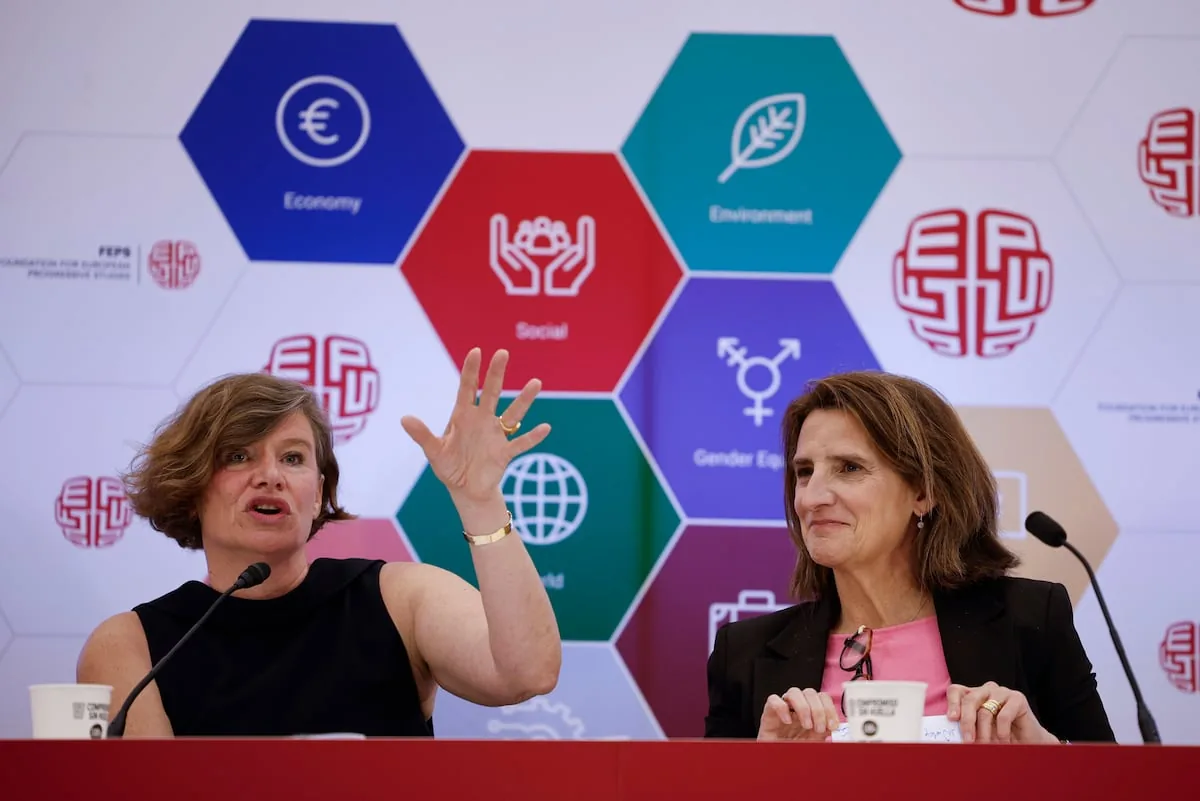







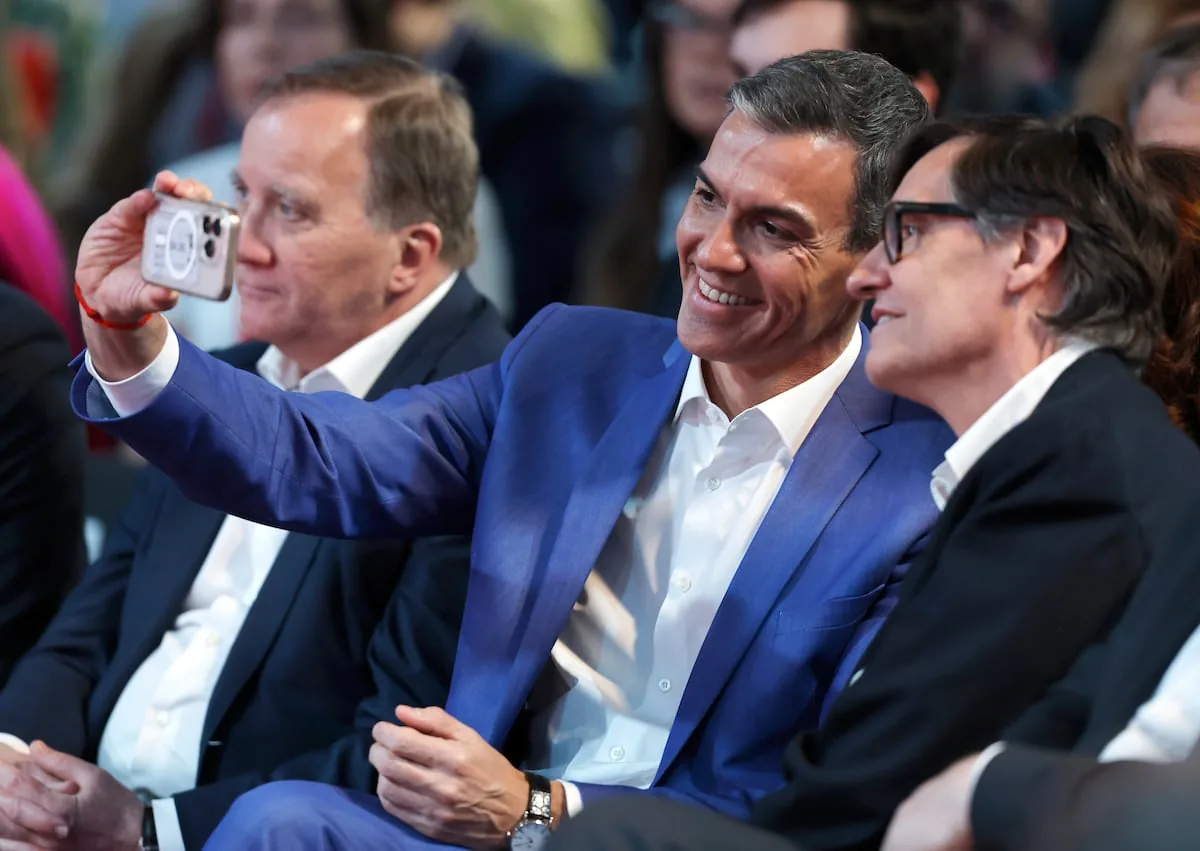
Progressive parties from around the world have used the Global Progressive Movement (GPM) to discuss the agenda with which to confront populism and far-right movements. They have done so through some 90 roundtables where, over two days, politicians from all spheres, trade unionists, academics, and activists have made their diagnosis of the current situation and formulated proposals to recover lost ground in recent years. These are some of the policies proposed in various areas.
Read more Stoichkov, Crazy Horse
Inequality. At all the Global Progressive Movement tables, there has been a unanimous diagnosis: inequality has grown exponentially in recent decades. And successive financial and price crises and the digital revolution have only widened the gap between the most powerful and the most impoverished. So much so that there has even been talk of an “oligarchy” that puts democracy at risk. “The lower participation of labor in wealth has increased social polarization,” said the First Vice-President of the European Commission, Teresa Ribera. The social democrats’ recipe is also clear: impose a global tax of 2% on the wealth of large fortunes. According to Paris School of Economics economist Gabriel Zucman, this would bring in about 250 billion dollars that could be used to fight inequality.
Public services. Progressives placed great emphasis on public services, which they believe are under pressure in several countries. Criticism focused on large corporations or investment funds doing business with basic goods such as housing, water, or energy. “They are not a slot machine,” said University College London (UCL) economist Mariana Mazzucato, who advocated limiting the profits these companies make from such business. “We have to confront the sharks and limit profits,” agreed University of Massachusetts Amherst economist Isabella Weber.
Housing. This is another of the key issues debated by social democrats. Large European cities – including Barcelona, Athens, and Amsterdam – where construction is complex, are conspiring to receive funds directly from Brussels for housing policies. From there, they seek to act on several fronts: curbing speculative purchases – as in the Netherlands or Catalonia – stopping the proliferation of Airbnb, and building more. In this regard, the Dutch socialist delegation explained that Amsterdam is building more housing but applying reservations to all layers of the population, so that 40% of homes are for low-income households and another 40% for the middle class. The mayor of Barcelona, Jaume Collboni, defended his plan to exhaust the licenses for more than 10,000 tourist apartments by 2028. “They contribute nothing to the city, only to their owners,” he stated.
Industry and climate transition. Progressives believe that the current economy has reached an excessively high level of financialization, neglecting the productive economy. “We are in a context with societies that have very high profits and, in contrast, invest little,” criticized Mazzucato. Economist Isabella Weber considered that the progressive agenda must bet on the green agenda to “stabilize” economies in the face of successive shocks they are suffering, while also penalizing companies that still base their activity on fossil fuels. “If we want to move towards a green transition, we have to ensure that the sectors we don’t want are not the ones that have the most profits.”
Common good. Progressives also conclude that the growth of some cannot occur by leaving others behind. For this reason, Spain has decided to promote a Global Council for a Common Good Economy together with Mazzucato. This body, whose first meeting will take place in the summer of 2026, aims to articulate “a new economic thinking to inform the design of more effective policies, improve institutional practices, and reform the multilateral system.” “It is structured on four principles: justice, equality, sustainability, and global solidarity,” sources from the Ministry of Economy added. The Council, with Spain as the first host country, will include the participation of Finance Ministers, civil society representatives, and economists with recognized international careers, according to these sources. The meetings will be in-person and will take place on the sidelines of global events such as the annual meetings of the World Bank, the International Monetary Fund, and COP. In addition, a second in-person meeting is planned in Madrid in the spring of 2027 to develop a reform agenda.
Feminism. In addition to world leaders and prominent figures of social democracy, members of civil society and academia contributed their knowledge in different areas across the 34 sessions -116 speakers- of the conference. Several speakers associated the advance of the far-right with the anti-feminist offensive -José Luis Rodríguez Zapatero spoke of “a counter-reaction”- and advocated responding with values and public policies. Experts warned that feminism must adapt its language and tools to remain mainstream, especially among youth. Colombian activist Ana María Archila, recently appointed head of the Office of International Affairs for the city of New York, explained that the election of Zohran Mamdani has been “a response of rejection” to the far-right movement represented by Donald Trump: “Within our government plan is the idea of building and being a feminist government every day. The pillars of our action are focused on equality, inclusion, and the creation of collective power.”
Migration. The debate on migration has been hijacked by the far-right, which has managed to spread discursive frameworks of fear and disinformation among part of public opinion, speakers from two panels dedicated to the issue agreed. Experts advocated responding by providing data, appealing to rights, and working on the narrative. Progressivism, they pointed out, must speak of migration as a factor of prosperity, social cohesion, and labor rights. “The best way to contribute to a positive culture that dismantles disinformation and hoaxes is data,” insisted Elma Saiz, Minister of Inclusion, Social Security, and Migration, who highlighted that her government’s policies have reduced irregular arrivals by 50%.
Green agenda. The progressive international defends an irreversible but socially just ecological transition, which avoids territorial or social inequalities. Sara Aagesen, Third Vice-President and Minister for Ecological Transition, pointed out yesterday that dependence on fossil fuels “makes us more vulnerable” and that, as long as this is the case, decisions affecting us will be made in third countries. “When we talk about security, we have to reaffirm our commitment to the green agenda,” she assured. The minister defended the need to continue expanding renewable energies so that Europe is thus “less exposed to volatilities.”
Social networks and AI. The internet is power, ministers, former heads of government, and experts summarized during the conference. Social networks have become a crucial node of political discussion, largely dominated by dynamics that favor polarization, disinformation, and reactionary discourse. And democracies have reacted late, as Teresa Ribera, Vice-President of the European Commission, explained. “Now we are realizing not only the challenges and risks it presents, but also the threats of being so dependent, so vulnerable,” she assured. Ribera warned of the excessive concentration of power of large technology companies and called for “raising our voices against these abuses.” How? With regulation that enforces accountability and provides transparency.
Read more From nail to nail: nothing is left to chance when a masterpiece is moved