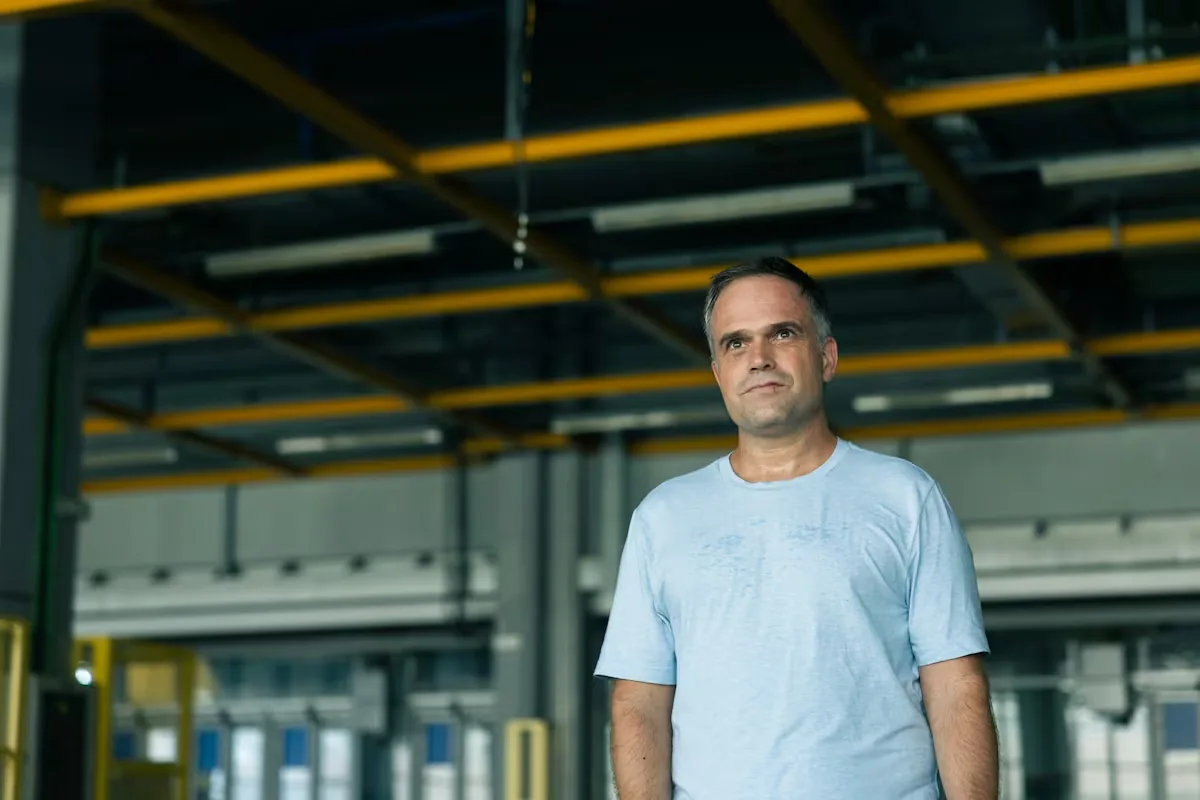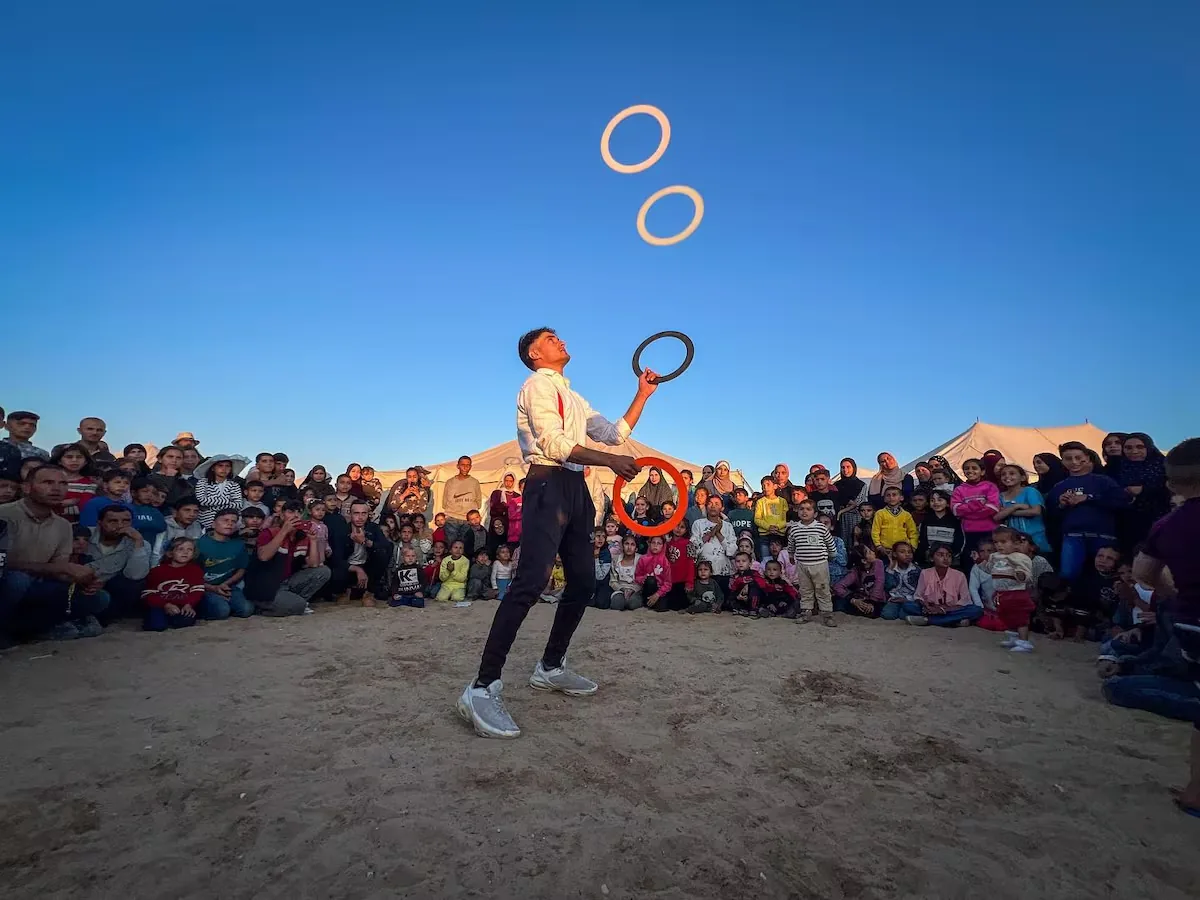
In 2018, after a adolescence in a Gaza under Israeli blockade watching circus activity videos abroad on the internet, Muhammad Jader decided to bring what he had learned to his environment. After waiting a decade to painstakingly introduce the necessary tools, he opened Free Gaza Circus with nine other Palestinians. The goal was to “spread circus culture” among children and young people, with workshops and courses on what they learned on social media, in a “humble space” they opened in the Yabalia refugee camp, in the north of the Strip, he recalls today, eight years and much pain later. The project, founded with his brother Yusef, grew to include 480 students in a Gaza from which it was already difficult to leave at that time.
In October 2023, Hamas launched its surprise attack and Israel began bombing the enclave, causing hundreds of daily deaths and ordering the displacement of more than half of the then 2.3 million Gazans from the north (where Yabalia is) to the south. “We didn’t know where to go, or what to do. We left all the instruments behind amid the bombings. For a month, we were simply traumatized,” he recalls.
The government of Benjamin Netanyahu turned life in the Strip into a mix of attacks and displacements, induced hunger and destruction, in which teaching circus tricks would have been a kind of misplaced and untimely luxury. Jader, displaced from his native north to the southernmost tip, Rafah, understood that the circus could no longer be about skills, but about pure mental health and survival.
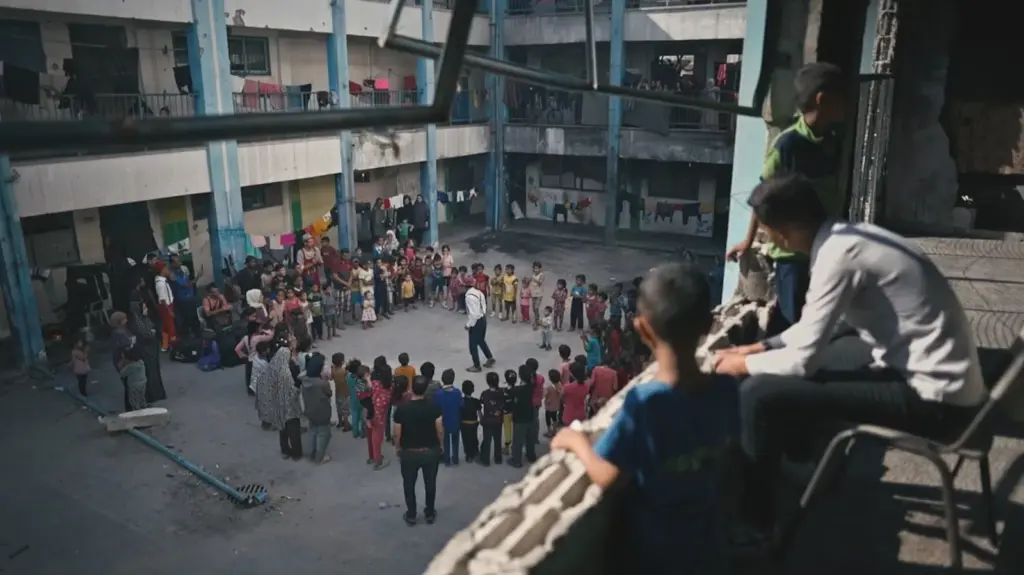
“We sat down and thought we had to use our energy to start giving hope to our people. Make them feel safe for a while and change the routine of tension and bombings. Until October 7 [2023, when the bombings began], our goal was to train and teach. When the war started, it became about providing emotional and social support, with activities in the displaced persons camps. Distracting children and young people from the bombing and destruction around them,” he says in a broken phone conversation (many Gazans rely on signals from neighboring Egypt or Israel or use international SIM cards) because Israel has prevented free entry to Gaza for journalists for almost three years.
Loudspeaker and fabrics
The first thing they did was buy a small loudspeaker. Then, they worked hard to find fabrics and colorful clothes among the rubble to weave clown costumes themselves. The circus then focused on giving free outdoor shows to bring smiles amid adversity with simple red noses, balls for acrobatics, or stilts made from rescued wood.
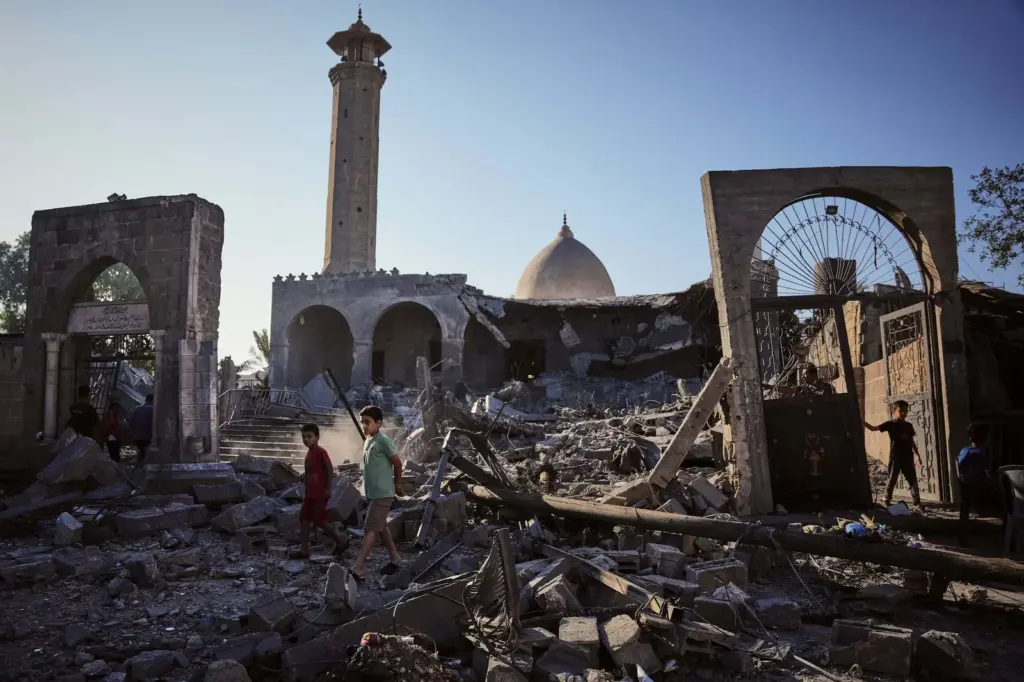
The systematic devastation of buildings left most Gazans in tents. Therefore, in summer, this new version of the circus hoped for the strong sun to go down to gather people of all ages, eager for a break in their routine of queues to get food and drinking water from humanitarian and charitable organizations, or hours searching through rubble for wood, or even plastics, to be able to cook.
“Elderly people also attended and it was very nice to see how we put a smile on the faces of adults too. They have no work, they were sitting doing nothing and, at the end, they told us they were very happy and that we should keep coming,” recalls Jader, who is now 27 years old. “When the army withdrew from Khan Yunis, we went to perform and saw more smiles on the faces of the elderly than on the children. It convinced me even more that the circus is very important in this situation.”
Read more Dozens of young Moroccans embark on the journey back home: «I have no other choice»
Born as a stable and educational initiative, the circus thus forcibly became itinerant and focused on psychosocial support. Practically all minors in Gaza (1.1 million) need mental health services and psychosocial support, according to UNICEF, the UN agency dedicated to childhood. Even before the invasion, the Strip had only one psychiatrist per 100,000 inhabitants.
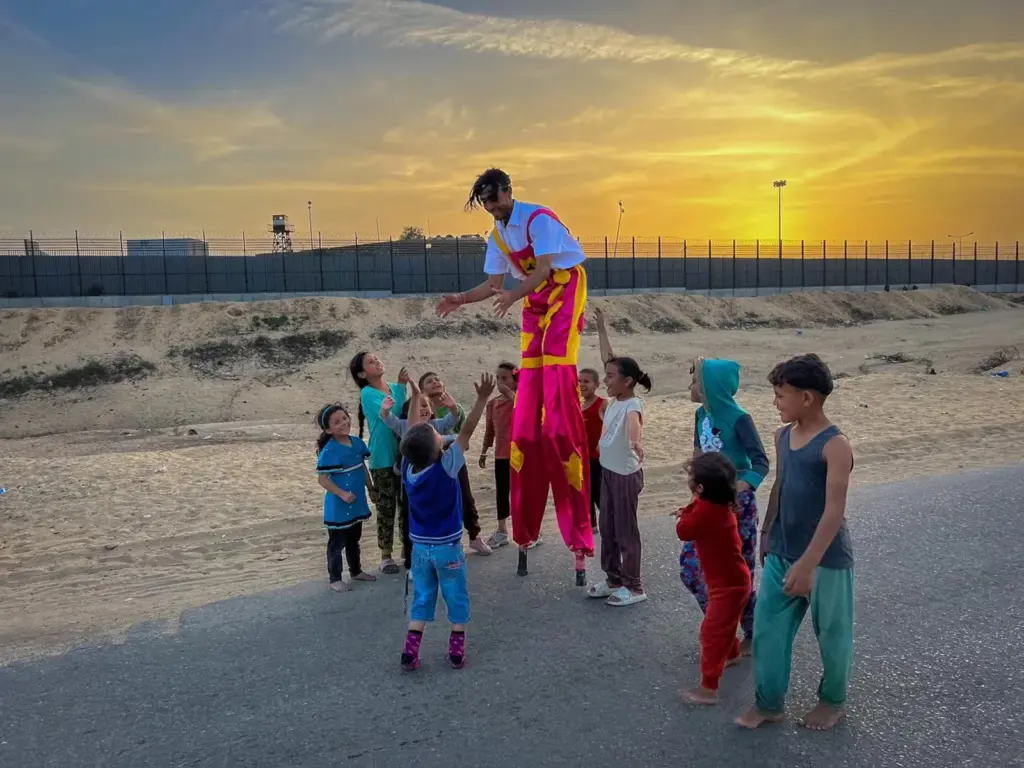
In the spring of 2025, Israel tightened the use of hunger as a weapon of war by preventing any food access. The result: famine for more than a million people and dozens of skeletal children dying of starvation. The circus decided to stop. “Children wake up and go to bed hungry […] We cannot offer psychological support to those who have not been able to eat anything. Even we, as artists, are exhausted from hunger and worn out by this situation,” they explained in a statement.
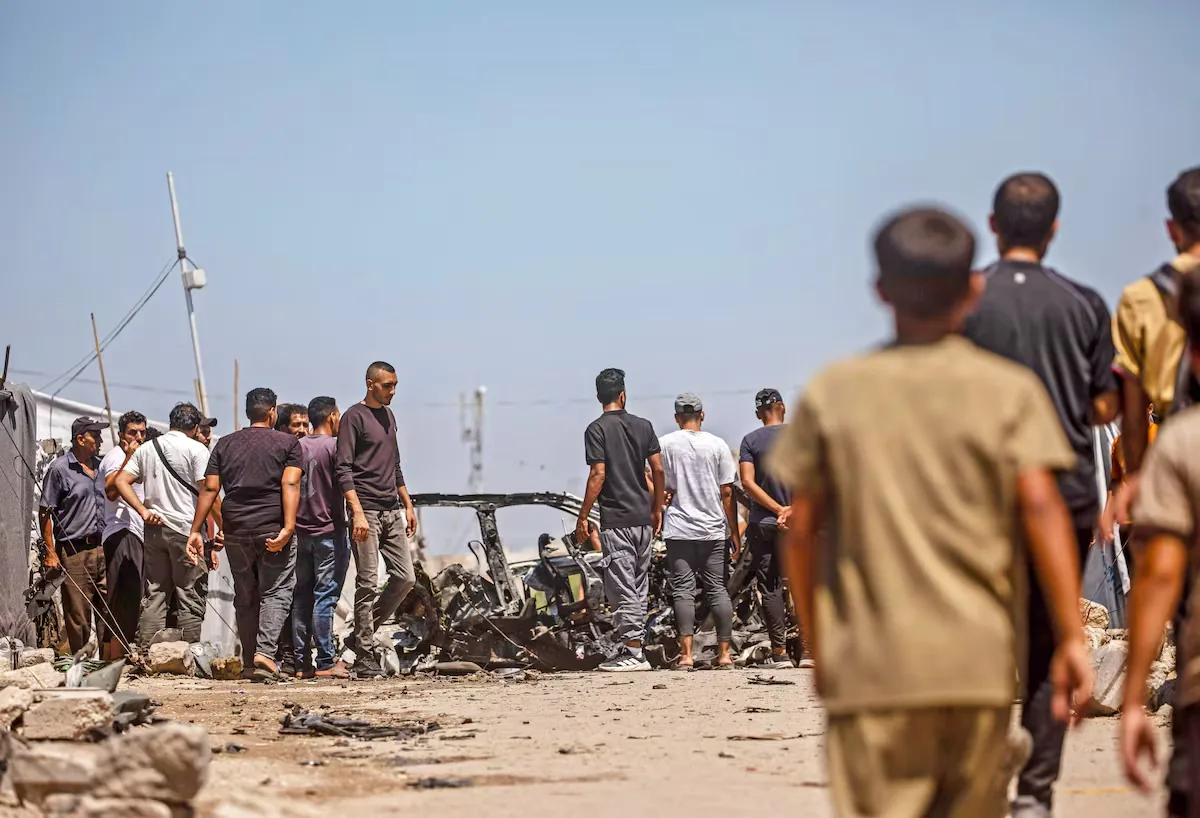
That same October, US President Donald Trump imposed a ceasefire on Netanyahu in Gaza and the circus resumed activities. Israel continues bombing (1,320 dead in ten months of truce), controls 60% of Gaza, prevents the reconstruction of the devastated Strip and still limits the entry of aid, but the attacks are much less intense, the constant displacements are a thing of the past and there is considerably more food in the markets.
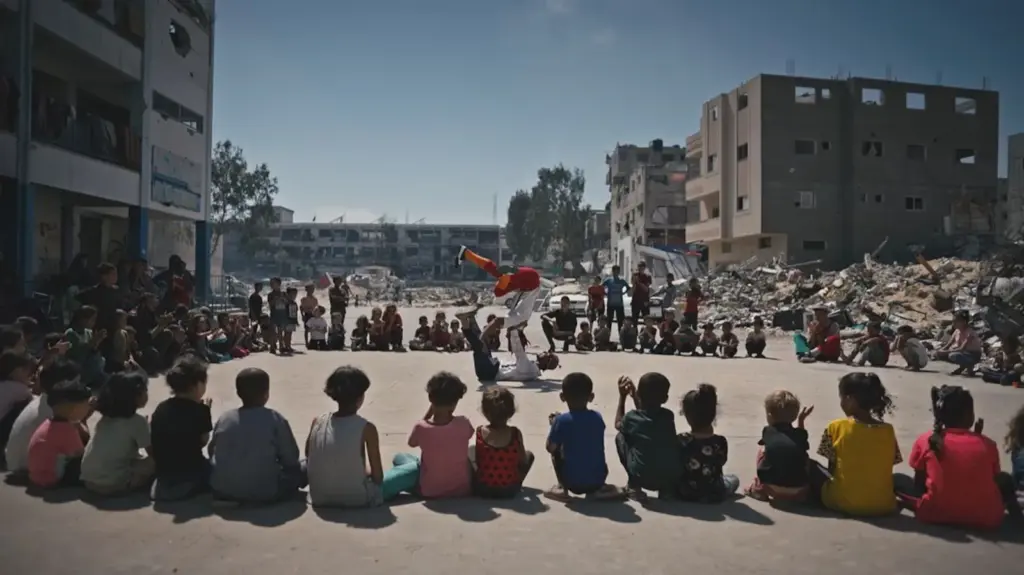
As it is the closest thing to stability they can aspire to in the short term, in May they resumed the training dimension. Not in Yabalia, where the center that housed the activities looks destroyed, but in Deir al Balah, the new home of hundreds of thousands of displaced people. And not all. Of the 10 partners who opened the circus, three have died during the Israeli invasion. Only four of the survivors have managed to get together and resume training and education activities in a tent provided by a Palestinian philanthropic foundation, Tamer, in collaboration with UNICEF.
Last January, they took advantage of the ceasefire to go to the original center to search for tools among the rubble. “We only recovered simple things,” like carabiners or mats, “but it gave us hope,” he recalls. The most expensive and difficult to obtain items remain buried there, like the bike, the pillars to hang ropes to perform aerials. “Outside Gaza it is easy to get them, but for us it was at the time like finding a treasure,” he explains.
That is why the circus focuses on teaching floor acrobatics or clown, which require fewer resources. And, in a Gaza where few speak the word future with hope, it feeds on personal efforts. “We have no projects, no clear plan, no continuous support, no operating budget,” he admits. For now, he is concerned about something more immediate: the almost 190 children enrolled in the activities. “I think,” he says, “I have a problem with the size of the tent.”
Read more And yet… the poor