





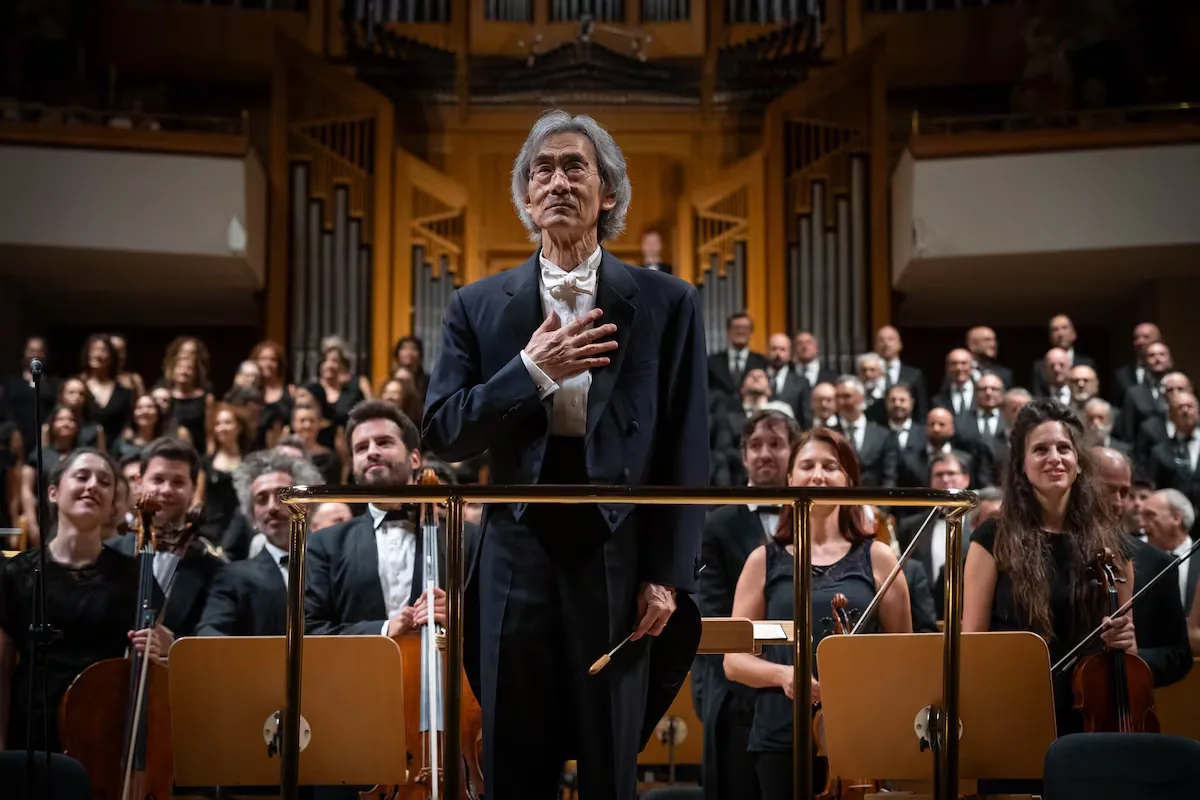
“Youth is fiery and bold, old age frail and cold,” said the madrigal attributed to Shakespeare with which these pages greeted, on September 18, 2015, the debut of David Afkham as principal conductor of the National Orchestra of Spain, with the Second Symphony by Gustav Mahler. Exactly eleven years later, on the same September Friday, the same symphony and the same Symphony Hall welcomed his successor, Kent Nagano (Berkeley, California, 74 years old), and the second half of the verse was disproved. His Resurrection was that of a conductor who no longer needs to prove anything and who, perhaps for that reason, proved everything: a serene and mature reading, with a compact vision, capable of emphasizing the densest passages and lingering on the most chamber-like ones.
Nagano has insisted these days on one word: encounter. In the video with which the OCNE presents the program, he talks about creating “a space for an encounter between musicians, composers, artists and, of course, the audience.” In 10 Lessons in My Life (Alianza), the book written with Inge Kloepfer that arrives this week in bookstores with a prologue prepared for the Spanish edition, he maintains that encounters have marked his entire professional career and that he does not believe Madrid will be an exception.
For that first encounter, Nagano proposed a program without intermission, with the express request for silence between the two works, and wanted the National Choir to be at the opening concert as a statement of intent, just as his predecessor did in 2015. Behind this is the work of Félix Palomero, technical director of the OCNE since 2019, who made both Nagano’s arrival and the commission of the premiere that opened the program possible.
The evening began with a new composition conceived, in the words of the conductor himself, as a prelude to the symphony. Mikel Urquiza (Bilbao, 37 years old), winner of the Siemens Foundation composition prize in 2022, set to music in Deseo tomó delicia a series of fragments by Sappho in the literal version by Anne Carson, without filling the gaps opened by worms, censorships, and fires, for a choir in dialogue with an orchestra made up of brass, percussion, and harp.
We are talking about a portico that connects with the Mahlerian universe without renouncing its own idea of resurrection, starting with that of words, which the composer defines in the preface of the score published by Ricordi as “a tomb, a bomb, and a shadow.” It includes the unreal sound of the choir whistling pianissimo while horns and trombones blow slide whistles; it includes the lyricism of “Rosas pastoras,” with the choir’s melismas over the glockenspiel and the call of the water nightingale; it includes the festive zapateado, with castanets and horn, of “Y tampoco, ni siquiera lugar santo tampoco”; and it includes a wonderful ending in which the choir vocalizes over slide whistles and harmonicas, as if the last fragment, the stars eclipsing when the full moon shines, had also eclipsed.
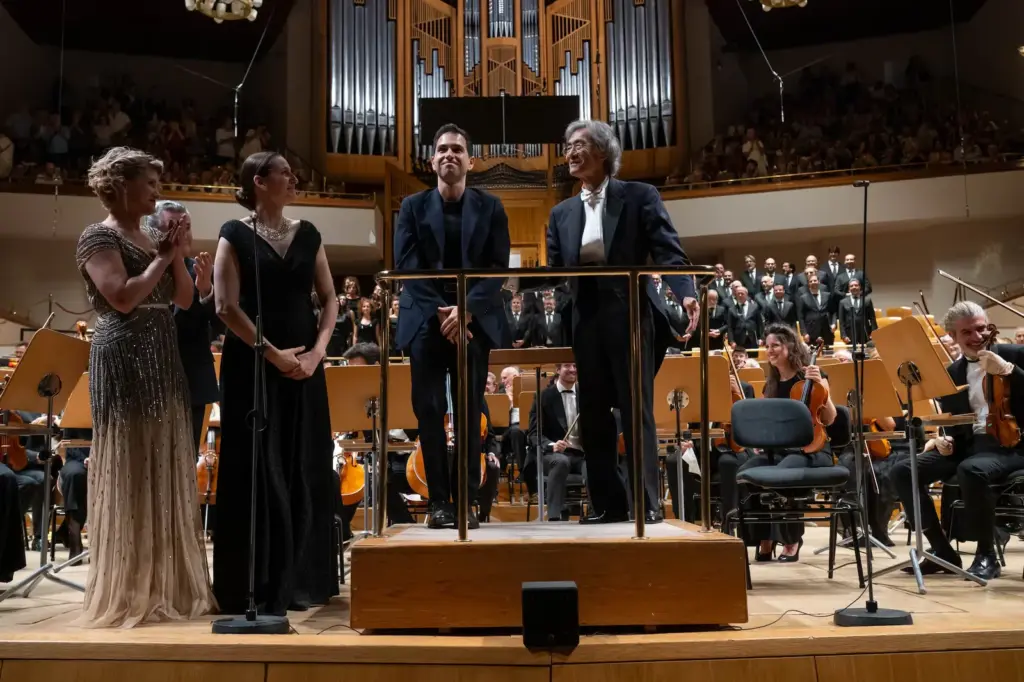
The three baritones who declaim “Esperando en sacrificios” with the required severity came from the National Choir itself, which shone with its own light from the first bar. In London, last March, Nagano preluded Mahler’s Second with the responsory O vis aeternitatis by Hildegard of Bingen, sung in procession through the hall. Madrid loses that ritual effect but gains an extraordinarily imaginative prelude that confirms Urquiza as one of the most personal voices in current Spanish composition.
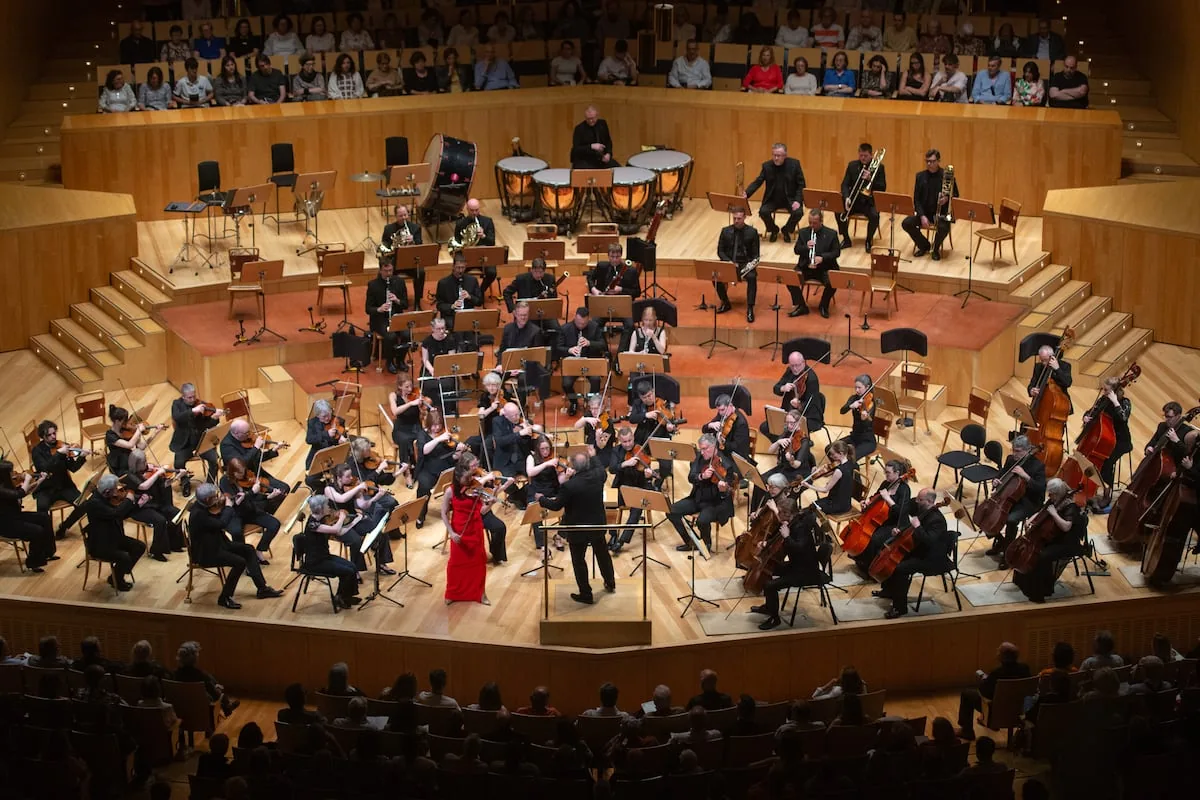
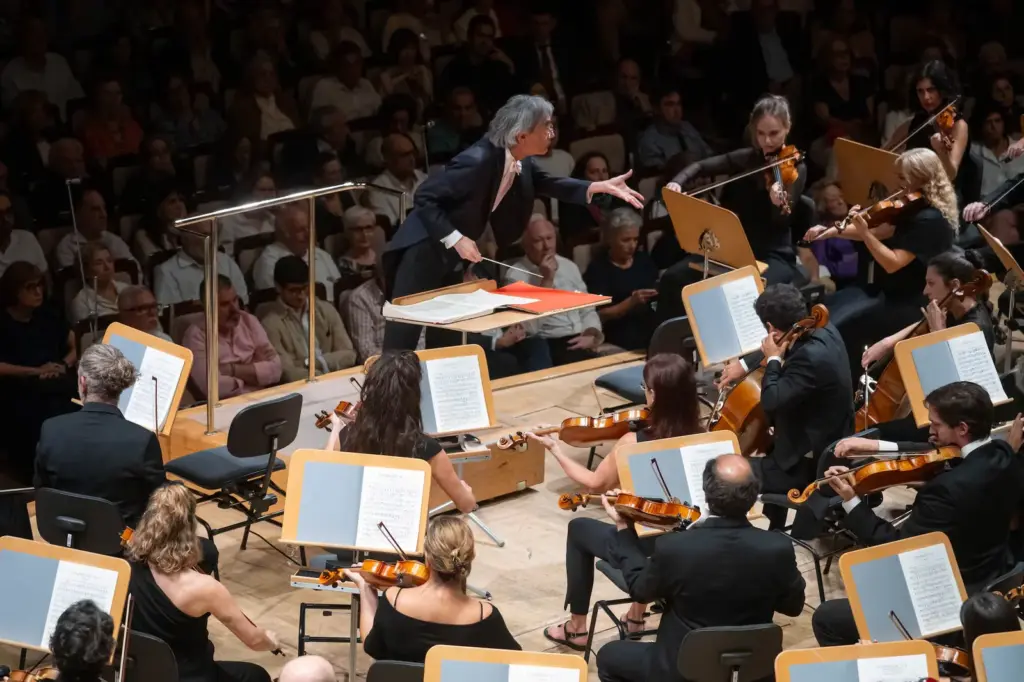
Mahler’s symphony started perfectly balanced thanks to a hybrid string arrangement that favored transparency: violins facing each other on both sides of the podium, cellos in front on the left and violas on the right, but double basses behind the cellos. The first movement was admirable for its planning. Everything flowed without interruptions, with tempo management that advanced the marches at a good pace and linked transitions naturally, thus enhancing the two extensive developments of this funeral march that Mahler titled Todtenfeier in 1888. Nagano indulged in the chamber dimension, with the beautiful pastoral theme of José María Ferrero de la Asunción’s English horn and an exquisite dialogue between José Sotorres’ flute and concertmaster Valerie Steenken’s violin, integrating the climaxes smoothly.
Read more Aena airports prepare to handle 100 million more annual travelers within 15 years
The andante moderato was an ideal contrast, with its danceable ländler air, and one of the night’s highlights. The ONE showed the smoothness of its strings in the successive variations, with exquisite woodwinds and brass, in another lesson of construction that allowed reaching the livelier section without forcing and culminating with the elegance of the final pizzicatos.
The scherzo caught that elegance and lost some of the bittersweet humor, so Mahlerian, of Saint Anthony’s preaching to the fishes, although it shone again for its transparency and dialogue between sections, especially evident between first and second violins, facing each other on both sides of the podium. Urlicht benefited from a choir of horns, trumpets, bassoon, and contrabassoon placed farther than usual, an otherworldly effect that dialogued with the attractive and dramatic voice of German mezzo Christina Bock.
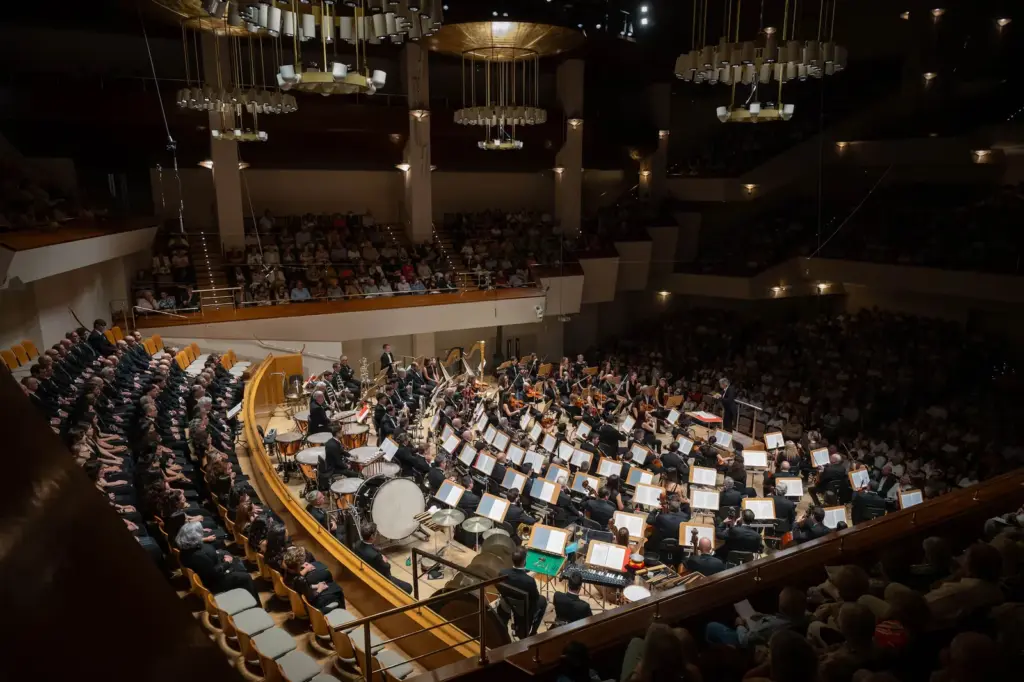
The extensive symphonic-choral finale began with an imposing fanfare of terror and was again admirable for its construction and fluidity. The eschatological proclamations of the one who cries in the desert were overwhelming, especially the one leading to the theme of the ascension, with glorious brass despite slight inaccuracies. Dramatic power was not lacking when the earth trembled with tam-tams and timpani and the tombs opened. In that vision of the Last Judgment, with the march of the dead, Nagano reached the most intense moments of his interpretation, literally giving the audience goosebumps and maintaining very high tension until the return of the fanfare.
Then came the calm, and the resurrection choir began with the singers seated, which favored a compact sonority, in perfect pianississimo, almost a murmur, over which the voice of Canadian soprano Jane Archibald was discreetly projected. The National Choir maintained that sound density in the second stanza and dazzled in the fourth (“All that is born must perish, all that dies will rise again!”), with excellent dynamic contrasts. The two soloists shone in their duet, the choir joined them with the ascension theme in the penultimate stanza, and finished the last (“You will rise again, yes, you will rise again”) with powerful high notes over the organ. Nagano precisely managed the accumulated tension until the final climax, on the theme of eternity, with an overwhelming and unforgettable effect.
Eleven years later, the National Orchestra has started again with the same symphony, and Urquiza’s premiere seemed to know it: its refrain, “here, again,” reminds us that life is also repetition and inheritance. Mahler expresses it in his own way when he makes the choir sing “I will die to live.” Those who were at the National Auditorium on Friday can say they witnessed a resurrection: that of an orchestra that, with a new principal conductor, returns to the beginning.
National Orchestra and Choir of Spain. Symphony Cycle-01
Works by Mikel Urquiza and Gustav Mahler.Jane Archibald, soprano; Christina Bock, mezzo-soprano. National Choir of Spain (Miguel Ángel García Cañamero, conductor). National Orchestra of Spain. Kent Nagano, conductor. National Auditorium, September 18. Repeated on the 19th and 20th; Radio Clásica broadcasts the Sunday concert live.
Read more One arrested in L’Hospitalet de Llobregat accused of murder