


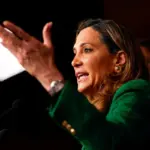





Moscow is satisfied with the rise within the European Union of another pro-Russian, Eurosceptic politician critical of aid to Ukraine, the general and former Bulgarian president Rumen Radev, who won the legislative elections in the Balkan country this weekend. “The Kremlin is impressed by the statements of former Bulgarian leader Rumen Radev about his readiness for a pragmatic dialogue with Russia,” Putin’s spokesman, Dmitry Peskov, said this Monday.
Russia had lost its main ally within the bloc a week earlier in the last two decades, former Hungarian Prime Minister Viktor Orbán, defeated by his former collaborator Péter Magyar. Just seven days later, the victory of Radev’s party in the Bulgarian parliamentary elections fuels hope in Moscow of being able to count on another partner who will undermine internal European agreements, boycott the euro, and hinder aid to Ukraine against the Russian invasion, although the Kremlin remains cautious.
“It is too early to conclude that the pan-European climate towards Russia has changed,” Peskov remarked during his daily press conference.
These are Bulgaria’s eighth legislative elections in five years, but the ongoing count indicates that the nation will achieve a stable government for the first time in this five-year period. According to the count, Radev’s party, Progressive Bulgaria, exceeds 42% of the votes and would achieve the necessary majority to govern alone.
Radev, 62, served as Bulgarian president from 2017 until January of this year. A former commander of the Balkan country’s air force, he rejects the euro, a currency his nation just adopted this year, and advocates for closer ties with Russia. However, he will take the reins of a country with a pro-European majority and which is also one of the main recipients of aid from the bloc, which will force him to maintain a much more precarious balance than the one that kept Orbán in power for 16 years.
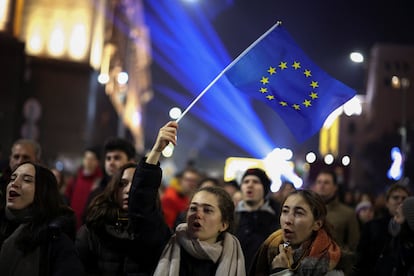
“We are the only European Union member state that is both Slavic and Eastern Orthodox. We can become a very important link in the restoration of relations with Russia,” Radev stated.
Meanwhile, in Russia, they expect Radev to be a new channel of influence in Europe, but not a veto power like Orbán had.
“The main effect of this victory is not a geopolitical change, but the emergence of a new leader in Eastern Europe who will try to soften Brussels’ stance against Russia instead of unilaterally breaking it, as Orbán proposed,” political scientist Ilya Grashenkov told the state news agency Tass.
A former advisor to Putin, Sergei Markov, emphasizes on his private Telegram channel that Moscow has lost Orbán, but has gained “a coalition of moderate governments” close to its interests.
“Slovakia, the Czech Republic, and Bulgaria, small and poor countries,” Markov enumerates, confident that “the war with Russia, the aggressive leadership of Brussels, and excessive immigration” will attract Europeans towards pro-Russian parties.
Other ultranationalist Telegram channels also express skepticism about Radev’s future role. “Of course, he is not a pro-Russian politician, but he certainly causes headaches for Brussels. I wouldn’t be surprised if he asks Lukoil to resume its operations in Bulgaria,” pro-war blogger Boris Rozhin asserted.
Nevertheless, the general comes to power with an important card up his sleeve. The refinery of the Russian oil company Lukoil in Burgas, on the Black Sea coast, is the largest plant of its kind in the Balkans and supplies the entire country with fuel.
The Russian company agreed to sell these facilities to the American fund Carlyle after being sanctioned by the Trump administration in October 2025 due to no progress in negotiations over Ukraine. Its transfer to an investment fund, and not to a rival oil company like Chevron or Exxon, keeps the door open for Lukoil’s return to Europe in an uncertain future.